Co-selling headless and API-first products with platform partners
An independent guide to co-selling headless and API-first products with platform partners. Why the motion fits, how the field actually sells, category examples only, and the enablement that makes it repeatable.
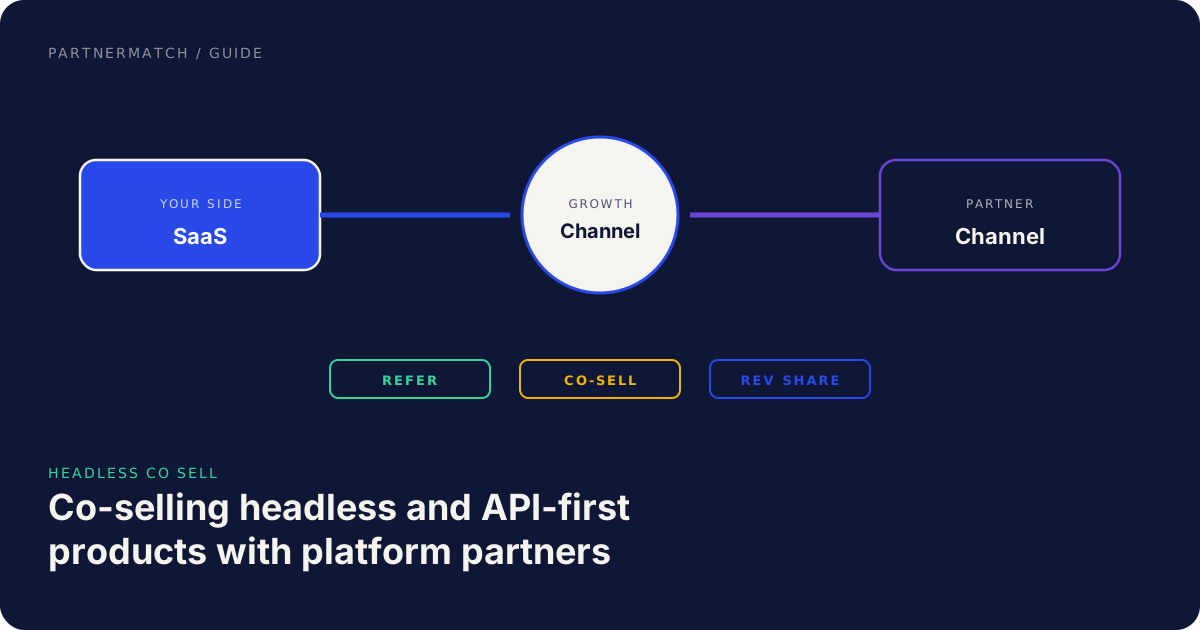
A headless or API-first product is rarely bought on its own. It is bought inside a larger decision: a new storefront, a new content model, a new data platform, a new commerce stack. The person already in that room is not your AE. It is the platform seller who is shaping the architecture and looking for the pieces that make their deal complete. That is why headless and API-first products fit platform co-sell unusually well, and why so many of them still sit on a marketplace with no field motion behind them.
This is an independent guide. PartnerMatch is not affiliated with any platform named here. Names such as a headless CMS, a commerce platform, or a cloud provider are category examples, not claimed partnerships. Confirm current co-sell and marketplace rules in each vendor's own materials. It builds on the co-selling engine, referral vs reseller vs co-sell, and cloud co-sell. The product type is the variable: headless, API-first, composable. The field mechanics stay the same.
The 60-second version
- Headless and API-first products are architecture pieces, not destinations. They get chosen inside a platform deal. Co-sell is how you arrive in that deal instead of selling a second time after it has closed.
- The platform seller is the distribution. Their customer already trusts them. Their budget conversation is already open. Your job is to make it easy for them to name you at the right moment.
- Fit is workflow, not logo. You belong in the deal if you sit immediately before or after the platform in a job the customer is already buying.
- The motion is enablement plus registration plus a place to transact. A two-minute story, a deal-registration path, and usually a marketplace or private-offer surface.
- Category examples only. Headless CMS, headless commerce, API-first payments, API-first data, composable search. Use them as patterns, not as promised routes.
- Attribution is influence more often than origination. Most co-sell on a platform deal is influenced pipeline. Count it that way or finance will reject the line.
- Start with one platform, one story, a handful of sellers. One seller who can pitch you is a motion. Twelve who cannot is not.
- Do not wait to be invited. Map accounts, register early, and show up with the architecture diagram already drawn.
Why headless and API-first products fit platform co-sell
A packaged, UI-first product can be sold in a standalone demo. A headless CMS, a headless storefront, an API-first payments layer, or a composable search index usually cannot. The customer is buying an architecture. The "somewhere" is the platform. The "something" is you, or a competitor who got into the deal first.
Co-sell works when the partner is already in the account, trusted, and talking about a job your product completes. Contentful's explainer of what a headless CMS is describes the pattern: content is managed in one system and delivered through APIs to any front end. Shopify's headless commerce documentation describes the commerce version: the storefront is decoupled, and the platform remains the commerce engine behind APIs. In both cases the customer is assembling a stack. A seller who is already selling the engine is the natural person to introduce a piece.
The co-selling engine treats this as the highest-value partner motion for products that slot into a larger workflow. Headless and API-first are that product type. Standalone selling still exists; it is not the main path for a product whose value shows up after a platform is chosen.
The buyer is already in a platform deal
By the time a customer is "ready to look at a headless CMS" or "ready to look at an API-first payments layer," they are often mid-evaluation on the platform that will sit next to it. If you arrive after that evaluation, you are selling into a frozen architecture. If you arrive during it, you are a line item in a live design.
The account you want is not "anyone who might need our API." It is "accounts the platform is currently selling, where the solution design has a gap we fill." That is account mapping, the same exercise as in cloud co-sell: overlap your pipeline and ICP with the platform's active opportunities. A spreadsheet is enough at the start.
| If this is true | You are in a co-sell deal | If this is true instead |
|---|---|---|
| Platform evaluation is open | Time your intro into that evaluation | Platform is already locked, no gap |
| Solution design has a named hole you fill | Bring an architecture diagram, not a pitch deck | You are a parallel product, not a piece |
| Platform seller's number improves | They have a reason to bring you in | Only your number improves |
| There is a countable transaction path | Their field can get credit | Influence would be invisible |
If the last two are no, you may still have a product fit and no co-sell motion. Sell direct, or run a referral. Co-sell requires the platform seller to gain something. "We are API-first" is not a reason for them to spend political capital.
The motion: what the platform seller actually does
They recognize the gap. In discovery, the storefront, content, search, or payments story is incomplete. The seller has a pattern for "when I hear X, I bring Y." You have to be Y in that sentence, in their words.
They introduce you, or they invite you to the architecture session. You fill a slot. The customer should experience one design conversation, not a second sales cycle.
They stay until it closes. That is the difference from referral, where they send a lead and leave. See referral vs reseller vs co-sell. In co-sell both sellers remain active and you keep the customer.
The deal gets registered and, often, transacted where they can count it. Registration is how sourced versus influenced gets decided, the rules in co-sell attribution. A marketplace or private offer is how many platforms book the transaction. SaaS marketplace strategy covers those surfaces. Confirm the current path. Do not invent a fee, a tier, or a program name.
What the platform seller will not do: learn your product from a 40-page deck or staff your pipeline. Enablement has to fit in a two-minute story and a one-page architecture. If they cannot say what you do tomorrow, you are not in the motion yet.
Category examples, not claimed partners
Use categories to pick where to stand. Do not use a brand name as a plan.
Headless CMS. Content is stored in one system and delivered by API to web, app, and commerce fronts. Your product might be the front, the personalization layer, or the workflow around content.
Headless commerce. The storefront is decoupled from the commerce engine. Official docs such as Shopify's headless storefronts describe APIs and third-party fronts as a pattern, not as a PartnerMatch arrangement. If you are a front, a PIM, search, or payments layer, the commerce seller is already in the deal you want.
API-first payments, data, and composable services. The platform is the processor, the warehouse, the cloud, or a stack of APIs. You sit on top as rating, ingestion, search, or a vertical flow. Co-sell works when your presence increases volume or consumption. This often overlaps cloud co-sell.
These are patterns, not claimed partners. Score a real candidate with a partner ICP and the partnership prioritization framework before you spend enablement weeks.
| Category (examples only) | The platform is selling | The gap you might fill | Why their seller cares |
|---|---|---|---|
| Headless CMS | Content model and delivery APIs | Fronts, workflow, personalization | Completes the "any channel" story |
| Headless commerce | Cart, catalog, checkout APIs | Storefront, PIM, search, payments | Completes the storefront story |
| API-first payments | Processing and billing | Rating, tax, vertical flows | Volume and unblocked verticals |
| API-first data | Warehouse, stream, cloud | Ingest, activation, vertical data | Consumption on the platform |
| Composable services | A stack of APIs | One job done deeply | A cleaner architecture, fewer risks |
Enablement a platform seller will actually use
Headless products are easy to over-explain. The field needs a recognition cue, a picture, and a next step.
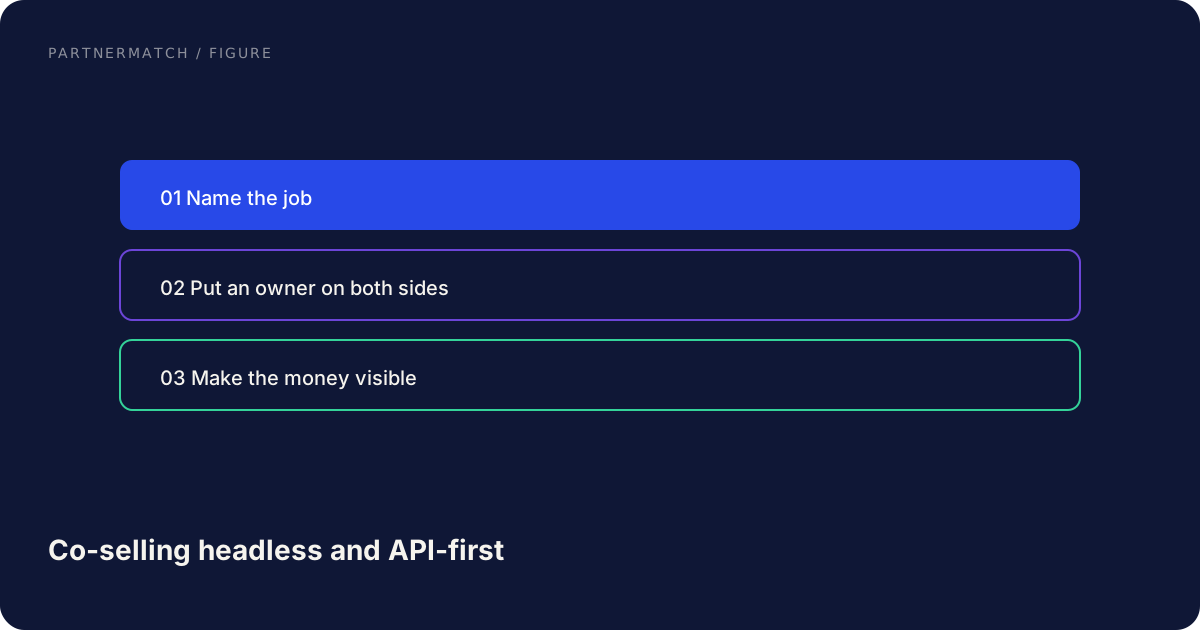
The two-minute story. "When the customer is buying [platform] and they still do not have a way to [job], we are the piece that does [job] through APIs, and it can sit next to what you already sold."
One diagram. Platform in the middle, your product as one box, the customer channel at the edge. If you cannot draw it on a whiteboard, the seller cannot either.
When to bring you in. Three discovery phrases, written down. If the seller never hears those phrases, they should not force you in.
What happens next. Who joins the architecture session, what you need from the seller, how to register the deal. A short form, not a process essay.
Proof that is specific. One customer who used the platform plus you, with the job named. A logo wall does not help in a live deal.
The partner enablement discipline applies: if their seller cannot pitch you without you in the room, the engine is not running. Translate protocols into the gap.
Attribution, marketplace, and starting small
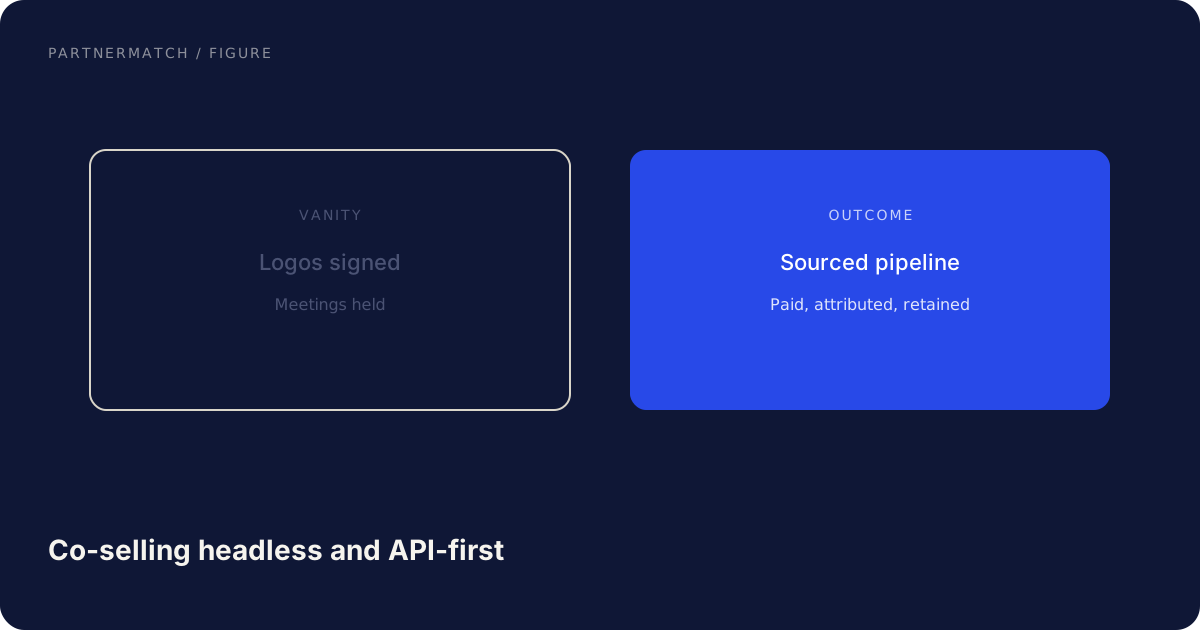
Most of this motion is influenced pipeline. The platform originated the deal. You entered because their seller named a gap. Tag it as influence, with a dated touch, under the rules in co-sell attribution and influenced vs sourced pipeline. Do not upgrade influence to sourced. The partnership metrics will not survive that.
A marketplace listing is often the transaction surface, not the demand engine. Sequence it the same way as cloud co-sell: get transactable if that is the price of admission, then build the field relationship. Listing without sellers is a storefront.
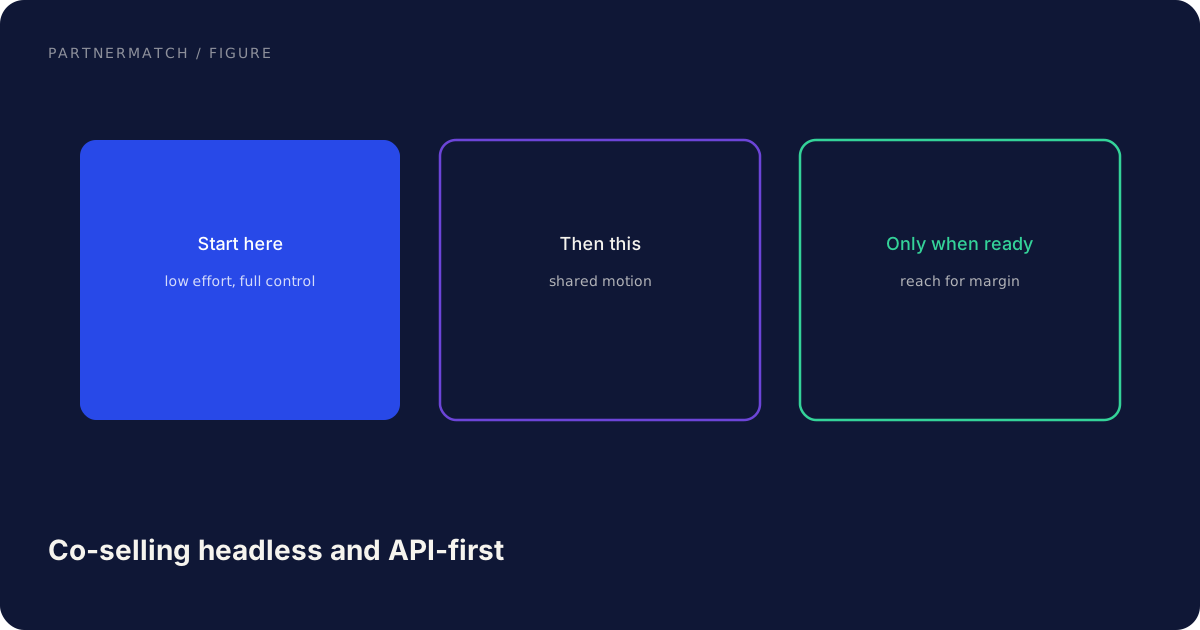
Start with one platform: the one your customers already run. Enable a handful of sellers, map a short account list, register the first deals, and prove that one seller can say the two-minute story unprompted. Then add a second. When to hire partnerships is relevant if nobody owns the mapping.
Common mistakes, and the fix
Selling headless as a destination. The fix: sell the gap in a platform architecture. If you cannot name the platform deal you sit inside, you are running a second sales cycle the customer did not ask for.
Treating a marketplace listing as co-sell. The fix: listing is a storefront. Co-sell is a seller who can name you. Sequence them.
A joint value prop about being API-first. The fix: tie the story to the platform seller's deal, their customer's job, and a countable transaction.
Claiming sourced credit on platform deals you entered mid-cycle. The fix: tag influence. Report win-rate lift. Keep sourced for origination you can prove.
Enabling "the ecosystem" instead of named sellers, or spreading across every category at once. The fix: a list of people, a two-minute story, three discovery cues, one platform, one job.
FAQ
Why do headless and API-first products fit platform co-sell? Because they are bought as pieces of an architecture the customer is already purchasing from a platform. The platform seller is in the room, the budget is open, and your product fills a named gap. Selling the same product as a standalone destination means arriving after the architecture has frozen.
Is this the same as cloud co-sell? Same motion, different or overlapping platforms. Cloud co-sell is the pattern with infrastructure providers. Headless CMS, headless commerce, and API-first data products often sit on those clouds and on application platforms. Confirm each vendor's current path rather than assuming they are identical.
Do we need to be on the platform's marketplace first? Often yes, when the platform's field only engages if the deal can be counted on their surface. Treat the listing as admission to co-sell, not as the co-sell itself.
How should we count pipeline from platform co-sell? Mostly as influenced. The platform usually originated the opportunity. You touched it. Use the origination test in influenced vs sourced pipeline. Do not add influenced dollars on top of company revenue.
What does a platform seller need in order to co-sell a headless product? A two-minute story in their language, a one-box architecture diagram, three discovery phrases that trigger the intro, a named next step, and one proof point. They do not need your API reference.
Should we start with several platforms at once? No. Start with the platform your customers already run. Enable a few sellers, map accounts, register deals, and prove tagged pipeline. A second platform is expansion after the motion exists.
The short version
Headless and API-first products get chosen inside platform deals. Co-sell is how you enter those deals while the architecture is still being drawn. The platform seller is the distribution: they already have trust, timing, and a number that improves when your piece fills a gap. Give them a two-minute story, a diagram, discovery cues, a registration path, and a place to transact. Count most of the result as influenced pipeline. Use CMS, commerce, payments, data, and composable services as category patterns, not as claimed partners. Start with one platform and a handful of sellers.
If you want that motion designed against a real platform and a real product, from the joint story through registration and the first enabled sellers, that is what a Partner Audit is for. We review the architecture you sit in, the platform to start with, and the enablement the field will actually use.
Further reading
- What is a headless CMS?, Contentful Help Center.
- Headless storefronts, Shopify.dev.
- How to build a co-selling engine for the five components this motion sits on.
- Co-selling with cloud providers for the same field mechanics inside AWS, Azure, and GCP as category examples.