When to hire your first partnerships person
When to hire partnerships at a B2B SaaS startup. The signals you are ready, the profile to look for, what the first hire owns, and a 30-60-90 plan.
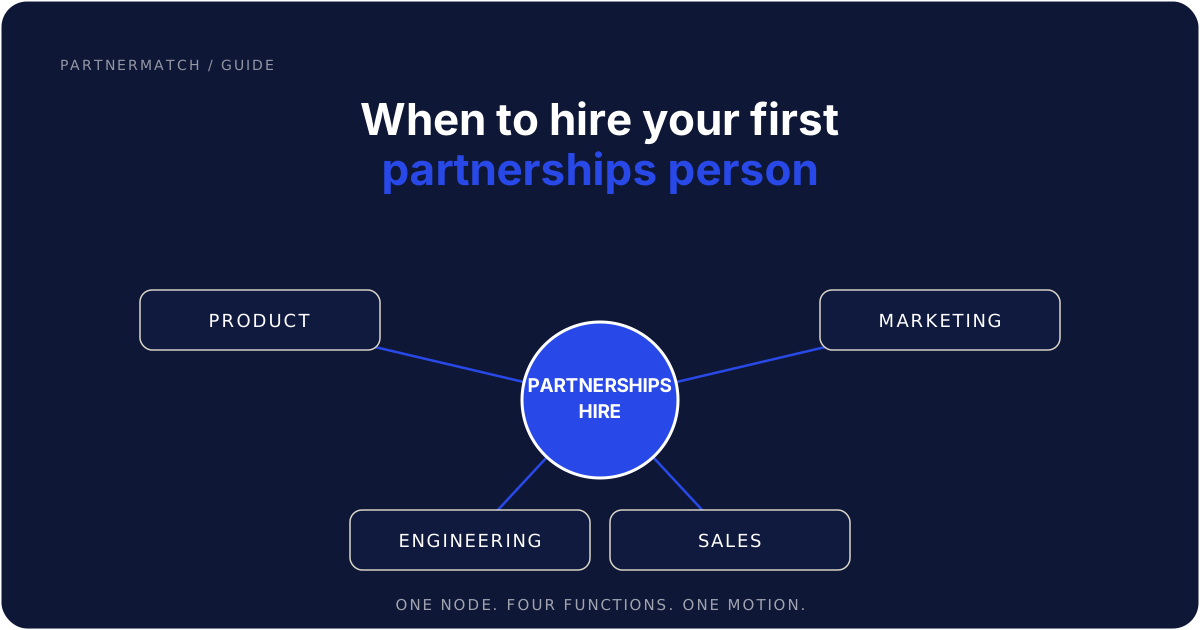
You have a list. Three customers asked for the same connector last quarter. A partner manager at a bigger platform keeps emailing, and you keep not replying because you do not know who would do the work. Someone on the board asked, in passing, whether you should hire a partnerships person. And now you are staring at a job description you are not sure you should post.
The first partnerships hire is one of the easiest hires to make too early and one of the most expensive to make wrong. Hire before the motion exists and you get an expensive person running calls with nothing to ship. Wait too long and you leave a real channel sitting in your inbox, unworked. This guide is about timing: the signals that say you are ready to hire partnerships, the signals that say wait, what the first hire should and should not own, the profile to look for, and a 30-60-90 plan so the person you hire is shipping by the end of the first quarter, not still "building relationships."
The 60-second version
If you only read one section, read this one:
- The first partnerships hire is a timing decision, not a headcount decision. Hire when the motion is real, not when the inbox is loud.
- You are ready when demand is concrete: customers keep asking for the same integrations, inbound partner interest is going unanswered, partnerships are a real line in the plan, and an integration or two have shipped and need a motion around them.
- You are not ready when the basics are missing: no product or engineering capacity to build, no clear ICP, or a founder who has not run the motion personally yet.
- The first hire owns broad and shallow: strategy, sourcing, enablement, deal support, and light program ops. Not a team, and not pure BD with no product link.
- Hire someone product-literate and cross-functional, comfortable across product, engineering, sales, and marketing, structured, and at ease with ambiguity.
- There is a stage before the hire. Founder-led first, then a fractional or service option, then a full-time owner once the channel is proven.
- Give the first hire a 30-60-90 plan that ends in a scoped, in-build integration, not a calendar full of intro calls.
- The point of the hire is shipped integrations, the same outcome as everything else in partnerships. The title does not change the deliverable.
Why timing is the whole question
Most advice about when to hire partnerships answers the wrong question. It tells you what a partnerships person does, which you already know, and skips the part that matters: whether your company is at the point where that person can succeed.
A partnerships hire is a force multiplier on a motion that already works. If the motion does not exist yet, there is nothing to multiply. You get a capable person spending six months doing what a founder should have done first: figuring out whether partnerships even move your numbers. That usually ends with a quiet departure and a line in the next board deck about "partnerships not working out."
So the question is not "should we have a partnerships person." Almost every B2B SaaS company eventually should. The question is whether the motion is real enough that a dedicated owner accelerates it instead of inventing it. The rest of this guide is how to tell.
The signals you are ready to hire partnerships
Readiness is not a feeling. It is a set of concrete, observable signals. You are looking for demand that already exists and work that is already piling up faster than a part-time founder can clear it.
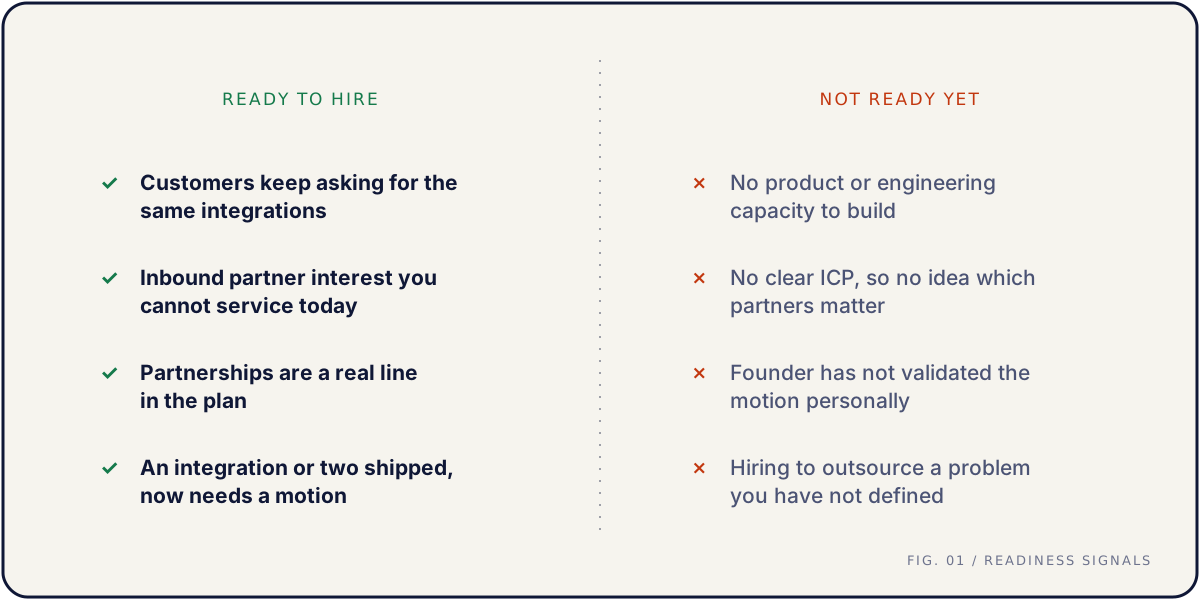
Customers keep asking for the same integrations. Not a one-off request from a single prospect, but the same two or three connectors named by name, in renewals, in churn conversations, and in sales calls you lost. Repeated, specific demand is the strongest signal there is, because it means the work has a customer outcome attached before anyone is hired to chase it.
Inbound partner interest you cannot service. Partner managers are reaching out, and the threads are dying because nobody owns the reply. When you are leaking real ecosystem interest purely for lack of an owner, the cost of not hiring has become visible.
Partnerships are a real line in the plan. Leadership has decided partnerships are a channel you are investing in this year, with a number or a strategic goal attached, not a "nice to have someday." A hire without a mandate floats. A hire against a planned channel has air cover.
An integration or two have shipped, and now need a motion around them. You have proof the work produces something, and you can feel the gap: the shipped integrations need launch, enablement, maintenance, and a pipeline of the next ones. That is a job. That is the moment.
| Signal | What it looks like in practice | Why it means ready |
|---|---|---|
| Repeated integration demand | The same connector named in 3+ deals or renewals | Demand exists before the hire chases it |
| Unserviced partner inbound | Partner-manager threads dying with no owner | The cost of no owner is now visible |
| Partnerships in the plan | A number or strategic goal, with leadership behind it | The hire has a mandate and air cover |
| Shipped integrations | One or two live, needing launch and a pipeline | The work proves out and now needs a motion |
You do not need all four. Two strong signals, especially repeated demand plus a shipped integration, are usually enough. For the underlying logic of why workflow demand beats logos, our tech partnerships for SaaS guide goes deeper on reading the signal.
The signals you are not ready yet
The mirror image matters just as much. These are the conditions under which a partnerships hire will struggle no matter how good they are, because the company has not built the ground they need to stand on.
No product or engineering capacity to build. Partnerships at a B2B SaaS company end in integrations, and integrations are code. If you have no engineering time to allocate to partner builds for the next two quarters, a partnerships hire becomes a person who scopes things that never ship. Frustrating for them, expensive for you. Fix the capacity question first, or plan to outsource the build, before you hire the owner.
No clear ICP. If you cannot say precisely who your best customer is, you cannot say which partners sit in their workflow, which means you cannot prioritize. A partnerships hire walking into an undefined ICP will chase logos, because logos are the only signal left when customer pull is missing. Define the customer first.
The founder has not validated the motion personally. This is the one teams skip most. Before you hand partnerships to someone else, a founder or product leader should have run at least one partnership end to end: picked a target, talked to the partner, scoped a build, shipped it, and watched whether customers adopted it. That tour teaches you what the motion requires, which is the only way to write a real job description and manage the person you hire. Delegating a motion you have never run is delegating a problem you cannot evaluate.
| Not-ready signal | The trap it creates | Fix it first by |
|---|---|---|
| No engineering capacity | Scopes that never ship | Reserving build capacity, or planning to outsource |
| No clear ICP | The hire chases logos | Defining the customer and their workflow |
| Founder has not run it | A motion you cannot manage | Running one partnership end to end yourself |
| Loud inbox, no demand | Hiring to quiet noise, not to ship | Separating real customer pull from polite interest |
A loud inbox is not a signal. Partner managers reach out because ecosystem activity is their quota, not because your customers need the integration. Hiring to quiet the noise gets you a person who answers emails. Hire to ship, not to triage.
What the first hire should, and should not, own
The most common scoping mistake is hiring the wrong shape of person for the stage. At a seed to Series B startup, the first partnerships hire is broad and shallow, not narrow and deep. They own a wide slice of the motion at a level of polish that fits a small company, and they explicitly do not own a team or a pure relationship-management role disconnected from product.
Owns, at this stage: partner strategy and the thesis, sourcing and qualifying targets, scoping integrations with engineering, supporting deals where an integration is in play, enablement so sales and support can sell and service what ships, and light program ops like a basic partner list, a simple listing, and the launch checklist.
Does not own, at this stage: a giant team, because there is no team yet. And not pure business development with no product link, the partner-dinner role that produces signed agreements and zero shipped integrations. The whole reason product-led partnerships beat BD-led ones is that the work is scoped and shipped, not just agreed. Our partnership prioritization framework covers how this one person triages an inbox into deep, fast, and no, which is most of the early program ops.
| Area | First hire owns it | First hire does not own it |
|---|---|---|
| Strategy | Sets the partner thesis and targets | Owns company-wide GTM strategy |
| Sourcing | Qualifies and prioritizes partners | A large outbound BD quota |
| Build | Scopes integrations with eng | Writes the integration code alone |
| Deals | Supports deals with integration in play | Carries the core sales quota |
| Enablement | Arms sales and support | Runs the full marketing function |
| Program ops | Basic list, listing, launch checklist | A staffed partner program with tiers |
The test for a good first-hire scope: it is wide enough that one capable person stays busy and owns outcomes, and narrow enough that nothing on the list requires a team or a quota they cannot influence. If the role as written needs three people, you have written a head-of-partnerships job, not a first hire.
The profile and skills to look for
Because the first hire is broad, the profile is a generalist with a product spine, not a specialist. The single most predictive trait is being product-literate: they can read an API doc, understand what an integration does for a customer, and hold a credible conversation with an engineer. A partnerships person who cannot do this defaults to relationship work, which at this stage produces calls, not code.
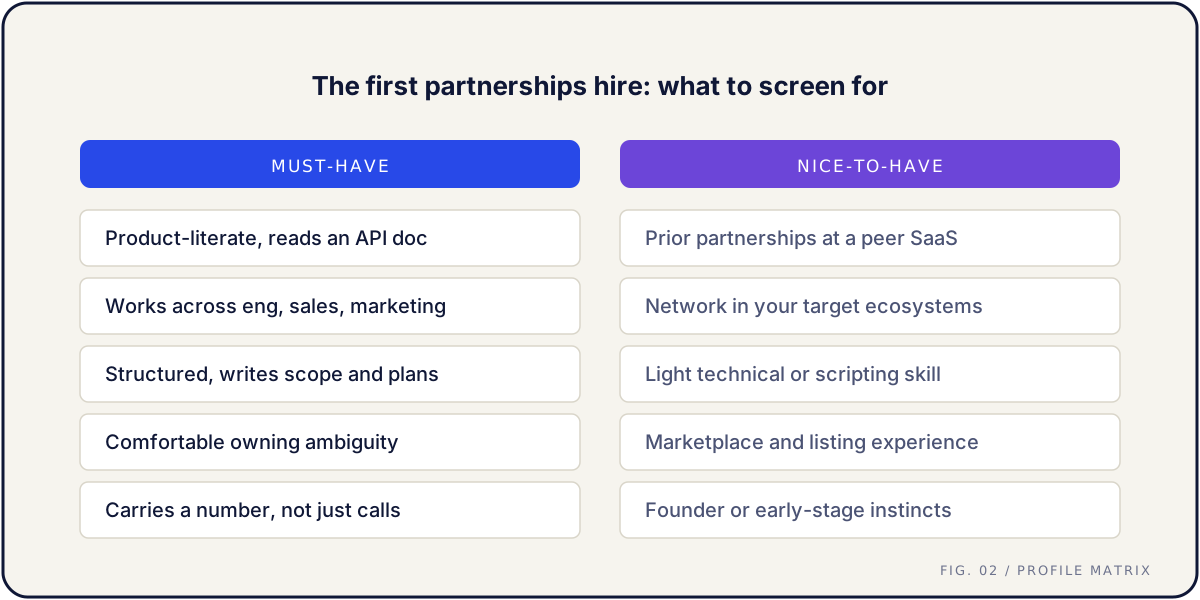
The must-haves:
- Product-literate. Reads docs, gets integrations, talks to engineers without a translator.
- Cross-functional. Moves comfortably across product, engineering, sales, and marketing, because the role touches all four and reports to none of them cleanly.
- Structured. Writes a scope, builds a plan, runs a launch checklist. The job is half project management.
- Comfortable with ambiguity. There is no playbook yet, no team, and no perfect data. They build the motion as they run it.
- Outcome-oriented. Thinks in shipped integrations and adoption, not in meetings booked.
The nice-to-haves are exactly that, nice. Prior partnerships experience at a peer SaaS helps, but it can also import a big-company playbook that does not fit your stage. An ecosystem network is useful, light technical skill is a bonus, marketplace experience saves some learning. None of these outweighs the generalist core. Hire the structured, product-literate generalist who has run ambiguous things before, over the polished specialist who needs a team and a playbook to function.
| Trait | Why it matters at this stage | Failure mode if missing |
|---|---|---|
| Product-literate | The work ends in integrations | Defaults to relationship-only work |
| Cross-functional | Role touches four functions | Gets stuck waiting on hand-offs |
| Structured | Job is half project management | Calls happen, nothing ships |
| Comfortable with ambiguity | No playbook or team yet | Stalls without process |
| Outcome-oriented | Success is adoption, not activity | Reports meetings as progress |
Founder-led, first hire, or a team: the org stages
The hire does not happen in a vacuum. It is the middle stage of a predictable progression, and knowing which stage you are in tells you whether to hire at all yet.
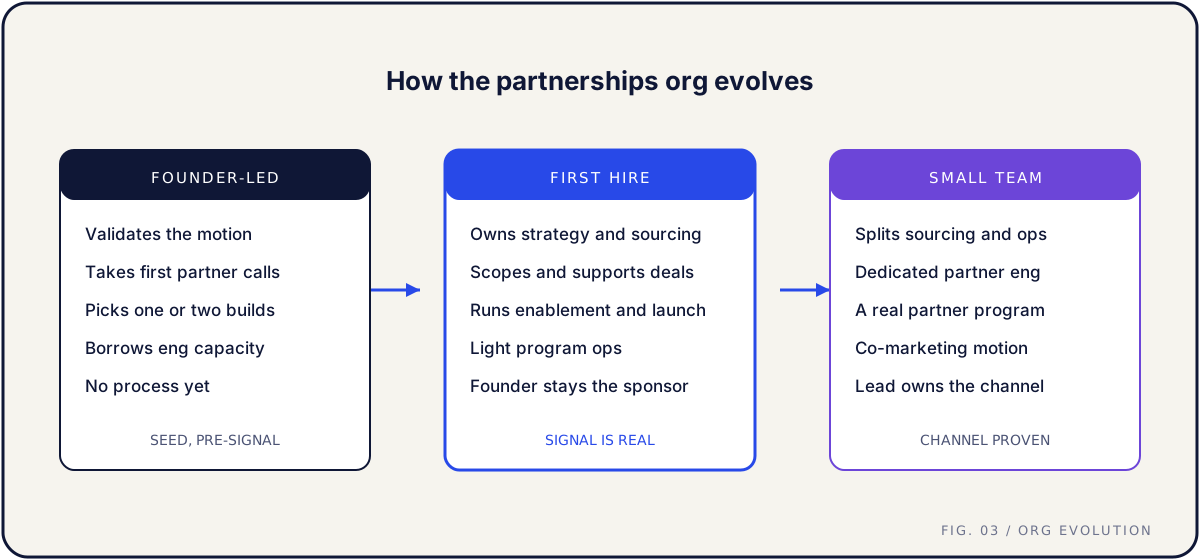
Founder-led. Early, pre-signal. A founder or product leader takes the first partner calls, validates the motion, picks one or two builds, and borrows engineering capacity to ship them. There is no process and no dedicated owner, and that is correct. This stage exists to answer one question: does this motion produce shipped, adopted integrations for us. Until that is answered, a hire is premature.
First hire. The signal is real. Demand repeats, an integration or two have shipped, and the founder is now the bottleneck. You hire one broad owner who takes strategy, sourcing, enablement, deal support, and light program ops, while the founder stays the executive sponsor. This is the hire this guide is about, and it is the right move only after the founder-led stage produced a real signal.
Small team. The channel is proven. Now you split the role: someone owns sourcing and ops, you fund dedicated partner engineering, you stand up an actual partner program with tiers and co-marketing, and the first hire becomes the lead. You scale a working channel, not a hypothesis.
| Stage | Who runs it | What it owns | When to move on |
|---|---|---|---|
| Founder-led | Founder or product leader | Validate the motion, ship 1-2 builds | Demand repeats and integrations ship |
| First hire | One broad partnerships owner | Strategy, sourcing, enablement, deal support, light ops | The channel is clearly producing |
| Small team | A partnerships lead plus specialists | Program, partner eng, co-marketing, scale | The channel needs more than one owner |
The mistake is skipping straight from founder-led to small team, or hiring a head of partnerships to "build the team" before there is a proven channel to build it around. Walk the stages in order.
Build versus outsource the early motion
Here is the option most founders forget exists: there is a stage between founder-led and a full-time hire where you do not have to choose between doing it all yourself and committing to permanent headcount. You can outsource the early motion.
A full-time partnerships hire is an ongoing cost and a bet that the channel will sustain the role for years. Before you make that bet, a fractional partnerships leader or a service can run the same early work: validate the motion, prepare partner-ready API docs, scope the first integrations, and build and launch them. This is what PartnerMatch does, the full path from partner strategy to shipped integration, without you converting a hypothesis into a salary.
The decision comes down to whether the motion is proven and whether you have engineering capacity.
| Situation | Better choice | Why |
|---|---|---|
| Motion unproven, low capacity | Outsource or fractional | Test the channel without permanent cost |
| Motion proven, no eng capacity | Outsource the build, own strategy | Keep the relationship, rent the engineering |
| Motion proven, capacity exists | Full-time first hire | The channel sustains the role |
| One-off integration, no ongoing plan | Outsource the project | No motion to staff yet |
Whatever you choose, the strategy and the partner relationships stay inside your company. You can rent the scoping, the build, and the launch. You should not rent the decision about which partnerships matter or own the partner relationship from the outside. Our SaaS partnership lifecycle breakdown shows the end-to-end work either an outsourced partner or your first hire will actually run.
A 30-60-90 plan for the first hire
Hire someone with no plan and you get a quarter of "building relationships" and no shipped integration. The fix is a 30-60-90 plan that points at a concrete deliverable from day one: a scoped integration in build by day 90, not a calendar full of intros.
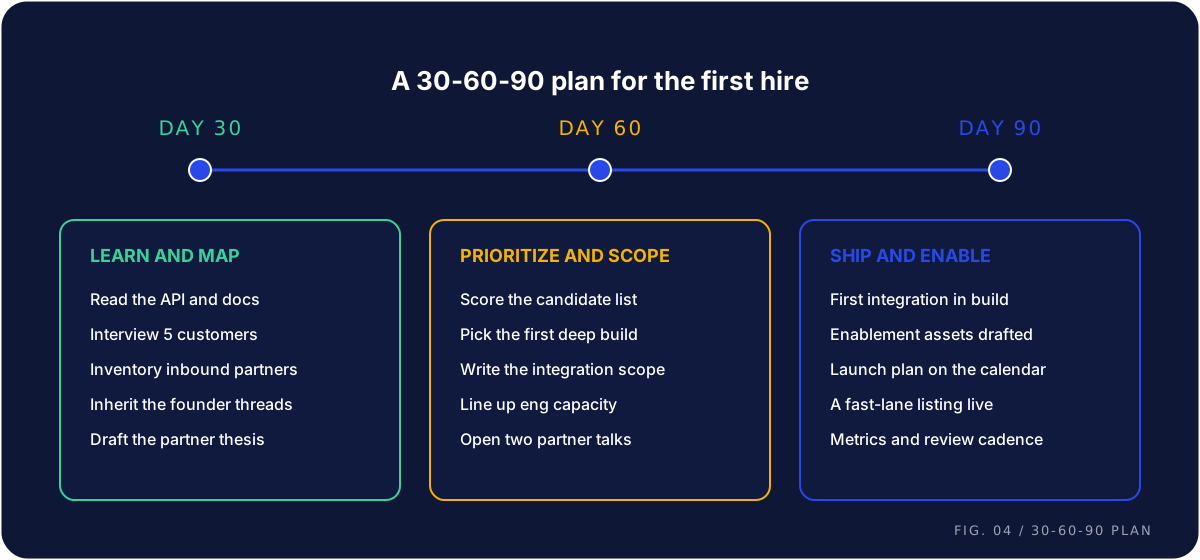
Day 30: learn and map. Read the API and the docs, interview five customers about the tools on either side of your product, inventory every inbound partner thread, inherit the founder's relationships, and draft a partner thesis. The output is a map of demand and opportunity, not a single meeting booked for its own sake.
Day 60: prioritize and scope. Score the candidate list on customer pull and distribution, pick the first deep build, write the integration scope with engineering, line up the capacity to build it, and open conversations with the top two partners. The output is one scoped, prioritized integration, ready to build.
Day 90: ship and enable. The first integration is in build, enablement assets are drafted, the launch is on the calendar, a fast-lane listing is live to capture quick value, and a metrics and review cadence is set. The output is momentum you can measure.
| Phase | Focus | Key outputs | Signal of success |
|---|---|---|---|
| Day 30 | Learn and map | Partner thesis, customer interviews, inbound inventory | Knows demand and opportunity cold |
| Day 60 | Prioritize and scope | Scored list, first deep build chosen, scope written | One integration ready to build |
| Day 90 | Ship and enable | Build underway, launch planned, listing live, metrics set | Visible, measurable momentum |
If by day 90 your new hire has run lots of calls but nothing is scoped or in build, that is not a slow start. It is a sign the plan slipped into relationship work, and you correct it now, not at the six-month review.
Common mistakes, and the fix
Hiring before the founder has run the motion. The fix: run one partnership end to end yourself first. You cannot write the job description, evaluate candidates, or manage the role for a motion you have never executed.
Hiring a pure BD profile with no product link. The fix: screen hard for product literacy. The first hire's work ends in shipped integrations, so they must be able to read a doc, get an integration, and talk to engineers. The dinner-and-handshake profile produces agreements, not code.
Hiring without engineering capacity behind them. The fix: reserve build capacity or plan to outsource the build before the hire starts. A partnerships owner with no way to ship is a person scoping things that die in the backlog.
Scoping a head-of-partnerships role as the first hire. The fix: write a broad-but-shallow first-hire role, not a role that needs a team. If the job description requires three people to deliver, you are hiring for the wrong stage.
Onboarding with no 30-60-90 plan. The fix: hand the new hire a plan that ends in a scoped, in-build integration by day 90. Without a concrete deliverable, the role drifts into activity that looks like progress and ships nothing.
FAQ
When should a B2B SaaS startup hire its first partnerships person? When the motion is real, not when the inbox is loud. Concretely: customers keep asking for the same integrations, partner inbound is going unserviced, partnerships are a funded line in the plan, and one or two integrations have already shipped and now need a motion around them. Two of those, especially repeated demand plus a shipped integration, is usually enough.
Do we need a partnerships hire before our first integration? No. The first integration should be founder-led or outsourced. You hire a partnerships person to scale a motion that already produces shipped, adopted integrations, not to invent one. Ship the first integration, confirm the channel, then hire.
What should the first partnerships hire own? A broad, shallow slice: strategy, sourcing, enablement, deal support, and light program ops. Not a team, because there is not one yet, and not pure BD disconnected from product. The deliverable is shipped integrations, so the role stays close to product and engineering.
What profile should we look for? A product-literate, cross-functional generalist who is structured and comfortable with ambiguity. Product literacy is the most predictive trait, because the work ends in integrations. Prior partnerships experience and an ecosystem network are nice to have, not decisive, and a big-company specialist can import a playbook that does not fit your stage.
Should we hire full-time or use a fractional or outsourced option first? If the motion is unproven or you lack engineering capacity, a fractional leader or a service like PartnerMatch lets you run the early motion without committing to permanent headcount. Once the channel is clearly producing and you have capacity, convert to a full-time first hire. Keep the strategy and the partner relationships in-house either way.
What level should the first hire be? Senior enough to own outcomes and operate without a manager in the function, junior enough to do the hands-on work themselves. Think a strong individual contributor or a player-coach, not a VP hired to build a team that does not exist yet. The founder stays the executive sponsor.
How do we know the hire is working out? By day 90 there should be a scoped integration in build, enablement underway, a launch on the calendar, and a metrics cadence in place. If there are lots of calls but nothing scoped or shipping, the role has drifted into relationship work and needs correcting now.
When do we go from one hire to a partnerships team? When the channel is proven and one owner is the bottleneck. Then you split sourcing from ops, fund dedicated partner engineering, stand up a real program, and the first hire becomes the lead. Do not hire a head of partnerships to build a team before there is a working channel to build it around.
The short version
The first partnerships hire is a timing call. Make it when the motion is real and make it after a founder has run that motion personally, not before.
You are ready when demand repeats, partner inbound is going unserviced, partnerships are a funded line in the plan, and an integration or two have shipped and now need a motion. You are not ready when there is no engineering capacity, no clear ICP, or no founder-validated motion. When you do hire, scope the role broad and shallow, screen for a product-literate cross-functional generalist, and hand them a 30-60-90 plan that ends in a scoped, in-build integration. And remember the stage in between: a fractional or outsourced option can run the early motion before you commit to a full-time seat.
If you want help deciding whether you are ready, and running the early motion either way, that is what a Partner Audit is for. We review your product, API, and partner potential, then tell you what to build, who to approach, and whether your next move is a hire or a shipped integration first.