How SaaS marketplaces rank apps, and how to climb
How marketplace ranking works for B2B SaaS. The general signals marketplaces tend to reward, how to influence each one ethically, and a worked climb.
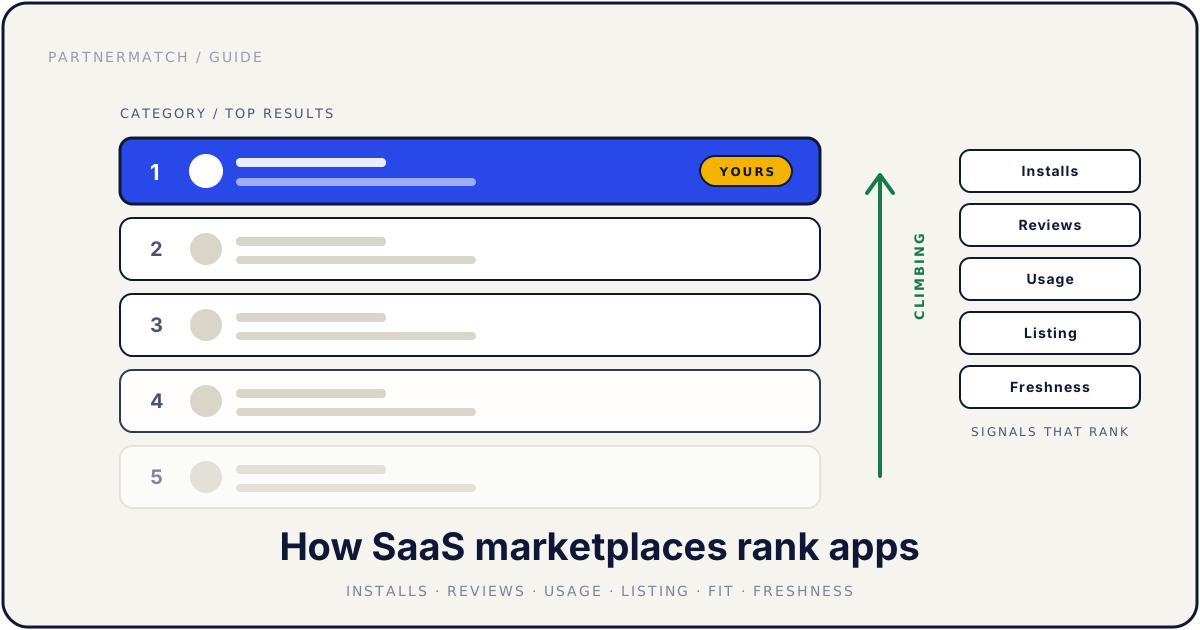
You did everything right. You built the integration, wrote a clear listing, passed review, and went live. Then you searched your own category and found yourself on page two, somewhere around rank fourteen, below apps you have never heard of. Most shoppers will never scroll that far.
That is the part of marketplace ranking nobody warns you about. Visibility is not a reward for shipping. It is the output of a set of signals the marketplace watches, and most of the installs in any category go to the handful of apps at the top. If your listing sits below the fold, it might as well not exist.
This guide explains how marketplaces rank apps in general terms: why ranking decides your install volume, the signals marketplaces tend to reward, how to influence each one ethically, and a worked example of a listing climbing from page two to the top. One thing up front, stated plainly: every marketplace guards its exact ranking algorithm, and those algorithms change. Nobody outside the company knows the precise weights, and anyone who claims to is guessing. What follows is the common pattern across marketplaces, not any one platform's secret formula.
The 60-second version
- Ranking decides your install volume. Most installs in a category go to the top few apps, so position is not a vanity metric, it is your distribution.
- No one knows the exact algorithm, and it changes. Marketplaces keep the formula proprietary and tune it over time. Optimize the inputs, not a rumored weighting.
- Marketplaces reward demand and quality. Demand is installs, reviews, and active usage. Quality is listing completeness, category fit, and freshness. Both feed your rank.
- Velocity matters, not just totals. A burst of recent installs and fresh reviews signals momentum, which is why your launch window is worth planning.
- You influence signals, you never fake them. Drive first installs from customers who asked, earn reviews honestly, keep the listing current. Bought reviews get detected and punished.
- It compounds into a flywheel. Installs drive reviews and usage, those drive ranking, ranking drives more installs. Co-marketing speeds the wheel.
- A climb is a maintained position, not a launch event. Recency and engagement decay, so a listing you stop touching slides back down past better-maintained competitors.
Why marketplace ranking decides your install volume
Open any marketplace category and watch your own behavior. You read the first two or three results, maybe a fourth. If one of them fits, you install it and stop looking. You almost never reach page two, and you certainly never reach page nine.
Every shopper does the same thing. That is why ranking is not a leaderboard for bragging rights. It is the mechanism that decides how many people ever see your app at all. The difference between rank two and rank fourteen is not a small percentage. It is the difference between a steady stream of installs and a trickle from people who already knew your name and searched for it directly.
This is the uncomfortable truth behind a lot of disappointing marketplace launches. The integration works, the listing is fine, and the install count is still flat, because the listing is buried where no one shops. Getting listed put you in the building. Ranking is what puts you in the window.
The good news is that ranking is downstream of things you control. Marketplaces do not rank apps at random, and they are not trying to hide good apps. They are trying to surface the ones their shoppers will install, use, and rate well, because that keeps shoppers coming back. Once you understand the signals they read to make that guess, you can feed them deliberately.
The signals marketplaces tend to reward
Across marketplaces, the same families of signals show up, because every platform wants the same outcome: put forward apps that shoppers will install and be happy with. The exact list and the exact weights differ from one marketplace to the next, and they are not published. But the pattern is consistent enough to plan around.
It helps to group the signals into two buckets. Demand signals answer "do shoppers want this app." Quality signals answer "is this listing trustworthy and well kept." A strong rank usually needs both. Lots of installs with a half-finished listing underperforms; a beautiful listing with no installs does too.
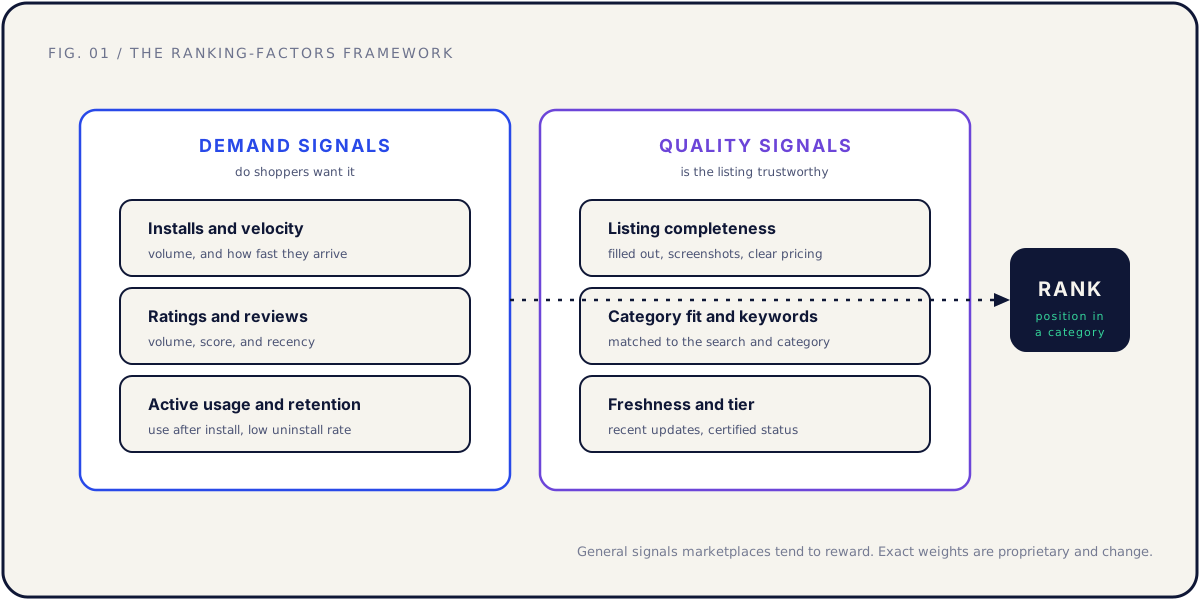
Here is the framework in detail. Treat the weight column as a relative hint about how much each signal tends to matter, not a published number from any marketplace.
| Signal | Bucket | What it rewards | Typical weight |
|---|---|---|---|
| Install volume and velocity | Demand | Apps shoppers actually add, and recent momentum | High |
| Ratings and reviews | Demand | Volume, score, and recency of ratings | High |
| Active usage and retention | Demand | Use after install, low uninstall rate | High |
| Listing completeness | Quality | A filled-out listing with screenshots and clear pricing | Medium |
| Category fit and keywords | Quality | Apps matched to the search and the right category | Medium |
| Recency of updates | Quality | Recently maintained apps over abandoned ones | Medium |
| Partner tier or certification | Quality | Verified, certified, or premier status | Medium |
Two things about this table are worth saying out loud. First, the "typical weight" column is directional. No marketplace tells you it weights installs at thirty percent and reviews at twenty. Treat these as the order of magnitude, not a recipe. Second, the signals interact. Velocity multiplies volume, usage protects installs from decaying your rank, and a complete listing converts more shoppers into installs in the first place. You are not optimizing seven separate dials. You are feeding one loop.
The takeaway is not to chase a rumored formula. It is to make every input strong, because an app that genuinely earns installs, gets used, collects fresh reviews, and stays maintained will rank well under any weighting a marketplace chooses.
How to influence each signal, ethically
Influencing a ranking signal sounds like gaming it. It is the opposite. The signals are honest proxies for "shoppers like this app," and the durable way to move them is to make the underlying thing true, then let the marketplace observe it. The shortcuts, bought installs and fake reviews, get detected, and a listing that ranks for a week then craters is worse than one that climbs slowly.
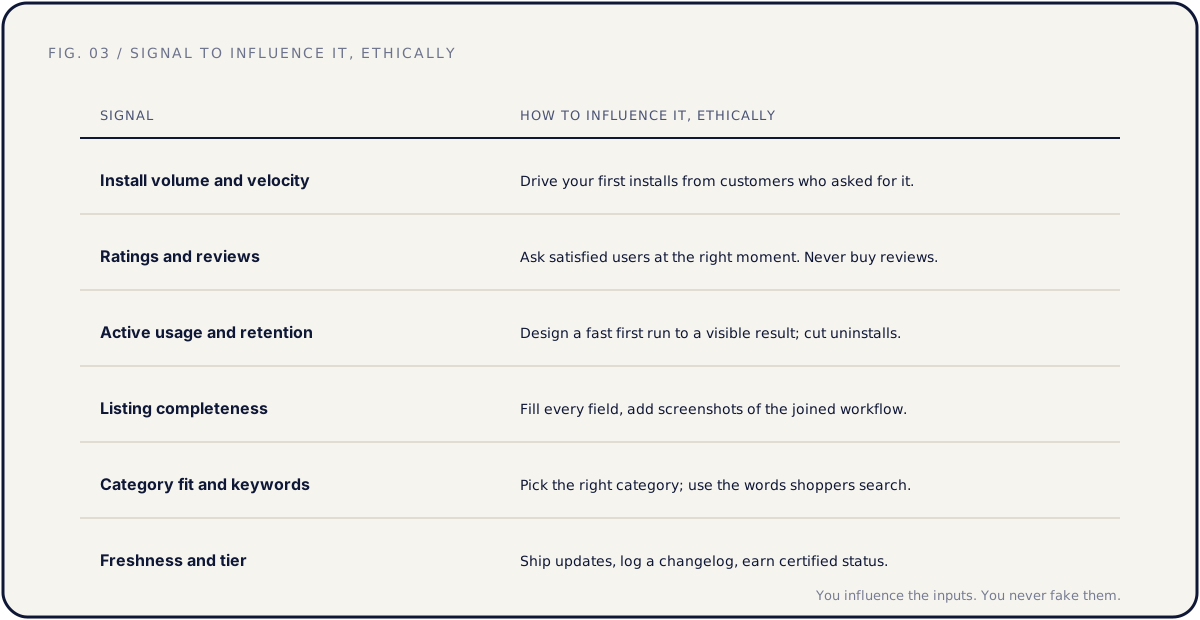
Install volume and velocity. Your warmest installs already exist: the customers who asked you to build the integration in the first place. Reach them individually the week you launch. A concentrated burst of real installs from people who wanted the app creates the velocity signal honestly, and those same people become your first reviewers and your first active users. This is why launch timing matters. The same fifty installs spread over six months read as a flat line; clustered into a launch week, they read as momentum.
Ratings and reviews. Reviews do not happen on their own. Satisfied customers rarely think to leave one, while frustrated ones always do, so a passive listing drifts toward a worse rating than the product deserves. Build a habit instead. After a customer has used the integration successfully for a couple of weeks, ask, with a short in-app prompt or a one-line email at the right moment. Never buy reviews, never offer a reward in exchange for a positive one, and never have employees post as customers. Marketplaces are good at spotting it, and the penalty is severe.
Active usage and retention. The riskiest moment is right after install. A customer who connects and cannot figure out the next step uninstalls within a week, which hits both your retention and your engagement signal. Design the first run deliberately: a setup measured in minutes, a clear first action, and a visible result. Get the customer to the joined workflow you promised in the listing's first line, fast. Usage is the signal that is hardest to fake and therefore the one marketplaces trust most.
Listing completeness. This one is free and most teams leave points on the table. Fill every field. Add screenshots that show the two products working together, not your UI in isolation. State the price plainly. A complete listing both satisfies a quality signal directly and converts more shoppers into the installs that drive the demand signals.
Category fit and keywords. Put your app in the category where shoppers actually look for it, and use the words they search, not your internal product names. If buyers search "lead enrichment," the listing should say "lead enrichment," not "audience intelligence layer." Fit is a quiet signal, but a miscategorized app competes in the wrong race and loses.
Recency and tier. Ship updates and log them. A changelog entry, a version bump, and a note that you support the latest platform API all signal that the app is alive. Where the marketplace offers a verified, certified, or premier tier, earn it once the listing is live and converting. Tier is both a trust signal to shoppers and, on many marketplaces, an input to rank.
The flywheel: how the signals compound
The signals are not independent. They feed each other, which is why ranking compounds instead of staying flat. Installs generate reviews and usage. Reviews and usage lift your rank. A higher rank puts you in front of more shoppers, who drive more installs. Each turn of the loop makes the next install cheaper, because you are no longer paying to be seen, the rank is doing it for you.
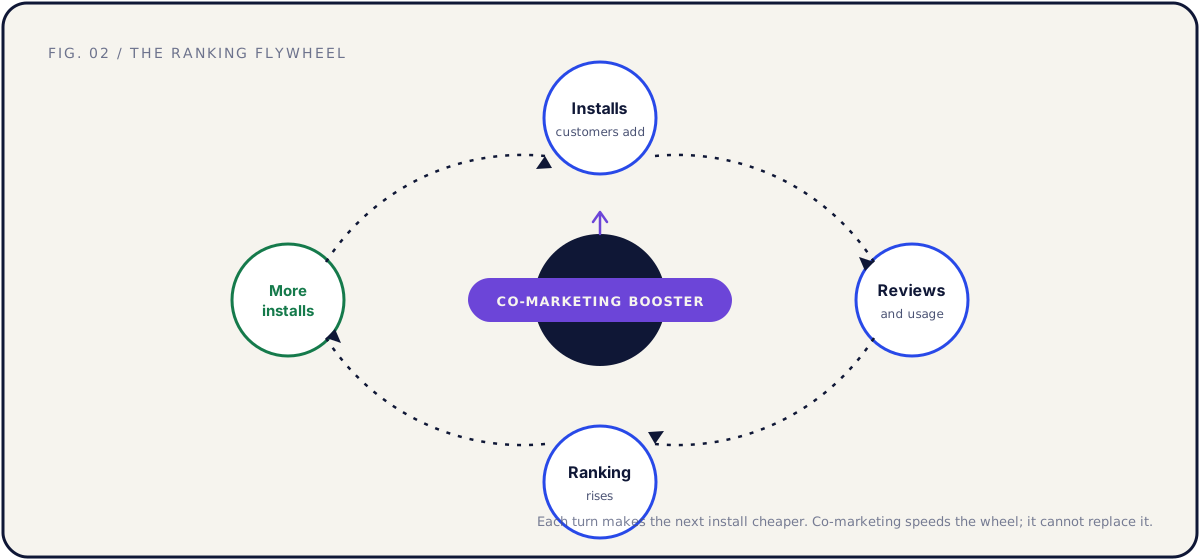
Co-marketing sits on top of the wheel as a booster. A joint launch, a partner newsletter mention, a webinar, or a co-authored post sends a burst of qualified traffic to the listing, which converts into a cluster of installs and reviews, which spins the wheel faster. The mechanics of running those joint motions are in the co-marketing playbook. The important point is the order of operations: co-marketing amplifies a listing that already converts. Point a launch at a listing with a weak first line and no setup guide, and you have spent partner goodwill driving traffic that bounces.
The flywheel also explains why launches matter more than steady-state. A cold start is the hardest part, because a listing with zero installs and zero reviews has nothing to compound. The job at launch is to manufacture the first turn of the wheel honestly, by concentrating your real demand into a window. After that, the loop carries more of the load, and your job shifts from starting it to keeping it turning.
| Flywheel stage | What feeds it | What stalls it |
|---|---|---|
| Installs | First customers who asked, a converting listing | A buried listing, a weak first line |
| Reviews and usage | A review habit, a fast first run | No prompt to review, a confusing setup |
| Ranking | Real installs, fresh reviews, active usage | Decay from an unmaintained listing |
| More installs | Higher position, more shopper traffic | A competitor maintaining harder than you |
A worked example of a climb
Hypotheticals are clearer than abstractions, so here is one. The numbers are invented to illustrate the shape of a climb, not a promise of results, and your marketplace and category will behave differently.
Picture a Series A product that just listed in a CRM marketplace. Launch week, the listing sits at rank fourteen on page two. Almost no organic shoppers see it. Over the next ninety days, the team does five things, and the position moves.
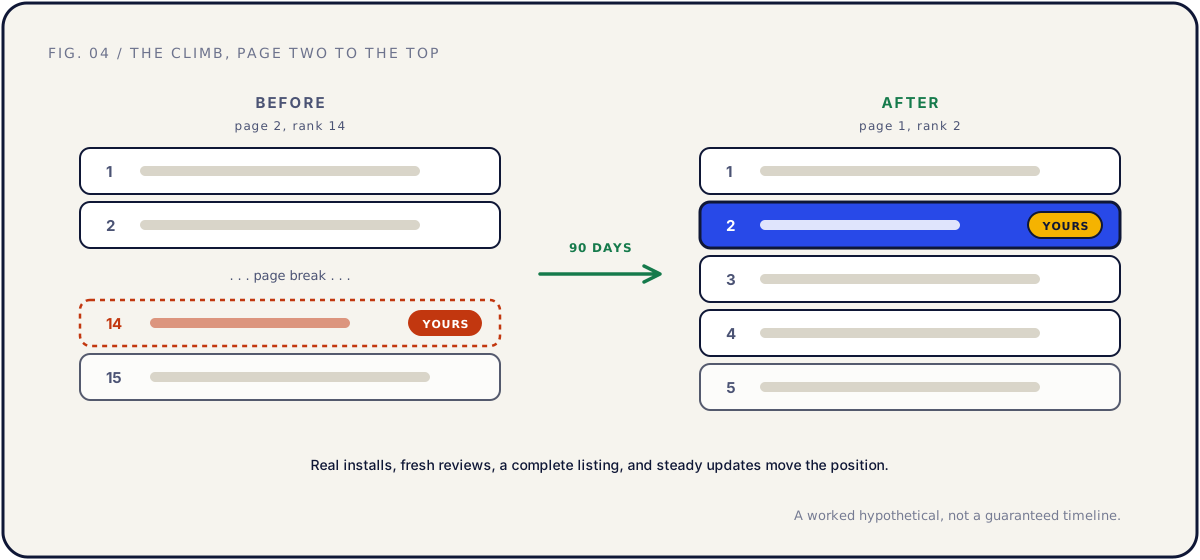
Here is the sequence behind that move, mapped to the signals.
| Week | Action | Signal it feeds |
|---|---|---|
| 1 | Email the 40 customers who asked for the integration | Install volume and velocity |
| 2 to 3 | In-app prompt to review after a successful first run | Ratings and reviews |
| 3 | Fix the setup flow so first run takes under five minutes | Active usage and retention |
| 4 | Complete every listing field, add joined-workflow screenshots | Listing completeness |
| 6 | Recategorize and rewrite the listing around search terms | Category fit and keywords |
| 8 | Co-marketing push with the partner: webinar and newsletter | Velocity, all demand signals |
| 12 | Ship a version update and log a changelog entry | Recency of updates |
None of these is a trick. Each one makes a true thing happen, real installs, real reviews, real usage, a real update, and the marketplace observes it. The climb from rank fourteen to rank two is the flywheel turning, not a hack. And critically, the team did not stop at week twelve. They kept the review habit and the update cadence running, because the moment they stop, recency and velocity decay and a hungrier competitor starts climbing past them.
How ranking fits your overall marketplace strategy
Ranking is one chapter of a larger story, not the whole book. It only pays off if the steps before and after it are in place. Before ranking comes choosing the right marketplace and writing a listing that converts. After ranking comes turning installs into pipeline. Optimizing ranking signals for a listing in the wrong marketplace, or one that converts poorly, is polishing a part that the rest of the machine cannot use.
The full sequence, from choosing where to list through certification, conversion, and maintenance, is laid out in the SaaS marketplace strategy guide. The short version is that ranking sits in the middle. It depends on a listing that converts, which depends on a working integration in a marketplace where your customers actually shop, and it pays off only when you have attribution and activation to turn the installs it generates into revenue.
It also looks different in every ecosystem. The general signals here hold, but each marketplace tunes them, surfaces a different tier system, and runs a different review process. For a concrete example of these patterns inside one specific ecosystem, see the independent HubSpot App Marketplace playbook, which walks the same loop through one platform's mechanics. Whatever the marketplace, confirm its current rules directly, because the one constant is that the details change.
| Stage | Question it answers | Where ranking sits |
|---|---|---|
| Choose | Where do our customers already shop | Before ranking |
| List and convert | Does the listing earn the install | Feeds ranking |
| Rank | Do shoppers ever see us | This guide |
| Convert to pipeline | Does the install become revenue | After ranking |
Common mistakes, and the fix
Treating ranking as a launch event. The fix: treat it as a maintained position. Recency, velocity, and engagement all decay, so a listing you stop touching slides back down. Keep the review habit and update cadence running after launch week, not just during it.
Chasing a rumored algorithm. The fix: optimize the inputs every marketplace rewards, installs, reviews, usage, completeness, fit, and freshness. Strong inputs rank well under any weighting, and the weighting is proprietary and changes anyway, so reverse-engineering it is wasted effort.
Buying installs or reviews. The fix: drive real installs from customers who asked, and earn reviews by asking satisfied users at the right moment. Faked signals get detected and punished, and a listing that ranks for a week then craters is worse than one that climbs honestly.
Spreading a thin launch over months. The fix: concentrate your real demand into a launch window. The same installs that read as a flat line when spread out read as momentum when clustered, and velocity is a signal in its own right.
Optimizing rank for a listing that does not convert. The fix: get the first line, screenshots, setup guide, and pricing right first. Ranking sends shoppers to the listing; the listing still has to close them. A higher rank on a weak listing just buries the conversion problem under more traffic.
FAQ
How do marketplaces actually rank apps? In general terms, they read a mix of demand signals (install volume and velocity, ratings and reviews, active usage and retention) and quality signals (listing completeness, category fit and keywords, recency of updates, and partner tier), then surface the apps most likely to satisfy shoppers. The exact formula and weights are proprietary to each marketplace and change over time, so optimize the inputs rather than a rumored algorithm.
Can I find out a specific marketplace's exact ranking algorithm? No, and you should be skeptical of anyone who says they can. Marketplaces keep the formula confidential and tune it regularly, partly to prevent gaming. What you can know is the family of signals they tend to reward, which is consistent enough across marketplaces to plan around without knowing any one platform's secret weights.
What is the single most important ranking signal? There is no single one, and it varies by marketplace, but demand signals tend to carry the most weight, install volume and velocity, reviews, and active usage. They are also the hardest to fake, which is exactly why marketplaces trust them. The practical answer is that they reinforce each other, so the highest-leverage move is starting the flywheel with a strong, concentrated launch.
How do I get my first installs and reviews? Reach the customers who asked for the integration individually, the week you launch. They are your warmest installs and your most likely reviewers. Then build an ongoing habit: prompt satisfied users a couple of weeks after they activate. Concentrating these into a window also creates the velocity signal that an unmanaged trickle never does.
Is it against the rules to ask customers for reviews? Asking is fine and expected on most marketplaces. What crosses the line is buying reviews, rewarding only positive ones, or posting fake reviews yourself. The safe pattern is a neutral prompt to all satisfied users at a natural moment, with no incentive tied to the rating. Check your specific marketplace's review policy, since the details differ.
How long does it take to climb the rankings? It depends on your category's competitiveness, your install velocity, and the marketplace's mechanics, so there is no universal timeline. The worked example in this guide spans ninety days as an illustration, not a promise. The reliable pattern is that a concentrated launch plus a maintained review and update habit moves position over weeks to months, and that abandoning the listing reverses it.
Does co-marketing really affect ranking? Indirectly, yes, and meaningfully. Co-marketing does not change the algorithm, but a joint launch or partner promotion sends a burst of qualified traffic that converts into installs, reviews, and usage, which are the signals that move rank. It is a booster on a wheel that already turns, covered in the co-marketing playbook, not a substitute for a converting listing.
Will my ranking hold if I stop maintaining the listing? No. Recency of updates, install velocity, and active usage all decay over time, so an abandoned listing loses position to better-maintained competitors. A high rank is a maintained position, not a permanent award. Keep shipping updates, answering reviews, and refreshing the listing, or expect to slide.
The short version
Marketplace ranking decides how many people ever see your app, because most installs in a category go to the top few results. Marketplaces guard their exact algorithms and change them, so do not chase a rumored formula. Instead, feed the signals they tend to reward: demand, which is install volume and velocity, reviews, and active usage, and quality, which is listing completeness, category fit, and freshness.
Influence each signal by making the underlying thing true, drive real installs from customers who asked, earn reviews honestly, design a fast first run, complete the listing, and keep it updated. Those inputs compound into a flywheel where installs drive reviews and usage, those drive ranking, and ranking drives more installs, with co-marketing as a booster. A climb from page two to the top is that flywheel turning, and holding the position is a matter of maintenance, not a one-time launch.
If you want the whole path handled, from choosing the marketplace to building the integration to a listing that converts, ranks, and turns installs into pipeline, that is exactly what a Partner Audit is for. We review your product, API, and marketplace potential, then define which marketplaces to enter, what to build, and how to ship a listing that climbs and stays there.