SaaS marketplace strategy: how to get listed, ranked, and installed
A SaaS marketplace strategy that compounds. Choose marketplaces, write a listing that converts, pass certification, rank, and turn installs into pipeline.
You shipped the integration. You put it on a marketplace. Then nothing happened, or close to nothing. A handful of installs in the first week from customers who already knew you, and then the line went flat.
A SaaS marketplace is not a directory you submit to and forget. It is a distribution channel with its own rules for who gets seen, installed, and ranked. Treated as a project, a listing keeps generating installs for years. Treated as a checkbox, it sits on page nine and does nothing.
This guide covers the full SaaS marketplace strategy: why marketplaces compound, which ones to enter first, how to write a listing that converts, how to pass certification without pain, how ranking actually works, how to turn installs into pipeline, and how to maintain listings as a portfolio.
The 60-second version
- A SaaS marketplace is a compounding channel. A good listing keeps generating installs long after launch week, the way a BD relationship never does.
- Buyers shop ecosystems first. A prospect inside their CRM or help desk looking for an add-on is closer to a yes than a cold lead.
- Choose marketplaces by customer pull and distribution upside, then weigh certification cost. Enter where your customers already shop.
- The listing converts on the first sentence. Lead with the customer workflow, not your feature list, and show a screenshot of the joined workflow.
- Treat the certification checklist as acceptance criteria from day one. Security questionnaire prep is part of scope, not an afterthought.
- Ranking rewards installs, reviews, engagement, recency, category fit, and partner tier. Stay general, optimize the inputs, and do not chase a rumored algorithm.
- Installs are not pipeline yet. Add attribution, in-app activation, and a review-generation habit, then maintain the listing like a product.
Why marketplaces are a compounding distribution channel
Most growth channels are rented. You pay for an ad, you get a click, the click stops the day you stop paying. A marketplace listing behaves differently. Once it is live, certified, and ranking, it keeps generating installs while you ship other features and your sales team works different deals.
That is the first reason marketplaces compound: the listing is an asset, not a campaign. The work is front-loaded; the returns arrive for years.
The second reason is buyer behavior. A prospect who opens their CRM's app marketplace and searches for "lead enrichment" is not a cold lead. They have a tool they pay for, a workflow they run, and a specific gap to fill. They are shopping the ecosystem they already trust. Showing up there puts your product inside a buying moment that has already started, instead of interrupting someone who was not thinking about you.
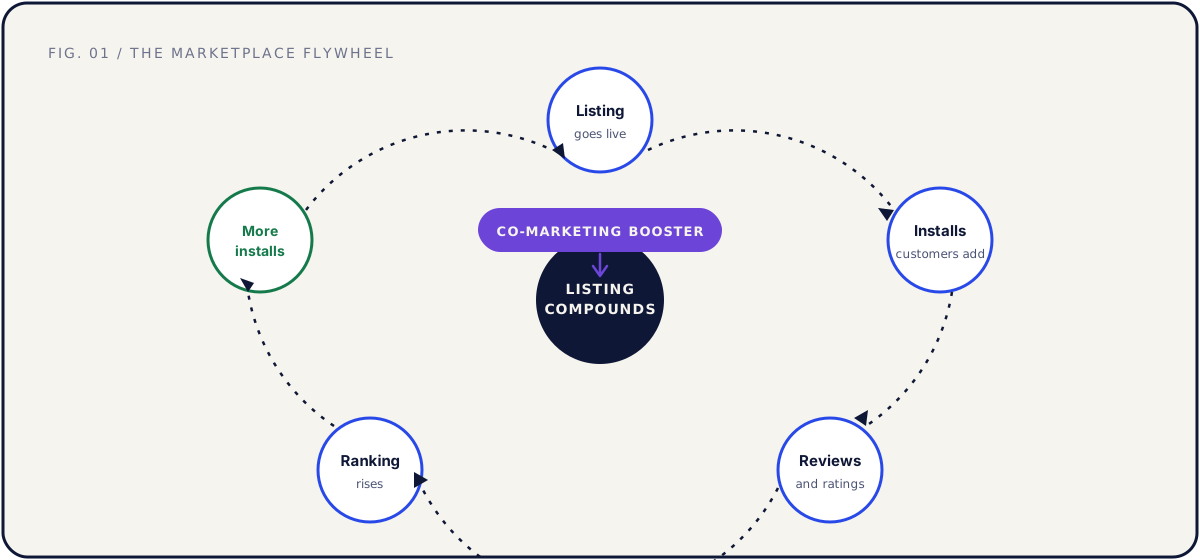
The third reason is the loop. Installs drive reviews, reviews drive ranking, ranking drives more installs. Each turn makes the next one cheaper. Co-marketing acts as a booster on top, but the loop runs on its own once it is moving.
| Channel | How it behaves | What it costs to keep |
|---|---|---|
| Paid ads | Linear. Clicks stop when spend stops. | Continuous budget |
| Cold outbound | Linear. Pipeline tracks rep hours. | Continuous headcount |
| SaaS marketplace listing | Compounding. Installs accrue and rank improves over time. | Quarterly maintenance |
The catch: the loop only starts if the listing converts, and the listing only gets seen if it ranks. Both are downstream of choosing the right marketplace in the first place. So that is where the strategy starts.
Choosing which marketplaces to enter first
You cannot list everywhere at once, and you should not try. Each marketplace has a certification cost, a review process, and ranking dynamics you will need to learn. Spreading thin across five gets you five page-nine listings. Going deep on one gets you a channel.
Pick the same way you pick integration partners: score each marketplace on two axes.
- Customer pull: are your existing customers and active deals already inside this ecosystem? A marketplace attached to a platform your buyers live in every day beats ten attached to platforms they have never opened.
- Distribution upside: how much traffic does the marketplace actually send, and how hard is it to rank? Millions of monthly shoppers and a fair ranking system is a different bet from a sleepy directory.
This is the same customer-pull by distribution-upside thinking we use for choosing integration partners in the complete guide to tech partnerships. The marketplace and the integration are usually the same decision viewed from two sides: you build the integration to earn the listing.
Then weigh the certification cost. A marketplace with a clear, documented review process and a self-serve submission flow is cheap to enter. One that requires a SOC 2 report, a lengthy questionnaire, and a named partner manager before you can submit is expensive, and that expense should be justified by the upside.
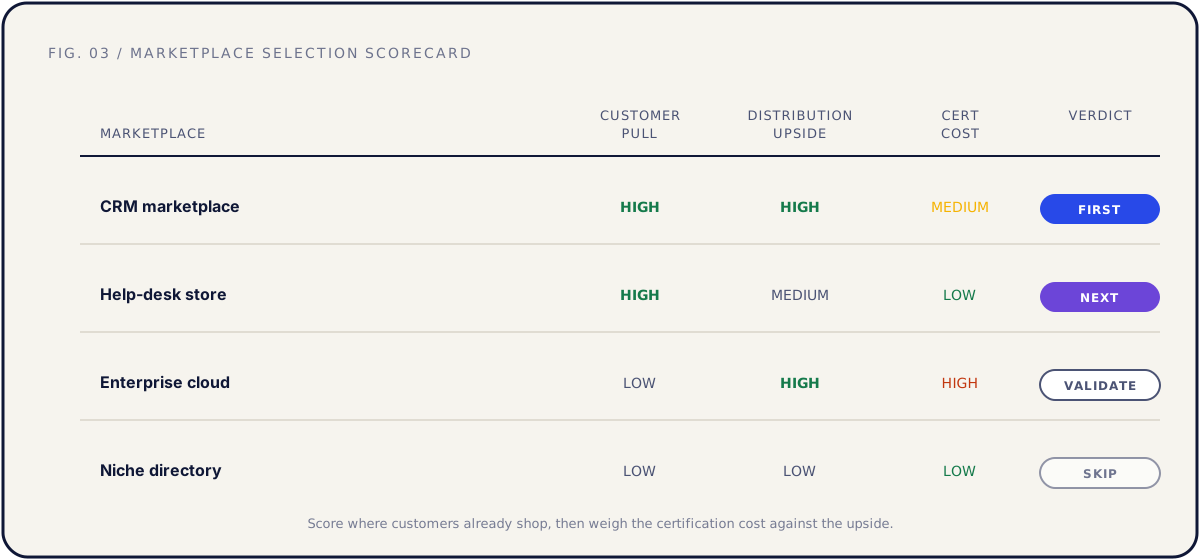
How to read the scorecard:
| Verdict | When it applies | What to do |
|---|---|---|
| First | High pull, high upside, manageable cert cost | List here now. This is your channel. |
| Next | High pull but medium upside, or low cert cost | List after the first one is converting. |
| Validate | High upside but low current pull, or high cert cost | Confirm demand with prospects before paying the certification tax. |
| Skip | Low pull, low upside | A logo in a directory is not a strategy. |
The common mistake is starting with the most famous marketplace instead of the most relevant one. The biggest ecosystem is often the hardest to rank in and the slowest to certify. A mid-size marketplace where your customers already shop will usually return installs faster.
The anatomy of a listing that converts
A marketplace listing is a landing page whose layout you do not control. What you do control, the copy, the screenshots, the social proof, and the pricing, decides whether a shopper installs or scrolls past.
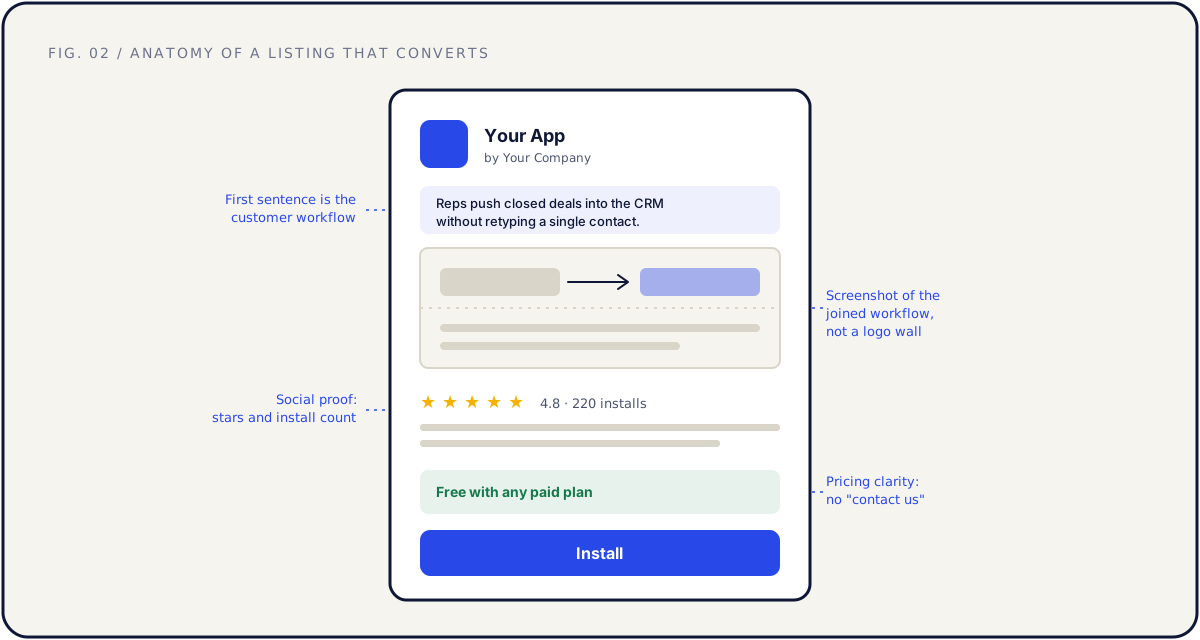
The first sentence is the customer workflow. Not your category, not your funding, not your feature list. The shopper is asking one question: will this remove a step from my day? Answer it in the first line. "Reps push closed deals into the CRM without retyping a single contact" tells them exactly what they get. "The leading revenue intelligence platform" tells them nothing they can act on.
Screenshots show the joined workflow. The most common mistake is showing your own product UI in isolation, or worse, a wall of partner logos. The shopper wants to see the two products working together: data flowing from one into the other, the new button inside the tool they already use, the report that now includes both sources. Show the seam where the integration lives.
Social proof is stars and install counts. A listing with 4.8 stars and 220 installs reads as safe. A listing with no reviews reads as a gamble, however good the product is. This is why review generation is part of the strategy, not a nice-to-have. We come back to it below.
Pricing clarity beats pricing optimization. Shoppers are often self-serving their way to a decision. "Free with any paid plan" or "$20 per seat per month" lets them decide on the spot. "Contact us for pricing" sends them to a form most will not fill out. If your integration is free, say so loudly, because free is a powerful filter in a marketplace.
One more thing the listing needs behind the scenes: the integration itself has to be solid, which means your API and docs were partner-ready before you ever submitted. If you have not done that work, start with making your API partner-ready, because a listing on top of a fragile integration converts shoppers into one-star reviews.
Certification and app review without pain
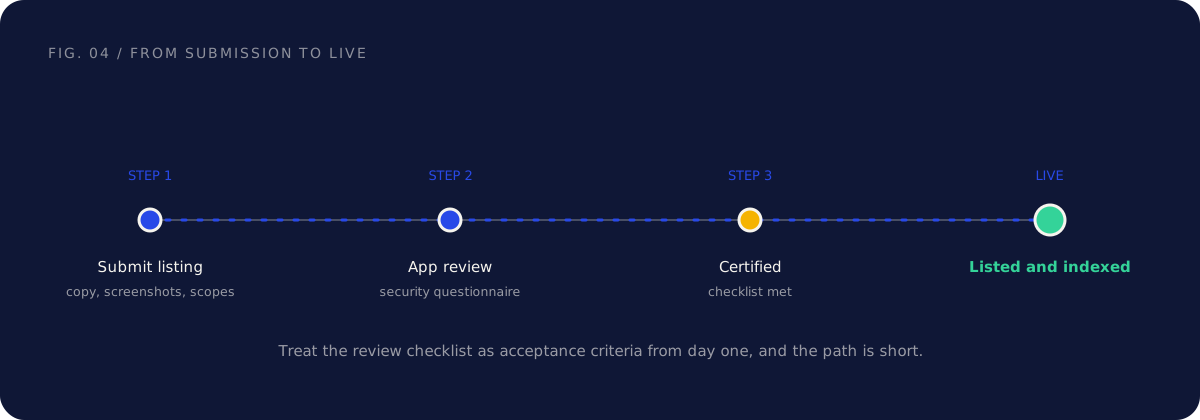
Every marketplace worth listing in has a review process. Most teams treat it as a gate that appears at the end, a surprise wall between a finished integration and a live listing. That is why certification feels painful. The fix is to treat the review checklist as acceptance criteria from day one.
Before you write a line of integration code, fold the marketplace's review requirements into your scope: required OAuth scopes, mandatory error handling, branding rules, data-handling commitments, the security questionnaire. When the checklist is the spec, review is a formality. When it is discovered at submission, review is a rework cycle.
The security questionnaire is where most submissions stall, so prepare it like a deliverable:
| Reviewer asks | Have ready |
|---|---|
| How is customer data stored and encrypted? | Data flow diagram and encryption details |
| What scopes does the app request, and why? | Scope-by-scope justification, minimum necessary |
| How do you handle token storage and revocation? | Auth lifecycle documentation |
| What happens to data when a customer uninstalls? | Deletion and retention policy |
| Do you have a security contact and disclosure process? | A named contact and a public policy page |
None of this is exotic. It is the same information a serious enterprise buyer asks for, which is why getting it ready pays off twice. The questionnaire is also where the marketplace's terms intersect with your own contracts, including data processing and liability. Settle those before submission, not during. We cover the contract layer in SaaS partnership agreements.
A practical sequence that avoids the rework cycle: pull the checklist and questionnaire before scoping, write the integration scope with the checklist items as acceptance criteria, self-audit against it before submitting, attach the answered questionnaire, and treat reviewer feedback as a bug list rather than a negotiation.
Done this way, app review is measured in days for most marketplaces. The teams who experience it as months are usually the ones who discovered the requirements at the end.
How ranking actually works in most marketplaces
Every marketplace guards its ranking algorithm, and every one is different. Anyone who promises to reverse-engineer a specific algorithm is selling you a guess. But the same general signals show up across marketplaces, because they all want the same outcome: surface apps that shoppers will install, use, and rate well.
The signals that consistently matter:
| Signal | What it rewards | What you control |
|---|---|---|
| Installs | Apps shoppers actually add | Listing conversion and demand |
| Reviews | Volume and recency of ratings | A review-generation habit |
| Engagement | Active use after install, low uninstall rate | Activation and integration quality |
| Recency | Recently updated, maintained apps | Version updates and changelog |
| Category fit | Apps matched to the search and category | Accurate categorization and keywords |
| Partner tier | Verified, certified, or premier status | Completing the certification path |
The takeaway is not to chase a rumored formula but to make the inputs strong. A listing that converts drives installs. Installs that activate drive engagement. Engagement and a review habit drive ratings. Regular updates signal recency. Accurate categorization drives fit. Do those well and you rank well in any marketplace, however its weights are tuned.
Two anti-patterns are worth naming. Buying or incentivizing fake reviews gets detected and punished by most marketplaces, producing a listing that ranks for a week and then craters. Launching once and never touching the listing again lets recency and engagement decay while better-maintained competitors climb past you. Ranking is not a launch event. It is a maintained position.
Turning installs into pipeline
An install is not revenue. It is a customer or prospect who clicked a button. Whether that click becomes pipeline depends on three things you build around the listing: attribution, activation, and a review habit.
Attribution. You need to know which deals touched the marketplace and which installs came from where. Tag installs with their source, pass that into your CRM, and look at influenced revenue, not just install count. Without attribution, the marketplace is invisible in your reporting, which is how good channels get defunded by teams who could not see them working.
In-app activation. The risky moment is right after install. A customer who installs and then cannot figure out what to do next will uninstall within a week, which hurts both retention and your engagement signal. Design the first run deliberately: a setup that takes minutes, a clear first action, and a visible result. Get the customer to the joined workflow you promised in the listing's first sentence, fast.
Review generation. Reviews do not happen on their own. Happy customers rarely think to leave one; unhappy ones always do. Build a habit: after a customer has used the integration successfully for a couple of weeks, ask. A short in-app prompt or a one-line email at the right moment turns silent satisfied users into the social proof that ranks your listing and reassures the next shopper.
These three turn a flat install count into a channel you can defend in a planning meeting. They also feed the flywheel: activation drives engagement, reviews drive ranking, ranking drives the next install. Converting installs into pipeline is the same work that compounds the listing.
Maintaining listings as a portfolio
Once you have more than one listing, you have a portfolio, and a portfolio needs maintenance. Listings decay. The screenshot shows a UI you redesigned six months ago. The pricing line is wrong since your last packaging change. The partner shipped a new API version and your integration throws errors that show up as one-star reviews before they reach your inbox.
Run a quarterly refresh across every listing:
| Cadence | What to check |
|---|---|
| Quarterly | Screenshots current, copy accurate, pricing correct, new reviews responded to |
| On product change | Update listings affected by UI or packaging changes the same week |
| On partner API change | Test the integration, ship the version update, note it in the changelog |
| On deprecation | Plan the migration, communicate to installed customers, update or sunset the listing |
The version-update discipline matters more than it looks. Recency is a ranking signal, so a maintained listing quietly outranks an abandoned one over time. Responding to reviews, including critical ones, signals to the marketplace and to future shoppers that the app is alive and supported.
Deprecations deserve special care. When a partner sunsets an API version, you have installed customers depending on a connection that is about to break, and the maintenance job is to migrate them before the break, not after. A portfolio without a maintenance owner becomes a field of slowly breaking integrations, each one generating churn and bad reviews. That is the difference between a channel that compounds and one that quietly rots.
Common mistakes, and the fix
Listing everywhere at once. The fix: pick one marketplace by customer pull and distribution upside, make it convert, then expand. Five page-nine listings are worth less than one channel.
Writing the listing for yourself instead of the shopper. The fix: first sentence is the customer workflow, screenshots show the joined workflow, pricing is explicit. Hand the listing to someone outside the company and watch where they get confused.
Discovering certification requirements at submission. The fix: pull the review checklist and security questionnaire before scoping, and treat them as acceptance criteria. The review becomes a formality instead of a rework cycle.
Chasing a rumored ranking algorithm. The fix: optimize the inputs that every marketplace rewards, installs, reviews, engagement, recency, and fit. Strong inputs rank well under any weighting.
Treating the listing as a launch, not an asset. The fix: attribution, activation, a review habit, and a quarterly refresh. The compounding only happens if you maintain the loop.
FAQ
How many marketplaces should we list in? Start with one, the one where your customers already shop. Get it converting and ranking before adding a second. Most B2B SaaS startups do well with two to four maintained listings, treated as a portfolio, rather than a dozen neglected ones.
How long does marketplace certification take? For most marketplaces with a documented review process, days to a couple of weeks once you submit, assuming you treated the checklist as acceptance criteria. Large enterprise ecosystems with deep security review can take months. The variable is rarely the marketplace; it is how prepared you are.
Do we need the integration built before we can list? Almost always, yes. The listing is the storefront for a working integration, and reviewers test the integration during certification. Build it partner-ready first, then list. A listing in front of a fragile integration just converts shoppers into one-star reviews.
What makes a listing rank higher? No single trick. Across marketplaces, ranking rewards installs, review volume and recency, post-install engagement, how recently you updated, category fit, and your partner tier. Optimize those inputs rather than chasing a specific marketplace's rumored formula.
Should our integration be free or paid in the marketplace? For most B2B SaaS, free with a paid plan removes friction and maximizes installs, which feeds ranking. Charging directly is viable when the integration is a substantial standalone capability, but it raises the conversion bar. Whatever you choose, state the price clearly. Ambiguity costs more installs than a price does.
How do we get our first reviews? Ask, deliberately and at the right moment. After a customer has used the integration successfully for a couple of weeks, prompt them in-app or by email. Your first reviews usually come from the customers who asked for the integration, so reach those people individually at launch.
How do we know the marketplace is actually working? Attribution. Tag installs by source, pass them into your CRM, and report on influenced revenue and active connections, not raw install count. A marketplace that drives installs that activate and appear in closed deals is working. One that drives installs that uninstall in a week is not, and the fix is usually activation, not more installs.
Can we run a marketplace strategy without a partnerships hire? Yes. At seed to Series B this is usually owned by a founder or product leader, with engineering capacity for the integration and maintenance. A dedicated hire makes sense once marketplaces are a proven channel, not before. What you cannot skip is the owner.
The short version
A SaaS marketplace strategy compounds when you treat the listing as an asset instead of a checkbox. Choose the marketplace where your customers already shop, scored on customer pull and distribution upside. Write a listing whose first sentence is the customer workflow, with screenshots of the joined workflow and clear pricing. Treat the certification checklist as acceptance criteria so review is a formality. Optimize the inputs every ranking system rewards instead of chasing a rumored algorithm. Then turn installs into pipeline with attribution, activation, and a review habit, and maintain your listings as a portfolio so the loop keeps turning.
Done this way, a single listing keeps generating installs for years, and each turn of the flywheel makes the next one cheaper.
If you want the whole path handled, from choosing the marketplace to building the integration to a listing that converts and ranks, that is exactly what a Partner Audit is for. We review your product, API, and marketplace potential, then define which marketplaces to enter, what to build, and how to ship a listing that compounds.