How to negotiate SaaS partnership agreements: the terms that protect the integration
A practical guide to SaaS partnership agreements for startups. The documents you will see, the terms that matter, and the red flags worth walking away from.
A partner manager at a platform you have chased for a year finally says yes. Their legal team sends over a technology partner agreement, forty pages, and your stomach drops. You are a seed-stage company, nobody on your team has negotiated a partnership agreement before, and the document reads like it was written to protect the other side, because it was.
Here is the reframe that helps: a partnership agreement is not the deliverable. It protects the deliverable. The integration is the deliverable. The partner agreement, the marketplace developer terms, and the data processing addendum exist so that the integration you build is yours to keep, your customers' data stays safe, and the platform cannot pull the API out from under you with a week's notice.
This guide covers what you will actually see when you negotiate a SaaS partnership agreement: which documents show up and who pushes them, the partner agreement terms that matter most for a startup, how to negotiate from the small side of the table, what to do about revenue share, and the red flags worth walking away from. The goal is not to turn you into a lawyer. It is to let you read the document, know what to push on, and brief your own counsel without wasting their hours.
The 60-second version
- A signed agreement with no integration scope is a press release. The paper protects the build; it is not the build.
- You will see up to four documents: a mutual NDA, a technology partner agreement, a marketplace developer agreement, and a data processing agreement. Know which governs what.
- The terms that matter most for startups: integration IP ownership, data access and usage rights, support SLAs, API deprecation notice, and termination. Read those first.
- Most platform boilerplate does not move. Spend your negotiating capital on the few terms that protect your integration, not on rewriting their standard rev share.
- Run legal in parallel with integration scoping, not after. The agreement and the build inform each other.
- Keep the first commercial model simple. A clean rev share or referral fee beats a clever structure nobody can reconcile later.
- Some terms are walk-away red flags: unlimited liability, broad IP assignment, data resale rights, and exclusivity with no commitment.
- Write a one-page deal memo so product and engineering know exactly what was promised before they build.
The agreement protects the integration, it is not the deliverable
The most common mistake founders make with partnership agreements is treating the signature as the finish line. The deal closes, everyone celebrates, and then six months later nothing has shipped. A signed agreement with no integration scope attached is a press release. It announces intent. It does not move data between two products.
The agreement does a narrow, important job: protect the integration you are about to build. It answers the questions that matter when something goes wrong. Who owns the code you wrote. What the platform may do with your customers' data. How much warning you get before the API changes. What happens to the live integration if either side walks away.
Read the agreement as the insurance policy on a project, not the project itself. That tells you where to spend effort. You do not need to win every clause. You need the few clauses that protect the integration to be right, and everything else to be survivable.
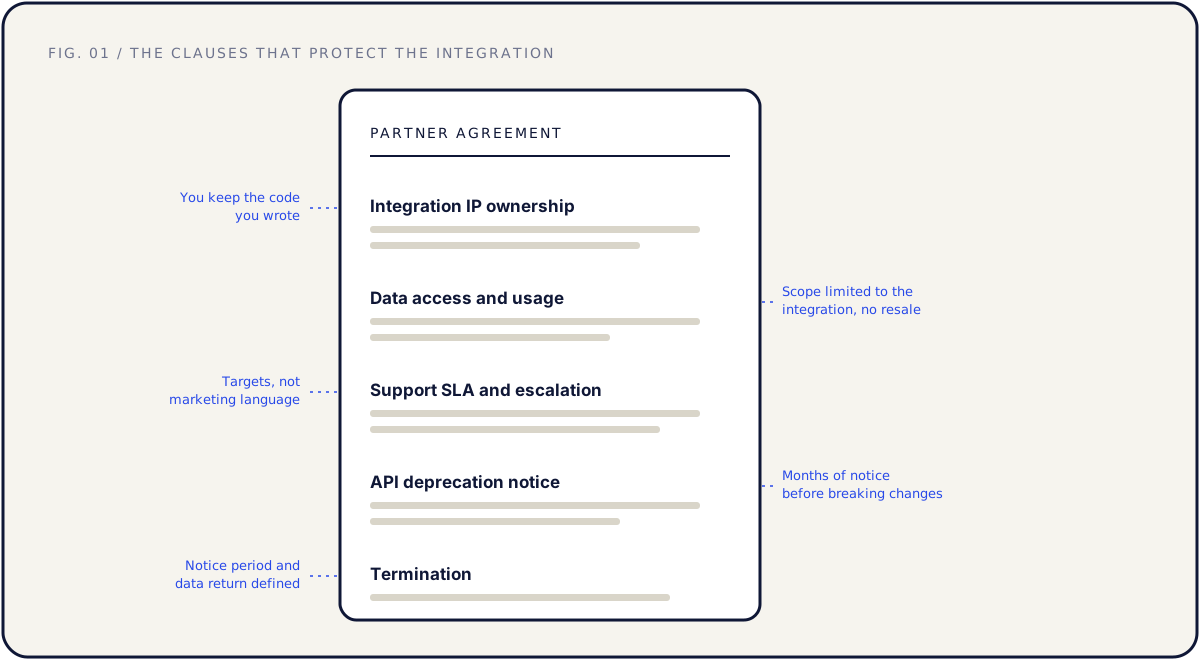
This is also why the agreement and the scope should be built together. The scope says what the integration does. The agreement says what happens to it under stress. When the two are written in isolation, you get an agreement that protects an integration nobody has defined, or an integration that violates terms nobody read. Our guide to the SaaS partnership lifecycle walks through how the legal track and the build track run alongside each other.
The documents you will see
Partnership paperwork is not one document. Depending on the platform and the depth of the relationship, you will see up to four, and they arrive at different stages from different people. Knowing which is which keeps you from negotiating data terms in the NDA or arguing about IP in the marketplace listing agreement.
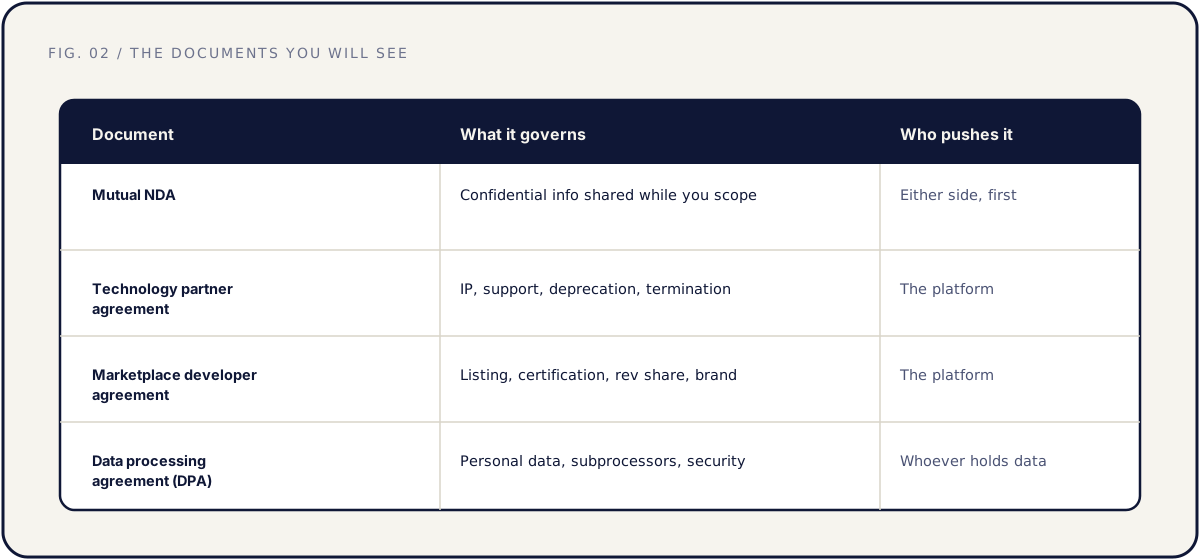
| Document | What it governs | Who pushes it |
|---|---|---|
| Mutual NDA | Confidential information shared while you scope the integration: roadmaps, architecture, customer lists. | Either side, usually first. |
| Technology partner agreement | The core relationship: IP ownership, support obligations, deprecation notice, termination, liability. | The platform, on their template. |
| Marketplace developer agreement | Listing your app: certification, brand and trademark use, revenue share, review process. | The platform, often click-through. |
| Data processing agreement (DPA) | Handling of personal data: roles, subprocessors, security commitments, breach notice. | Whoever holds the regulated data. |
A few practical notes. The mutual NDA is the cheapest to sign and the one you can usually accept close to as-is, as long as it is genuinely mutual and the term is reasonable. The technology partner agreement is where the terms that matter most live, so it gets the bulk of your attention. The marketplace developer agreement is frequently a click-through, but read it anyway, because it often contains the revenue share and the brand rules. The DPA matters the moment customer personal data crosses the integration, which is to say almost always in B2B SaaS.
One trap: platforms sometimes bundle all of this into a single master agreement with exhibits. The structure changes, the content does not. Find the IP, data, support, deprecation, and termination language wherever it lives.
The partner agreement terms that matter most for startups
You cannot negotiate everything, and you should not try. Here is where a startup's attention pays off, in rough order of how often they cause pain later.
Integration IP ownership. The code you write to connect the two products should remain yours. Watch for assignment language that hands the platform ownership of anything you build "in connection with" the agreement. You want a clean split: they own their platform and API, you own your product and the integration code, and each grants the other the license it needs for the integration to function. Never sign away ownership of code your engineers wrote.
Data access and usage rights. This clause decides what each side may do with the data flowing through the integration. The platform needs a license to process the data to make the integration work. It does not need the right to analyze, resell, or train on your customers' data. Scope the usage to "as necessary to provide the integration" and explicitly exclude resale and independent commercial use.
Support SLAs and escalation. When the integration breaks at a customer site, you need a named path to the platform's engineers, not a public support queue. Push for a technical escalation contact and a response commitment for partner-reported issues. The platform will rarely give a hard uptime SLA on its API, but a documented escalation path is reasonable and movable.
Certification and listing terms. If the partnership includes a marketplace listing, understand what certification requires, how long review takes, and what can get you delisted. A surprise delisting kills the integration as effectively as a breach. Read the grounds for removal before you build to them.
Co-marketing commitments in writing. Verbal promises of a newsletter mention or a launch blog post evaporate when the partner's marketing lead changes jobs. If co-marketing is part of why you are doing the deal, get the specific commitments into the agreement or a side letter: what, when, and who is responsible.
Termination and API deprecation notice. Two separate things, both critical. Termination governs what happens when the relationship ends: notice period, wind-down, and what happens to live customer integrations. Deprecation notice governs how much warning you get before they change or remove the API your integration depends on. Ask for the longest deprecation window you can get; ninety days is a common floor, more is better. A breaking change with two weeks of notice is an outage you cannot prevent.
Exclusivity asks, and how to decline. Sometimes a platform asks you not to integrate with their competitors. As a startup, exclusivity is almost always a bad trade unless it comes with a real commitment in return: guaranteed co-sell, minimum revenue, or a meaningful integration fee. To decline gracefully, name the reason: "We are building a category of integrations and cannot single-source, but we are happy to make you the first and the most deeply integrated." That keeps the relationship warm while protecting your optionality.
Negotiating from the small side of the table
You are the smaller company. That is not the disadvantage it feels like, as long as you spend your leverage on the right things. The trick is knowing what a large platform will and will not move on, so you do not burn goodwill fighting battles you cannot win.
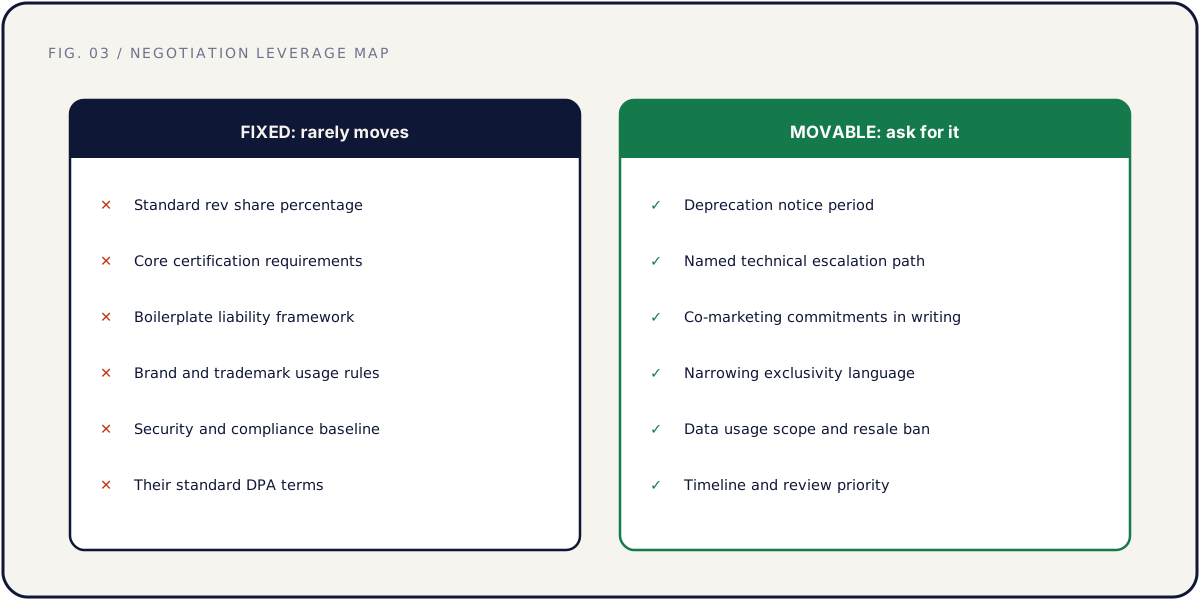
Large platforms will rarely move on their standard revenue share, their core certification requirements, their boilerplate liability framework, their brand usage rules, or their baseline security and compliance terms. These are templated across thousands of partners, and asking for changes triggers a legal review that adds weeks for no benefit. Accept them.
They will often move on the deprecation notice period, a named technical escalation path, specific co-marketing commitments, narrowing overly broad exclusivity or data language, and your review priority and timeline. These are partner-specific, the partner manager can champion them internally, and they are exactly the terms that protect your integration.
Two tactics matter from the small side. First, protect momentum. A partnership that goes quiet for a legal cycle often does not restart, because the partner manager's quarter moves on. Keep the conversation alive: send the redline with a short note that says yes to most of it, flags the two things you need, and proposes a call to close. Second, run legal in parallel with scoping. Do not wait for signatures to start the integration scope, and do not wait for the scope to start legal review. The two tracks inform each other, and running them together keeps the partnership moving. We cover the mechanics of running both tracks at once in our guide to integration project management.
One more momentum tactic: do the platform's work for them. A clean, short redline that touches three clauses with a one-line rationale each gets reviewed faster than a heavily marked-up document, and it signals you are easy to work with.
Revenue share and commercial models
The money side of a partnership is where founders overthink. The instinct is to design a clever structure that captures every dollar of value. The better instinct, for a first partnership, is to keep it simple enough that both finance teams can reconcile it without a spreadsheet argument every quarter.
Three common models cover most partnerships, used alone or in a simple blend:
| Model | How it works | Best when |
|---|---|---|
| Marketplace rev share | The platform takes a percentage of revenue from customers who find you through their marketplace. | You are listed on a marketplace that drives signups. |
| Referral fee | A flat or percentage fee for qualified leads or closed deals that one side sends the other. | Either side actively sends the other named opportunities. |
| Co-sell credits | Sales teams get internal credit (not cash between companies) for deals where the integration helped close. | Both companies have field sales and want reps motivated to push the integration. |
For a first partnership, default to the simplest model that fits. A standard marketplace rev share is usually fixed anyway, so accept it. If there is a referral arrangement, make it a clean percentage with a clear definition of a qualified lead and a simple attribution rule. Avoid tiered structures, true-ups, and minimum guarantees in version one. They create reconciliation work that outweighs the dollars at your stage, and they give the relationship something to argue about before it has earned the right to be complicated.
The model can get more sophisticated later, once the integration is live and you have real numbers. Optimizing rev share on an integration that has not shipped is optimizing a number that is currently zero.
Red flags worth walking from
Most partnership agreements are negotiable and survivable. A few terms are not, and a startup should be willing to walk rather than sign them. Recognizing these early saves you from a deal that looks like growth and turns into a liability.
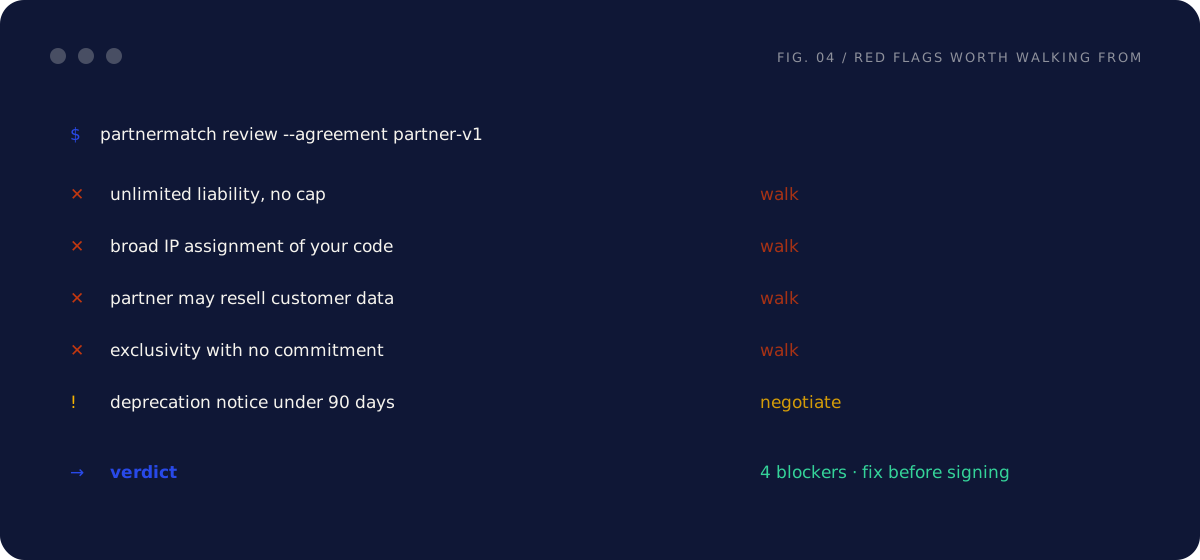
- Unlimited liability with no cap. If the agreement makes you liable for unlimited damages, one bad incident can exceed your entire company's value. Standard practice is a liability cap, often tied to fees paid. No cap is a walk-away.
- Broad IP assignment. Language that assigns the platform ownership of anything you create in connection with the integration can swallow your own product. You are licensing an integration, not transferring your company's work.
- Data resale or independent use rights. If the platform can resell, monetize, or build competing products from your customers' data, the integration becomes a pipe that leaks your customers to your partner. This is a trust-ending term.
- Exclusivity without commitment. Being asked not to integrate with competitors, with nothing offered in return, trades your future optionality for free. Exclusivity is only a deal if it comes with guaranteed revenue or distribution.
A short deprecation notice (under ninety days) is an amber flag rather than a red one: negotiate it up if you can, and if you cannot, go in with eyes open and a plan for fast turnarounds when the API changes.
None of this is a reason to be adversarial. Most platforms are not trying to trap you; their templates are simply written for the platform's protection, and the burden is on you to read them. Flagging a red-flag clause politely and asking for the market-standard version usually works, because the partner manager wants the deal too.
Keep a one-page deal memo
The agreement is for lawyers. Your product and engineering teams will not read forty pages, and they should not have to. What they need is a one-page deal memo that translates the agreement into what it means for the build.
A good deal memo captures, in plain language: what we are allowed to build and what we are not, who owns the integration code, what data we may move and what we may not do with it, the deprecation notice we are entitled to, the support escalation path, any co-marketing we committed to, and the termination terms that affect how we design for wind-down. One page, owned by whoever owns the partnership.
This memo is the bridge between the legal track and the build track. Without it, engineering discovers a data usage restriction mid-build, or a salesperson promises a co-marketing push that was never in the agreement, or nobody designs for the deprecation window because nobody knew the number. It is cheap insurance that the integration you ship matches the integration you signed for, and the document you hand a new engineer or account executive so they can act on the partnership without rereading the contract.
Common mistakes, and the fix
Treating the signed agreement as the finish line. The fix: attach an integration scope and an owner to every signed agreement. The paper protects the build; it does not replace it. A signature with no scope is a press release.
Negotiating the terms the platform will never move. The fix: spend your capital on deprecation notice, data usage, IP, and escalation. Accept the standard rev share, certification, and boilerplate liability. Fighting fixed terms costs weeks and goodwill for nothing.
Running legal after scoping instead of alongside it. The fix: start both tracks together. The agreement shapes what you can build, and the scope shapes which terms matter. Sequencing them adds a full cycle to the timeline.
Designing a clever commercial model for a first deal. The fix: pick the simplest rev share or referral fee that fits, with clear attribution. Save tiers and true-ups for after the integration has revenue to optimize.
Leaving product and engineering to read the contract. The fix: write a one-page deal memo. The people building the integration need the terms in plain language, not buried in an exhibit.
FAQ
Do we need a lawyer to negotiate a partnership agreement? For the technology partner agreement and the DPA, yes, have counsel review before you sign. Doing the first read yourself makes your lawyer's time cheaper and faster. A click-through marketplace agreement usually does not need full review, but skim it for the rev share and brand terms.
Is this article legal advice? No. This is a practical overview to help you read partnership agreements and brief your own counsel, not legal advice. Every deal, jurisdiction, and company is different, and the terms that matter for you depend on your specific situation. Have a qualified attorney review any agreement before you sign it.
How long does it take to negotiate a SaaS partnership agreement? With clean redlines and a responsive partner, a couple of weeks for a standard technology partner agreement. Large enterprise platforms with formal legal queues can take a month or more. The biggest accelerator is sending a short, focused redline rather than a heavily marked-up document.
What is the difference between a partner agreement and a marketplace agreement? The technology partner agreement governs the core relationship: IP, support, deprecation, termination, and liability. The marketplace developer agreement governs listing your app: certification, brand use, and revenue share. You may sign one, the other, or both, depending on whether the partnership includes a marketplace listing.
Should we ever accept exclusivity? Rarely, and only with a real commitment in return, such as guaranteed co-sell, minimum revenue, or a meaningful integration fee. Exclusivity with nothing offered back trades your future optionality for free, a bad deal for a startup building a category of integrations.
What deprecation notice period should we ask for? The longest you can get. Ninety days is a common floor; six months or more is better. It is one of the most movable terms in the agreement and one of the most important, because a breaking change with little warning is an outage you cannot prevent.
Who should own the agreement internally? The same person who owns the partnership, usually a founder or product leader at seed to Series B. They coordinate legal review, capture the terms in the deal memo, and make sure the build matches what was signed. Ownership split between "legal" and "product" is how promises fall through the cracks.
Can we use the platform's template as-is? Sometimes, for a low-stakes integration. But always read for the red flags: unlimited liability, broad IP assignment, data resale rights, and exclusivity without commitment. Those four are worth a redline even on an otherwise standard template.
The short version
A SaaS partnership agreement is not the deliverable. It is the insurance policy on the deliverable, which is a working integration. Read it that way and you know where to spend effort: integration IP ownership, data usage rights, support escalation, API deprecation notice, and termination. Accept the terms the platform will never move, and push hard on the few that protect what you are building.
Run legal in parallel with scoping, keep the first commercial model simple, walk away from the genuine red flags, and write a one-page deal memo so product and engineering know exactly what was promised. The paper is there to make sure the integration you ship is the integration you signed for, and that it stays yours.
If you want the whole path handled, from partner strategy and agreement review to scoping, written code, and launch, that is what a Partner Audit is for. We review your product, API, and partner potential, then define what to build, who to approach, and how to ship it without the agreement becoming the place the partnership goes to die.