Native vs iPaaS vs embedded integrations: how to choose
A practical guide to native vs iPaaS vs embedded integrations for B2B SaaS. The real trade-offs, when each wins, and a decision framework that ships.
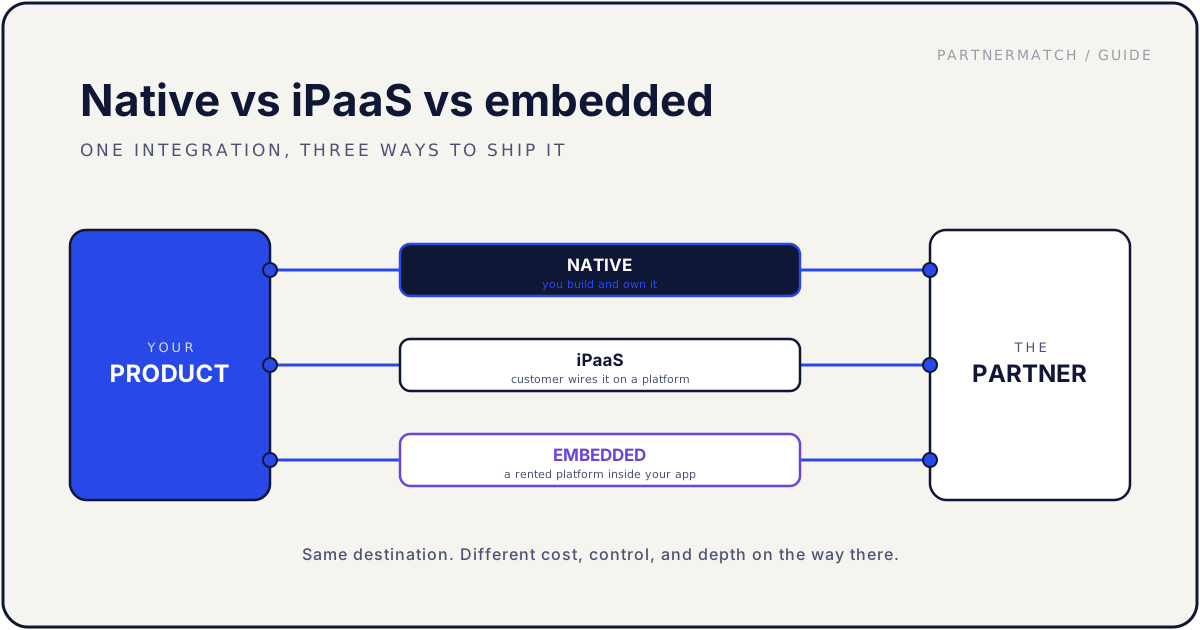
A customer wants your product connected to their CRM. You have three ways to deliver it, and the native vs iPaaS vs embedded integrations choice is genuinely three different products with different costs, owners, and failure modes. You can build the connection yourself and own it end to end. You can publish a connector on a general automation platform and let the customer wire the steps. Or you can white-label an integration platform inside your own product so the customer never leaves your UI.
Most teams make this call by accident. An engineer builds a native connector because the biggest account asked. Someone in growth publishes a Zapier app over a weekend. A year later the integration roadmap is both expensive and thin, and nobody can explain which approach was used for what or why.
This guide gives you the real distinctions. We define the three approaches, score them on build effort, UX control, depth, time to market, maintenance, and cost, and give you a framework to run against the next request. The short version: build native for the connections that are core and deep, use an iPaaS connector for the long tail, and embed a platform when you want many connectors inside your product without building each one. Most products use all three on purpose.
The 60-second version
If you only read one section, read this one:
- There are three ways to ship an integration, not one: native that you build and own, an iPaaS connector on a third-party automation platform, and embedded iPaaS that you white-label inside your product.
- Native gives you the deepest UX and depth, and costs the most to build and maintain forever.
- An iPaaS connector is the cheapest reach, one connector that wires your product to thousands of others, but the user does the wiring and the depth is shallow.
- Embedded iPaaS keeps the experience in your product with a connector catalog you did not build each piece of, at a recurring platform fee and limited control.
- Match the approach to the job, not to whichever one a single loud customer named last quarter.
- This is the same logic as build vs buy vs partner, applied to integration delivery: native is build, iPaaS and embedded are buy.
- Almost every product runs a mix. Native for the deep core, iPaaS for breadth, embedded for in-app breadth, and that mix is your integration strategy.
The three approaches, defined
Before the trade-offs, get the definitions exactly right, because the words get used loosely and that is where the confusion starts.
Native, or in-house, integration. Your engineers build the connection to a specific partner and you host and own it end to end. The customer turns it on inside your product, configures it in your UI, and you control the data model, sync behavior, error handling, and roadmap. This is the integration that lives on your settings page with the partner's logo next to a toggle. It is the most expensive to build and to keep alive, and the one your largest accounts judge you on.
iPaaS connector. iPaaS stands for integration platform as a service: the general automation platforms where a user builds a workflow by wiring a trigger in one app to an action in another. You publish one connector for your product, and from then on any of that platform's users can connect you to thousands of other apps through their own recipes. You build once, the platform's users assemble the rest.
Embedded iPaaS. The same recipe-based model, but the platform runs inside your product instead of on a third-party site. You license an embedded integration platform, white-label it, and your customers build automations or pick from a connector catalog without leaving your UI. To the customer it looks like your integrations feature. Under the hood, a vendor maintains the connectors and the recipe engine. You get breadth that looks native without building each connector yourself.
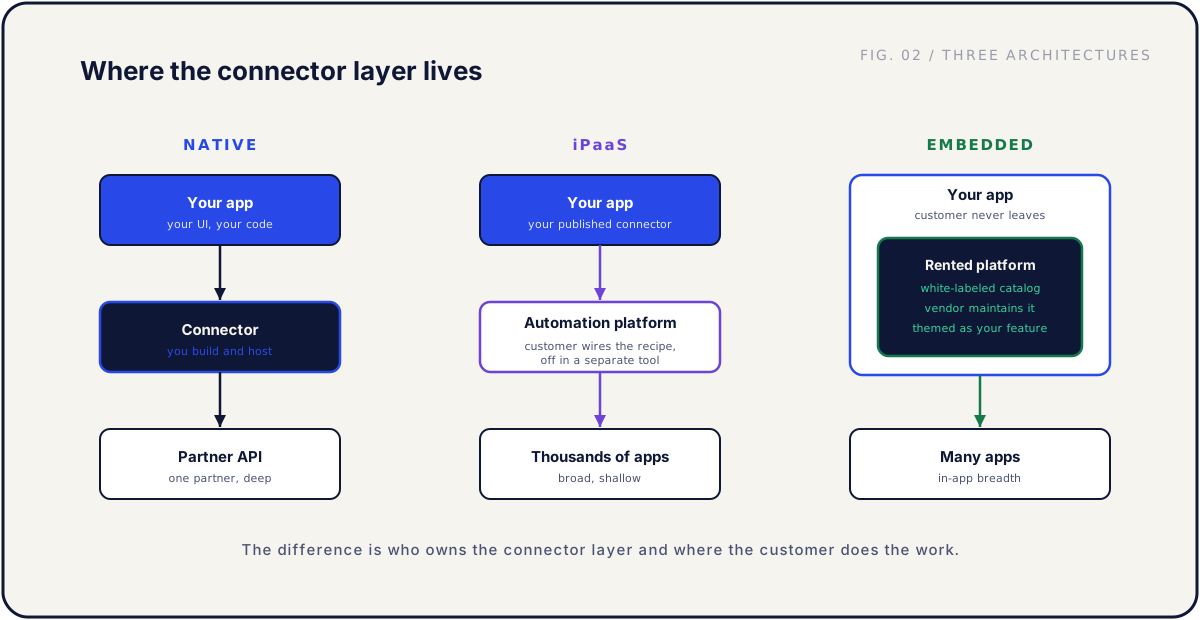
The simplest way to keep them straight: native is a connection you build to one partner. An iPaaS connector is one your customer builds on someone else's platform, using a connector you published. Embedded iPaaS is your customer building connections inside your product, on a platform you rent.
How each handles the six trade-offs
Six dimensions decide most of this, and the three approaches sit in very different places on each.
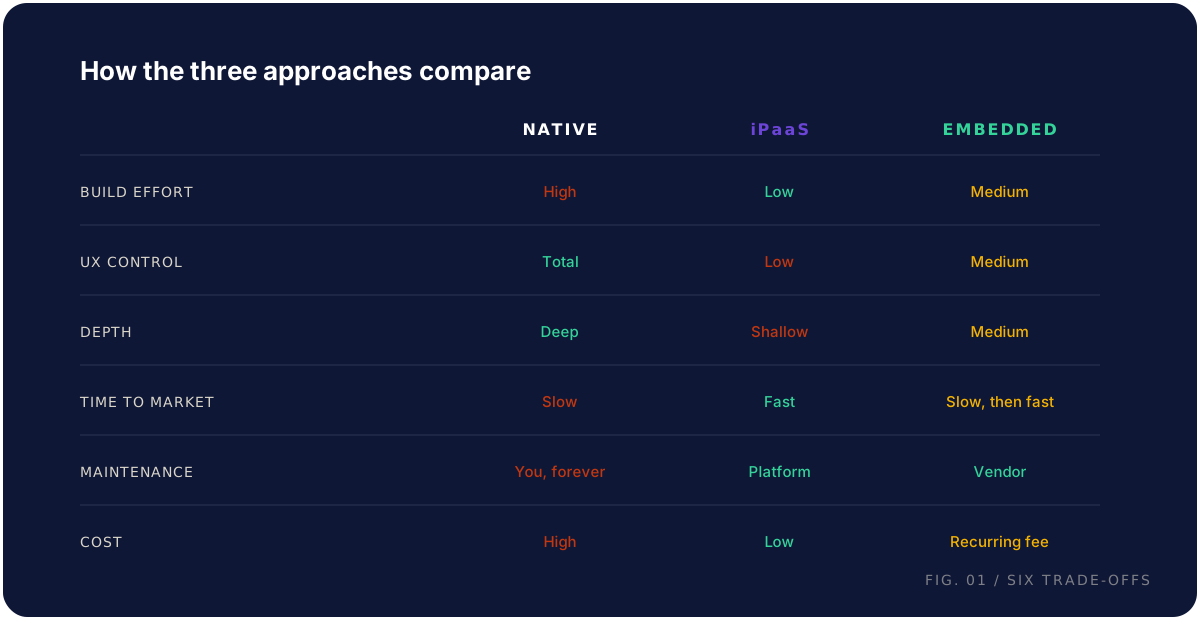
Build effort is high for native, low for an iPaaS connector, and medium for embedded. UX control is total for native, low for iPaaS, and medium for embedded. Depth runs deep to shallow to medium in the same order, because iPaaS caps you at the platform's triggers while native goes as deep as the API allows. Time to market is slow for native, fast for iPaaS, and slow-then-fast for embedded.
The two teams most often misprice are the last two. Maintenance is yours forever with native, every partner API change and auth rotation landing on your team, while iPaaS moves it to the platform and embedded to the vendor for a fee. Cost follows the same shape: high for native, low for iPaaS, and a recurring fee for embedded. Here is the comparison in one table.
| Dimension | Native | iPaaS connector | Embedded iPaaS |
|---|---|---|---|
| Build effort | High, per connector | Low, one connector | Medium up front, low after |
| UX control | Total, it is your product | Low, lives in the platform | Medium, themed catalog in your app |
| Integration depth | As deep as the API allows | Shallow, platform triggers only | Medium, shaped by the vendor |
| Time to market | Slow, weeks per connector | Fast, customer wires it | Slow to start, fast after |
| Maintenance | Yours, forever | Platform's | Vendor's, for a fee |
| Cost | High up front and ongoing | Low, customer bears per-connection | Recurring platform fee |
The pattern: native trades money and time for control and depth, iPaaS trades control and depth for reach and speed, and embedded iPaaS buys in-product breadth at a recurring fee. None is better in the abstract. The right one depends on the job.
When native wins for a startup
Build native when the integration is core to your value or deep enough that nothing else will do.
If a customer chooses your product partly because of how it connects to a specific tool, that connection is part of what you sell, and renting it from a platform means renting your differentiation. Own it. The classic case is the integration your top accounts already move data through by hand: high pull, high value, worth the engineering.
Native also wins when the integration needs depth an iPaaS framework cannot reach: two-way sync with conflict rules, custom field mapping, bulk operations, anything tightly coupled to your data model. The platforms move records between apps; they do not build the deep, opinionated connection at the center of a workflow.
The honest test is maintenance. Every native connector is a standing obligation you pay forever, not a one-time build. Go native when you would happily staff the upkeep. If the answer to "who owns this when the partner ships a v2 API in eighteen months" is a shrug, you are not ready.
| Native wins when | Native hurts when |
|---|---|
| The integration is core to your value | It is a long-tail tool used shallowly |
| You need depth or two-way sync | A recipe of triggers and actions is enough |
| You need full control of the UX | You need breadth faster than you can build |
| You will staff the maintenance | Your team is already underwater |
When an iPaaS connector wins
An iPaaS connector wins for breadth, speed, and the long tail of tools you will never build natively.
If customers want your product connected to fifty niche apps and use each shallowly, one published connector answers all fifty for the cost of building one. The platform maintains those connectors, the customer assembles the recipe, and the per-connection work moves to the user who wants it. It is the platform's sweet spot when the user is technical enough to wire steps and the workflow is simple: when a record is created here, do that there.
The cost is control and depth. The experience lives in the platform, and you are capped at the triggers you expose. For a long-tail tool that nobody picks your product for, that trade is fine. For the integration at the center of your value, it is a slow mistake. This long-tail-versus-core split is the heart of a working integration portfolio, which we cover in connectors, agents, and third-party workflows.
When embedded iPaaS wins
Embedded iPaaS wins when you want the breadth of an iPaaS connector but inside your own product, and you would rather rent the engine than build it.
The case is breadth plus a contained experience. Your customers want many integrations, you do not want to send them to a separate automation tool, and you do not want to build and maintain dozens of connectors. An embedded platform gives you a catalog that looks like your feature, themed in your UI, with the connectors and recipe engine maintained by the vendor. It also wins when the in-product experience matters for retention, since sending customers off to a third-party tool can feel like a gap.
The trade is a recurring fee and the vendor's limits: you inherit their connector coverage, recipe model, roadmap, and pricing. For breadth that is not your differentiation, that is a reasonable deal. For the one deep connection that is, you still build native. Embedded covers the middle: many integrations, in your product, none of them the thing customers pick you for.
| Approach | Best for | The catch |
|---|---|---|
| Native | The deep, core connection customers pick you for | You build and maintain it forever |
| iPaaS connector | The long tail of shallow, niche tools | The experience leaves your product |
| Embedded iPaaS | Many in-app integrations you would rather not build | A recurring fee and the vendor's limits |
How this maps to build vs buy vs partner
If this feels familiar, it should. Native vs iPaaS vs embedded is the same decision as build vs buy vs partner, applied to how you deliver an integration rather than whether to add a capability.
Native is build: you write and own it, control everything, and pay the maintenance forever. iPaaS and embedded are both buy: you license a platform that maintains the connectors, trading control for speed and breadth. The same criteria decide it, core to value, time to market, maintenance, and cost, and the same trap applies, defaulting to build because building is the engineering reflex. We lay out the full criteria and a worked example in build vs buy vs partner.
One distinction is worth keeping straight. The build-vs-buy-vs-partner framework adds a third option, partner, which is about co-building and co-selling so the integration becomes a distribution channel. That is a relationship question, not a delivery question: you can partner with another product and still deliver the result natively, on an iPaaS, or through your embedded catalog. Partnering decides who you build with and why. Native vs iPaaS vs embedded decides how you ship it.
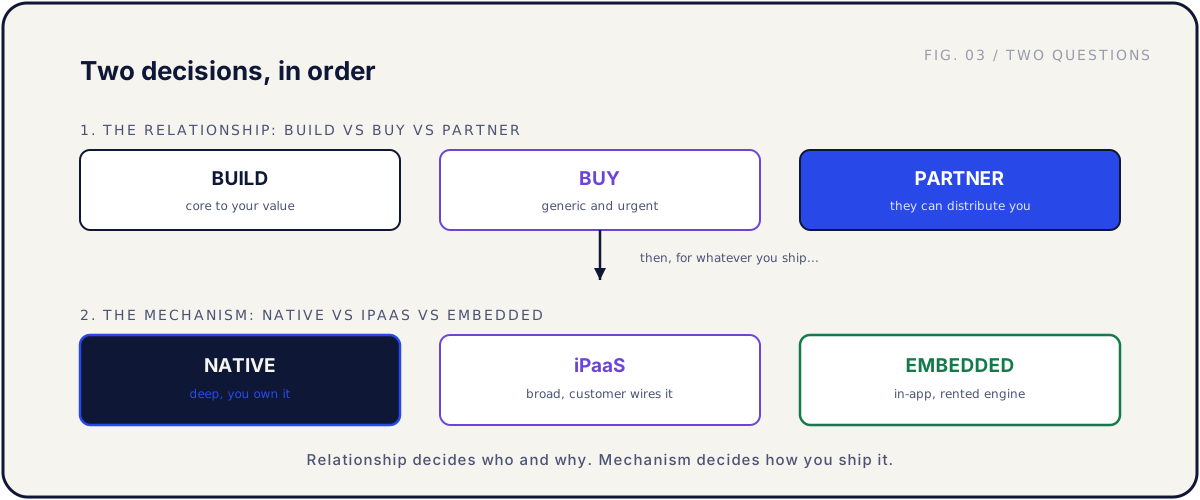
So run both questions in order. First decide build, buy, or partner. Then decide native, iPaaS, or embedded based on depth, control, and reach. The first question sets the strategy, the second sets the mechanism.
How a portfolio mixes all three
The framing that trips teams up is treating this as one choice for the whole product. It is a choice per integration, and a healthy product runs all three at once.
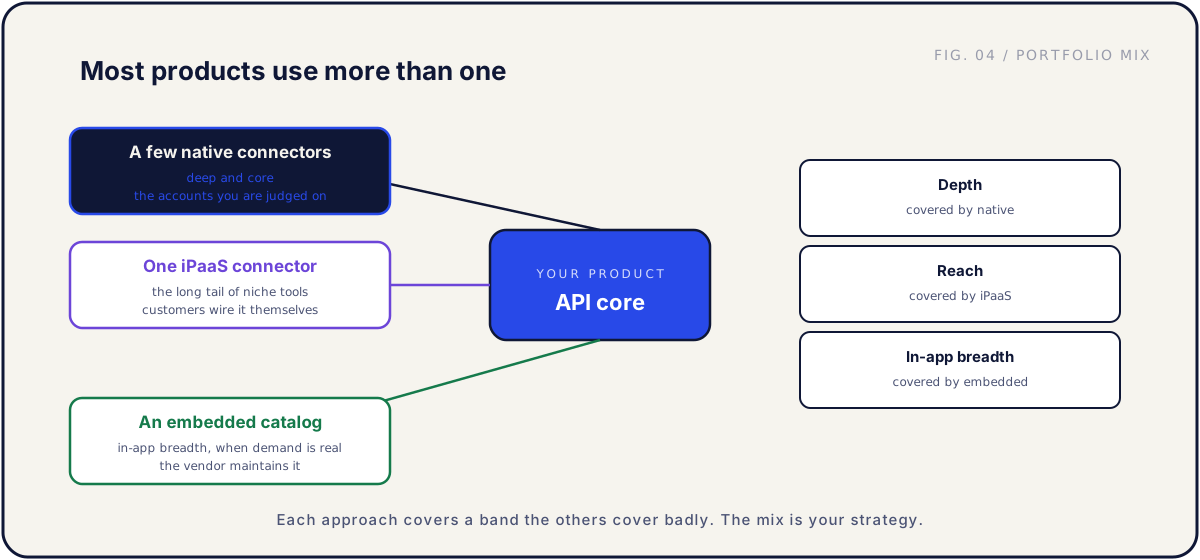
A typical seed-to-Series-B mix: a few native connectors for the deep, core integrations your biggest accounts judge you by; one published iPaaS connector for the long tail; and, once breadth demand is real, an embedded catalog so customers can pick from many integrations inside your product without you building each one.
Each approach covers a band the others cover badly. Native covers depth and loses on breadth. iPaaS covers breadth and loses on control and depth. Embedded covers in-app breadth and loses on the deepest connections. Together they cover the whole range without forcing any one approach to do a job it is bad at.
This is why the mix is your integration strategy, not a one-time architecture call. Every new request gets routed to the approach that fits it, and the pattern of those decisions evolves as the product and customer base grow. We cover the scoring and sequencing in how to build a SaaS integration strategy that actually ships.
A practical sequence for most startups: get your API and webhooks clean first, since all three approaches sit on top of them. Build one native connector for your deepest workflow. Publish one iPaaS connector for breadth. Add an embedded catalog when in-app breadth demand shows up. The order follows the pull, not the technology.
A decision framework
When the next integration request lands, walk the tree instead of defaulting to a build. Three questions decide it.
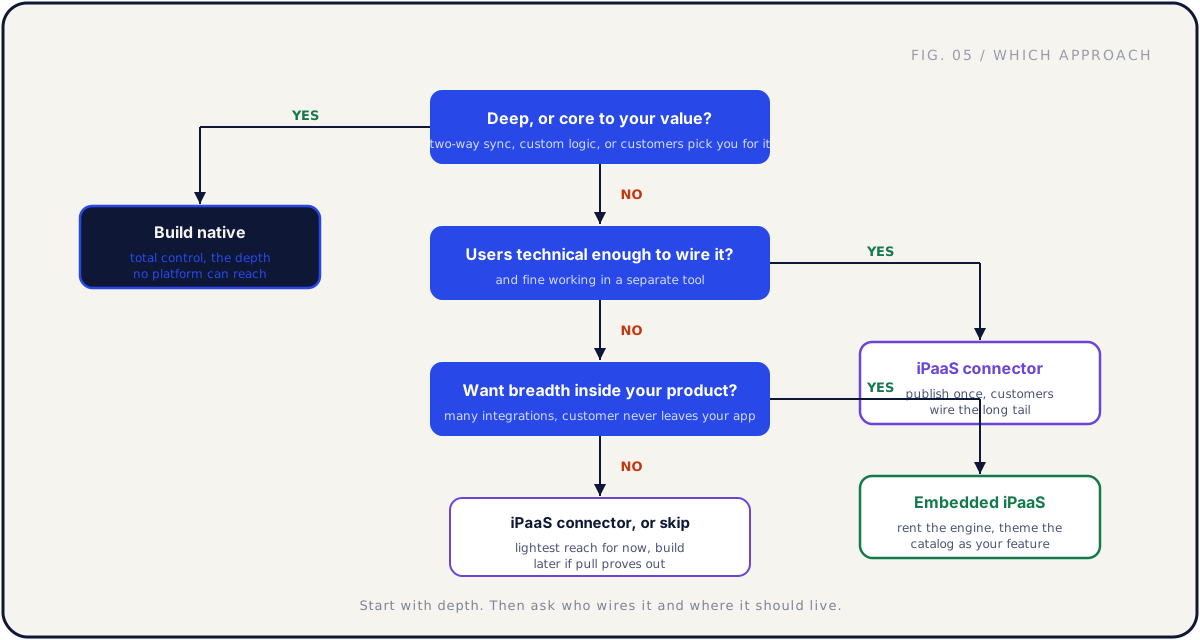
Does it need depth, or is it core to your value? If the integration needs two-way sync, custom logic, or tight coupling to your data model, or if customers pick you partly because of it, build native. Depth and differentiation are the native signals, and no platform delivers either.
Are your users technical enough to wire it themselves? If the integration is shallow and your users can build a recipe, an iPaaS connector is the efficient answer: they assemble it on the platform, you maintain nothing beyond your published connector, and the long tail covers itself. If they are not technical, or you do not want them leaving your product, that points toward embedded.
Is the priority breadth in your product, or speed and reach? When you want many integrations inside your product and would rather rent the engine than build each one, embed an iPaaS platform. When you just need broad reach fast and are fine with the experience living elsewhere, a public iPaaS connector is lighter.
The tree is deliberately short because the failure mode is overthinking it. Most teams already know which two or three integrations are deep and core and which are long-tail. The framework mostly keeps you from reaching for a heavy native build when a published connector or an embedded catalog would serve the request better and cheaper.
One nuance: these are not permanent. A common path is to publish an iPaaS connector for early demand, then build native once an integration proves core, and the reverse happens when a native connector becomes a maintenance drain and gets replaced by an embedded catalog entry. Treat the first call as reversible.
Common mistakes, and the fix
Treating every request as a native build. The fix: run it through the decision tree. Most requests are long-tail and shallow, and a published iPaaS connector or an embedded catalog serves them for a fraction of the cost. Reserve native engineering for the deep, core connections.
Pricing the launch, not the lifetime. The fix: estimate three years, not three sprints. A native connector is a launch cost plus years of upkeep. iPaaS and embedded move that upkeep to a platform for a fee.
Using iPaaS for the integration that is your differentiation. The fix: build the core connection natively. A shallow, platform-bound recipe cannot deliver the depth or control a differentiating integration needs, and capping your most important connection at a platform's triggers is a slow mistake.
Confusing breadth with depth. The fix: match the approach to the job. A broad embedded catalog does not replace the deep native connector your largest account needs, and a native connector does not give you the long-tail reach of an iPaaS connector. You usually want both.
Building an embedded catalog before breadth demand is real. The fix: sequence it. Embedded iPaaS earns its fee once customers are asking for many integrations. Before that, one native connector for depth and one iPaaS connector for the long tail is a stronger, cheaper position.
FAQ
What is the difference between native, iPaaS, and embedded integrations? Native means your engineers build and own the connection to a specific partner, end to end, inside your product. An iPaaS connector is one connector you publish on a third-party automation platform, after which the platform's users wire your product to thousands of others themselves. Embedded iPaaS is the same recipe model, but you white-label the platform and run it inside your own product so customers never leave your UI. The three differ in build effort, UX control, depth, and who maintains the connectors.
Is iPaaS the same as embedded iPaaS? No. A public iPaaS connector lives on a third-party platform, where your customer works to wire the connection. Embedded iPaaS runs inside your product, themed as your feature, with the connectors and recipe engine maintained by a vendor you pay. Same recipe model, different home: one sends the customer out to an automation tool, the other keeps them in your app.
When should a startup build a native integration instead of using iPaaS? Build native when the integration is core to your value or needs depth an iPaaS framework cannot reach, like two-way sync, custom logic, or tight coupling to your data model. Use an iPaaS connector for the long tail of shallow, niche tools where a recipe is enough. The deciding factor is usually whether you will staff the maintenance, because native upkeep is yours forever.
Does embedded iPaaS replace building native connectors? No, it complements them. Embedded iPaaS covers in-product breadth, the many integrations customers want but none of them the thing they pick you for. The deep, differentiating connection at the center of your value still wants a native build. Most products run both at once.
Which is cheapest? Up front, an iPaaS connector usually wins, since you build one connector and the customer bears the per-connection cost. Over time it depends on volume: embedded iPaaS is a recurring fee in exchange for not maintaining a catalog, and native is most expensive because you pay both the build and the maintenance forever. Price the full lifetime, not just the launch.
How does this relate to build vs buy vs partner? It is the delivery-mechanism version of the same decision. Native is build, and both iPaaS and embedded are buy, since you license a platform that maintains the connectors. Partner is a separate, relationship-level question, and a partnered integration can still be delivered any of the three ways. Decide build, buy, or partner first, then the mechanism. We cover the criteria in build vs buy vs partner.
Can I switch approaches later? Yes, and many teams do. A common path is to publish an iPaaS connector for early demand, then build native once an integration proves core. The reverse happens when a native connector becomes a maintenance drain and gets replaced by an embedded catalog entry. Treat the first choice as reversible.
Do most products use just one of these? No. A healthy product runs a mix: a few native connectors for the deep, core integrations, one iPaaS connector for the long tail, and often an embedded catalog for in-app breadth. Each approach covers a band the others cover badly, and the pattern of how you route each request is your integration strategy.
The short version
Native vs iPaaS vs embedded integrations is one decision with three honest answers. Native means you build and own the connection, with total control and depth and a maintenance bill you pay forever. An iPaaS connector means you publish once and your customers wire the long tail themselves, cheaply, with the experience living on the platform. Embedded iPaaS means you rent a platform and run it inside your product, buying in-app breadth at a recurring fee.
Match the approach to the job. Build native for the deep, core connections customers pick you for. Use an iPaaS connector for the shallow, long-tail tools. Embed a platform for many in-app integrations you would rather not build. Run the decision per integration, and you will end up using all three on purpose, which is what a real integration strategy looks like.
If you want help deciding which integrations to build native, which to push to an iPaaS, and where an embedded catalog earns its fee, that is what a Partner Audit is for. We review your product, API, and integration requests, then tell you what to build, what to buy, and how to ship it.