Influenced vs sourced pipeline: definitions that finance will trust
A clear guide to influenced vs sourced pipeline for B2B SaaS partnerships: precise definitions, attribution rules, and a table finance will trust.
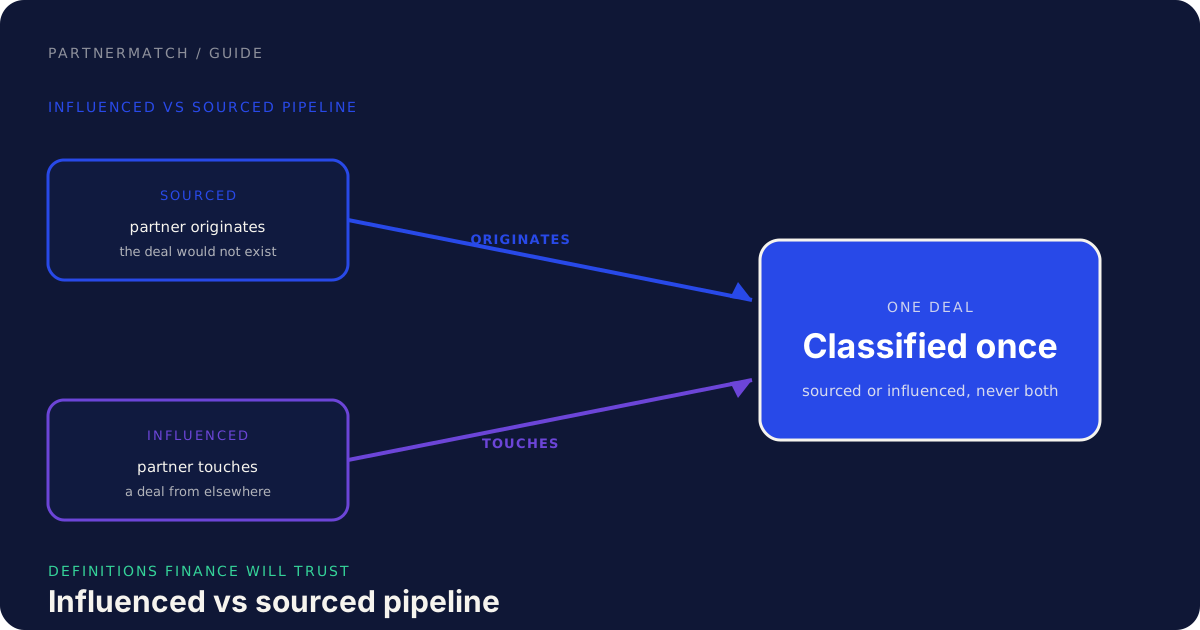
A partner manager forwards you a list of forty deals and says the partner "drove" all of them this quarter. You open the list. Six are net-new accounts the partner actually brought you. The other thirty-four were already in your pipeline before the partner ever appeared. Report all forty as partner-driven and finance will believe none of them.
That is the whole problem with influenced vs sourced pipeline. The two are not the same number, they do not deserve the same credit, and blurring them is the fastest way to lose the trust of the one team the program needs most. Defined cleanly, partnership pipeline becomes a line finance can forecast against. Mushed together, it becomes a story finance quietly discounts.
This guide is the definitive explainer on influenced vs sourced pipeline: the precise definitions, why the distinction matters, how to write attribution rules your team can apply, how to operationalize it in a CRM without buying anything, how to avoid double counting, and a worked example. The goal is definitions and a rules table you can lift straight into your own deck.
The 60-second version
- Sourced means the partner originated the opportunity. The deal would not exist in your pipeline without them. Full credit, because without the partner there is no deal to credit.
- Influenced means the partner touched a deal that came from elsewhere. The opportunity already existed, and the partner helped it advance, close, or grow. Influence credit, not sole credit.
- A deal is sourced or influenced, never both. The two buckets do not overlap. If the partner originated it, it is sourced. If they touched an existing deal, it is influenced.
- The clean test is one question: would this deal exist without the partner? No means sourced. Yes means influenced. Everything else is detail on top of that test.
- The distinction drives credit, comp, and budget. Different numbers fund different decisions, and conflating them inflates both until someone checks and the whole program loses credibility.
- Attribution rules need an origination test, a window, and a touch definition. Without those three written down, every deal becomes a judgment call and every judgment call becomes an argument.
- You can operationalize it in your CRM with one field. A partner-source field, deal registration for origination, and a couple of tags handle sourced vs influenced before you buy any platform.
- Double counting is the trust killer. Two teams claiming the same deal, or one deal counted as both sourced and influenced, is how finance learns to discount the entire dashboard.
Sourced vs influenced, defined precisely
Most arguments about partner credit happen because nobody wrote down what the words mean. Here are the two definitions, tight enough to hold up in a finance review.
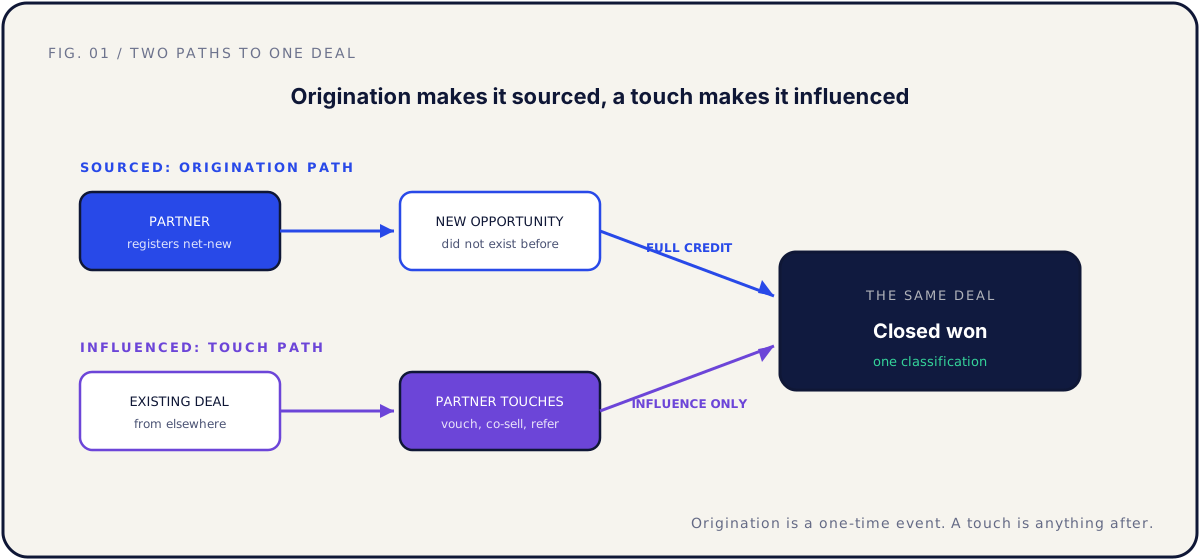
Sourced means the partner originated the opportunity. The deal did not exist in your pipeline before the partner brought it. They found the customer, made the introduction, and handed you an opportunity you would not have had otherwise. The defining feature is origination: the partner is the reason the deal exists at all. Sourced deals carry full credit, because the counterfactual is clean. No partner, no deal.
Influenced means the partner touched a deal that came from elsewhere. The opportunity was already in your pipeline, sourced by marketing, sales, or inbound, and the partner did something that helped it advance, close, or grow. A co-sell where the partner's seller vouches for you. A referral into a deal you were already working. An integration that became the reason the customer chose you. Influenced deals carry influence credit, not sole credit, because the deal would have existed without the partner.
The line between them is origination versus touch. Origination is a one-time event: who put this opportunity into existence. Touch is anything after that: who helped move it. A partner can only originate a deal once, but many parties can touch it. That asymmetry is why the two numbers behave differently and need different rules.
| Dimension | Sourced | Influenced |
|---|---|---|
| The test | Would this deal exist without the partner? No | Would this deal exist without the partner? Yes |
| What the partner did | Originated the opportunity | Touched an existing opportunity |
| Credit | Full | Influence, not sole |
| Typical volume | Smaller, higher-signal | Larger, the bulk of partner value |
| Counterfactual | No partner, no deal | Deal exists either way, partner improved it |
| What it proves | Partnerships create demand | Partnerships raise win rate and deal size |
Notice the shape of the two numbers. Sourced is usually the smaller, cleaner number: a short list of deals that plainly would not exist without the partner. Influenced is usually the larger one, because partners touch far more deals than they originate. Both are real. They answer different questions, and reporting them as one number throws away the most useful distinction you have.
Why influenced vs sourced pipeline matters
If sourced and influenced were just bookkeeping, you could pick one label and move on. They are not. The distinction drives four decisions that each break differently when the numbers are blurred.
Credit. Who gets to claim a deal shapes how teams behave. If influence is treated as origination, every team that ever touched a deal claims to have driven it, and the claims sum to more than the deal is worth. Clean definitions stop credit from inflating past reality.
Comp. Partner managers and partners often get paid against these numbers. Loose definitions pay out on deals the partner did not really drive, which is expensive and teaches the field to game the tag rather than do the work.
Budget defense. At budget season, finance asks what partnerships returned. Sourced answers "demand the partner created." Influenced answers "deals the partner made more likely to close." Both defend the budget, but only if finance believes the numbers, and belief depends on the definitions holding up under questioning.
Avoiding double counting. This one quietly destroys credibility. If a deal counts as sourced for one team and influenced for another, or as both at once, the totals double, someone reconciles, and the gap surfaces in a meeting. After that, every partnership number is suspect.
| Decision | What sourced informs | What influenced informs | What breaks if you blur them |
|---|---|---|---|
| Credit | Who originated the deal | Who helped advance it | Inflated claims that sum past the deal value |
| Comp | Origination bonuses | Influence or assist credit | Paying out on deals the partner did not drive |
| Budget defense | Demand the partner created | Win-rate and deal-size lift | Finance discounts the whole line |
| Forecasting | Net-new partner supply | Partner effect on existing deals | A forecast nobody trusts |
The pattern across all four is the same. The two numbers fund different decisions, and the moment they merge, every decision downstream is made on a number that is too big. The reason to keep them separate is so each one stays small enough to be true.
How to define the attribution rules clearly
Definitions are the start. Rules make them usable when a real deal does not read like a textbook. You need three written rules: an origination test, an attribution window, and a touch definition. Without them, every ambiguous deal becomes a judgment call, and every judgment call becomes an argument between teams that both want the credit.
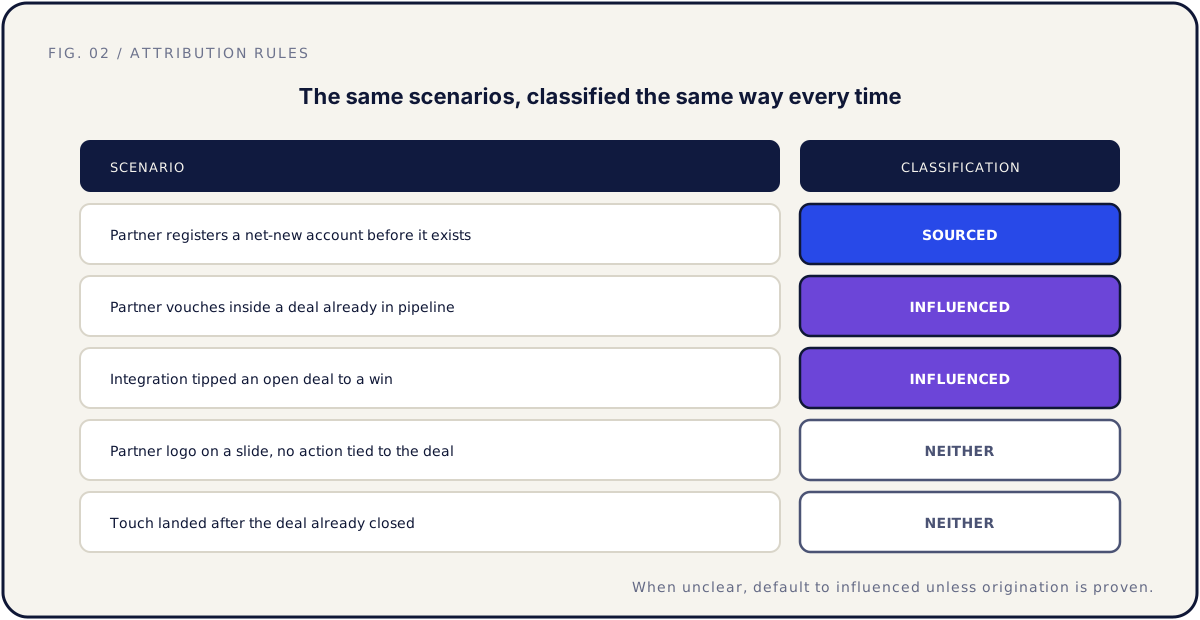
The origination test. Write down what counts as the partner originating a deal. The cleanest standard is deal registration: the partner registers the opportunity before it exists anywhere else in your pipeline, and the account is genuinely net-new. If the account was already in an active sales cycle, the partner did not originate it, no matter how helpful they were. Origination is who created the opportunity, not who helped it.
The attribution window. Decide how long a partner touch counts as influence. A touch that lands while a deal is open is influence. A touch that lands after the deal already closed, or so long before the opportunity opened that it could not plausibly have moved it, is not. A defensible window is "any partner touch logged while the opportunity is open, up to close." Pick one, write it down, and apply it the same way every time.
The touch definition. Decide what actually counts as a touch. A logged co-sell meeting, a referral into the account, a demo the partner ran, a technical validation that removed a blocker: these are touches. A logo on a slide, a generic webinar the buyer might have attended, or "the partner exists in this market" are not. The test is whether you can name a specific action, on a specific date, tied to a specific opportunity.
| Rule | The question it answers | A defensible default |
|---|---|---|
| Origination test | Did the partner create this opportunity? | Registered before it existed elsewhere, account is net-new |
| Attribution window | When does a partner touch count? | Any logged touch while the opportunity is open, up to close |
| Touch definition | What counts as influence? | A specific, dated action tied to the opportunity |
| Single vs multi-touch | One partner or several get influence? | Each gets influence credit, none gets sole credit |
| Tie-break | Sourced or influenced when unclear? | Default to influenced unless origination is proven |
Two rules deserve emphasis. When several partners touch the same deal, each gets influence credit and none gets sole credit: do not pick a winner, and do not let the influence claims sum to more than one deal's worth of credit. Influenced pipeline measures which deals partners touched, not a pie to be divided. And the tie-break keeps the program honest under pressure: when you genuinely cannot tell, default to influenced, the more conservative claim, and reserve sourced for deals where origination is provable.
For how these classifications roll up into the rest of your reporting, see our guide to partnership metrics, which puts sourced and influenced inside the wider activity, output, and outcome stack.
Operationalizing it in your CRM
You do not need a partner ecosystem platform to track sourced versus influenced. You need a place to store the classification, a way to capture origination, and the discipline to tag at entry rather than reconstruct at close. All of that fits in the CRM you already run.
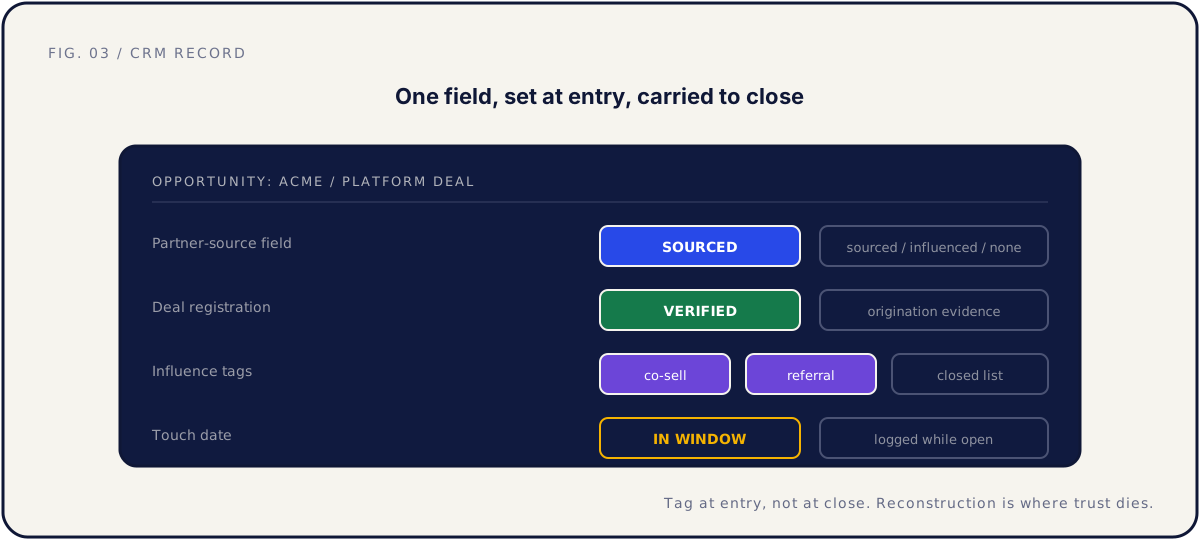
One partner-source field. Add a single field to the opportunity that records the partner and the classification: sourced, influenced, or none. This is the field finance traces back to when they ask where a number came from. One field applied consistently beats five fields applied unevenly.
Deal registration for origination. Origination needs evidence, and deal registration is the cleanest evidence there is. When a partner registers a net-new account before it appears anywhere else in your pipeline, that registration is the proof the deal was sourced. No registration and no record of the partner before the deal opened means it is not sourced. The timestamp is what makes the sourced claim auditable.
Simple tags for influence. Influence is a touch, so capture the touch. A short, fixed set of tags, co-sell, referral, integration-led, technical-validation, lets a rep mark how the partner touched the deal without writing a paragraph. Keep the list small and closed, because an open text field becomes noise, and noise cannot be reported.
| CRM element | What it captures | The rule that keeps it clean |
|---|---|---|
| Partner-source field | Sourced, influenced, or none | One field per opportunity, set once, carried to close |
| Deal registration | Origination evidence | Registered net-new before the deal existed elsewhere |
| Influence tags | How the partner touched the deal | A small, closed list, not free text |
| Touch date | When the influence happened | Logged at the time, inside the attribution window |
One rule matters more than the schema: tag at entry, not at close. Set the partner-source field the moment the partner enters the deal, and carry it forward to closed-won untouched. Reconstructing attribution after the deal closes is where credibility goes to die, because nobody remembers the real sequence and everyone remembers it in their own favor. The same discipline of tagging influence at first touch and carrying it to close runs through our co-selling engine guide, where attribution is what keeps the whole motion funded.
Avoiding double counting and inflated claims
Double counting does the most damage, because it does not just inflate one number, it teaches finance to distrust all of them. It shows up in two shapes, and both have the same fix: a deal is claimed once, by one bucket.
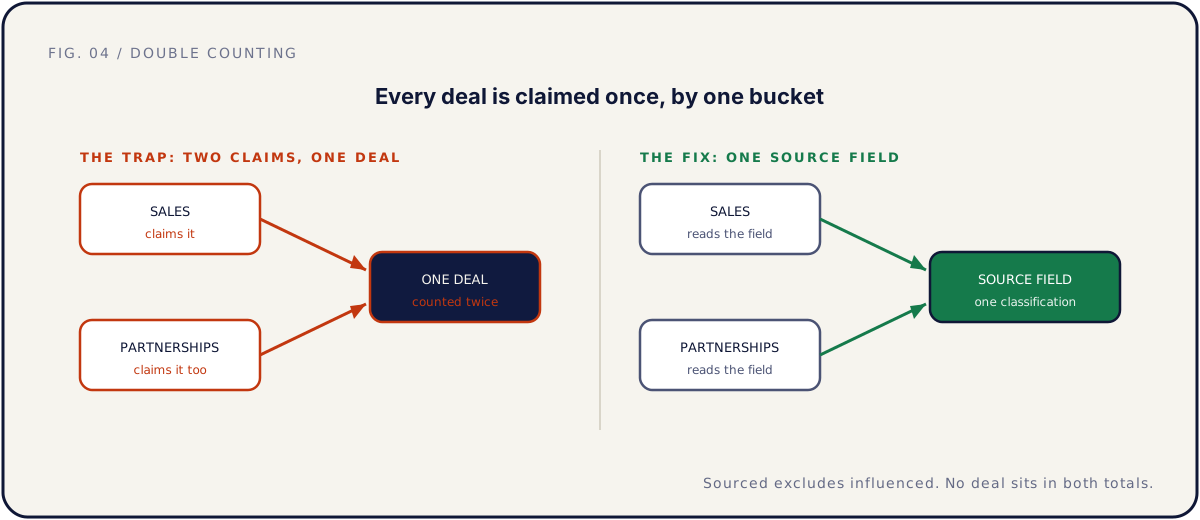
Shape one: one deal, two teams. Sales counts a deal as theirs, and partnerships counts the same deal as partner-sourced. Both report it. The pipeline now shows the deal twice, and the partnership number looks like it is taking credit for sales' work. The fix is a single source field on the opportunity that everyone reads from. The deal has one classification, visible to both teams, and the field is the referee.
Shape two: one deal, both buckets. A partner originates a deal, so it is sourced, then the same partner touches it later and someone also tags it influenced. Now one deal sits in both totals, and the partner's contribution looks twice as large as it is. The fix is the no-overlap rule: a sourced deal is never also counted as influenced. Origination already includes every later touch by that partner.
| Double-counting trap | How it happens | The fix |
|---|---|---|
| Two teams, one deal | Sales and partnerships both claim it | One source field everyone reads from |
| Both buckets, one deal | Partner sourced it and is tagged influenced too | Sourced excludes influenced, no overlap |
| Multiple partners, summed credit | Each partner claims sole credit | Each gets influence credit, totals never exceed the deal |
| Reconstructed at close | Attribution rebuilt from memory | Tag at entry and carry it forward |
The principle behind every fix is the same: every deal is claimed once. One classification, one source field, no overlap between sourced and influenced, and influence credit that never sums past the deals partners actually touched. Hold that line and your numbers stay smaller than competitors' inflated ones, but yours survive the meeting where someone checks. A partnership number is only useful for as long as finance believes it.
How it ties to co-sell attribution and the lifecycle
Sourced versus influenced is not a standalone exercise. It sits inside two larger systems, and getting the definitions right is what makes both legible.
Co-sell attribution is mostly an influence problem. When a partner's seller pitches you inside their own deal, the deal usually existed before the co-sell started, so co-sell almost always produces influenced pipeline rather than sourced. The exception is a co-sell that begins with the partner registering a net-new account, which is sourced. The vouching, the air cover, the joint pitch into a deal you were already working: that is influence. Most of a co-sell motion's reported value lands in the influenced column, and that is correct. The full mechanics of tagging and reporting it live in our co-selling engine guide.
The lifecycle matters because where a deal sits in the partnership arc tells you what classification is even possible. Early, before an integration is live, a partner can source deals through introductions but cannot yet influence through the product. Later, once the integration is adopted, the partner can influence deals by being the reason a customer chooses you. The classification you expect shifts as the partnership matures, which is why sourced and influenced read differently at each stage of the SaaS partnership lifecycle.
| System | Where sourced shows up | Where influenced shows up |
|---|---|---|
| Co-sell attribution | Co-sell on a partner-registered net-new account | Partner vouching inside an existing deal |
| Referral motion | Partner introduces a net-new account | Referral into a deal already in pipeline |
| Integration-led | A net-new buyer who came for the integration | The integration tipped an open deal to a win |
| Lifecycle stage | Heavier early, via introductions | Grows later, once the integration is adopted |
The throughline is that sourced and influenced are the common vocabulary these systems share. Co-sell, referral, integration-led demand, and every lifecycle stage resolve into one of the two buckets. Define them once, cleanly, and every other partner motion inherits a classification it can be measured by.
A worked example: the same deal, classified correctly
Definitions are easiest to trust when you watch them applied to a deal that could plausibly go either way. Here is a hypothetical run through the rules, then a variant that flips the answer.
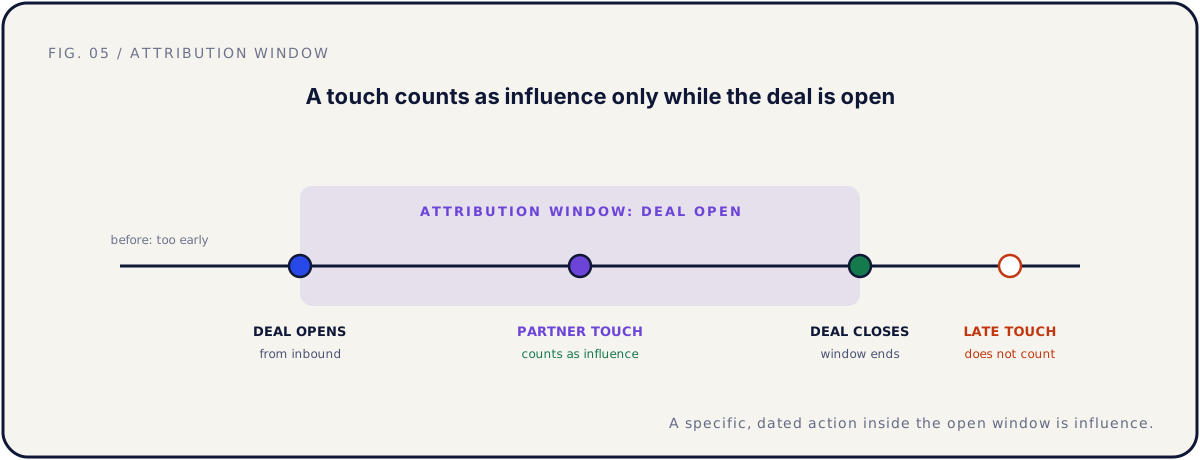
The base case. A mid-market prospect finds your product through a search ad, books a demo, and enters your pipeline as an open opportunity. Three weeks later, while the deal is still open, the buyer mentions they also use a platform you partner with. Your partner's seller joins a call, confirms the integration works, and vouches for you against a competitor. The deal closes two weeks after that.
Run the rules. Origination test: did the partner create this opportunity? No, it came from a search ad and existed before the partner appeared, so it is not sourced. Attribution window: did the partner touch the deal while it was open? Yes. Touch definition: a specific, dated action tied to the opportunity? Yes, a logged call and a competitive vouch. The deal is influenced. The partner gets influence credit, not sole credit, because the deal would have existed without them.
Now flip one fact. Same partner, same product, but the partner's seller registers the account as net-new before it appears anywhere in your pipeline, then brings the buyer to you. The buyer had never heard of you. Origination test: did the partner create this opportunity? Yes, there is a registration, the account was net-new, and no inbound preceded it. The deal is sourced. Full credit, because without the partner there is no deal.
| Fact about the deal | Base case | Flipped case |
|---|---|---|
| How the opportunity started | Search ad, then inbound demo | Partner registered a net-new account |
| Did it exist before the partner? | Yes | No |
| What the partner did | Vouched inside an open deal | Originated and introduced the buyer |
| Inside the attribution window? | Yes, touch landed while open | N/A, partner created it |
| Correct classification | Influenced | Sourced |
| Credit | Influence, not sole | Full |
One product, one partner, two deals, two correct answers. The only fact that changed was origination: who created the opportunity. That single fact is the hinge the entire classification turns on, which is why the origination test is the first rule you write and the one you defend hardest.
Common mistakes, and the fix
Counting a deal as both sourced and influenced. The fix: enforce the no-overlap rule. A sourced deal already includes every later touch by that partner, so you never add an influence tag on top. One deal, one bucket. This is the most common way a partner number gets quietly doubled.
Reconstructing attribution at close instead of tagging at entry. The fix: set the partner-source field the moment the partner enters the deal and carry it forward untouched. A number rebuilt from biased memory will not survive the first audit. Tag in real time or do not claim the credit.
Treating any partner touch as origination. The fix: hold the origination test to deal registration on a net-new account. A partner being helpful or enthusiastic is influence, not sourcing. Origination is a specific, evidenced event, and only deals that pass it belong in the sourced column.
Letting influence claims sum to more than the deal. The fix: when several partners touch one deal, each gets influence credit and none gets sole credit, and the influenced total never exceeds the value of the deals partners actually touched. Influenced pipeline is a tally of touched deals, not a pie to be sliced.
Reporting one blended "partner-driven" number. The fix: always report sourced and influenced as two separate lines. The blended number hides your most useful distinction, and it is exactly what finance learns to discount, because it cannot tell demand the partner created from deals the partner merely touched.
FAQ
What is the difference between sourced and influenced pipeline? Sourced means the partner originated the opportunity, so the deal would not exist without them and they get full credit. Influenced means the partner touched a deal that came from elsewhere and helped it advance, so they get influence credit but not sole credit. The clean test: would this deal exist without the partner? No means sourced, yes means influenced.
Can a deal be both sourced and influenced? No, never both. If the partner originated it, it is sourced, and that already accounts for every later touch by that partner. If the partner touched a deal that already existed, it is influenced. Counting the same deal in both buckets doubles the partner's apparent contribution and is the most common cause of finance distrusting the numbers.
Why does finance care about the distinction? Because the two numbers fund different decisions. Sourced measures demand the partner created, influenced measures the partner's effect on deals that already existed, and they inform credit, comp, budget, and forecasting differently. Blur them and every downstream decision is made on a number that is too big.
How long should the attribution window be? A defensible default is any partner touch logged while the opportunity is open, up to close. A touch after the deal closed does not count, and one so far before the opportunity opened that it could not have moved the deal does not count either. The exact length matters less than writing it down and applying it the same way every time.
How do we attribute a deal that several partners touched? Give each partner that touched it influence credit, and none of them sole credit. Do not pick a winner, and do not let the claims sum to more than one deal's worth of value. Influenced pipeline measures which deals partners touched, not a pie divided among them, so multiple partners can each be credited without inflating the total.
Do we need a special tool to track sourced versus influenced? No. A single partner-source field, deal registration as origination evidence, and a small closed set of influence tags handle it inside the CRM you already run. Tag at entry and carry it to closed-won. Buy a partner platform later, once the manual version is producing numbers worth automating.
What counts as the partner originating a deal? Deal registration on a genuinely net-new account, logged before the opportunity exists anywhere else in your pipeline. If the account was already in an active sales cycle, the partner did not originate it, however helpful they were afterward. Only deals with that evidence belong in the sourced column.
How does this relate to co-sell attribution? Co-sell almost always produces influenced pipeline, because the deal usually existed before the partner's seller started pitching you inside it. The exception is a co-sell that begins with the partner registering a net-new account, which is sourced. Most reported co-sell value should land in the influenced column, and that is correct.
The short version
Influenced vs sourced pipeline comes down to one question: would this deal exist without the partner? If no, the partner originated it and the deal is sourced, with full credit. If yes, the partner touched a deal that came from elsewhere and it is influenced, with influence credit but not sole credit. A deal is one or the other, never both.
The distinction is worth defending because it drives credit, comp, budget, and forecasting, and because blurring it inflates every number until finance stops believing any of them. Write down three rules: an origination test, an attribution window, and a touch definition. Operationalize them with one partner-source field, deal registration for origination, and a small set of influence tags. Tag at entry, never reconstruct at close. Never count a deal in both buckets, and never let influence claims sum past the deals partners actually touched.
If you want the whole partnership engine handled, from strategy and a partner-ready API through shipped integration code, launch, and the attribution that proves it worked, that is exactly what a Partner Audit is for. We review your product, API, and partner potential, then define what to build, who to approach, and how to measure whether it moved the business.