The SaaS co-marketing playbook for tech partnerships
A co-marketing and partner marketing playbook for B2B SaaS: ship the integration first, climb the ladder, run launch week, measure influenced pipeline.
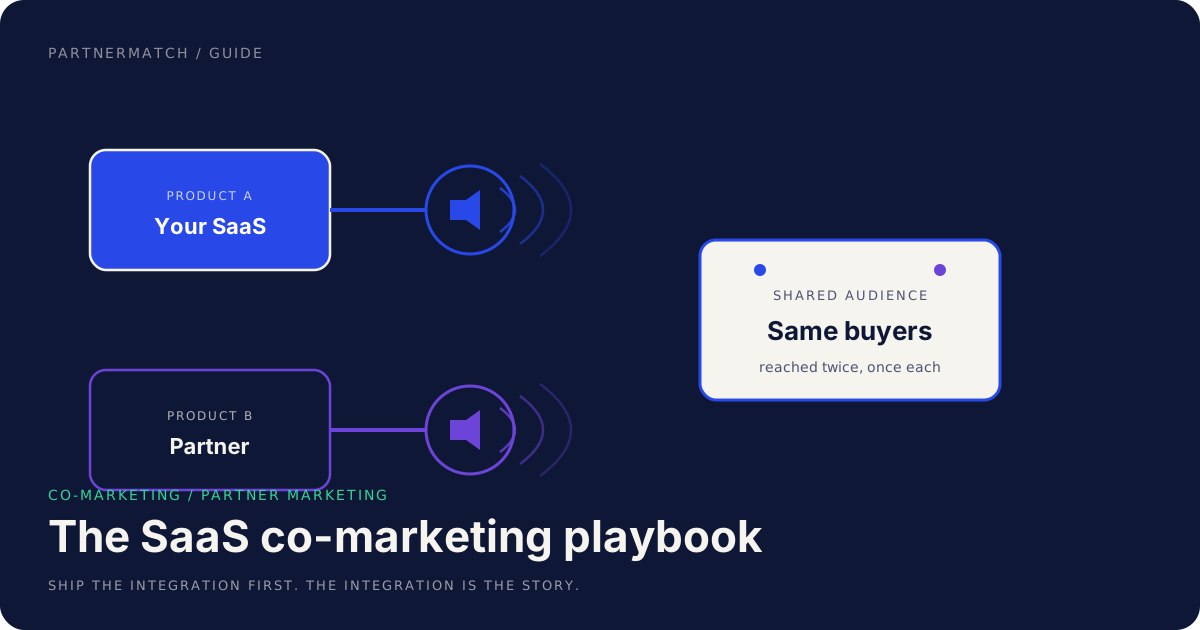
A partner manager you met at a conference suggests a joint webinar. It sounds like momentum. You block a date, build slides, send invites, and forty people show up, half of them your own customers. Two months later nobody can point to a single deal it created, and the partner stops replying.
This is the most common way co-marketing fails in B2B SaaS. The activity happens, the calendar fills, and the pipeline does not move. Co-marketing and partner marketing work, but only when there is something real underneath them. This guide is the playbook: why co-marketing needs a shipped integration to stand on, the ladder of activities from cheap to expensive, how to run launch week, what compounds over time, how to measure it, and how to run all of this with a team of one or two.
The 60-second version
If you only read one section, read this one:
- Co-marketing without a shipped integration is theater. The integration is the story. No story, no reason for a customer to care.
- Climb the ladder, do not start at the top. Directory listings and mutual links are cheap. Conferences are expensive. Earn each rung.
- Launch week is your one free ask. Partner marketing teams have ecosystem content quotas, and a clean integration launch is the easiest thing for them to feature.
- Make the ask a copy-paste. Prewritten posts, screenshots, an approved quote, and a boilerplate paragraph turn a favor into a five-minute task for the partner.
- The compounding work is evergreen. Integration landing pages on both sites, partner backlinks, and marketplace reviews keep earning after the launch noise fades.
- Measure influenced pipeline, not impressions. Referral traffic, attributable installs, and deals where the partner appeared are the numbers that survive a board meeting.
- A one-page kit per partner is the whole operation. With it, two people can run co-marketing across a dozen partners.
Co-marketing fails when there is no shipped integration underneath
The reason most SaaS co-marketing produces nothing is that there is nothing to market. Two companies agree they have overlapping customers, so they swap logos and book a webinar. But the audience is being asked to care about a relationship, not a result. Relationships are not interesting. Results are.
The integration is the story. "We now sync your closed deals into your CRM automatically" is a story a customer will click on. "We are excited to announce our partnership" is a press release nobody reads. When you have shipped something that removes steps from a workflow your shared customers already run, every co-marketing activity has a subject. When you have not, you are decorating an empty room.
This is why the order matters. Strategy, scope, and a shipped integration come first; co-marketing is the amplification layer on top. If you are still upstream of a live integration, start with our guide to tech partnerships for B2B SaaS, because the marketing in this post assumes you have something to announce.
A useful test before you book any joint activity: can you describe, in one sentence a customer would care about, what the integration does for them? If you cannot, you are not ready to co-market. You are ready to go finish the build.
| Co-marketing with an integration | Co-marketing without one |
|---|---|
| The announcement has a subject: a workflow that now works | The announcement is about the companies, not the customer |
| Customers click because there is something to use | Customers scroll past a logo swap |
| The partner can point engineering and sales at a live thing | The partner has nothing concrete to enable |
| Attribution is possible: installs, referrals, opportunities | Nothing to attribute, so nothing gets measured |
The co-marketing ladder, cheap to expensive
Co-marketing activities are not equal in cost or in signal. Treat them as a ladder. The bottom rungs are cheap, fast, and worth doing for almost every partner. The top rungs are expensive and only pay off for partners where the integration already has real adoption and a real shared customer base.
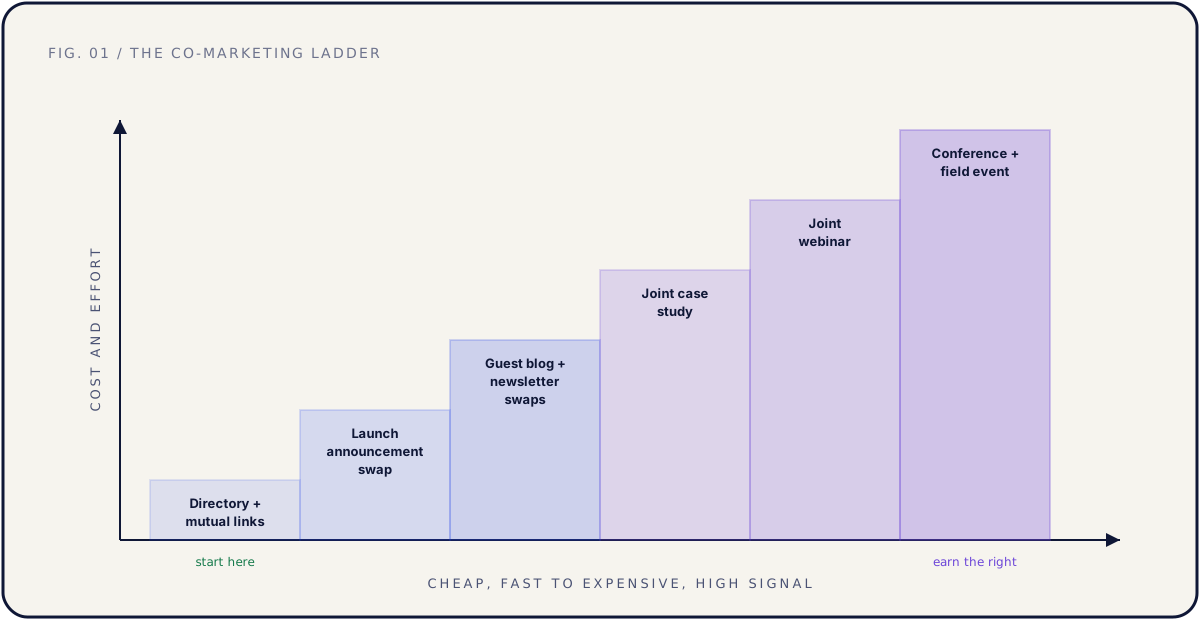
Start at the bottom and climb only as far as the partnership justifies.
| Rung | Cost and effort | When it is worth it |
|---|---|---|
| Directory listing and mutual links | Hours | Always. The minimum table stakes for any live integration. |
| Launch announcement exchange | A day | Every integration launch. This is the one ask the partner almost always says yes to. |
| Guest blog and newsletter swap | A few days | When both audiences overlap and each side has a real readership. |
| Joint case study | A week or two | When at least one shared customer is live, happy, and willing to be named. |
| Joint webinar | Two to four weeks | When the integration has enough adoption to fill a room with real prospects, not just your own base. |
| Conference or field event | A month plus budget | When the partnership drives meaningful revenue and the shared customer base justifies travel. |
The mistake is starting at the top. A joint webinar for an integration with eleven installs is a lot of work to reach an empty audience. Climb the ladder. Do the directory listing and the announcement swap on day one, do the case study once a customer is live, and only book the conference booth when the numbers say the partner is a top-three relationship.
One more rule: never skip the bottom rungs because they feel small. The directory listing and the mutual integration links are the rungs that keep working for years after the webinar is forgotten.
The launch-window playbook
Launch week is the single best moment to ask a partner for marketing, and most startups waste it. The integration goes live quietly, and three months later someone remembers to ask the partner for a tweet, long after anyone cares.
Ask during the launch window, and ask for specific things. Here is why the timing works in your favor: partner marketing teams have ecosystem content quotas. They are measured on how many integration stories they ship. A clean launch with assets ready is not a favor you are begging for; it is them hitting their number with the least possible effort. You are the easy win on their list.
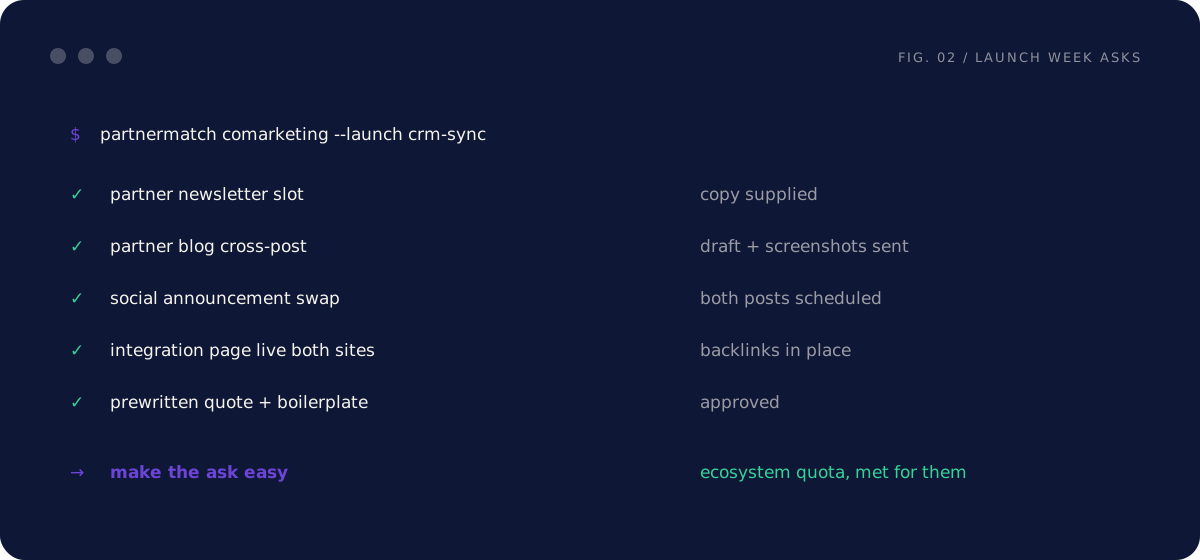
The way to guarantee a yes is to make the ask trivial. Do not send "would you mind featuring us?" Send a folder with everything already written:
- A newsletter blurb, in their voice, the right length, with the link already in it.
- A blog cross-post draft, with screenshots, that they can publish with light edits.
- Two social posts, one for each of you to swap, copy already written.
- An approved quote from your founder they can drop into their announcement.
- A boilerplate paragraph describing your product, so nobody has to write one.
When the entire ask is "review this and hit publish," the partner's marketing team can say yes in an afternoon. When the ask is "please write something about us," it sits in a queue forever. This is the same discipline that makes the rest of the launch work, covered in the launch section of our tech partnerships guide: launch is a project, and the partner-facing assets are part of the project, not an afterthought.
A practical sequencing note: line up these assets during the build, not after it ships. The week the integration goes live is the worst week to start writing copy.
Evergreen co-marketing that compounds
Announcements spike and fade. The co-marketing that matters most is the kind that keeps working long after launch week, with no further effort. Three things compound.
Integration landing pages on both sites. A dedicated page on your site for each integration, and ideally a matching one on the partner's site, does three jobs at once. It ranks for "[partner] integration" searches, it gives sales a link to send into deals, and it captures the referral traffic the partner sends you. This is the most durable co-marketing asset you can build, and it is the destination every other activity should point at.
SEO value of partner backlinks. When a partner links to your integration page from their directory, their blog, and their docs, those are high-quality backlinks from a relevant domain. They lift your search rankings for the integration and for your product generally. A logo swap on a partner page is worth more than most startups realize, precisely because it is a permanent link, not a one-day post.
Marketplace reviews. If the integration lives in the partner's marketplace, reviews from happy customers are co-marketing that the customers do for you. A handful of real reviews moves a marketplace listing up the rankings and reassures the next prospect reading it. Ask your first installs for a review the same way you ask them for a quote.
| Evergreen asset | What it earns | How long it works |
|---|---|---|
| Integration landing page (both sites) | Search traffic, sales link, referral capture | Years |
| Partner backlinks | Domain authority, ranking lift | As long as the link lives |
| Marketplace reviews | Listing rank, prospect trust | Compounds with each review |
The pattern: spend the launch energy once, but point it at assets that keep paying. A webinar is a moment. A ranked integration page with partner backlinks is an annuity.
Measuring co-marketing without fooling yourself
Co-marketing dies in budget meetings when the only numbers are impressions and registrations. Those are activity metrics, not outcomes. To keep co-marketing funded, measure what a board cares about: pipeline.
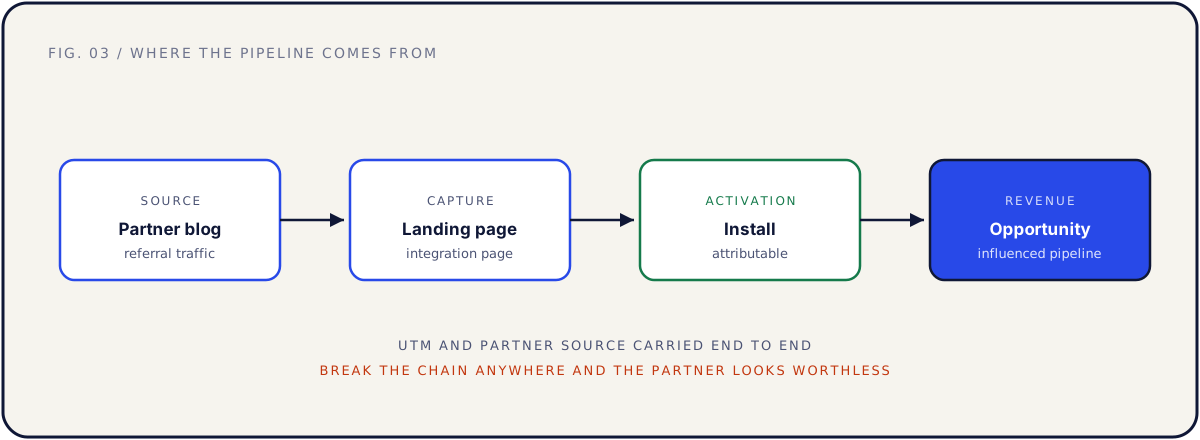
The chain is simple, and your job is to not break it. A partner blog post sends referral traffic to your integration landing page. The landing page drives an install. The install shows up in a deal. If you tag the partner source with a UTM at the top and carry it through to the opportunity, you can report influenced pipeline. If you drop the tag anywhere along the way, the partner looks worthless and the program looks like a cost.
Match each activity to the metric it actually moves, and to who should own it.
| Activity | Primary metric | Typical owner |
|---|---|---|
| Directory listing | Attributable installs | Product or partnerships |
| Announcement swap | Referral traffic, install spike | Marketing |
| Guest blog and newsletter | Referral traffic, signups | Marketing |
| Joint case study | Influenced pipeline, sales usage | Sales and partnerships |
| Joint webinar | Sourced opportunities, MQLs | Marketing and sales |
| Integration landing page | Organic traffic, attributable installs | Marketing and product |
Two honest caveats. First, influenced pipeline is fuzzy; a deal touched co-marketing among five other touches. Report it as influence, not as sole credit, and you keep your integrity. Second, give activities time. An integration page ranks over months, not days. Judge the evergreen assets on a quarter, and judge the announcement spikes on a week.
For a deeper look at how integration adoption feeds your broader numbers, our SaaS integration strategy guide connects these metrics to the rest of the portfolio.
Running co-marketing with a tiny team
At seed to Series B you do not have a partner marketing department. You have a founder, a product person, and maybe one marketer. Co-marketing still has to happen, so the operation has to be small enough to run between other work.
The whole system is one document per partner: a one-page kit. Build it once when the integration launches, and every future ask becomes a copy-paste.
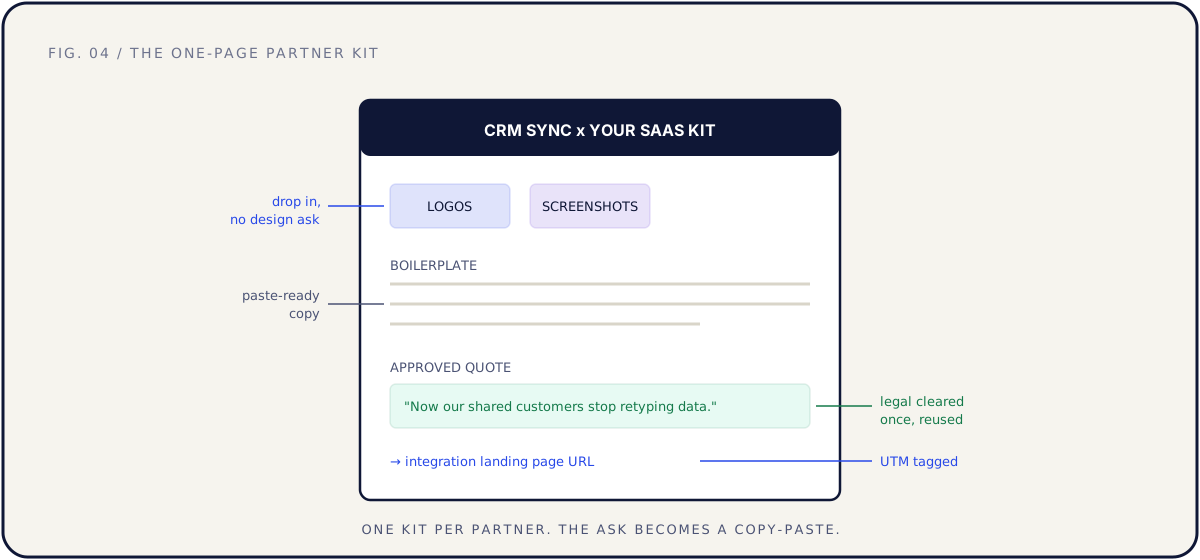
What goes in the kit:
- Logos, in the formats and sizes a partner's marketing team needs, so there is never a design back-and-forth.
- Screenshots of the integration in action, captioned, ready to drop into a blog or a slide.
- A boilerplate paragraph describing your product in your approved language, so nobody has to write one under deadline.
- An approved customer quote and a founder quote, cleared by legal once, reusable everywhere.
- The integration landing page link, already UTM-tagged, so attribution starts the moment anyone uses the kit.
With the kit in hand, the entire co-marketing process for a new activity is: pull the kit, paste the relevant pieces, send. A two-person team can run this across a dozen partners because the marginal cost of each ask collapses to almost nothing. The work is front-loaded into building the kit well, once.
Keep the kits in a shared folder, one per partner, named so anyone on the team can find them. When a partner reaches out, you respond in minutes instead of starting from scratch.
How co-marketing feeds the next partnership
The quiet payoff of co-marketing is not the pipeline from this partner. It is how much easier it makes the next partner conversation.
Public proof compounds. When a prospective partner sees that you already shipped a real integration, ran a clean launch, and have a case study and a ranked landing page to show for it, you stop being a risk. You become the easy yes. Their partner manager can see exactly what working with you looks like, because you have a public track record of doing it well.
This is the loop that makes partnerships a channel rather than a series of one-offs. Each shipped integration with real co-marketing behind it becomes a reference for the next one. The case study you wrote with partner one is the credibility you lead with when you approach partner two. The launch you ran smoothly is the reassurance partner three needs.
Co-marketing is one stage of a longer cycle that runs from targeting through launch to renewal and expansion. To see where it sits in the full loop, and how to keep partnerships compounding instead of stalling after launch, read our guide to the SaaS partnership lifecycle.
The founders who win at partnerships understand this: the marketing is not the goal, and it is not separate from the product work. It is the layer that turns one shipped integration into the proof that wins the next three.
Common mistakes, and the fix
Co-marketing before the integration ships. The fix: no announcement until there is a live workflow to announce. The integration is the story; without it you are marketing a logo swap. Finish the build first.
Starting at the top of the ladder. The fix: do the cheap rungs for every partner, and reserve webinars and conferences for partnerships with real adoption and a real shared customer base. A webinar for an integration with eleven installs is wasted effort.
Asking the partner to write everything. The fix: send a prewritten kit so the ask is "review and publish," not "please create content about us." Partner marketing teams have quotas and no spare time; be the easy win.
Measuring impressions instead of pipeline. The fix: tag the partner source at the top of the funnel and carry it through to the opportunity. Report influenced pipeline and attributable installs, the numbers that keep the program funded.
Treating each activity as a one-off. The fix: build a reusable one-page kit per partner and point everything at an evergreen integration landing page. Front-load the work once so the marginal cost of every future ask is near zero.
FAQ
Do we need a marketing team to do co-marketing? No. At seed to Series B, a founder or product leader with a one-page kit per partner can run co-marketing across a dozen relationships. The system is built to be small. The work is in building the kit well once, after which each activity is a copy-paste.
What if our integration just launched and has no customers yet? Stick to the bottom of the ladder. Do the directory listing, the mutual links, and the announcement swap, then point everyone at the integration landing page. Save the case study, webinar, and conference rungs for after real adoption shows up. There is no point filling a webinar room before you have customers to invite.
How do we get a bigger partner to co-market with us? Make it the easiest thing on their desk. Ship the integration, then arrive with a prewritten kit during their launch window. Partner marketing teams have ecosystem content quotas, and an integration story with assets ready is them hitting their number with no work. You are doing them a favor, not the other way around.
What is the single highest-value co-marketing asset? The integration landing page, on both your site and the partner's. It ranks in search, gives sales a link, captures referral traffic, and earns backlinks. Unlike a webinar, it keeps working for years with no further effort.
How do we measure whether co-marketing is working? Track referral traffic from partner sources, attributable installs, and influenced pipeline, which means deals where the partner or integration appeared in the sales process. Tag the partner source with a UTM at the top of the funnel and carry it through to the opportunity. Impressions and registrations are activity, not outcomes.
Should we pay for a conference booth with a partner? Only when the partnership already drives meaningful revenue and the shared customer base justifies the travel and budget. The conference rung is the most expensive on the ladder. Earn it with adoption first; do not lead with it.
How many co-marketing activities should we run per partner? For most partners, the bottom three rungs are enough: directory listing, announcement swap, and an evergreen landing page. Add a case study when a customer goes live. Reserve webinars and events for your top one or two relationships. More is not better; focused is better.
Who should own co-marketing internally? At your stage, the same person who owns the partnership, usually a founder or product leader, with marketing helping on the announcement and landing page. The key is that co-marketing is not handed to a separate team that never touched the integration. The owner who shipped it should drive the marketing of it.
The short version
Co-marketing works when there is a shipped integration underneath it, and fails when there is not. The integration is the story; the marketing is the amplifier. Get the order right and every activity has a subject worth a customer's attention.
Climb the ladder from cheap to expensive, and earn each rung. Use the launch window to ask the partner for marketing while it is the easiest yes on their list, and make the ask a copy-paste with a prewritten kit. Build evergreen assets that compound: integration landing pages, partner backlinks, marketplace reviews. Measure influenced pipeline, not impressions. And remember that every well-marketed integration becomes the public proof that makes the next partnership easier.
If you want the whole path handled, from shipping the integration to running the launch and the co-marketing that follows, that is exactly what a Partner Audit is for. We review your product, API, and partner potential, then define what to build, who to approach, and how to ship and market it.