Tech partnerships for B2B SaaS: the complete guide from partner idea to shipped integration
How to build tech partnerships that end in live integrations, not press releases. Choosing partners, getting your API ready, scoping the build, shipping, and launching so customers adopt it.
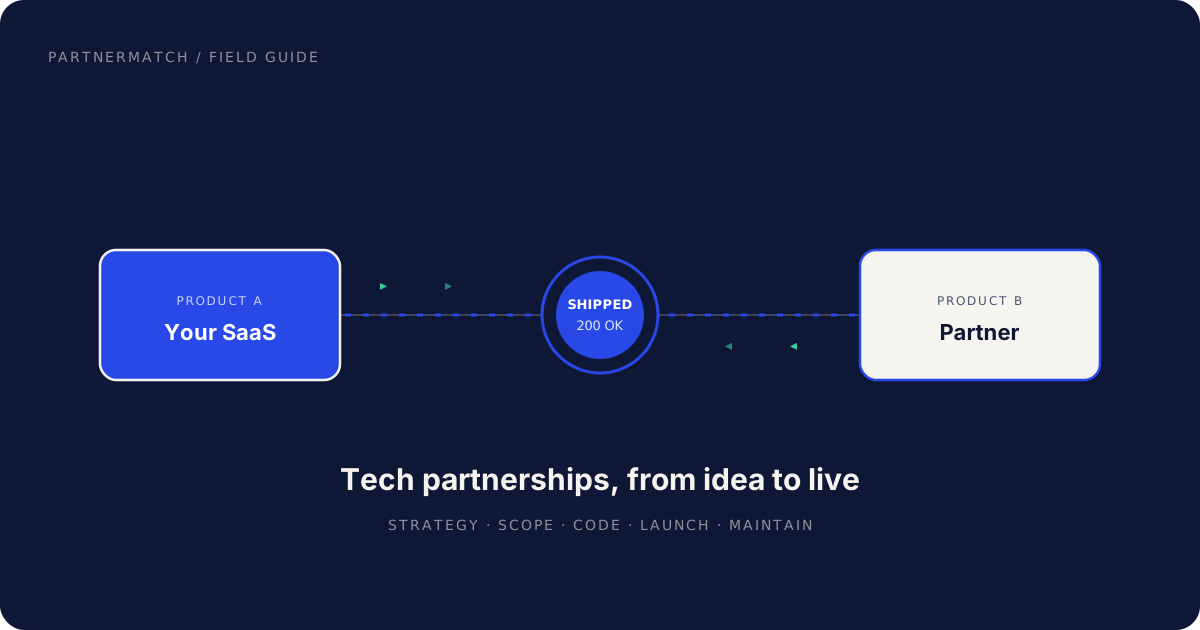
You have seen the integration page of a competitor and felt behind. Or a customer asked, again, when you will connect with their CRM. Or a partner manager at a bigger platform reached out, you had two great calls, and then nothing happened for six months.
Tech partnerships are the most discussed and least shipped growth channel in B2B SaaS. This guide covers the full path: what a tech partnership actually is, how to choose the right partner, what to prepare before the first call, how to scope and build the integration, and how to launch it so customers actually use it.
The 60-second version
If you only read one section, read this one:
- Pick integration targets by customer workflow, not by logo.
- Treat the partnership as a product project with a named owner, not a BD relationship.
- Make your API documentation partner-ready before outreach, because partner engineers judge you in ten minutes.
- Score candidates on customer pull and distribution upside, and build the top-right quadrant first.
- Scope the integration with user stories, a workflow map, and acceptance criteria before anyone writes code.
- Treat launch as its own project, with a marketplace listing, enablement assets, and co-marketing.
- Keep monitoring after launch. An integration that silently breaks is worse than no integration.
What a tech partnership actually is
A tech partnership is a product relationship between two software companies whose customers overlap. The deliverable is not the agreement, the co-branded webinar, or the logo on each other's websites. The deliverable is a working integration that removes steps from a workflow your shared customers already run.
Everything else in the partnership, from the marketplace listing to the co-marketing, hangs off that integration. Which is why the partnership only creates value when the whole ecosystem around your product is connected: the API, the documentation, the roadmap, sales enablement, and launch assets all point at the same shipped thing.
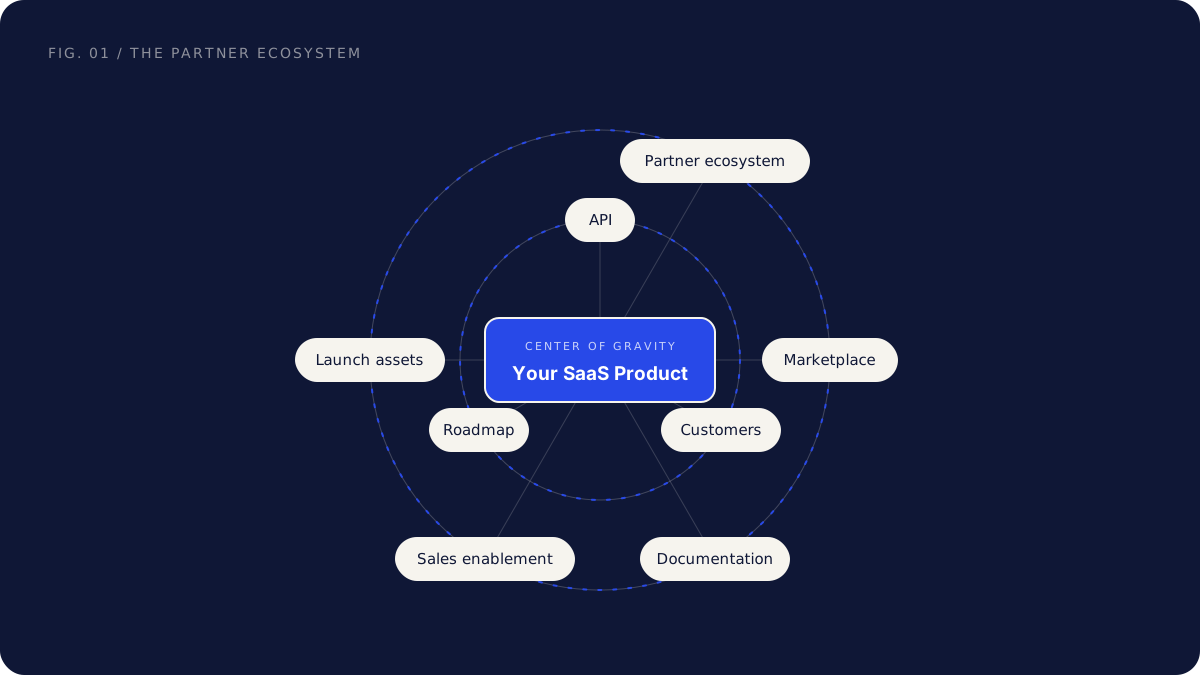
For a B2B SaaS startup, the payoff comes in three forms:
| What you get | How it shows up |
|---|---|
| Growth | The partner's marketplace and customer base put your product inside workflows your prospects already use. |
| Retention | Customers who connect an integration wire your product into daily operations, which makes it harder to replace. |
| Credibility | Being a verified app on a major ecosystem makes a seed-stage product look enterprise-ready in security reviews and sales calls. |
The two ways partnerships get run
Most failed partnerships die the same way: they are run as business development instead of product work. Calls happen, decks are exchanged, an agreement may even get signed. But there is no integration scope, no owner, and no date. The work cannot survive contact with a prioritization meeting.
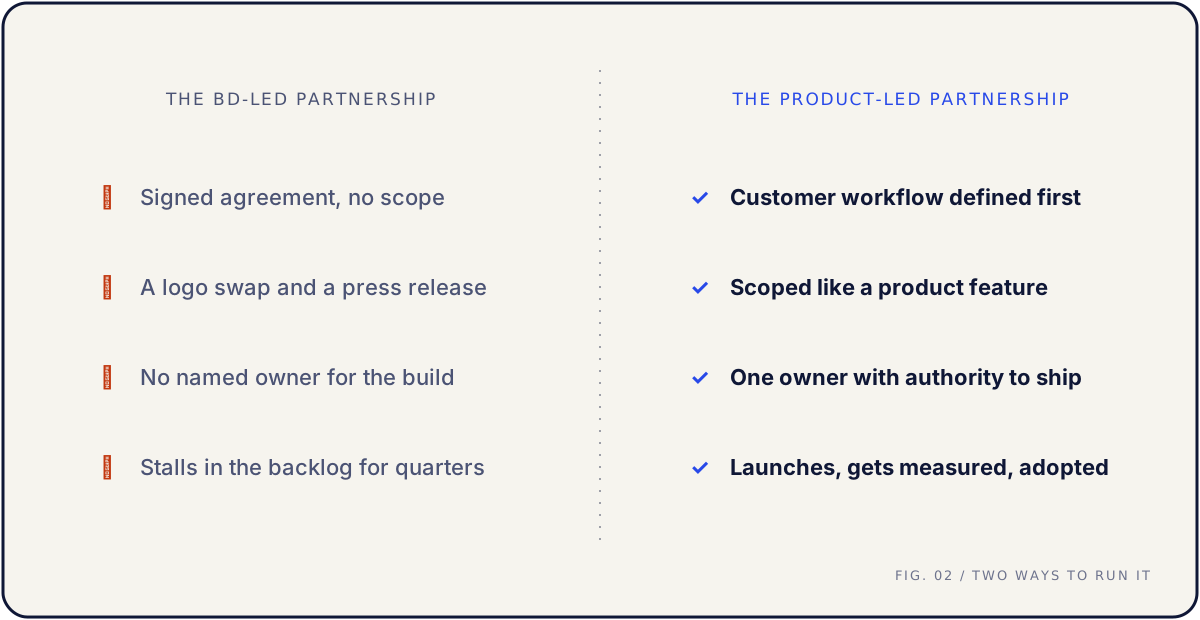
The difference in practice:
| BD-led | Product-led | |
|---|---|---|
| Starting point | "Their logo would look great on our site" | "Our customers move this data by hand every day" |
| Definition of done | Signed agreement | Integration live, customers using it |
| Owner | Whoever took the first call | A named product owner with engineering capacity |
| Typical outcome | Press release, then silence | Shipped integration, marketplace listing, measurable adoption |
If you take one habit from this guide: never enter partner outreach without already knowing what the integration would do for the customer, written in one sentence. "Sales reps push closed deals into their CRM without retyping contact data" is a workflow. "We partner with a CRM" is not.
What you need before the first partner call
Three assets decide whether partner conversations move or stall.
1. A workflow story. Which tools sit immediately before and after your product in your customers' day? What data do they move by hand? What would they stop doing if the connection existed? If you cannot answer from real customer conversations, run five interviews before any outreach.
2. Partner-ready API documentation. When a potential partner's engineering team opens your docs, they are estimating pain. They need to answer three questions in ten minutes: what can we build, how does authentication work, and where is the customer value? That means a plain-language API overview, auth explained end to end with a working example, two or three concrete use cases with endpoints mapped, and a sandbox they can try without talking to sales.
3. A named owner. One person with the authority to prioritize the work and the access to engineering to ship it. Partnerships without an internal owner lose every roadmap argument to whatever the loudest customer asked for that week.
How to choose your first integration partner
Not every integration deserves to be built, and very few deserve to be built first. Score each candidate on two axes:
- Customer pull: how many existing customers and active deals asked for it.
- Distribution upside: whether the partner runs an active marketplace or partner program that can send you leads.
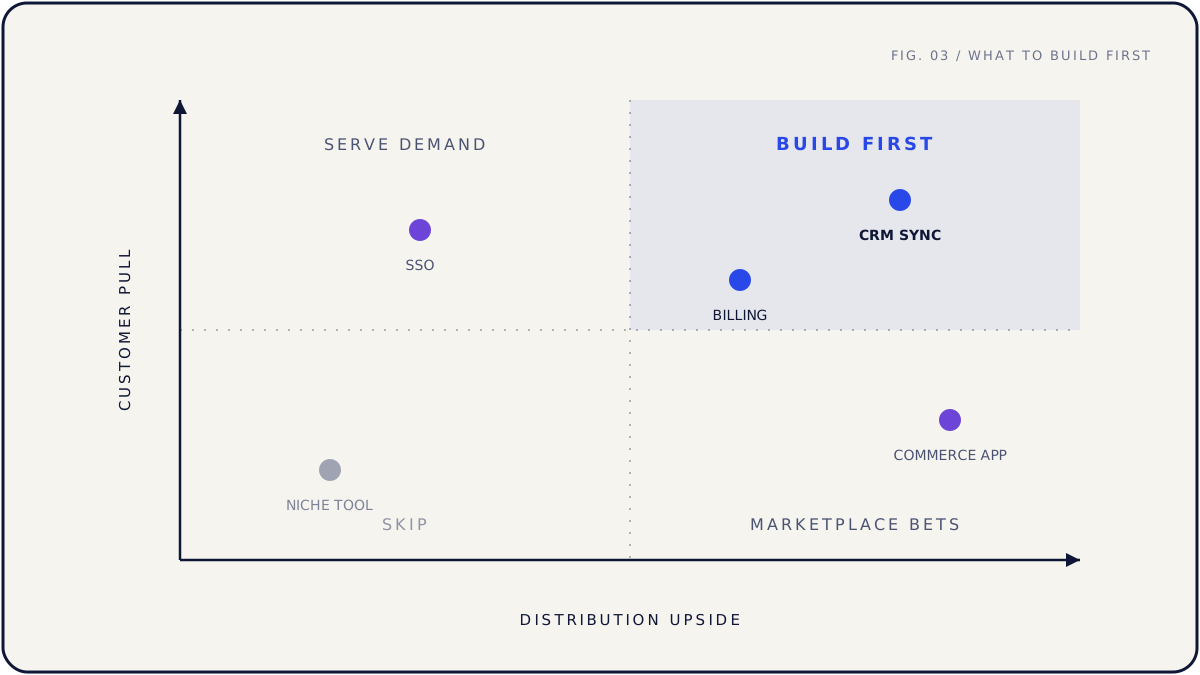
How to read the quadrants:
- Build first (high pull, high distribution): customers are asking and the partner has a marketplace. This is your first integration.
- Serve demand (high pull, low distribution): build it for retention, but do not expect leads from it.
- Marketplace bets (low pull, high distribution): can work as a distribution play, but validate with prospects before committing engineering time.
- Skip (low pull, low distribution): the logo might look nice. That is not a reason.
Also weigh build cost: a partner with a stable, well-documented API, a sandbox, and a clear app review process is dramatically cheaper to integrate with than one where every question needs an email thread.
The nine-step path from idea to live
Here is the full journey we run at PartnerMatch, and the order matters. Steps one through five are cheap and fast. Step six is where the real cost sits, which is exactly why everything before it exists.
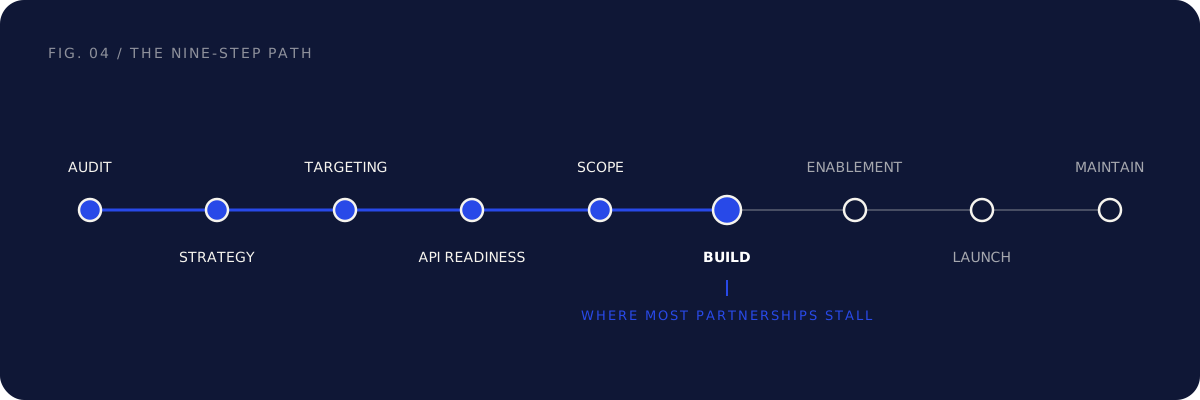
- Audit. Review your product, API, customer workflows, current partners, and integration opportunities. Output: an honest map of what you have and what is missing.
- Strategy. Decide what partnerships are for: growth, retention, enterprise deals, or adoption. The answer changes which partners you target.
- Partner targeting. Define the partner profile, score candidates on the matrix above, and prepare outreach that leads with the customer workflow, not your pitch deck.
- API readiness. Close the documentation gaps the audit found, so partner engineers can say yes quickly.
- Integration scope. Turn the idea into user stories, a workflow map, requirements, and acceptance criteria. More on this below.
- Build. Write, test, and ship the integration code, coordinating with the partner's team on review and certification. This is where most partnerships stall, because it is the step that needs dedicated engineering.
- Enablement. Prepare sales, support, and marketing with one-pagers, demo flows, and FAQ before the launch, not after.
- Launch. Marketplace listing, release notes, announcement, partner co-marketing. Treated as a project, not a tweet.
- Maintain. Monitor the integration, handle partner API changes, and keep certifications current. Partner APIs change without asking you first.
Scope it like a product, not a deal
The integration scope is the document that turns a partnership from a conversation into a roadmap item. It does not need to be long. It needs four parts:
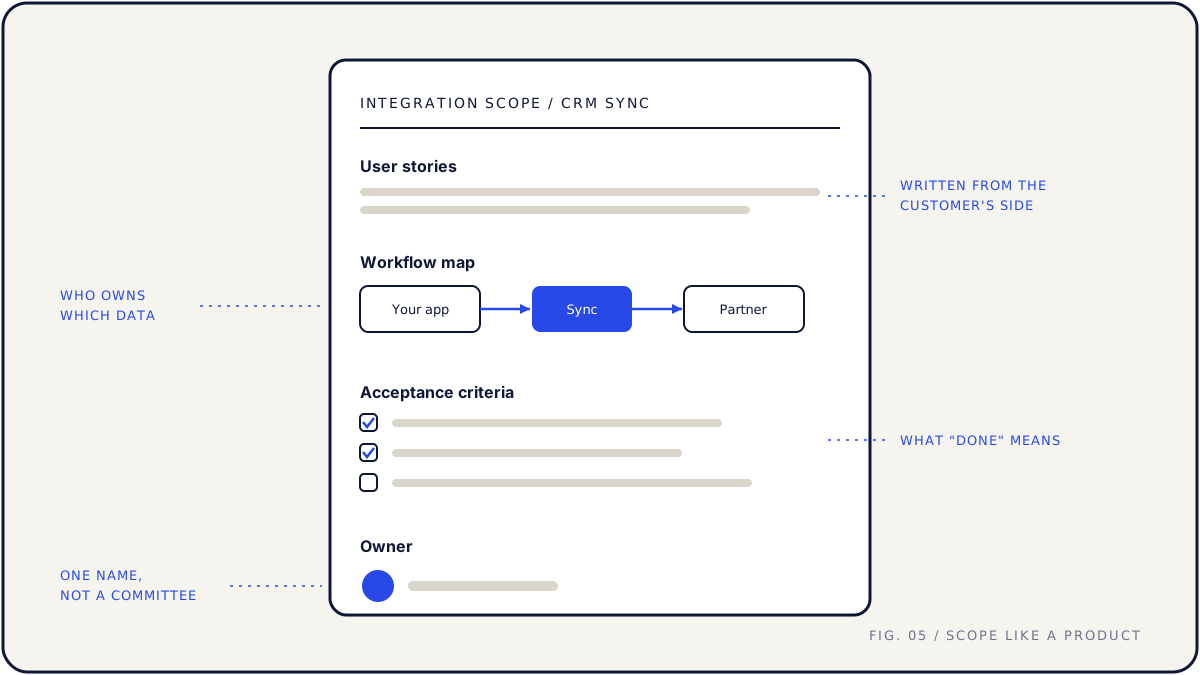
- User stories for both sides of the integration, written from the customer's perspective. "As a sales rep, when I close a deal, the contact appears in my CRM within a minute."
- A workflow map that settles which system owns which data, which direction syncs flow, and what happens on conflict. Most integration bugs are really unanswered ownership questions.
- Acceptance criteria that define done. Sync latency, error handling, edge cases like deleted records and renamed fields.
- One owner. A name, not a committee.
A useful test: hand the scope to an engineer who was not in any partner meeting. If they come back with basic questions about data ownership or what done means, the scope is not finished.
Launch is a project, not an announcement
An integration that ships silently might as well not exist. Customers do not read changelogs, and marketplace algorithms do not promote listings with no installs. Run launch week with a checklist:
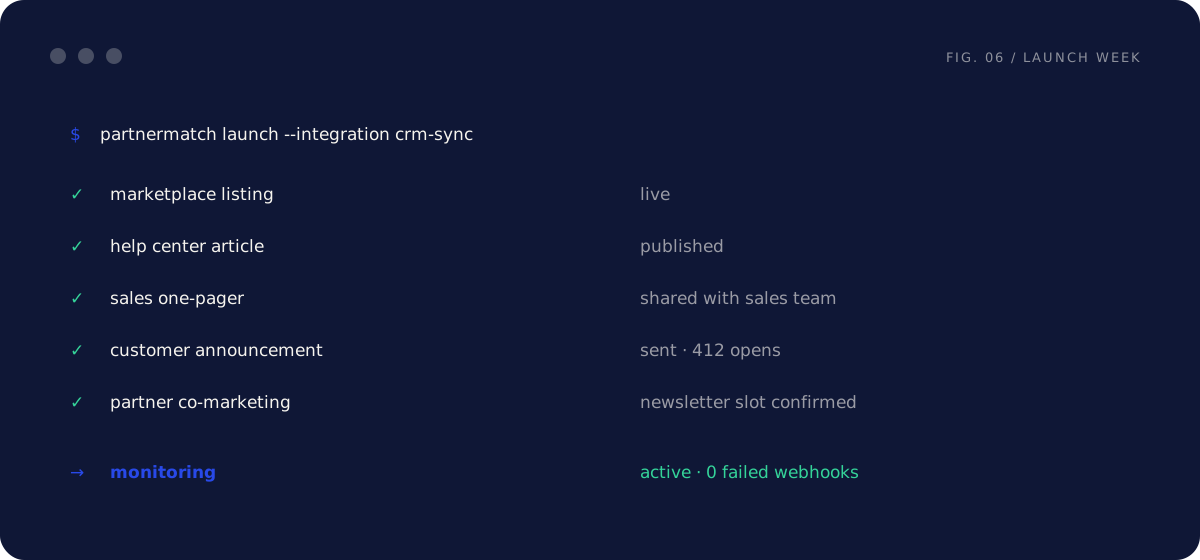
- Marketplace listing with screenshots and the customer workflow in the first sentence, not feature jargon.
- Help center article that walks through setup end to end, including what permissions the customer needs to grant and why.
- Sales one-pager so your team can pitch the integration in active deals the same week.
- Customer announcement, sent individually to everyone who asked for the integration. These are your first installs and your first reviews.
- Partner co-marketing. Ask the partner for a newsletter mention, a blog post, or a social slot. Partner marketing teams have quotas for ecosystem content; you are doing them a favor by being easy to feature.
- Monitoring switched on from day one: webhook delivery, token refresh, sync failures. The first you hear about a broken integration should never be a churn-risk customer.
Then watch adoption for 90 days. Installs tell you the listing works. Weekly active connections tell you the scope was right. If customers connect and then go quiet within a week, fix that before building integration number two.
Common mistakes, and the fix
Chasing the biggest logo first. The fix: score on customer pull and distribution upside. A mid-size partner with an active marketplace usually beats a giant who will not return your emails.
Doing outreach before the API story is ready. The fix: partner-ready docs before the first call. You get one first impression with a partner's engineering team.
Signing the agreement and calling it done. The fix: define done as "live and adopted," and put the integration scope, owner, and date in writing on both sides.
Building for the partner instead of the customer. The fix: every user story names the customer, not the partner. The partner's certification checklist is a constraint, not the goal.
Forgetting the integration after launch. The fix: monitoring, a named maintainer, and a process for partner API deprecations. Set a quarterly review of adoption and error rates.
FAQ
How long does a first integration partnership take? With docs ready and a scoped build, a typical first integration takes six to twelve weeks from scope to live, plus the partner's app review time, which ranges from days (most marketplaces) to months (large enterprise ecosystems). The unscoped version of the same project routinely takes a year.
Do we need a partnerships hire before our first integration? No. You need an owner, and at seed to Series B that is usually a founder or product leader with part-time focus. A dedicated partnerships team makes sense once integrations are a proven channel, not before.
Should we build in-house or get outside help? The strategy and the partner relationship must live in your company. The documentation, scoping, build, and launch work can be done by your team or a service like PartnerMatch, depending on engineering capacity. What you should not do is split the integration across owners.
Is a marketplace listing worth the certification effort? If the partner's marketplace is where your customers already shop for tools, yes, almost always. Certification is mostly a fixed cost, and the listing keeps generating installs after launch.
How do we get a big platform's attention with little traction? Lead with shared customers. Even five named customers asking for the integration is a stronger opener than any traction slide. Partner managers are measured on ecosystem activity, and a startup that arrives with a scoped use case and partner-ready docs is the easiest yes on their desk.
What metrics should we track? Installs, weekly active connections, sync volume, error rate, and influenced revenue (deals where the integration appeared in the sales process). Adoption beats install count.
How many integrations should we build in year one? Fewer than you think. One shipped, launched, and adopted integration beats four half-built ones. Most startups do well with two to four in the first year, with the first one treated as the template for the rest.
When is the right time to start? When customers describe moving data by hand between your product and another tool. That is demand. If you have an API, or can expose one, the rest is process.
The short version
Tech partnerships compound: each shipped integration makes your product stickier, your marketplace presence wider, and the next partner conversation easier. But they only compound when they ship.
Pick the partner by workflow and the matrix, not the logo. Get your API docs partner-ready before outreach. Scope like a product, name an owner, and treat launch as a project with its own checklist. Then keep the integration monitored and maintained, because partner APIs change without warning.
If you want the whole path handled, from partner targeting to written code to launch assets, that is exactly what a Partner Audit is for. We review your product, API, and partner potential, then define what to build, who to approach, and how to ship it.