The full lifecycle of a SaaS tech partnership, from first call to renewal
The partnership lifecycle for B2B SaaS as a loop, not a funnel: identify, prioritize, pitch, negotiate, build, launch, partner success, review, renew.
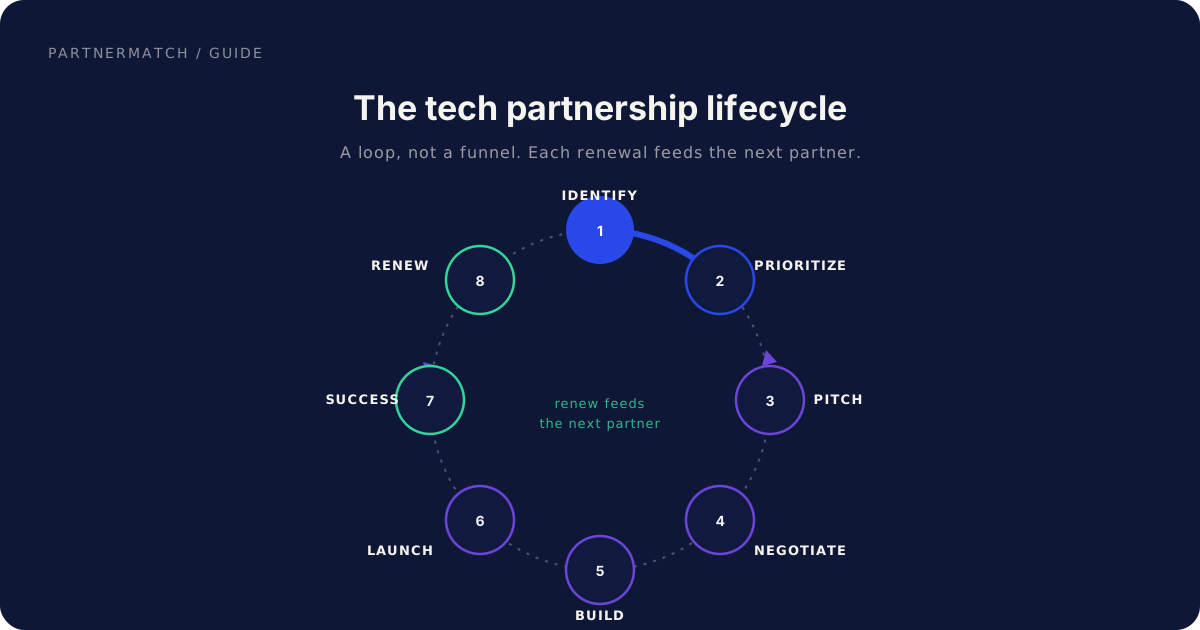
Most teams treat a tech partnership as a thing that ends. You sign the deal, you ship the integration, you send the announcement, and then attention moves to the next fire. Six months later the integration is quietly broken, nobody owns it, and the partner has stopped returning emails.
The teams that get real growth from partnerships treat the partnership lifecycle differently. It is not a project with a finish line. It is a loop that runs from the first call through renewal, and a good renewal teaches you exactly which partner to go after next.
This guide walks the full tech partnership lifecycle stage by stage: how to identify and prioritize partners, how to pitch and qualify them, how to negotiate without killing momentum, how build and launch actually happen, what partner success looks like for a startup, when to sunset a partnership, and who owns each stage when you have no partnerships team at all.
The 60-second version
- The partnership lifecycle is a loop, not a funnel. Identify, prioritize, pitch, negotiate, build, launch, partner success, review and renew, then the renewal feeds the next partner.
- Identify from demand you already have: customer requests, deal notes, lost-deal reasons, and gaps in the marketplaces your buyers already use.
- Prioritize on customer pull and distribution upside before you spend a dollar of engineering time. Most candidates should die at this stage.
- Pitch with shared customers and a scoped use case, not a partner deck. Qualify their app-review timeline, partner tiers, and who owns the relationship on their side.
- Negotiate the few terms that matter commercially, involve legal late and narrowly, and keep the build moving while papers are in flight.
- Build and launch follow a known nine-step path. Treat the integration like a product feature and the launch like a project.
- Partner success is the longest stage and the most ignored. Lightweight QBRs, a shared adoption dashboard, and expansion through deeper scope and co-selling.
- Sunset cleanly when it is time. Flat adoption, a deprecated partner API, or a strategy shift are all valid reasons to wind a partnership down without burning the relationship.
The partnership lifecycle is a loop, not a funnel
A funnel implies you pour candidates in the top and end with a shipped integration. The narrowing is real, but the line is wrong. The output of a good partnership is not just an integration. It is information: which customers adopted it, which partner motion actually sent leads, and which adjacent partner your shared customers keep asking about next.
That information feeds the front of the loop again. So the right mental model is a ring with eight stages, where the last stage hands the first stage a better starting position than it had before.
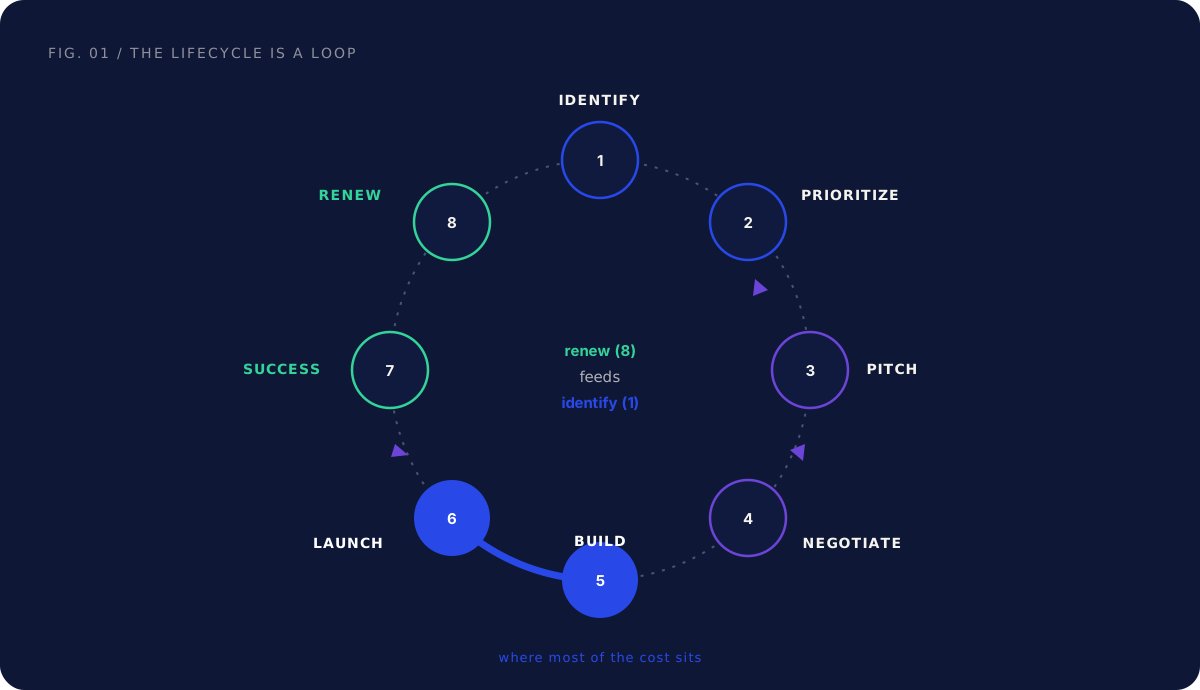
The eight stages, in order:
| Stage | What it produces |
|---|---|
| 1. Identify | A list of candidate partners drawn from real demand |
| 2. Prioritize | A scored shortlist, with most candidates cut |
| 3. Pitch | A qualified conversation with a willing partner |
| 4. Negotiate | A signed agreement that does not block the build |
| 5. Build | A scoped, tested, live integration |
| 6. Launch | Adoption, a listing, and enablement in place |
| 7. Partner success | A maintained integration that grows |
| 8. Review and renew | A decision to deepen, hold, or sunset |
Stages one through three are cheap. Stage five is expensive. Stages seven and eight are where most of the compounding value lives, and where most startups stop paying attention. The point of running this as a loop is that you only pay the expensive build cost for partners that survived the cheap stages.
Identifying and prioritizing partners
Identification is a sourcing problem before it is a strategy problem. You are not brainstorming logos in a room. You are reading evidence that already exists in your company about which tools sit next to yours in a customer's day. Four sources, all of which you already have:
- Customer requests. Support tickets and feature requests that mention another product by name. "Can you sync this to our CRM" is a partner candidate with a customer attached.
- Deal notes. Your sales team's call notes name the tools a prospect already runs. Recurring names are demand signals.
- Lost-deal reasons. When you lose because "it does not connect to X," X is a high-pull candidate.
- Marketplace gaps. Look at the marketplaces your buyers shop in. A category with weak or missing options that your product covers is a distribution opening.
Once you have a list, prioritize it before you talk to anyone. Score each candidate on two axes: customer pull, meaning how many existing customers and active deals asked for it, and distribution upside, meaning whether the partner runs a marketplace or program that can actually send you leads. Build the candidate that scores high on both first. We go deeper on scoring and sequencing in our partnership prioritization framework.
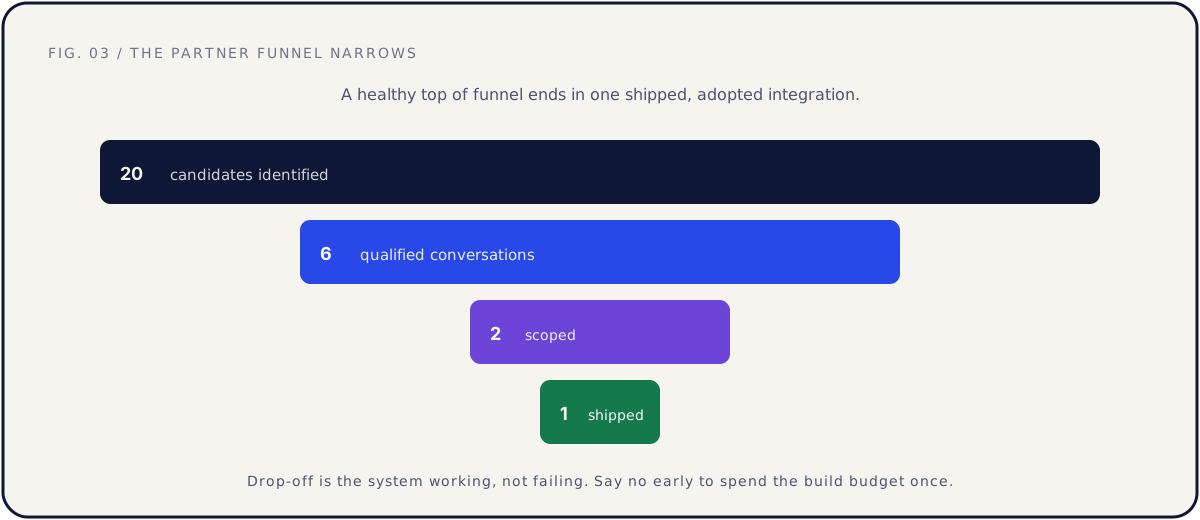
The discipline here is saying no. Twenty candidates is normal. One shipped integration per quarter is also normal. The gap between those two numbers is not failure, it is the system working.
Pitch and qualification
The pitch stage is where most founders reach for the wrong tool. They send a partner deck about their company. Partner managers see dozens of those a month, and they all read the same: "please give us your distribution."
Lead with the customer instead. The strongest opener names shared customers and a scoped use case in two sentences. "Four of your customers use our product to manage payments, and they currently export invoices by hand to reconcile in your platform. We would like to build the sync that removes that step." That gets answered because it makes the partner manager's job easier. Partner managers are measured on ecosystem activity, and a startup that arrives with named customers and a clear build is the easiest yes on their desk.
Qualification runs the other direction. You are deciding whether this partner is worth the build, and three things tell you:
- App-review timeline. Some marketplaces certify in days. Large enterprise ecosystems take months and have real security and design requirements. This number changes your whole project plan, so get it early.
- Partner tiers. Many programs have tiers that gate marketplace placement, co-marketing, and lead sharing. Find out which tier you would land in and what the next tier requires, because "listed but invisible" is a common and disappointing outcome.
- Ownership on their side. A partnership with no named owner at the partner dies the same way it does at a startup. If you cannot find one person accountable for the integration on their end, treat that as a yellow flag.
A good pitch-and-qualify stage ends with mutual interest, a rough scope both sides recognize, and a shared sense of the timeline. It does not need a signed anything yet.
Negotiating and closing complex agreements
This is the stage where momentum goes to die, so the goal is to close the few things that matter commercially and keep everything else moving.
What actually matters in most SaaS tech partnership agreements:
| Term | Why it matters |
|---|---|
| Data handling | Who can access, store, and process customer data, and under what security commitments |
| Use of marks | Whether you can use each other's name and logo, and where |
| Support boundaries | Who answers a customer when the integration breaks, and how escalation works |
| Marketplace and listing rights | What you can publish, and any review or approval gates |
| Revenue share or referral terms | Only if money actually moves; many tech partnerships have none |
| Term and termination | How either side exits, and what happens to the integration if they do |
Involve legal late and narrowly. Founders often hand the whole thing to a lawyer at the first call, which adds weeks before you even know the partnership is real. Better: qualify the partnership commercially first, agree the business terms in plain language, then bring legal in to paper a deal that already exists in principle. Give your lawyer the two or three points you actually care about so the review is scoped, not open-ended.
The most useful habit in this stage is to keep the build moving while papers move. You do not need a signed master agreement to start API readiness work, finish the integration scope, or stand up a sandbox. None of that touches production customer data. By the time legal closes, you want to be ready to build, not starting to think about it. For more on what to negotiate and what to leave alone, see our guide to SaaS partnership agreements.
Build and launch, summarized
Build and launch are the most documented stages of the lifecycle, so this section points rather than repeats. The path from a scoped idea to a live, adopted integration runs nine steps, and the order matters because the cheap steps exist to de-risk the one expensive one.
The short version of the path:
- Audit and strategy decide whether this partnership is even for growth, retention, or enterprise credibility.
- Partner targeting and API readiness make sure partner engineers can say yes quickly when they open your docs.
- Integration scope turns the idea into user stories, a workflow map, and acceptance criteria before anyone writes code.
- Build is where the real cost sits: writing, testing, and shipping the integration, plus the partner's review or certification.
- Enablement and launch prepare sales, support, and marketing, then run launch week as a project with a listing, help docs, and co-marketing.
- Maintain keeps the integration alive as partner APIs change without warning.
The mistake to avoid here is treating the signed agreement as the finish line. Done means live and adopted, not papered. We cover the full build-and-launch path, the integration scope anatomy, and the launch-week checklist in the complete guide to tech partnerships for SaaS.
Partner success after launch
This is the longest stage in the partnership lifecycle and the one startups most often skip. The integration is live, the announcement went out, and the team moves on. Then adoption drifts, the partner forgets you exist, and at renewal there is nothing to talk about.
Partner success does not require a partnerships team. It requires three lightweight habits.
Run a lightweight QBR, not an enterprise one. A startup quarterly business review with a partner is one slide, not a forty-page deck. Show three numbers the partner also cares about: adoption, sync volume, and influenced pipeline. The point is to keep a relationship warm and to surface problems before they become churn, not to perform.
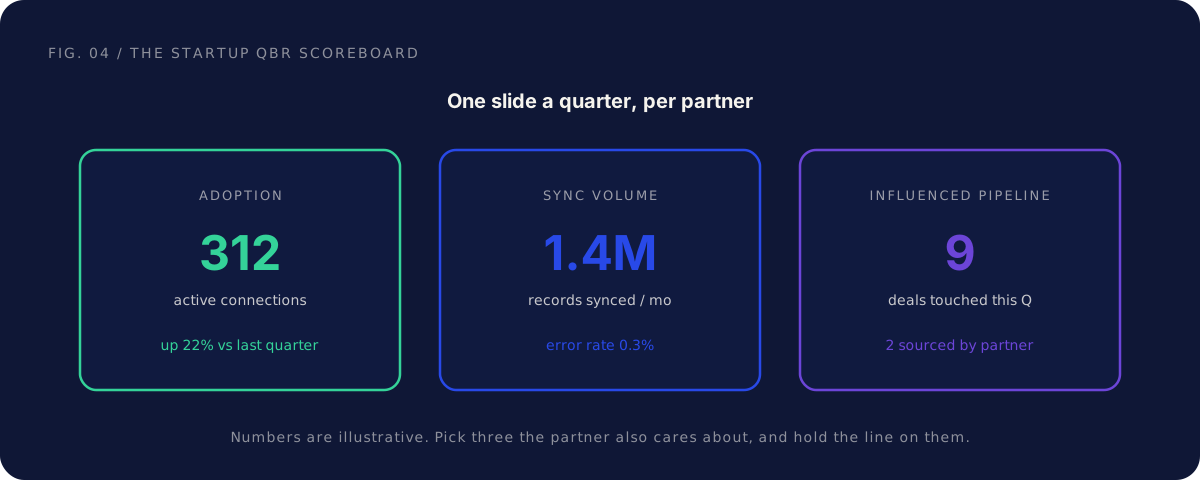
Keep a shared adoption dashboard. Both sides should see installs, weekly active connections, sync volume, and error rate without asking. Shared visibility turns "is this working?" from a quarterly debate into a glance, and it makes the expansion conversation concrete.
Expand through deeper scope and co-selling. A live integration is a foundation, not a ceiling. Expansion comes two ways: deepening the integration so it covers more of the shared workflow, and co-selling, where your sales teams introduce each other into accounts where both products fit. Co-selling only works once the integration is real and adopted, which is why partner success comes before it in the loop.
The signal that partner success is working: at the renewal conversation, you are negotiating how to do more together, not whether to keep the lights on.
When to sunset a partnership
Not every partnership should be renewed, and pretending otherwise quietly drains your team. Sunsetting is part of the lifecycle, not a failure of it. Three patterns mean it is time to wind down.
- Adoption flatlined. If installs and active connections have gone nowhere for two or three quarters despite a real launch, the workflow you bet on was not as common as the early requests suggested. A dead integration is a tax with no return.
- The partner deprecated their API. When a partner sunsets the API your integration depends on, you face a forced rebuild. If adoption does not justify rebuilding, sunset instead.
- A strategic shift. Your ICP moved, your roadmap moved, or the partner's product moved away from your shared customers. The partnership made sense for a version of the company you no longer are.
Do it cleanly. Tell the partner before you tell the market. Give the customers who use the integration real notice, a migration path if one exists, and a clear end date. Publish a short deprecation note in your changelog, and pull the marketplace listing rather than leaving a broken one live. A clean sunset protects the relationship, and partner managers move between companies, so the goodwill you keep here shows up in a future deal.
Staffing the lifecycle at a startup
The most common objection to all of this is "we do not have a partnerships team." You do not need one. You need clarity about who owns each stage, because the failure mode is not missing headcount, it is every stage owned by nobody.
Here is how the stages typically map onto an existing seed-to-Series-B team.
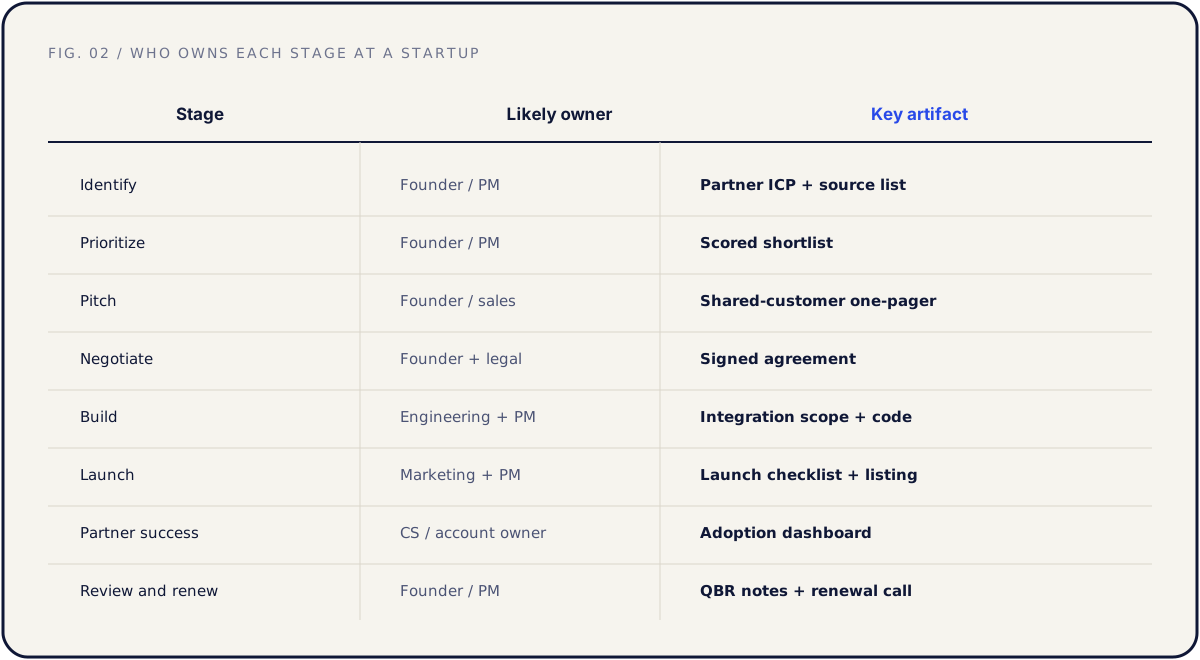
| Stage | Likely owner | Key artifact |
|---|---|---|
| Identify | Founder or PM | Partner ICP and source list |
| Prioritize | Founder or PM | Scored shortlist |
| Pitch | Founder or sales lead | Shared-customer one-pager |
| Negotiate | Founder plus legal | Signed agreement |
| Build | Engineering plus PM | Integration scope and code |
| Launch | Marketing plus PM | Launch checklist and listing |
| Partner success | CS or account owner | Adoption dashboard |
| Review and renew | Founder or PM | QBR notes and renewal call |
Two things make this work. First, one person, usually a founder or product leader, owns the loop end to end even when individual stages are handed off. Without a loop owner, the partnership falls into the gap between sales and engineering every time. Second, the artifacts are the handoffs. A scored shortlist hands to a pitch, a scope hands to a build, an adoption dashboard hands to a renewal. When the artifact exists, the handoff is clean. When it does not, the stage quietly stalls.
A dedicated partnerships hire makes sense once integrations are a proven channel with several live partners, not before. Until then, the lifecycle runs on clear ownership and a handful of good artifacts.
Common mistakes, and the fix
Treating the partnership as a project that ends at launch. The fix: run it as a loop. Put partner success and a renewal review on the calendar before launch week, so the long stage has an owner and a date from the start.
Pitching your company instead of the customer. The fix: lead every first message with shared customers and a scoped use case. The partner deck is a follow-up, not an opener.
Handing the whole agreement to legal on day one. The fix: qualify and agree business terms in plain language first, then bring legal in narrowly to paper a deal that already exists. Keep the build moving while papers move.
Skipping prioritization and building for the loudest customer. The fix: score every candidate on customer pull and distribution upside, and let most of them die before engineering is involved.
Letting a dead integration linger out of politeness. The fix: sunset on the evidence. Flat adoption, a deprecated partner API, or a strategy shift each justify a clean wind-down, and a clean wind-down protects the relationship.
FAQ
How long does one trip around the partnership lifecycle take? From first identification to a live integration, a typical first partnership runs a few months: weeks for identify through negotiate, then six to twelve weeks for a scoped build, plus the partner's app-review time. Partner success and renewal then run for as long as the partnership lives. The unscoped version routinely takes a year and often never ships.
Do we need a partnerships team to run this? No. At seed to Series B, the lifecycle runs on an existing team with clear stage ownership and one person owning the loop end to end. A dedicated hire makes sense once partnerships are a proven channel, not before.
What is the difference between this and just building integrations? The build is one stage. The lifecycle is the whole loop around it: choosing the right partner, closing the agreement, launching for adoption, keeping the integration healthy, and feeding what you learn into the next partner. A great build on a badly chosen partner is wasted engineering.
When should we involve a lawyer? After you have qualified the partnership commercially and agreed the business terms in plain language, not before. Bring legal in narrowly, with the two or three points you actually care about, so the review is scoped rather than open-ended.
How do we run a QBR with a partner if we are tiny? Keep it to one slide and three numbers the partner also cares about: adoption, sync volume, and influenced pipeline. The goal is a warm relationship and early problem detection. A short, honest update beats a polished deck nobody reads.
What metrics decide whether to renew or sunset? Active connections and weekly usage tell you if the workflow was real. Error rate tells you if the integration is healthy. Influenced pipeline tells you if the distribution upside materialized. Flat adoption across two or three quarters, or a deprecated partner API with no adoption to justify a rebuild, points to a sunset.
How do we keep momentum while the agreement is being papered? Run the non-production work in parallel. API readiness, the integration scope, and a sandbox do not touch customer data and do not need a signed agreement. By the time legal closes, you want to be ready to build, not starting to plan.
How many partnerships should we run at once? Fewer than you think. One partnership moving cleanly through build and launch, plus one or two in earlier stages, is plenty. The loop is meant to be repeated, not parallelized into chaos. Ship one well, then let its renewal point you at the next.
The short version
A SaaS tech partnership is not a deal you close, it is a loop you run. Identify partners from real demand, prioritize hard, pitch with shared customers, negotiate the few terms that matter, build and launch like a product, then keep the integration healthy and growing until the renewal conversation tells you whether to deepen, hold, or sunset.
Run it as a loop and the work compounds. Each renewal hands the next round a warmer relationship, better data, and a clearer sense of which partner to chase next. Run it as a series of one-off projects and you start cold every time.
If you want the whole lifecycle handled, from partner targeting through written code, launch assets, and post-launch maintenance, that is exactly what a Partner Audit is for. We review your product, API, and partner potential, then define what to build, who to approach, and how to ship it.