How to build a co-selling engine with strategic technology partners
A co-selling playbook for B2B SaaS: build a co-sell engine from a joint value prop, partner enablement, account mapping, attribution, and incentives.
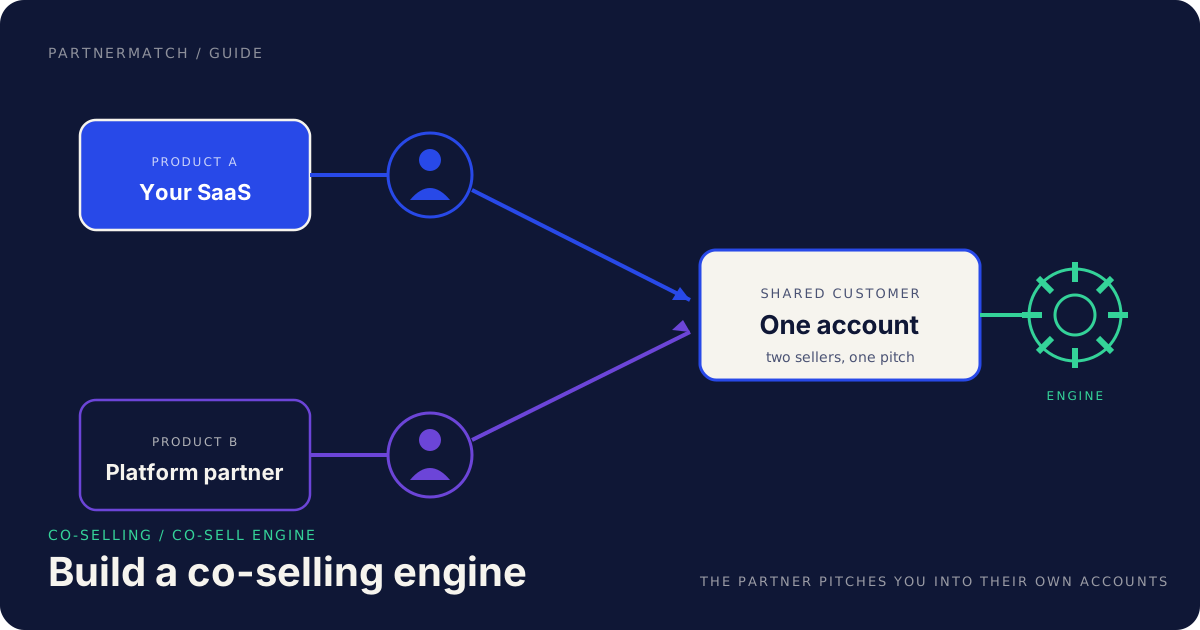
A partner manager at a much larger platform tells you their field team loves your product. Great news. Then nothing happens. Their sellers never co-sell you, never mention you in a single deal, because nobody taught them what you do, when to bring you up, or what they get for it.
This is the gap between a partnership that exists on paper and a co-selling engine that moves pipeline. Co-selling is the highest-leverage partner motion in B2B SaaS, and it is also the one most teams run by accident: a few warm intros, a Slack channel, and a hope that the partner's sellers will remember you.
This guide treats co-selling as a system you build, not a relationship you maintain. We cover what co-selling is and how it differs from referral and reseller models, why a co-sell engine is worth building, the five components that make it repeatable, and how to run each one with a small team. A co-selling engine is something you engineer, not something you wait for.
The 60-second version
If you only read one section, read this one:
- Co-selling means the partner actively pitches you into their own accounts, not just forwards a lead and walks away.
- It is the highest-leverage partner motion for API-first and headless products that slot into a bigger platform's workflow, because the partner is already in the room.
- A co-sell engine has five components: a joint value proposition, partner enablement, account mapping, co-sell attribution, and aligned incentives. Skip one and the engine stalls.
- Enablement is the part everyone underinvests in. A partner's seller cannot pitch a product they were never taught to recognize.
- Account mapping finds the overlap between your open pipeline and the partner's install base. You can run it in a spreadsheet before you buy a tool.
- Attribution is survival, not bookkeeping. If you cannot show influenced pipeline, the partnership dies in budget season.
- Incentives have to reach the field rep, not just the partnership team. A rep co-sells what pays them or makes their number.
What co-selling actually is
Co-selling is a motion where a partner does not just point a customer at you, they sell alongside you. Their seller raises your product in their own deal, positions it as part of the solution, and stays in the room while it closes. The customer experiences one joint pitch, not a handoff.
That is different from the two motions it gets confused with. In a referral model, the partner makes an introduction and steps back; you do the selling, you own the customer, and the partner collects a fee at most. In a reseller model, the partner sells your product as their own, owns the customer, carries support, and takes margin. Co-selling sits between them: both sellers stay active, you keep the customer, and the leverage comes from the partner's access, not their sales effort alone.
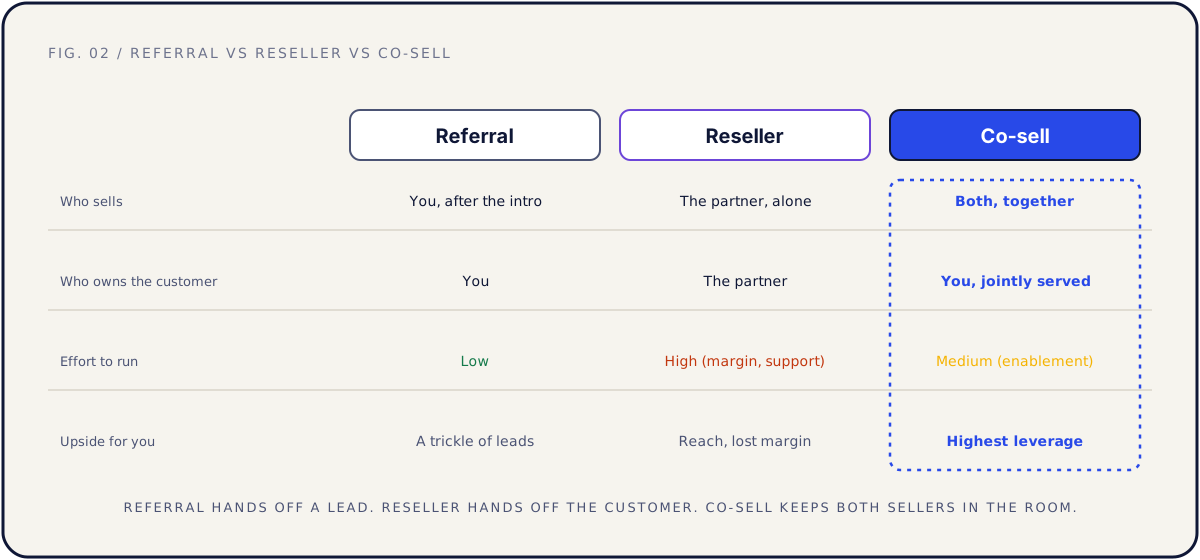
The distinction matters because it changes what you build. A referral program needs a tracking link and a payout. A reseller program needs margin, contracts, and support training. A co-selling engine needs something harder and more valuable: a partner's field team that can actually pitch you. That is what the rest of this guide is about.
| Motion | The partner's role | What you have to build |
|---|---|---|
| Referral | Sends a lead, then exits | A tracking link and a payout |
| Reseller | Sells and owns the customer | Margin, contracts, support enablement |
| Co-sell | Pitches you inside their own deal | A joint value prop and field-ready enablement |
Why co-selling is the highest-leverage partner motion
Most growth channels start cold. You buy attention, earn trust, then qualify a need. Co-selling skips those steps, because the partner has already done them. Their seller is inside an account, the customer already trusts them, and the budget conversation is already open. When that seller brings you up, you arrive warm, vouched for, and timed to a live buying moment.
This leverage is strongest for API-first and headless products. If your product slots into a larger platform's workflow rather than standing alone, your natural buyer is often already mid-deal with that platform. A headless commerce engine, a payments layer, a data pipeline: these rarely get bought in isolation. They get bought as part of a bigger decision, which means the platform's seller is the person with the most natural reason to introduce you, at the right time.
Think about the kinds of strategic technology partners whose clients you would co-sell into. Creative and design platforms such as Adobe, PLM and CAD ecosystems like Centric Software or Lectra, and real-time 3D engine platforms such as Epic Games all run large, complex deals where adjacent tools get pulled in. A product that extends one of those workflows has a natural co-sell path: the platform's seller is already shaping the customer's stack, and your product is a piece of it. These are illustrative examples of partner categories, not claims about any specific arrangement.
The catch is that leverage is not automatic. A partner's seller will only co-sell you if three things are true: they understand what you do, they have a reason to bring you up, and they get something for it. Build those three and the leverage shows up. Skip them and you are back to hoping.
The anatomy of a co-selling engine
A co-selling engine is not a relationship, it is a system with parts. When co-selling works, you can name the five components and point to who owns each. When it fails, one of them is missing, and the whole motion quietly degrades into the occasional warm intro.
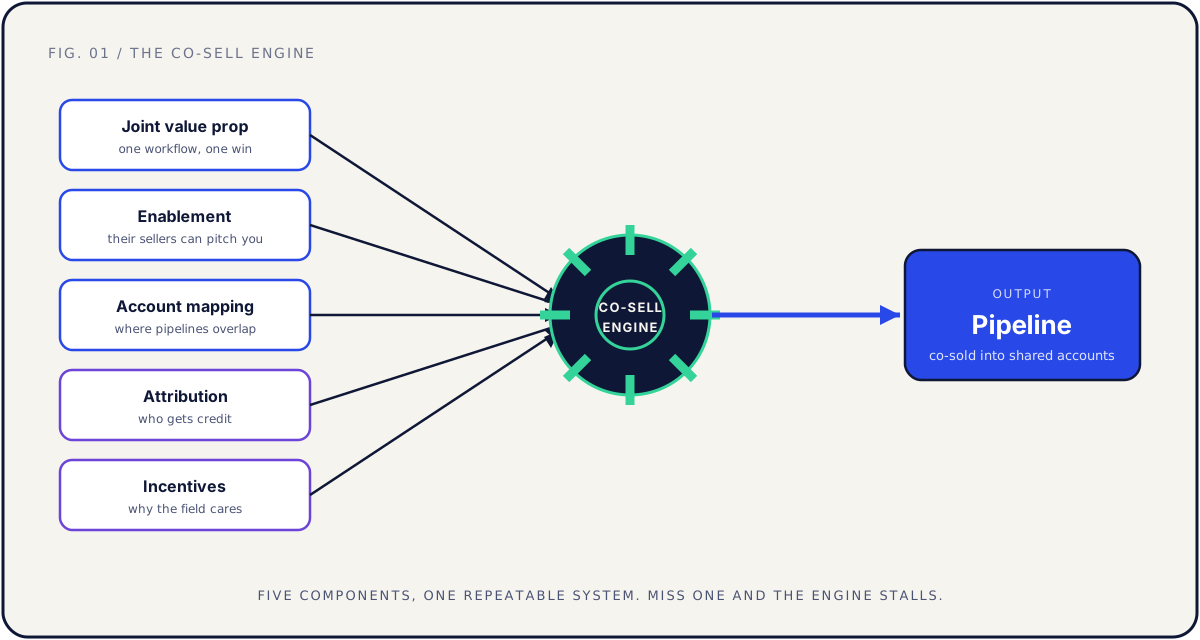
The five components, and what each one does:
| Component | What it produces | Who tends to own it |
|---|---|---|
| Joint value proposition | One sentence a partner seller can say | Founder or product |
| Partner enablement | Sellers who can recognize and pitch you | Partnerships or product |
| Account mapping | A list of shared accounts to work | Partnerships plus sales |
| Co-sell attribution | Influenced pipeline you can report | Sales ops or partnerships |
| Aligned incentives | A reason the field rep cares | Founder plus partner program |
Read the engine as a loop, not a checklist. The joint value prop tells enablement what to teach. Enablement makes account mapping actionable, because a trained seller can act on a shared account. Attribution proves the mapping worked, which justifies the incentives, which keep the field engaged. Each component feeds the next, and a weak link starves everything downstream.
The rest of this guide takes the five in order. They are not equally hard. The joint value prop is a writing exercise. Enablement and account mapping are where the real work sits. Attribution and incentives keep the engine funded once it runs.
Component one: the joint value proposition
The joint value proposition is the single sentence a partner's seller can say in a customer meeting without checking notes. It is not your pitch and it is not the partner's pitch. It is the combined story: what the customer can now do that neither product delivered alone.
A weak joint value prop sounds like a logo pairing. "We integrate with their platform" tells a seller nothing they can use. A strong one names the customer's workflow and the result: "Their customers building 3D product configurators can now push assets straight into the engine without a manual export, so launches ship weeks sooner." A platform seller can repeat that, because it makes their deal bigger and their customer happier.
Write it from the partner seller's incentive, not yours. The test: does saying this sentence help the partner's rep close their own deal? If your product makes the platform stickier, expands its footprint in the account, or removes a blocker the customer raised, the seller has a selfish reason to mention you. If it only helps you, it will not get said.
Keep it to one workflow. A joint value prop that tries to cover every integration you offer becomes a paragraph no seller will memorize. Pick the one shared workflow where your product most obviously extends the partner's, and let it carry the relationship. Add more later, once the first one is producing deals.
Component two: enabling the partner so their sellers can pitch you
This is the component everyone underbuilds, and the one that decides whether the engine runs. A partner's seller cannot pitch a product they do not understand and have never seen demoed. Enablement is how you put your pitch in their head so it fires at the right time without you present.
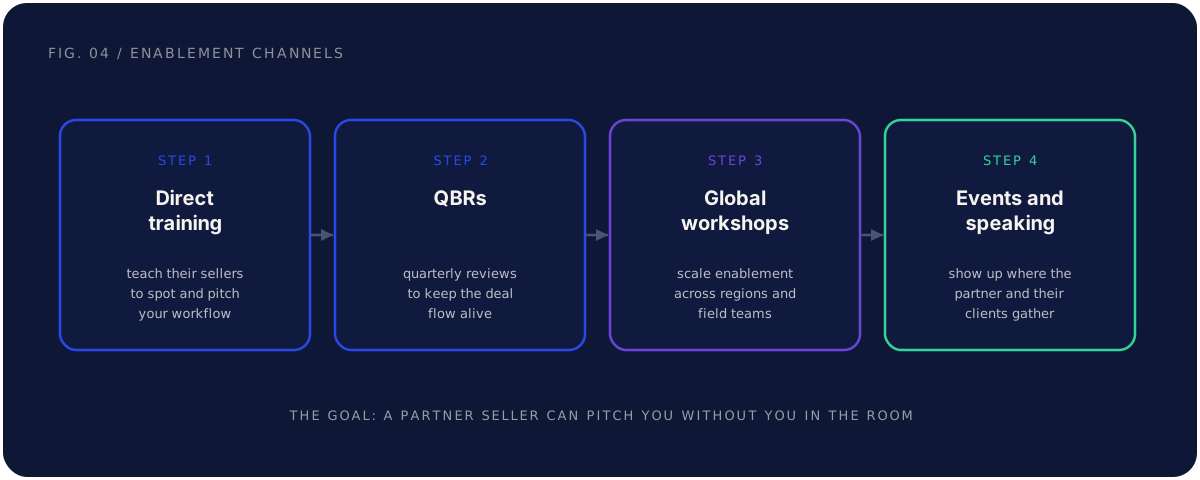
Enablement runs on four channels, from intimate to broad:
- Direct training. Run live sessions with the partner's sellers. Teach them the joint value prop, the customer signals that mean you belong in the deal, and a two-minute demo they can give themselves. Record it so new reps can self-serve.
- Quarterly business reviews. A QBR with the partner keeps the relationship warm and the deal flow honest. Bring three numbers the partner also cares about: co-sell deals worked, influenced pipeline, and what you need from them next quarter. This is also where you re-train, because partner sales teams turn over.
- Global enablement workshops. Once the motion works in one region or segment, scale it. A workshop format lets you train dozens of the partner's sellers at once, which is how a co-sell motion goes from a handful of friendly reps to the whole field.
- Events and speaking. Show up where the partner and their customers gather. A speaking slot at the partner's user conference, or a joint session at an industry event, does enablement and demand generation at once: the partner's sellers see you treated as a credible part of the ecosystem, and their customers hear the joint story directly.
The mental model: you are not enabling the partner's company, you are enabling individual sellers. A signed agreement enables nobody. A rep who can give your two-minute demo from memory is the unit of a working co-sell engine. The work compounds, but it also decays, because sales teams turn over, so treat it as a standing program, not a launch task. This is the same discipline that runs through the whole partnership lifecycle: the long stages after launch are where the value is, and where most teams stop paying attention.
Component three: account mapping without a fancy tool
Account mapping is finding the overlap between your pipeline and the partner's install base, so co-selling targets the accounts where both of you have a reason to be. Without it, co-selling is random: a rep happens to remember you in a deal where it happens to fit. With it, you walk into a QBR with a named list of accounts where you both already have a foot in the door, which is a far more productive conversation.
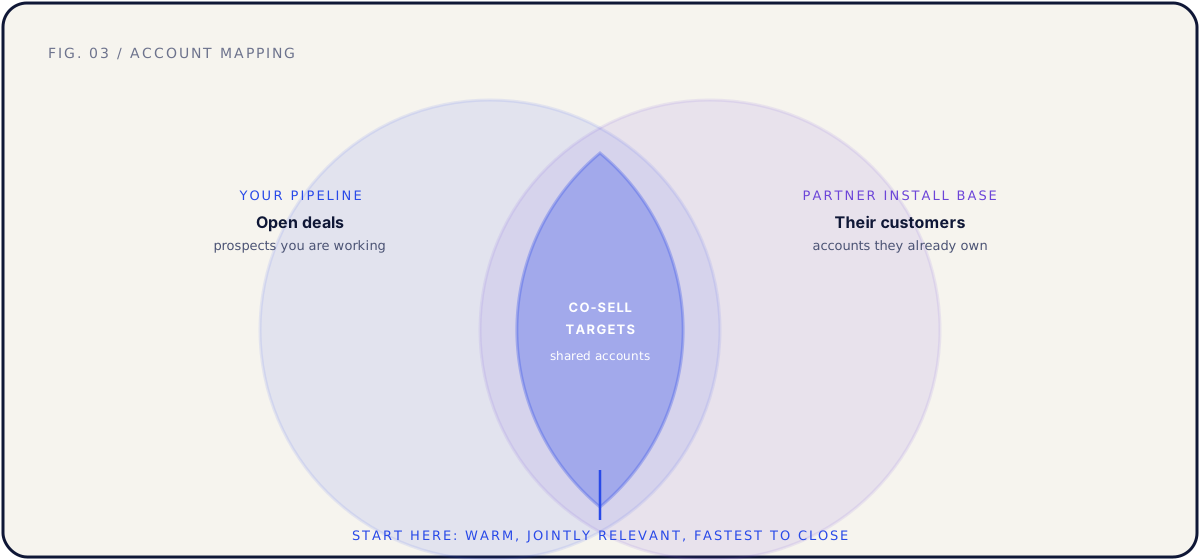
The overlap has three zones, and each one is a different play:
| Zone | What it is | The co-sell play |
|---|---|---|
| Your pipeline, their customer | A deal you are working at an account they already own | Ask the partner seller for an intro and air cover |
| Their pipeline, your customer | A deal they are working at an account you already serve | You vouch for them, they expand, you get pulled deeper |
| Both prospecting | Neither has the account yet, but both want it | Plan a joint approach so you arrive together |
You do not need a partner ecosystem platform to do this. The first pass is a spreadsheet. Export your open opportunities and your customer list, get the partner to share their account list at whatever granularity their policy allows, and match on domain or company name. The rows that appear on both lists are your co-sell targets, and they are warm by definition: someone on each side already has a relationship.
Two practical notes. First, account mapping is privacy-sensitive; share the minimum that makes the match work, and agree up front on what each side can do with the other's list. Second, the value is in working the list, not building it. Bring the top ten overlapping accounts to the next QBR with a specific ask per account, and the mapping turns into pipeline. Prioritizing that list is the same scoring discipline covered in our partnership prioritization framework: not every overlap deserves equal effort.
Component four: co-sell attribution that survives budget season
Attribution is the component that keeps the engine alive when budgets get cut. Co-selling produces influence, not clean conversions, which makes it easy to undervalue and easy to defund. If you cannot show that the partner touched real deals, the partnership looks like a cost the moment someone runs the numbers.
The job is to track influenced pipeline: deals where the partner appeared in the sales process, even when they were not the only source. Tag the partner the moment they enter a deal, whether through an intro, a co-sell account, or a referral, and carry that tag to closed-won. Break the chain anywhere and the partner looks worthless, because the credit evaporates before the deal closes.
| Question | What to track | Where it lives |
|---|---|---|
| Did the partner touch this deal? | A partner-source field on the opportunity | Your CRM |
| Which motion brought it? | Co-sell vs referral vs inbound tag | Your CRM |
| How much pipeline did the partner influence? | Sum of influenced opportunity value | A simple quarterly report |
| Is it converting? | Win rate on partner-influenced deals | The same report |
A few rules keep attribution honest. Report influence, not sole credit; a co-sold deal usually had several touches, and claiming the partner did it all destroys your credibility the first time someone checks. Decide credit rules with the partner before the deals start, because nothing sours a partnership faster than fighting over who closed what. And keep the report boring and repeatable, because the audience is a budget meeting. The numbers that survive a board review are influenced pipeline and win rate, the same ones that justify the incentives in the next section. This is the same attribution discipline that underpins co-marketing; we go deep on carrying a source tag end to end in the SaaS co-marketing playbook.
Component five: incentives that motivate the partner's field team
The final component is the one founders most often get wrong, because they design incentives for the partner's company instead of the partner's seller. A company-level agreement does not move a rep with a quota to hit this quarter. The question that decides whether co-selling happens is simple: when a partner seller is sitting in a deal, what do they get for bringing you up?
There are three layers of incentive, and they reach different people:
- Strategic incentive (the executive). Your product makes the partner's platform stickier, larger in the account, or more competitive. This wins the program's sponsorship but does nothing for the individual rep.
- Tactical incentive (the seller). Co-selling you makes the rep's own deal bigger, faster, or more likely to close. This is the one that actually moves the field, and it is exactly what a good joint value prop delivers.
- Direct incentive (the wallet). A referral fee, a spiff, or co-sell credit that counts toward the rep's number. Money works, but it is the layer with the most contractual and channel-conflict friction, so use it where it is clean and lean on the tactical layer everywhere else.
The most durable incentive is the tactical one, because it does not depend on a payout structure that a compensation reset can erase. If co-selling your product reliably makes the partner rep's deals better, they will keep doing it without being paid extra, and teach the next rep to do it too. Build the value prop so that pitching you is in the rep's self-interest, and the engine runs on its own fuel.
When you do use direct incentives, keep them simple and fast. A clear spiff that pays quickly on a tagged, closed deal beats an elaborate tiered program nobody on the field understands.
How it connects to co-marketing and the lifecycle
Co-selling does not run alone. It is one motion inside a larger partnership system, and it depends on the work that comes before and beside it.
Co-marketing feeds co-selling. The integration landing pages, joint case studies, and launch announcements that co-marketing produces are the proof a partner seller points to when they pitch you. Co-marketing builds the air cover; co-selling is the ground game that converts it. The full amplification side lives in the SaaS co-marketing playbook.
Co-selling also sits late in the partnership lifecycle, and that order is not optional. You cannot co-sell an integration that does not exist or that nobody has adopted, because there is no joint value prop to enable sellers on. Co-selling earns its place only after the integration is live, adopted, and proven, which is why it lives in the partner-success stage rather than the launch stage. The leverage is real, but it is the payoff for doing the earlier stages well, not a shortcut around them.
Common mistakes, and the fix
Treating co-selling as a relationship instead of a system. The fix: name the five components and assign each an owner. A warm relationship with no enablement, no account map, and no attribution is not an engine, it is a friendship that produces the occasional intro.
Enabling the partner's company, not its sellers. The fix: train individual reps until one of them can give your two-minute demo from memory. A signed agreement enables nobody. The unit of a working co-sell engine is a seller who can pitch you unassisted.
Designing incentives for the executive, not the field. The fix: make the joint value prop so the rep's own deal gets bigger or faster when they bring you up. Strategic alignment wins sponsorship; tactical self-interest is what moves the field.
Skipping attribution until budget season. The fix: tag the partner source the moment they touch a deal and carry it to closed-won from day one. You cannot reconstruct influenced pipeline after the fact, and that number is what keeps the program funded.
Co-selling before the integration is adopted. The fix: finish the build, prove adoption, then build the co-sell motion on top. With no live, adopted workflow there is no joint value prop, and with no joint value prop there is nothing for a seller to pitch.
FAQ
What is the difference between co-selling and a referral program? In a referral program the partner introduces a lead and steps back; you sell, you own the customer, and the partner gets a fee at most. In co-selling the partner's seller stays in the deal and pitches you alongside their own product. Co-selling needs more enablement but produces warmer, larger, better-timed deals because the partner is already in the room.
Do we need a partnerships team to run co-selling? No. At seed to Series B, a founder or product leader can run the engine if they own all five components. What you cannot do is leave any component unowned. The motion fails not from missing headcount but from enablement, account mapping, or attribution belonging to nobody.
Which kinds of partners are best for co-selling? Strategic technology platforms whose customers buy in large, complex deals where adjacent tools get pulled in. Creative and design platforms such as Adobe, PLM and CAD ecosystems like Centric Software or Lectra, and real-time 3D engine platforms such as Epic Games are illustrative of the category. If your product extends one of those workflows, the platform's seller has a natural reason to co-sell you.
How do we run account mapping without buying a tool? Export your open opportunities and customer list, ask the partner for their account list at whatever granularity their policy allows, and match on domain or company name in a spreadsheet. The overlap is your co-sell target list. Buy a dedicated platform later, once the manual version is producing deals and the volume justifies it.
How do we attribute a co-sold deal when there were many touches? Report influence, not sole credit. Add a partner-source field to the opportunity, tag it the moment the partner enters the deal, and carry it to closed-won. Then report influenced pipeline and the win rate on partner-influenced deals. Showing the partner reliably touched winning deals keeps the program funded.
What actually motivates a partner's individual sellers? The deal in front of them getting bigger, faster, or more likely to close when they bring you up. That tactical, self-interested incentive moves the field far more reliably than a company-level agreement or a slow, complicated payout. Direct spiffs help where they are clean and fast, but the durable motivator is making the rep's own number easier to hit.
When in the partnership should we start co-selling? After the integration is live, adopted, and proven, not before. Co-selling needs a joint value proposition, and that comes from a real, working shared workflow. Trying to co-sell an unbuilt or unadopted integration gives the partner's sellers nothing concrete to pitch.
How is co-selling different from co-marketing? Co-marketing builds public proof: landing pages, case studies, and announcements that make your joint story credible at scale. Co-selling is the one-to-one motion where a partner seller pitches you inside a specific deal. They reinforce each other, but they are run by different people with different metrics.
The short version
Co-selling is the highest-leverage partner motion in B2B SaaS because the partner is already in the room: the customer trusts them, the budget is open, and the timing is live. But that leverage only shows up when you build a co-sell engine instead of waiting for warm intros to materialize.
Build the five components and assign each an owner. Write a joint value proposition a partner seller will actually say. Enable individual reps through direct training, QBRs, workshops, and events until they can pitch you unassisted. Map the overlap between your pipeline and the partner's install base, even in a spreadsheet. Tag and report influenced pipeline so the program survives budget season. And design incentives that reach the field rep, not just the executive.
If you want the whole path handled, from partner strategy and a partner-ready API through the shipped integration, enablement, and the co-sell motion on top, that is exactly what a Partner Audit is for. We review your product, API, and partner potential, then define what to build, who to approach, and how to ship and sell it together.