Building a Shopify app: a scope-to-launch playbook for SaaS
An independent playbook to build a Shopify app for B2B SaaS. Decide if it fits, build on the APIs, meet listing requirements, get listed, and drive installs.
A merchant is staring at a problem they cannot solve with the tools they already have. Carts get abandoned, inventory drifts out of sync, reviews go uncollected. So they open the app store attached to the platform they run their store on, and they search. That search is where the decision to build a Shopify app starts to make sense, because it is a buying moment that has already begun.
This is an independent playbook for building a Shopify app and getting it listed, written for B2B and commerce SaaS teams. It is educational, written from the outside, and it is not official Shopify guidance. PartnerMatch is not affiliated with, endorsed by, or partnered with Shopify. Wherever requirements, fees, or timelines come up, treat them as general categories and check Shopify's current requirements before you scope anything.
What this guide covers: why the Shopify App Store is a strong channel for commerce SaaS, how to decide if it fits your product, how to translate your product into a merchant-specific use case, the general build path, what a merchant-facing listing that converts looks like, the app review and quality expectations at a high level, how to drive installs into revenue, and how to maintain the app as the platform evolves.
The 60-second version
- The Shopify App Store is a channel, not a directory. A large base of merchants shop it for tools that remove a real chore from running their store.
- It fits when your customers run Shopify stores and your app removes a merchant workflow. If neither is true, a listing will sit unused.
- You have to translate your product into a merchant use case. "Our platform does X" is not a reason to install. "This removes a task from your day" is.
- The build path is general and predictable. Build on the APIs, ship an OAuth install flow, bill through the platform, meet the requirements, submit, get listed.
- The listing converts on the outcome, not the category. Lead with the merchant result, show the app inside the admin, add reviews and a real setup guide.
- App review checks quality, security, and behavior. Treat the requirements as acceptance criteria from day one and review is a formality, not a wall.
- Installs are not revenue. Free-to-install is the front door; activation and a clear upgrade path turn an install into a paying merchant.
- A Shopify app is a maintained asset. The platform evolves, so keep the app, screenshots, and pricing current or the listing decays into one-star reviews.
Why the Shopify App Store is a strong channel for SaaS
Most growth channels are rented. You pay for the click, the click stops when the spend stops. An app listing behaves differently. Once it is live and ranking, it keeps generating installs while your team ships other features and sells other deals.
The Shopify App Store adds intent on top of that. A merchant browsing it already runs a store, already has revenue on the line, and is actively looking for a tool to fix a problem. You show up inside a buying moment that has already started, instead of interrupting someone who was not thinking about you.
There is a scale point too. A very large base of merchants run their stores on the platform and shop the store for tools, so the addressable audience for a genuinely useful commerce app is wide. For a seed-stage product, being a listed app in a well-known ecosystem also reads as credible in a sales call or a security review.
This is the same compounding logic we cover in the SaaS marketplace strategy guide, applied to one ecosystem: installs drive reviews, reviews drive ranking, ranking drives more installs, and co-marketing acts as a booster on top. It is the same shape as the sibling HubSpot App Marketplace playbook, pointed at merchants instead of CRM users.
| Channel | How it behaves | What it costs to keep |
|---|---|---|
| Paid ads | Linear. Clicks stop when spend stops. | Continuous budget |
| Cold outbound | Linear. Pipeline tracks rep hours. | Continuous headcount |
| Shopify App Store listing | Compounding. Installs accrue and rank improves over time. | Quarterly maintenance |
The catch is that the loop only starts if the listing converts, and the listing only converts if the app is real and the fit is right. So the first decision is not how to build it. It is whether to build it at all.
Deciding if a Shopify app fits your product
A Shopify app is only worth the work if two things are true. Both questions are about your customers, not about the platform's size.
Do your customers run Shopify stores? Look at your own base and your active pipeline. If a meaningful share of customers and deals run stores on the platform, the channel is pointed at people you already want. If almost none of them do, a listing is a logo in a store your real buyers never open. Pull the numbers before you commit engineering time.
What merchant workflow does the app remove? A listing earns installs by deleting a chore from a merchant's day, not by existing. Write the value in one plain sentence from the merchant's side. "When a customer abandons a cart, they get a recovery message automatically, and you see the revenue it brought back." If you cannot write that sentence from real merchant conversations, you are not ready to list. Run five merchant interviews first.
These are the same two axes we use to choose any integration target, customer pull and distribution upside, described in the complete guide to tech partnerships. The app and the listing are usually the same decision seen from two sides: you build the app to earn the listing.
| Signal | Strong fit | Weak fit |
|---|---|---|
| Customer overlap | Many customers and deals run Shopify stores | Almost no overlap with your base |
| Workflow removed | One clear chore deleted, stated in a sentence | A vague "better together" with no chore removed |
| Merchant value | Obvious payoff a merchant feels in a week | Value only your internal team understands |
| Maintenance appetite | You can own updates as the platform evolves | No owner for the app after launch |
If the fit is weak, the honest move is to not list, or to validate demand with a handful of named merchants first. A neglected listing is worse than none. It collects one-star reviews from merchants the app was never built for.
Translating your product into a merchant use case
This is the step most SaaS teams skip, and it is the one that decides whether the app installs or sits idle. Your product probably does something general. A Shopify app has to do something specific that a merchant recognizes as their problem.
The translation has three moves. First, name the merchant, not the buyer persona from your deck: a person who runs a store, watches a dashboard, and worries about conversion, fulfillment, and repeat purchase. Second, name the chore your app removes from that person's week, in their language, not yours. Third, scope the app down to the smallest version that delivers that one outcome cleanly. A focused app that does one thing well beats a broad one that does five things confusingly, because the merchant is searching for one thing.
Consider a hypothetical. A SaaS company sells a general "customer messaging platform." That phrase means nothing in the app store. Translated to a merchant use case, it becomes "send an automatic thank-you and a review request after every delivered order, with no setup beyond installing." Same product, but now it is a chore removed, stated as an outcome a merchant feels.
| Generic product framing | Translated merchant use case |
|---|---|
| "Customer messaging platform" | Auto thank-you and review request after delivery |
| "Data sync engine" | Keep inventory in sync across your channels, no spreadsheets |
| "Analytics suite" | See which products drive repeat purchases, in one screen |
| "Workflow automation" | Auto-tag high-risk orders before you ship them |
The narrower the use case, the easier everything downstream gets: the build is smaller, the listing headline writes itself, and app review has less surface area to question. Resist the urge to ship your whole platform as one app. Ship the one outcome your merchants actually search for.
The build path, in general terms
Once the fit is clear and the use case is named, the path is predictable. The steps below are framed generally on purpose. The platform's exact mechanics change, so confirm the current process in Shopify's developer documentation. The shape, though, is stable.
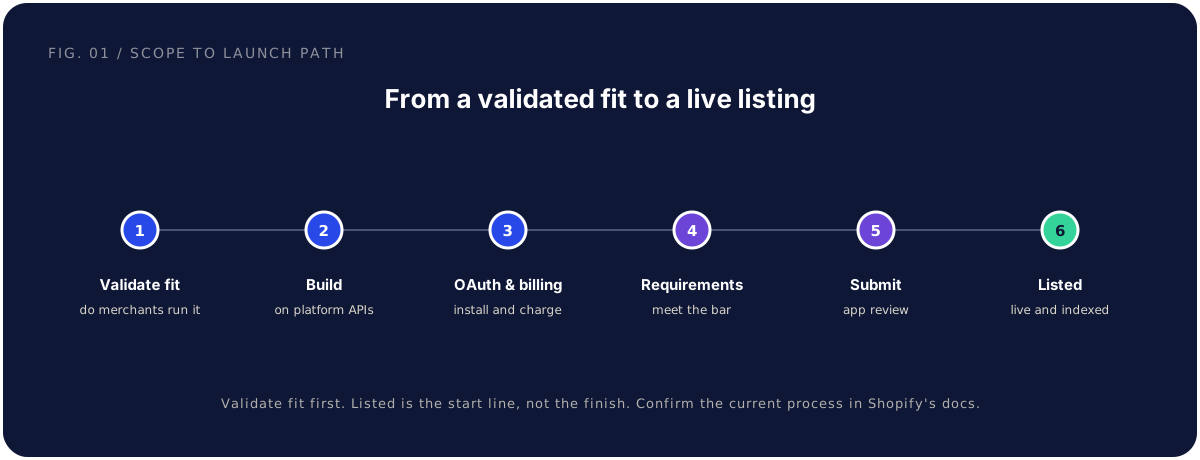
- Validate the fit. Confirm your customers run Shopify stores and that you can state the merchant workflow you remove in one sentence. This is the cheapest step and the one that saves the most wasted build.
- Choose the app type and build on the APIs. Decide what kind of app the use case needs, embedded in the admin, public, or otherwise, and build it against the platform's public APIs for the resources your workflow touches, in a development store.
- Ship the OAuth install flow and platform billing. Public apps install through OAuth: a merchant authorizes your app, you receive tokens, and you handle refresh and revocation. Request the minimum scopes the workflow needs. Charge through the platform's billing rather than a separate checkout, because merchants trust the in-platform charge and review generally expects it.
- Meet the listing requirements. Assemble what a public listing needs: a working install and uninstall, performance that does not slow the storefront, setup docs, a support contact, a privacy policy, deletion handling, and listing assets. More on this below.
- Submit for app review. Reviewers generally test that the app installs, performs, behaves, and handles data the way the listing claims.
- Get listed. Once approved, the app is live and discoverable by merchants searching for tools.
Steps one through five are relatively cheap and fast. The easy-to-underestimate part is that "listed" is the start line, not the finish. Everything after it, conversion, installs, and revenue, is where the channel is actually won.
A note on sequencing: build the app before you chase the listing. The listing is the storefront for a working app, and reviewers test the real thing. If your API and core product are not partner-ready, fix that first, because a listing on top of a fragile app just converts shoppers into one-star reviews. We are deliberately not stating exact fees, revenue-share terms, or review timelines here. Those are Shopify's, they change, and they govern your submission, so read them directly.
What a merchant-facing listing that converts looks like
A store listing is a landing page whose layout you do not control. What you do control, the copy, the screenshots, the proof, and the setup path, decides whether a merchant installs or scrolls past.
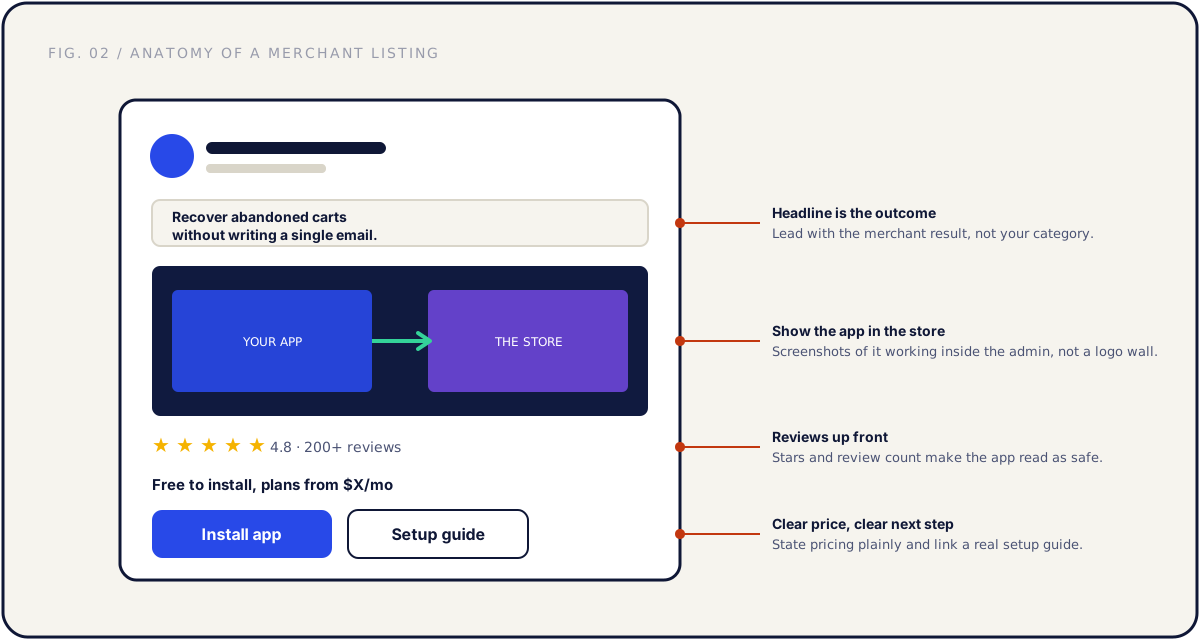
The headline is the outcome, not the category. The merchant is asking one question: will this remove a chore or make me money? Answer it immediately. "Recover abandoned carts without writing a single email" tells them what they get. "The leading customer engagement platform" tells them nothing they can act on.
Screenshots show the app inside the store. The most common mistake is showing your own product UI in isolation, or a wall of partner logos. The merchant wants to see your app working inside the admin they already use: the new screen, the report, the automation running. Show the seam where the app lives.
Social proof is stars and review counts. A listing with a strong rating and a visible review count reads as safe. A listing with no reviews reads as a gamble, however good the product is. This is why a review habit is part of the plan, not a nice-to-have.
A real setup guide and clear pricing close the gap. Merchants self-serve their way to a decision. State the pricing model plainly, free to install with a clear plan, or a monthly figure, and link a setup guide a merchant can follow without booking a call. Ambiguity costs more installs than a price does.
| Listing element | Converts when | Loses the merchant when |
|---|---|---|
| Headline | Names the outcome you deliver | Describes your category or funding |
| Screenshots | Show the app inside the store admin | Show your UI alone or a logo wall |
| Social proof | Rating and review count visible | No reviews, no counts |
| Setup guide | Public, step by step, self-serve | "Contact us" with no real guide |
| Pricing | Stated plainly on the listing | Hidden behind a sales form |
Co-marketing is a strong booster on the listing, and a store launch pairs naturally with a joint announcement to merchants. Marketing the listing amplifies one that already converts. It cannot rescue one that does not.
App review and quality expectations, at a high level
Every serious app store reviews apps before they go live, and Shopify's app review is part of getting listed. The point of review is consistent across ecosystems: confirm the app installs cleanly, performs well, behaves the way the listing claims, and handles merchant and customer data responsibly. The specific criteria are Shopify's and they change, so read their current requirements rather than treating any single list as final.
The reliable way to make review painless is to fold the requirements into your scope from day one, the same discipline that keeps any integration on track, described in the tech partnerships guide. When the checklist is the spec, review is a formality. When it is discovered at submission, review becomes a rework cycle.
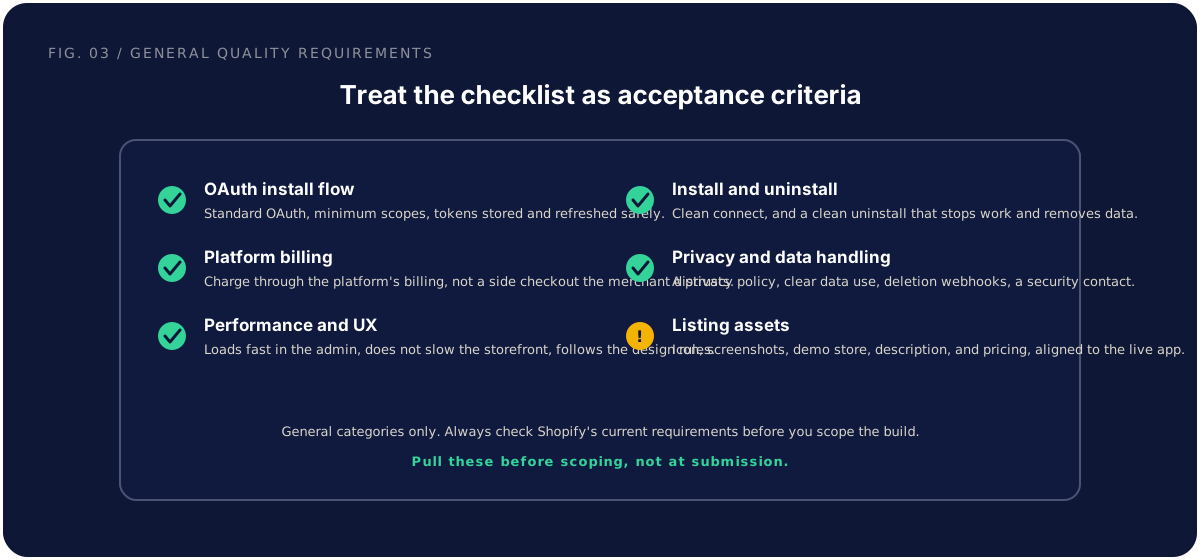
At a general level, expect review to care about these categories. None are exotic, and they are the same things a serious merchant asks about, so getting them ready pays off twice.
| Area | What reviewers generally look for | Have ready |
|---|---|---|
| OAuth and scopes | Standard install flow, minimum necessary scopes | Scope-by-scope justification |
| Platform billing | Charges run through the platform's billing | Billing flow tested end to end |
| Performance and UX | Fast load, no storefront slowdown, design rules followed | Performance checks, design review |
| Install and uninstall | Clean connect, and uninstall that stops work and cleans up | Tested uninstall and deletion path |
| Data handling | How data is stored, used, and deleted | Privacy policy and deletion webhooks |
| Support and contact | A reachable channel and a security contact | A named contact and a policy page |
A practical sequence that avoids the rework cycle: pull Shopify's current requirements before scoping, write the app scope with those items as acceptance criteria, self-audit against them before submitting, and treat any reviewer feedback as a bug list rather than a negotiation. Done this way, review tends to be measured in a reasonable window rather than dragging on. The teams who experience it as a slog are usually the ones who discovered the requirements at the end.
One guardrail worth repeating: do not invent the exact bar. We are describing general categories. The real criteria, fees, revenue-share terms, and timelines live in Shopify's current developer and app review documentation, and they are what govern your submission. This guide is independent and is not official Shopify policy.
Driving installs after launch and turning them into revenue
Getting listed is not the win. An install is not revenue. It is a merchant who clicked a button, often on a free-to-install app. Whether that install becomes a paying merchant depends on three things you build around the listing.
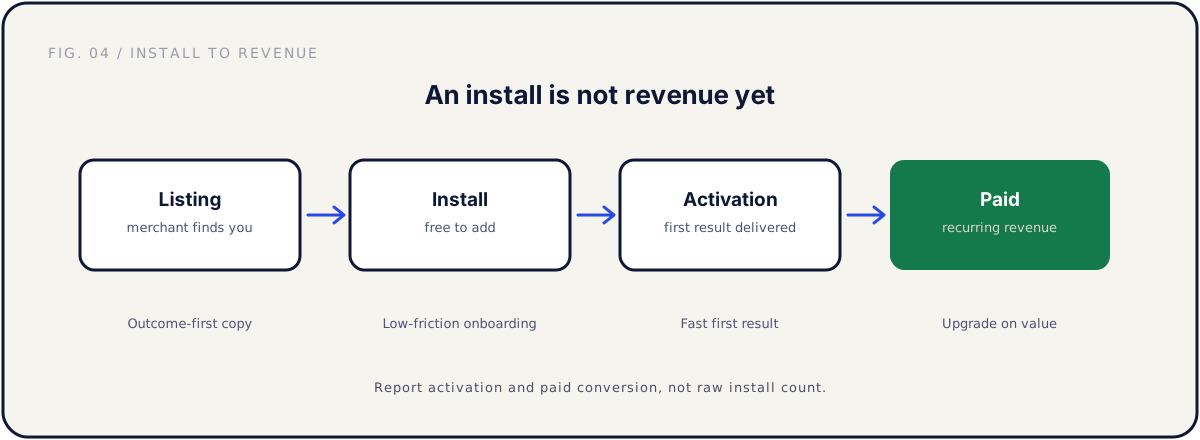
A fast first result. The risky moment is right after install. A merchant who cannot get a result in the first session uninstalls within days, which hurts both your revenue and your engagement signal. Design the first run deliberately: a setup that takes minutes, a clear first action, and a visible result. Get the merchant to the outcome you promised in the listing's headline before they leave the admin.
A clear upgrade path. Free-to-install gets merchants in the door. Revenue comes from the moment a merchant feels enough value to pay. Tie the upgrade to a result they can see, more orders recovered, more reviews collected, more time saved, rather than to an arbitrary feature gate. The cleanest pricing is the kind a merchant can reason about: free to start, then a plan that scales with the value they get.
A review habit. Reviews do not happen on their own. Happy merchants rarely think to leave one; unhappy ones always do. After a merchant has used the app successfully for a couple of weeks, ask. A short in-app prompt or a one-line email at the right moment turns silent satisfied merchants into the social proof that ranks your listing and reassures the next shopper.
| Stage | The risk | What you do |
|---|---|---|
| Listing | Seen but not installed | Lead with the outcome, add proof |
| Install | Added but never set up | Low-friction onboarding |
| Activation | Connected but no result | Fast, visible first result |
| Paid | Used for free, never upgrades | Tie the upgrade to felt value |
There is also a direct outreach motion at launch. The merchants who match the use case most closely are your first installs and your first reviews. Reach them individually the week you go live. They turn a cold listing into one with proof, which is what every later shopper reacts to.
Maintaining the app as the platform evolves
An app is a product, and products decay if no one owns them. The platform changes: APIs get new versions, scopes shift, requirements get updated, the admin gets redesigned. Your own product changes too. A screenshot goes stale after a redesign, a pricing line goes wrong after a packaging change, an API version gets deprecated and your app throws errors that surface as one-star reviews before they reach your inbox.
The fix is a maintenance owner and a cadence. This is the same portfolio discipline from the marketplace strategy guide, applied to one app you care about.
| Cadence | What to check |
|---|---|
| Quarterly | Screenshots current, copy accurate, pricing correct, new reviews answered |
| On product change | Update the listing the same week a UI or packaging change ships |
| On platform change | Test against new API versions, adjust scopes, ship the update |
| On deprecation | Migrate installed merchants before the old version breaks, then update the listing |
The recency signal matters more than it looks. A maintained app quietly outranks an abandoned one over time, and responding to reviews, including critical ones, signals to the store and to future shoppers that the app is alive and supported. Deprecations deserve the most care: when the platform sunsets an API version, you have installed merchants depending on a connection about to break, and the job is to migrate them before the break, not after.
This is also the work that earns better placement and any higher-trust status, which is generally a function of a quality app, a converting listing, real installs, good reviews, and consistent maintenance, exactly the inputs this whole playbook is built around.
Common mistakes, and the fix
Listing when your customers do not run Shopify stores. The fix: check the overlap in your base and pipeline first. If almost no one runs a store on the platform, the listing is a logo in a place your buyers never visit. Validate demand before you build.
Shipping your whole platform instead of one merchant use case. The fix: name the single chore your app removes and scope to the smallest app that delivers it cleanly. A focused app converts; a broad one confuses.
Discovering requirements at submission. The fix: pull Shopify's current requirements before scoping and treat them as acceptance criteria. App review becomes a formality instead of a rework cycle.
Treating "installed" as revenue. The fix: design a fast first result and an upgrade tied to felt value. Free-to-install is the front door, not the destination.
Shipping the app and never touching it again. The fix: a named maintenance owner and a quarterly refresh. An app on a platform that evolves will decay without one, and decay shows up as bad reviews.
FAQ
Is building a Shopify app worth it for a seed-stage startup? If a real share of your customers run Shopify stores and your app removes a clear merchant chore, yes. The build is mostly a fixed cost up front that keeps generating installs after launch. If the overlap is thin, spend the effort where your customers actually are instead.
Do we need the app built before we can list? Almost always, yes. The listing is the storefront for a working app, and reviewers generally test the real app during review. Build it partner-ready first, then list. A listing in front of a fragile app just converts shoppers into one-star reviews.
How long does Shopify's app review take? That depends on Shopify's current process and on how prepared you are, so check their documentation for timelines. In general, teams who fold the requirements into scope from the start move through faster than teams who discover them at submission. We are not stating an official timeline here.
What does the app review check? At a general level, that the app installs cleanly through OAuth, requests minimum scopes, bills through the platform, performs without slowing the storefront, handles data responsibly, and behaves the way the listing claims. The exact, current criteria are Shopify's and you should read them directly rather than relying on any summary.
Should our app be free or paid? For most commerce SaaS, free to install with a clear paid plan removes friction and maximizes installs, which feeds ranking, then converts merchants once they feel value. Charging from the first day is viable when the app is a substantial standalone capability, but it raises the conversion bar. Whatever you choose, state the pricing plainly on the listing, and check Shopify's current revenue-share and billing terms rather than assuming.
How do we get our first reviews and installs? Reach the merchants who match your use case most closely, individually, the week you launch. They are your warmest installs and your most likely reviewers. Then build an ongoing habit: prompt satisfied merchants a couple of weeks after they get their first result.
What kind of app should we build? That depends on the merchant workflow you are removing and on Shopify's current app types and surfaces, which you should confirm in their docs. The general rule is to choose the app type that puts your outcome closest to where the merchant already works, usually inside the admin, and to request only the scopes that outcome needs.
Can we run this without a partnerships hire? Yes. At seed to Series B this is usually owned by a founder or product leader, with engineering capacity for the build and maintenance. A dedicated hire makes sense once the channel is proven, not before. What you cannot skip is a named owner.
Further reading
- Shopify app developer documentation — the official guide to building, submitting, and listing Shopify apps. Confirm current requirements and fees here, since they change.
The short version
The Shopify App Store is a strong channel when your customers actually run Shopify stores and your app removes a real chore from a merchant's day. Decide that first, honestly, using your own base and pipeline, then translate your product into one specific merchant use case before you write any code.
If it fits, the path is predictable: build on the APIs, ship an OAuth install flow, bill through the platform, meet the listing requirements, submit for review, and get listed. Write a listing whose headline is the merchant outcome, with screenshots of the app inside the store, real reviews, and clear pricing. Treat app review requirements as acceptance criteria so review is a formality. Then turn installs into revenue with a fast first result, an upgrade tied to felt value, and a review habit, and maintain the app as the platform evolves.
Done this way, one app keeps generating installs for years, and each turn of the loop makes the next one cheaper. This is independent guidance, not official Shopify policy, so always confirm the current requirements, fees, and timelines before you submit.
If you want the whole path handled, from deciding whether the store fits to building the app to a listing that converts, that is exactly what a Partner Audit is for. We review your product, API, and store potential, then define what to build, how to meet the listing bar, and how to ship a listing that compounds.