Partner enablement 101: what partners need to sell you
A partner enablement guide for B2B SaaS: the kit, the journey, the channels, enabling each role, keeping assets current, and measuring deals.
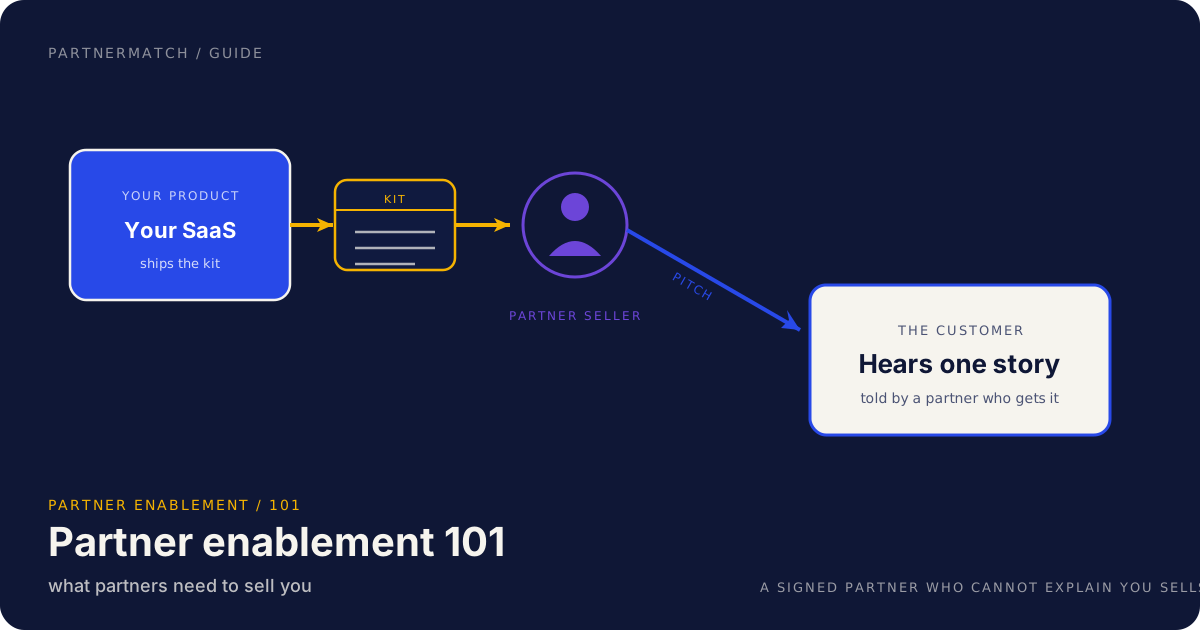
You sign a partner. Their leadership is excited, the logo goes on a slide, and a Slack channel lights up. Three months later you check the pipeline and there is nothing. Not because the partner is unwilling, but because their sellers have no idea what you do, when to mention you, or how to demo you. The agreement is real. The selling never started. This is what missing partner enablement looks like.
This is the gap partner enablement closes. Partner enablement is the work of giving a partner's team the knowledge, the assets, and the confidence to pitch and support your product without you in the room. It is the least glamorous part of a tech partnership and the part that most often decides whether the partnership produces revenue or just a press release.
This guide is a practical walkthrough of partner enablement for B2B SaaS: what it actually is, why partnerships fail without it, the core enablement kit you build, the journey a partner takes from onboarding to selling, the channels you run it through, how to enable different roles at the partner, how to keep it all current, and how to measure whether it is working. A signed partner whose sellers cannot explain you sells nothing. Partner enablement is how you fix that.
The 60-second version
If you only read one section, read this one:
- Partner enablement is giving a partner's team the knowledge, assets, and confidence to pitch and support you. A signed agreement enables nobody.
- Partnerships fail without it. A partner whose sellers cannot explain you in one sentence will never bring you up in a deal.
- The core kit is six assets: a one-pager, a pitch narrative, a demo or demo script, a technical overview and FAQ, a battlecard, and the integration setup guide.
- Enablement is a journey, not an event. Onboard the partner, train them, certify a rep can demo you, let them sell, and refresh as your product changes.
- It runs on four channels: a self-serve resource hub, live training, QBRs, and office hours, each reaching different people.
- Different roles need different enablement. Sales needs a pitch, solution engineers need depth, support needs troubleshooting, marketing needs assets.
- Keep one source of truth. Version your assets, retire the old ones, and never let a partner pitch a feature you shipped a year ago.
- Measure deals, not downloads. Partner-sourced and influenced pipeline and time to first partner-led demo tell you if enablement worked.
What partner enablement actually is
Partner enablement is the discipline of making a partner's people able to sell and support your product on their own. Not your salespeople. Theirs. The goal is a partner rep who can recognize when your product belongs in a deal, give a short pitch from memory, demo the core workflow, answer the obvious questions, and get the integration turned on, all without pulling you onto the call.
It helps to separate enablement from the two things it gets confused with. Recruitment is convincing a partner to sign. Co-marketing is announcing the relationship to the world. Enablement is the work in between and after: turning a signed name into a field team that can pitch you. A signed partner with zero enablement is the most common and most disappointing state a partnership can be in.
The unit of enablement is not the partner company. It is the individual seller. A partnership agreement enables nobody by itself. The thing that produces a deal is a specific human at the partner who can stand in front of a customer and explain why your product matters. Everything in this guide is built to manufacture that human reliably, at scale, as their team turns over.
| Term | What it means | What it produces |
|---|---|---|
| Recruitment | Getting a partner to sign | A name on an agreement |
| Enablement | Making their team able to sell and support you | Reps who can pitch you unassisted |
| Co-marketing | Announcing the relationship publicly | Awareness and air cover |
The mindset shift that makes enablement work: you are not training a company, you are equipping people. A partner with two enabled reps will outproduce a partner with a signed master agreement and a hundred reps who have never seen your demo.
Why partnerships fail without enablement
The failure is quiet, which is why it is so common. Nobody refuses to sell you. The deal flow just never starts, and everyone assumes the partnership is "early" when it is actually stalled.
Walk through what a partner seller faces. They are in their own deal, carrying their own quota, with a customer asking about their product. For them to bring you up, three things have to be true at once: they remember you exist, they recognize this is a moment where you fit, and they can say something useful about you. If any one of those fails, you never come up. Enablement is what makes all three true. Without it, you are relying on a busy stranger to improvise a pitch for a product they barely understand.
It compounds badly with sales turnover. Even if you enable the partner's team well at launch, sales orgs churn. The reps you trained leave, new reps arrive, and nobody re-runs the training. Six months later the institutional memory of your product is gone, and the partnership that once produced deals goes silent. Enablement that happens once decays to zero.
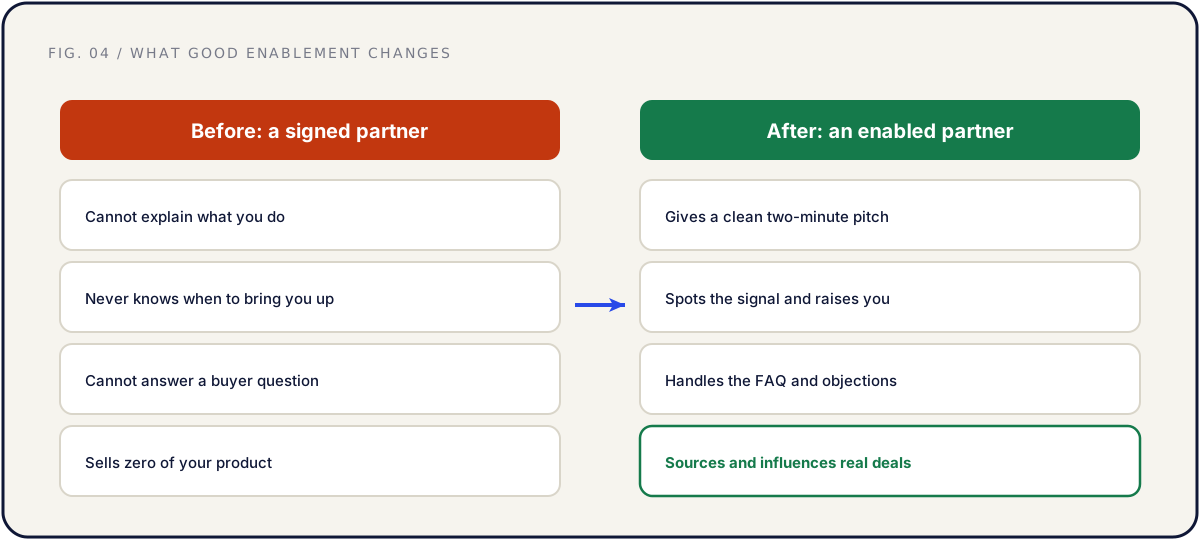
The contrast is stark when you look at a single rep. The un-enabled seller cannot explain you, never knows when to raise you, cannot answer a buyer's question, and sells none of your product. The enabled seller gives a clean two-minute pitch, spots the signal, handles the objection, and sources real deals. Same person, same partner, different outcome. Enablement is the only thing that moves a rep from the first column to the second.
The same logic runs through the whole partner motion. A co-sell engine cannot move pipeline if the partner's sellers cannot pitch you, which is why enablement is one of its five core components in the co-selling engine guide. Enablement is not a nice-to-have layered on top of a partnership. It is the mechanism by which a partnership turns into revenue.
The core enablement kit
The enablement kit is the set of assets a partner's team needs to pitch and support you. Build it once, keep it current, and it becomes the thing every channel below points at. Skimp on it and every training session starts from a blank page.
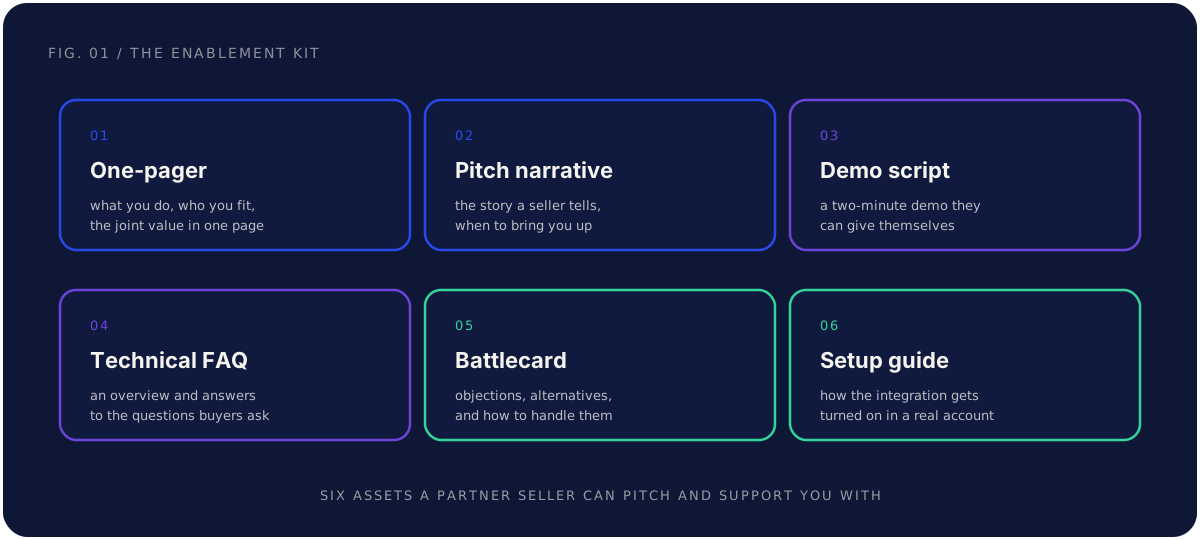
Six assets cover the core. Each one answers a specific question a partner seller or buyer will have.
| Asset | What it is | The question it answers |
|---|---|---|
| One-pager | Your product, fit, and joint value on a page | "What is this and who is it for?" |
| Pitch narrative | The story a seller tells and when to tell it | "How do I bring this up in my deal?" |
| Demo or demo script | A short, repeatable walkthrough of the core workflow | "What does it actually do?" |
| Technical overview and FAQ | A plain-language overview plus common answers | "How does it work and is it safe?" |
| Battlecard | Objections, alternatives, and how to respond | "What do I say when the buyer pushes back?" |
| Integration setup guide | How the integration gets turned on in a real account | "Once they want it, what happens?" |
A few notes on building these well. Write the one-pager for the partner seller's interest, not yours: lead with what your product does for their customer and their deal. The pitch narrative should name the customer signal that means you belong in the conversation, because timing is half the battle. And a demo script beats a polished demo video, because a rep who can give the demo themselves is worth ten who can only forward a recording.
Keep the kit tight. Six strong assets a rep will actually open beat twenty that sit in a folder. The job of the core kit is to get an average partner seller from "I have never heard of you" to "I can pitch this" as fast as possible. Add role-specific depth later.
The enablement journey, onboard to refresh
Enablement is not a single training session. It is a journey the partner moves through, and then keeps moving through as people change and your product evolves. Treating it as a one-time event is the most common way it fails.
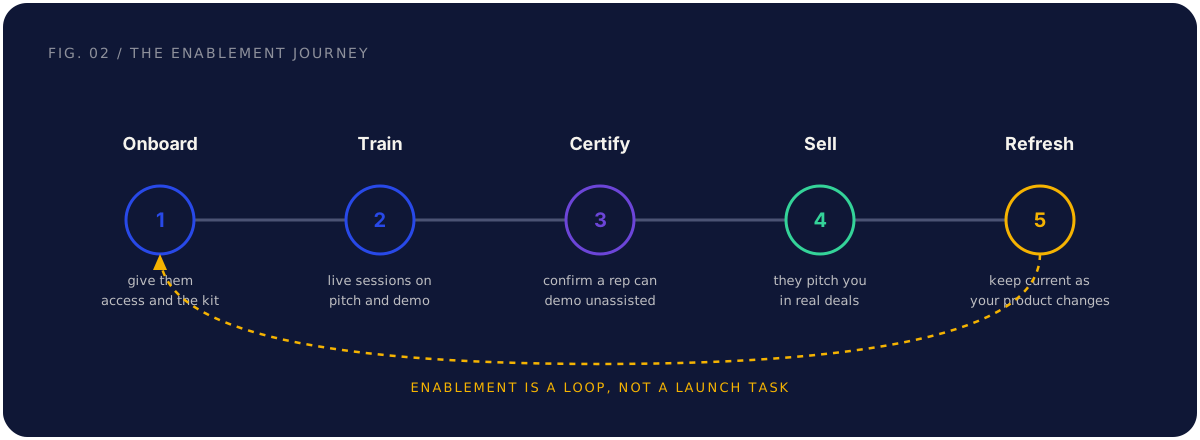
Five stages, each with a clear exit.
| Stage | What happens | Done when |
|---|---|---|
| Onboard | Give the partner access, the kit, and a point of contact | They can find every asset on their own |
| Train | Run live sessions on the pitch and the demo | Reps have seen it taught, not just sent |
| Certify | Confirm a rep can deliver the demo unassisted | At least one rep can pitch and demo solo |
| Sell | Reps bring you into real deals | A partner-led demo happens without you |
| Refresh | Update training and assets as your product changes | Reps are never pitching a stale version |
The stage everyone skips is certify. It is tempting to count "we ran a training" as enablement complete, but attendance is not competence. Certification is simply confirming that a real rep can give your two-minute pitch and core demo without you in the room. Until that is true, the partnership is not enabled, no matter how many sessions you logged.
The refresh stage is what makes this a loop rather than a line. Your product ships new features, your pricing changes, the integration gains capabilities, and the partner's team turns over. Each of those resets some of the enablement you did. A standing refresh cadence, tied to your release rhythm and the partner's QBRs, keeps the loop closed. This is the same discipline that runs through the long tail of the partnership lifecycle: the value is in the stages after launch, which is exactly where most teams stop paying attention.
The channels you run enablement through
The kit is what you teach. The channels are how you deliver it. Different channels reach different people, scale differently, and decay differently, so a working enablement program uses several at once rather than betting on a single annual training.
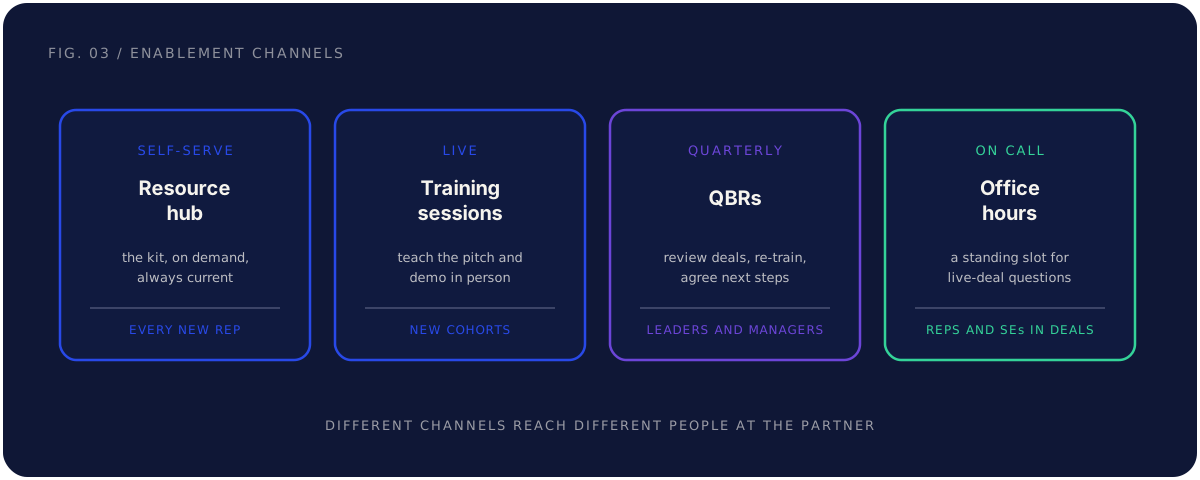
Four channels cover most of what you need.
- Self-serve resource hub. One place where the partner's team finds the kit on demand. This is your highest-leverage channel because it works while you sleep and onboards every new rep who joins after your last live session. Keep it current or it becomes a museum of stale claims.
- Live training sessions. Scheduled sessions where you teach the pitch and walk through the demo. Live training does what a document cannot: it lets reps ask questions, see the demo performed, and practice. Record every session so it feeds the hub.
- Quarterly business reviews. A QBR with the partner's leaders keeps the relationship honest and the enablement current. Bring deal numbers, identify which reps are active, and re-train on what changed. QBRs are also where you catch turnover before it silently erodes the partnership.
- Office hours. A standing, low-friction slot where a partner rep or solution engineer can bring a live-deal question. This is how you support reps in the moment that matters, when a customer just asked something they cannot answer. A fast answer here closes deals more often than a generic training does.
The pattern is to combine reach and depth. The hub gives reach with no marginal effort. Live training and office hours give depth and timing. QBRs keep the whole thing from decaying. No single channel is sufficient, and the cheap ones, the hub especially, are the ones teams most often neglect.
Enabling different roles at the partner
A partner is not one audience. The seller, the solution engineer, the support agent, and the marketer each need different things from you, and enablement that treats them as one group serves none of them well.
The mistake is building everything for the seller and assuming it covers the rest. The seller needs a pitch, the solution engineer needs architecture, support needs troubleshooting, marketing needs assets. Enable only the seller and the deal stalls the moment a technical buyer asks a hard question or a customer files a support ticket nobody can answer.
| Role at the partner | What they need to do | What to give them |
|---|---|---|
| Sales | Pitch you and bring you into deals | One-pager, pitch narrative, demo script, battlecard |
| Solution engineers | Answer technical questions and scope the fit | Technical overview, architecture, setup guide, deeper FAQ |
| Support | Help shared customers after the sale | Troubleshooting guide, escalation path, known issues |
| Marketing | Co-market the integration | Logos, screenshots, boilerplate, integration page link |
Sales is where most people start, and rightly so, because no deal happens without a seller bringing you up. But solution engineers close the technical buyer, and they need real depth, not a marketing one-pager. Support protects the partner's customer relationship, and a partner whose support team cannot help with your product will quietly stop recommending you. Marketing needs the co-marketing kit, its own discipline covered in the SaaS co-marketing playbook; enablement and co-marketing share assets but serve different goals.
The practical move is to layer the kit. Everyone gets the core. Solution engineers get the technical depth. Support gets the troubleshooting layer. Marketing gets the asset pack. You are not building four separate programs, you are extending one kit with role-specific depth where the deal actually needs it.
Keeping enablement current
Enablement decays. Your product ships features, your pricing moves, the integration gains capabilities, and the partner's team turns over. Every one of those events makes some piece of your kit wrong. Stale enablement is worse than none, because a partner confidently pitching a feature you deprecated damages the deal and your credibility.
The discipline that prevents this is a single source of truth. Every asset lives in one canonical place, the resource hub, and every channel points at it rather than copying it. When the demo script changes, you change it once and every rep sees the new version. The failure mode to avoid is scattered copies: a PDF a rep downloaded in March, a deck a manager forwarded, a slide buried in an email thread, each frozen at a different moment and each subtly wrong.
Version your assets so it is obvious what is current. Date them, retire the old ones, and make sure the hub never shows two conflicting answers. Tie a refresh to your release cadence: when you ship something that changes the pitch, the demo, or the setup, update the kit in the same motion, the way the launch assets are part of the launch project rather than an afterthought.
| Trigger | What it can make stale | What to update |
|---|---|---|
| New feature ships | Demo, one-pager, FAQ | The demo script and the workflow story |
| Pricing or packaging changes | Pitch narrative, battlecard | How reps frame value and handle cost objections |
| Integration gains capability | Setup guide, technical FAQ | The setup steps and the architecture notes |
| Partner sales team turns over | All of it, in practice | Re-run training and re-certify new reps |
The mental model: enablement is a living system, not a binder. The work is not building the kit once, it is keeping one true version of it alive as everything around it changes. A partner pitching last year's product is a self-inflicted wound.
Measuring whether enablement worked
Enablement is easy to fake-measure. You can report sessions run, reps trained, and assets downloaded, and none of those tell you whether the partner is selling you. Activity metrics make you feel busy and tell a board nothing. To know if enablement worked, measure deals and behavior.
The two questions that matter: is the partner producing pipeline, and how fast did a partner rep act on their own? Partner-sourced deals, where the partner originated the opportunity, and partner-influenced deals, where the partner appeared in a deal you were already working, are the outcome metrics. Time to first partner-led demo, the gap between signing and the first time a partner rep demos you solo, is the leading indicator that shows enablement is landing before the revenue does.
| Metric | What it tells you | Type |
|---|---|---|
| Time to first partner-led demo | Whether reps can actually pitch you yet | Leading |
| Number of certified reps | How much enabled capacity the partner has | Leading |
| Partner-sourced pipeline | Deals the partner originated | Outcome |
| Partner-influenced pipeline | Deals the partner touched | Outcome |
| Win rate on partner-touched deals | Whether enablement improves quality, not just volume | Outcome |
Track the leading indicators early, because outcome metrics lag by a full sales cycle. If you wait for partner-sourced revenue to judge enablement, you will not get a signal for months, by which point a stalled partnership has already gone cold. Time to first partner-led demo and the count of certified reps tell you within weeks whether the enablement is working.
Carry a partner-source tag from first touch through to closed-won, the same attribution discipline that keeps co-marketing and co-sell programs funded. The number that survives a budget review is influenced pipeline tied to enabled partners, not a count of training sessions. Enablement that cannot point to deals is the first line cut, no matter how many reps you trained.
Common mistakes, and the fix
Enabling the company, not the people. The fix: certify individual reps until at least one can give your pitch and demo from memory. A signed agreement and a kicked-off "partnership" enable nobody. The unit of enablement is a specific human who can pitch you unassisted.
Treating enablement as a launch event. The fix: run it as a standing program with a refresh loop tied to your releases and the partner's QBRs. Sales teams turn over and products change, so a single training session decays to zero within a couple of quarters.
Building only for the seller. The fix: layer the kit so solution engineers get technical depth, support gets troubleshooting, and marketing gets assets. A seller can open a deal, but a technical buyer or a support ticket can kill it if only sales was enabled.
Letting assets go stale. The fix: keep one source of truth in the hub, version everything, and retire old copies. A partner confidently pitching a deprecated feature does more damage than a partner who says nothing.
Measuring downloads instead of deals. The fix: track time to first partner-led demo and partner-sourced and influenced pipeline. Sessions run and assets downloaded are activity, not outcomes, and they will not survive a budget conversation.
FAQ
What is partner enablement, in one sentence? It is the work of giving a partner's team the knowledge, assets, and confidence to pitch and support your product without you in the room. The output you are after is a partner rep who can recognize when you fit, pitch you, demo you, and answer the obvious questions on their own.
How is partner enablement different from onboarding a partner? Onboarding is one stage of enablement, the part where you give the partner access and the kit. Enablement is the whole journey: onboard, train, certify, sell, and refresh. Onboarding gets the partner set up; enablement gets their reps actually selling you, and keeps them selling as people and products change.
What is the minimum enablement kit we need? A one-pager, a pitch narrative, a demo or demo script, a technical overview and FAQ, a battlecard, and an integration setup guide. Those six cover the questions a partner seller and a partner's buyer will ask. Build them tight and keep them current rather than producing a large library nobody opens.
Do we need a partnerships team to run enablement? No. At seed to Series B, a founder or product leader can run enablement if they own the kit, the channels, and the certification. What you cannot do is leave it unowned. Enablement fails not from missing headcount but from no single person making sure reps can actually pitch you.
How do we keep enablement from going stale? Keep one source of truth in a resource hub, version every asset, and retire old copies so nothing conflicts. Tie a refresh to your release cadence: when a feature, price, or setup step changes, update the kit in the same motion. And re-train when the partner's sales team turns over, which it will.
Who at the partner do we actually enable? All four customer-facing roles, with different depth. Sales needs a pitch and a demo. Solution engineers need technical depth to win the technical buyer. Support needs troubleshooting so shared customers stay happy. Marketing needs the co-marketing asset pack. Enabling only sales leaves the deal exposed the moment it gets technical.
How do we measure if enablement is working? Track time to first partner-led demo and the number of certified reps as leading indicators, and partner-sourced and influenced pipeline as outcomes. Carry a partner-source tag from first touch to closed-won. Avoid reporting sessions run or assets downloaded, which are activity metrics that tell a board nothing.
When should enablement start? As soon as the integration is live and there is a real joint value proposition to teach. Enabling reps before there is a working, adopted integration gives them nothing concrete to pitch. Once the integration is shipped, enablement is the next thing you build, because that is what turns the signed partner into deals.
The short version
Partner enablement is the work of giving a partner's team the knowledge, assets, and confidence to pitch and support your product on their own. A signed partner whose sellers cannot explain you produces nothing, which is why enablement, not recruitment, is what turns a partnership into revenue.
Build the core kit: a one-pager, a pitch narrative, a demo script, a technical FAQ, a battlecard, and a setup guide. Run the journey from onboard through certify to refresh, and do not mistake a training session for an enabled rep. Deliver it through a resource hub, live training, QBRs, and office hours. Enable every role, not just sales. Keep one source of truth so nobody pitches a stale product. And measure deals and time to first partner-led demo, not downloads. Enablement feeds co-sell and co-marketing, and it is the stage of the lifecycle where most of the value is won or lost.
If you want the whole path handled, from partner strategy and a partner-ready API through the shipped integration, the enablement kit, and the co-sell motion on top, that is exactly what a Partner Audit is for. We review your product, API, and partner potential, then define what to build, who to approach, and how to ship and sell it together.