Partner program governance for a small SaaS team
Who decides which partners get built, a meeting cadence a small team can keep, and a decision log that replaces committee theater.
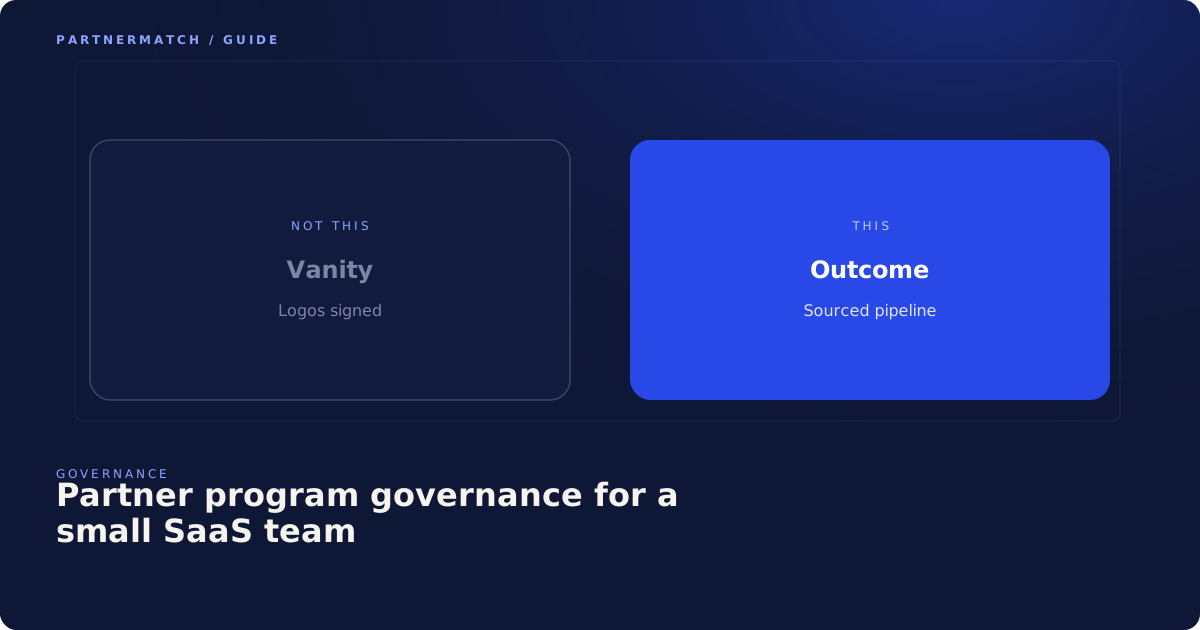
Partnerships at a small SaaS company fail in two opposite ways. Either nobody is allowed to say no, so every intro becomes a build, or every decision waits for a committee that does not exist, so nothing ships. Governance is the boring middle: a named person who can decide, a short meeting that actually decides, and a written record so you do not relitigate last quarter.
You do not need a partner board. You need business relationship management at startup resolution: who owns the relationship, who owns the build slot, and what evidence gets a yes. GOV.UK's writing guidance is a useful standard for the artifacts: short, specific, dated.
This post is the operating system for a team of one or two: who decides, a cadence you can keep, the decision log, and what to keep out of the room.
The 60-second version
If you only read one section, read this one:
- Governance is who decides, on what evidence, and where it is written. It is not a standing committee with a deck.
- One decision owner, two advisors. Partnerships (or the founder) decides. Product and engineering can block a build. Sales can request, not assign, a slot.
- A 30-minute monthly intake beats a quarterly offsite. Score inbound, fill or protect the build slot, record the calls.
- Keep a decision log. Partner, date, decision (deep / fast / no), why, owner, review date. That log is the program memory.
- Build slots are the scarce vote. Logos are not. Protect the slot the way you protect a roadmap bet.
- No theater. If a meeting cannot change a partner's status, cancel it.
- Tie decisions to the prioritization framework and the lifecycle. Governance without a scoring rule is opinion with a calendar invite.
Who decides which partners get built
Write the RACI once, on one page, and stop reinventing it in Slack.
The decision owner is the person who runs partnerships, often a founder until you hire. They own the yes, the not-now, and the never. They also own the relationship after the yes, which is why they should not be a committee.
Product and engineering hold a veto on the build slot, not a veto on talking to a partner. If there is no capacity this quarter, the answer is fast-lane or waitlist. Sales and CS bring demand. They do not mint a partner because a prospect asked once. Legal and finance enter after the commercial shape is clear, on the terms in your agreements guide.
| Decision | Owner | Must consult | Can only request |
|---|---|---|---|
| Take a discovery call | Partnerships | None | Anyone |
| Deep build this quarter | Partnerships | Product and engineering | Sales, CS, board |
| Fast-lane listing or referral | Partnerships | Product (light) | Sales |
| Change commercial terms | Partnerships | Finance, legal | The partner |
| Freeze or sunset | Partnerships | Product, CS | Anyone |
| Add a program tier | Partnerships | Founder or GM | Marketing |
If two people both think they own the build slot, you will double-book it. If nobody owns it, engineering will quietly deprioritize partner work every sprint. Name one owner in writing. Put the OKRs on that person so the decision and the number live together.
A useful rule: anyone can add a candidate to the intake list. Only the owner can move it to deep, and only with a score and a slot.
Meeting cadence a small team can keep
Cadence fails when it is either never or ceremonial. Pick meetings that change a status, then protect them.
| Meeting | Length and rhythm | Job |
|---|---|---|
| Intake | 30 min, monthly | Score new names, fill or protect the build slot, update the log |
| Build standup | 15 min, weekly, only while something is in build | Blockers, date, who is waiting on whom |
| Partner QBR | 45 to 60 min, quarterly, per live partner | Plan next quarter, keep / freeze / sunset |
| Portfolio hour | 45 min, quarterly | Reclassify active / listed / zombie, free slots |
Intake is the governance meeting. Bring the scored shortlist, the current slot (full or open), and any customer-pull evidence. Leave with decisions, not "good discussion." If nothing inbound scored above the bar, the correct output is an empty build slot and a note that you will not fill it for sport.
Skip a standing "ecosystem sync" that recites logos. Skip a steering committee that cannot name a next step. Partner communications can carry status. Meetings should carry choices.
Invite the smallest room that can decide: partnerships plus whoever holds the veto that week. The CEO does not attend intake unless they still own partnerships. A board intro goes on the list. It does not skip the list. When a live partner is in trouble, put it on the QBR. Do not invent a new forum.
The decision log
If it is not written, you will have the same argument in six weeks with worse memory. The log is not a wiki novel. It is a table.
Minimum fields:
| Field | Example |
|---|---|
| Date | 2026-08-12 |
| Partner | Northwind Billing |
| Decision | Deep / fast / waitlist / no / freeze / sunset |
| Evidence | 7 customer asks, 2 open deals, API looks partner-ready |
| Slot | Q3 build, eng weeks reserved |
| Owner | You |
| Review date | 2026-11-12 |
| Note | Not exclusive. Referral first, integration scoped to invoice sync. |
One row per decision, including the nos. The nos are how you defend the slot when the same name comes back through a different champion. You are allowed to reverse a no. You are not allowed to reverse it without new evidence and a new row.
Store the log where the team already works: a tab next to the partner list, not a separate "governance portal." Point onboarding and kickoff notes at the row so the build team can see what was actually promised.
Review the log at the quarterly portfolio hour. If a waitlist item is older than two quarters with no new pull, close it. If a deep partner has no review date, it is already drifting. Write the date.
What to keep out of the room
Governance goes bad when the meeting becomes a show. Keep these out.
Decks about the ecosystem vision. The vision lives in the partner ICP and the OKRs. Intake is for names and slots.
Live negotiation with the partner. Do not bring the partner to the meeting where you decide whether they get a slot. Decide, then talk to them.
Legal redlines. Paper follows the commercial yes. Do not stall a score because counsel has not seen a draft.
Roadmap theater. Engineering can say "no capacity this quarter." They should not be asked to perform a 40-item partner wishlist review every month.
Vanity reporting. Partners signed, meetings held, logos added. Put metrics that matter in the QBR, not in intake.
A test for every invite: can this person change the decision today. If not, send them the log line after.
Partner program tiers are policy, not a meeting. Write what registered, select, and premier get. Apply the policy in intake. Do not workshop the policy every time a loud partner wants premier.
Common mistakes, and the fix
A committee of everyone, so nobody decides. The fix: one owner, a veto for the build slot, everyone else requests.
No written no. The fix: log the no with evidence and a review date. Silence is how the same intro returns forever.
Intake that cannot fill or protect a slot. The fix: put the current build slot on the agenda as item one. If it is full, most candidates are waitlist or no.
CEO override by hallway. The fix: the CEO can own partnerships, or they can escalate into the log with new evidence. They should not mint a deep partner in a corridor.
Governance that only meets when something is on fire. The fix: a monthly 30 minutes. Fire meetings are for outages, not for strategy.
Confusing a QBR with intake. The fix: QBR is for a live partner's next quarter. Intake is for the portfolio. Different rooms, different jobs.
FAQ
Do we need a partner steering committee? Not at this size. A monthly intake and a quarterly portfolio hour are enough. Add a committee when multiple business units are fighting over the same slot. Until then it is delay with a calendar.
Who should own the build-slot veto? Whoever owns the engineering roadmap for partner work, usually the head of product or the eng manager who will staff it. Partnerships proposes. Capacity confirms.
How do we handle a board intro without looking rude? Log it, score it, and reply with the real next step: discovery, waitlist, or no. A scored no with a reason is more professional than a fake yes. Tell the board member which lane it landed in.
What if sales promises a partner on a deal call? That is a request, not a decision. Sales can promise to raise it. They cannot promise a ship date. Put the name in intake that month with the deal attached as evidence.
How detailed should the decision log be? One row you can read in twenty seconds. If you need a memo, link it. If the row cannot explain the call, the call was not clear.
Can we run governance in Slack? You can collect inbound in Slack. You should not decide deep builds in a thread that disappears. Monthly intake plus a log. Slack is the inbox, not the archive.
When do we outgrow this? When you have several live partners, a real partner engineer, and conflicting GTM motions. Then add a written policy for co-sell conflict and tiers. Still keep one decision owner.
What is committee theater? A meeting with slides, many attendees, and no authority to change a partner's status. If the output is "let's keep talking," cancel it.
Further reading
- Business relationship management for the discipline of owning a relationship with a decision, not a vibe.
- Writing for GOV.UK for short, dated artifacts a busy team will actually use.
- Partnership prioritization framework for the scoring rule intake should apply.
- Partnership OKRs so the decision owner is measured on outcomes, not meetings.
- Partner communications for status that should not consume a governance hour.
The short version
Small-team partner governance is a decision owner, a build-slot veto, a 30-minute monthly intake, and a log. Score inbound, fill or protect the only expensive vote you have, and write the yes, the wait, and the no so you do not relitigate them. Keep partners out of the decision room. Keep decks out of intake. Use QBRs for live relationships and intake for the portfolio. If a meeting cannot change a status, cancel it.
If you want the scoring rule, the slot math, and a log you can run without a committee, that is what a Partner Audit is for.