How to structure partner program tiers (without overbuilding)
A practical guide to partner program tiers for B2B SaaS: a copyable tier structure, earnable criteria, and which benefits to attach at each level.
A founder reads a few partner program pages from large software vendors, sees five tiers with names like Authorized, Silver, Gold, Platinum, and Elite, and copies the shape. Now there is a five-tier program, four of the tiers are empty, and the one partner the company actually has does not fit cleanly into any of them. The structure looks serious and produces nothing.
This is the trap with partner program tiers. The visible artifact, a tidy ladder of named levels, is the easy part. The hard part is deciding what each tier means, what a partner has to do to reach it, and what they get when they do. Most early teams build the ladder first and never answer those questions, which is how you end up with a program that signals ambition and produces nothing.
This guide is about structuring partner program tiers without overbuilding them: what tiers are and why they exist, why most startups add too many too early, a copyable tier structure, how partners earn their way up, which benefits to attach at each level and which stay universal, and how the whole thing aligns with your lifecycle, enablement, and co-sell investment so the tier describes reality rather than a wish.
The 60-second version
- Partner program tiers exist to do three jobs: set expectations, allocate your scarce attention, and reward commitment. If a tier does none of these, delete it.
- Most startups overbuild. A seed-stage company with three partners does not need a five-tier program. Empty tiers are maintenance cost with no payoff.
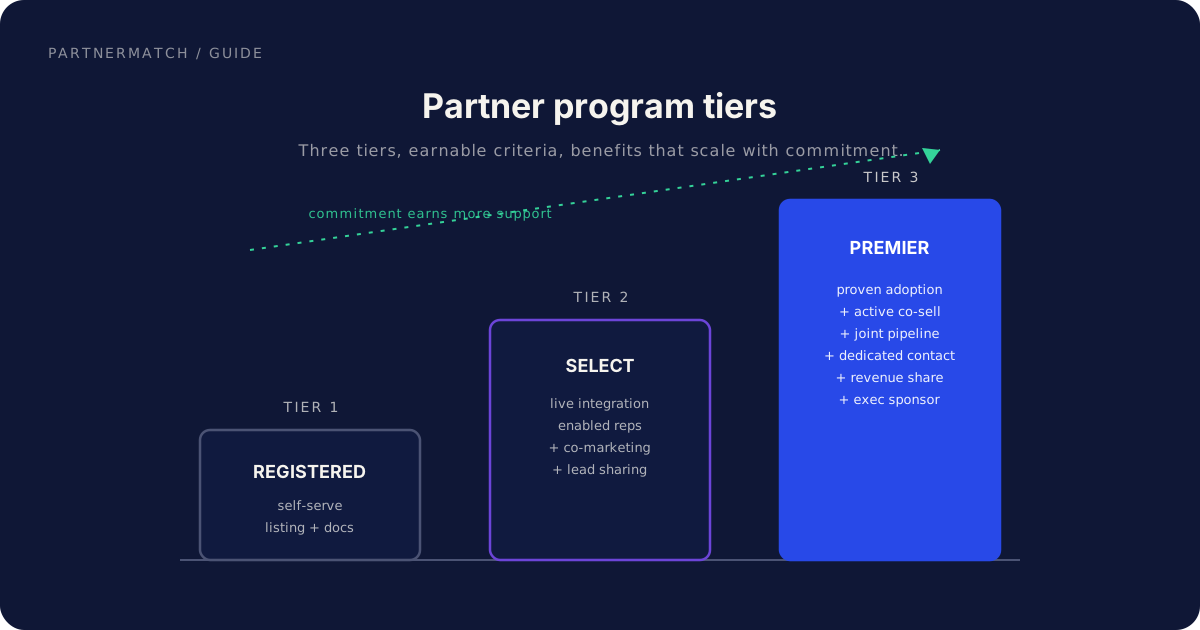
- Three tiers is the right starting shape: registered, select, premier. Two is fine if you are very early. Five is almost never right before Series B.
- Benefits scale with commitment. Enablement depth, co-marketing, lead sharing, co-sell support, revenue share, and a dedicated contact each turn on as the tier rises.
- Some benefits stay universal. Docs, sandbox access, and a marketplace listing should be available to every partner, regardless of tier.
- Tiers must be earnable on real criteria, like a live integration, proven adoption, and sourced pipeline. Tiers handed out by relationship are vanity and partners can tell.
- Align tiers with the lifecycle, enablement, and co-sell. A tier is a promise about how much you will invest, so it has to match what those systems can actually deliver.
- Add tiers when partners are waiting at the gate, not before. The trigger to expand is a crowded top tier, not a competitor's program page.
What partner program tiers are, and why they exist
A partner program tier is a named level that bundles a set of requirements with a set of benefits. A partner sits in exactly one tier at a time, and moving between tiers is the program's core mechanic. Tiers are not decoration. A well-built set of partner program tiers does three specific jobs, and a tier that does none of them should not exist.
The first job is setting expectations. A partner in the entry tier knows not to expect a co-marketing campaign next week. A partner in the top tier knows they have earned a dedicated contact and can ask for one. Tiers turn a vague relationship into a clear contract about what each side gives and gets.
The second job is allocating scarce attention. At a startup, the binding constraint is not money, it is the hours of the one or two people who run partnerships. You cannot give every partner a weekly call and a joint campaign. Tiers direct your limited attention to the partners who have earned it.
The third job is rewarding commitment. A partner who built a real integration, enabled their reps, and sourced pipeline should get more than one who signed a form and disappeared. Tiers make that difference visible and give a partner a reason to invest more, because they can see what the next level provides.
| Job a tier does | What it looks like in practice |
|---|---|
| Set expectations | A partner knows what they get and what they do not, by tier |
| Allocate attention | Your scarce hours go to partners who earned them |
| Reward commitment | More investment from the partner earns more from you |
If you cannot point to which of these three jobs a tier does, you do not have a tier. You have a label.
Why most startups overbuild tiers too early
The overbuilding instinct comes from copying the shape of mature programs. A vendor with two thousand partners genuinely needs five tiers, because the population is large enough that each tier holds a meaningful, differently treated group. A startup with five partners copying that structure ends up with four empty boxes.
Empty tiers are not free. Each tier you define is a promise you have to keep: someone delivers the benefits, tracks who qualifies, and reviews movement between levels. Build five tiers and you have committed to running a five-tier program with the headcount of a two-person team. The structure outruns the company.
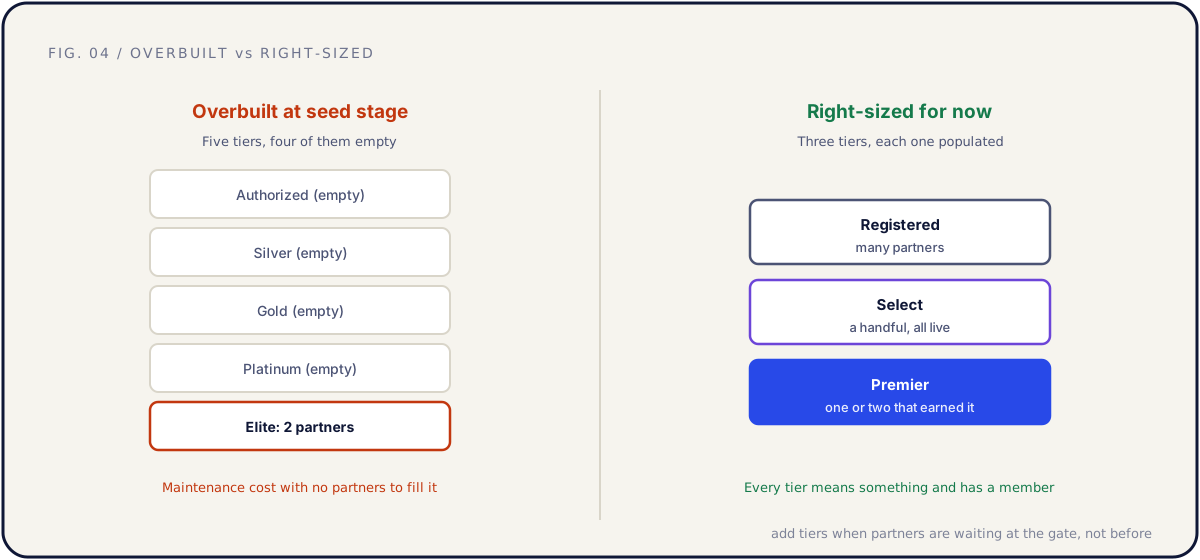
There is a quieter cost too. When a partner sees a Platinum level with no members and unclear criteria, they read it correctly: this is aspirational copy, not a working program. A lean program where every tier has real members is more convincing than an elaborate one that is mostly hypothetical.
The right-sizing rule is simple. Every tier should have at least one member, or a concrete near-term partner who will fill it. If you are inventing a tier for a partner who will not exist this year, you are overbuilding. Cut it, and add it back the quarter a real partner is knocking.
A simple, copyable structure for partner program tiers
Here is a three-tier structure that fits almost any B2B SaaS company from seed to Series B. The names are conventional on purpose, because partners recognize them: registered, select, premier. Use these or rename them, but keep the shape.
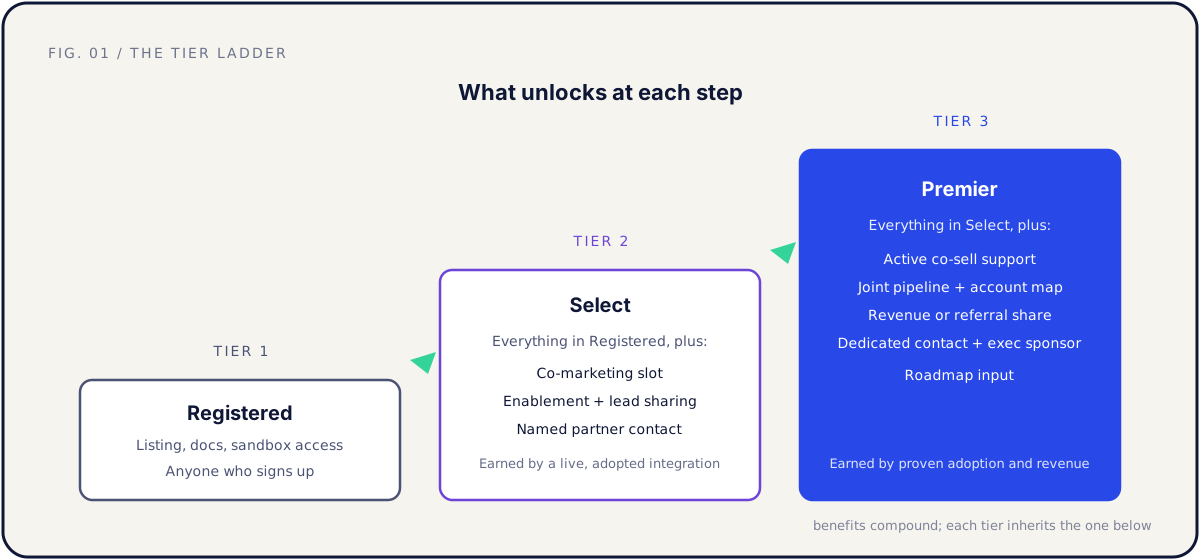
The structure is cumulative. Each tier includes everything in the tier below it and adds more. A premier partner gets the premier benefits plus all of select plus all of registered. That matters because moving up is always strictly better, and a partner never loses something they had.
Here is the copyable version, the table to lift into your own program doc and edit.
| Tier | Requirements to reach it | Benefits you provide |
|---|---|---|
| Registered | Sign up, agree to terms | Marketplace listing, public docs, sandbox access, self-serve enablement |
| Select | A live, certified integration; a named joint use case; at least one enabled rep; an owner on each side | Everything above, plus co-marketing slot, live enablement, lead sharing, a named partner contact |
| Premier | Proven adoption across accounts; sourced or influenced pipeline; reference customers; a working co-sell motion | Everything above, plus active co-sell support, joint pipeline planning, revenue or referral share, a dedicated contact, roadmap input |
A two-tier version works if you are very early: collapse registered and select into one entry tier, and keep premier as the earned top. That is honest when you have one real partner and a pipeline of self-serve ones. Split it later when select starts to crowd.
What changes as the tier rises is the depth of your investment across six dimensions: enablement depth, co-marketing, co-sell support, lead sharing, revenue share, and a dedicated contact. The next two sections cover how those benefits map across tiers and which stay universal.
What changes across tiers
The useful way to think about a tier is not as a status but as a level of investment you are committing to make. Each benefit dimension turns up as the tier rises, and reading the matrix below row by row tells a partner exactly what improves when they move up.
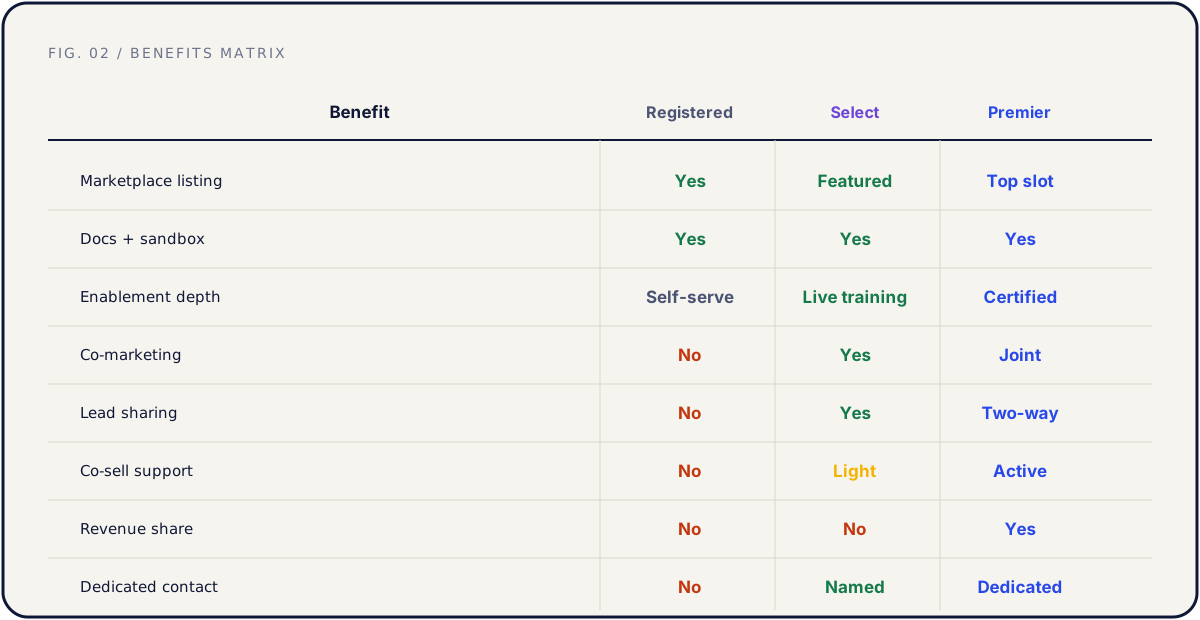
Here is the same matrix in table form, which is the version partners will screenshot.
| Benefit | Registered | Select | Premier |
|---|---|---|---|
| Marketplace listing | Standard | Featured placement | Top slot |
| Docs and sandbox | Yes | Yes | Yes |
| Enablement depth | Self-serve kit | Live training | Certified reps |
| Co-marketing | None | Joint slot | Joint campaign |
| Lead sharing | None | One-way to partner | Two-way |
| Co-sell support | None | Light | Active |
| Revenue or referral share | None | None | Yes |
| Dedicated contact | None | Named contact | Dedicated owner |
A few notes on the dimensions that trip people up.
Enablement depth is the one founders most often get backward. At registered, it is self-serve: a partner finds the kit and learns on their own. At select, you add live training and certification. At premier, you keep reps certified as their team turns over. Deeper enablement is expensive, so it belongs to the tiers where a partner has earned the investment. We cover building that kit in partner enablement 101.
Co-sell support is the most expensive benefit you offer, because it consumes your own sellers' time. Reserve it for the top tier, where adoption and pipeline have already proven the partnership moves revenue. Offering active co-sell to a registered partner is how you burn your sales team on relationships that have not earned it.
Revenue share should appear only at the top, if at all. Many tech partnerships have no money moving between them, and that is fine. If you do share revenue or pay referral fees, attaching it to premier gives partners a concrete reason to earn their way up rather than a flat payout that rewards nothing.
What stays universal across every tier
Not everything should be gated. Some benefits belong to every partner, including the entry tier, because gating them creates friction that costs you more than the exclusivity is worth. Three things stay universal.
Documentation stays open. Your API docs, integration guides, and reference material should be public, gated tier or not. A developer evaluating whether to build with you should never hit a wall that says "upgrade to read the docs." Open docs are how partners self-qualify into building, the cheapest lead generation a partner program has, and part of what makes an API partner-ready in the first place.
Sandbox access stays open. A partner should be able to get test credentials and build against a sandbox without negotiating a tier first. The point of the registered tier is to let partners build with zero friction, because a built integration is exactly what earns the next tier. Gating the sandbox defeats the mechanic.
The marketplace listing stays available. Every partner who builds a working integration should be able to list it, even at the entry tier. Listing quality can differ by tier, with featured placement and top slots reserved for higher tiers, but the baseline right to appear should be universal. A built integration nobody can find is a wasted build.
The principle: gate the things that cost you ongoing human attention, like co-marketing, co-sell, and a dedicated contact. Keep universal the build-once, self-serve things, like docs, sandbox, and a basic listing.
How partners earn their way up
A tier is only meaningful if it is earnable, meaning there is a clear, measurable bar a partner can hit on their own. The failure mode is tiers handed out by relationship: a partner gets bumped to premier because the founders are friendly, not because anything changed. Partners can always tell, and it poisons the program, because the ones who did the work see the tier mean nothing.
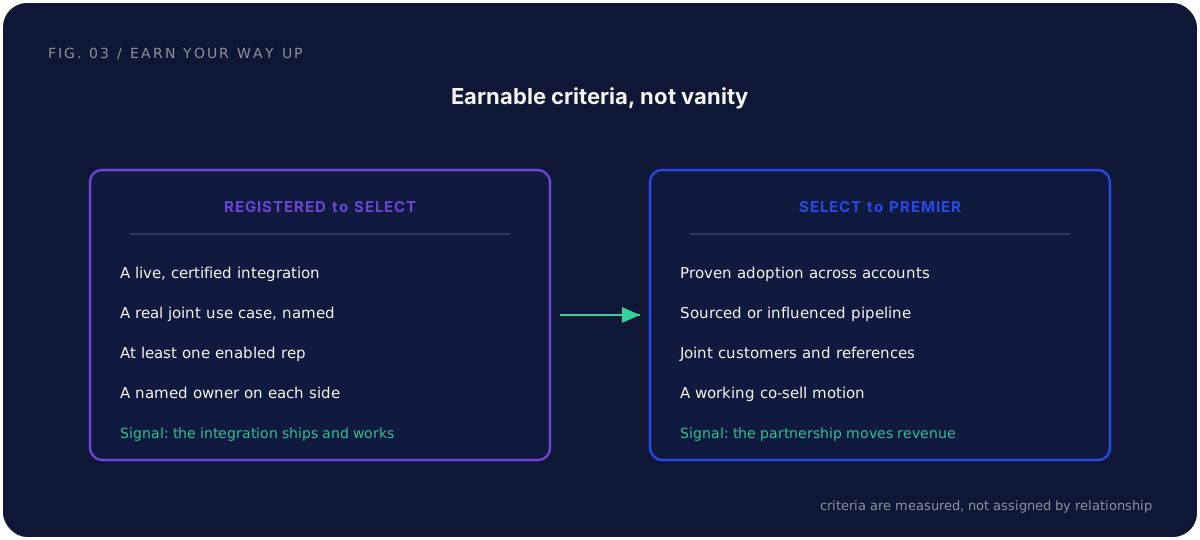
Good criteria share three properties. They are measurable, so both sides agree on whether the bar was hit. They are within the partner's control, so a partner can decide to earn the tier rather than wait to be granted it. And they map to something you care about, so a partner clearing the bar has genuinely become more valuable to you.
Here are criteria that meet that test, for the two gates in a three-tier program:
| Gate | What the partner must show | Why it is the right bar |
|---|---|---|
| Registered to Select | A live, certified integration; a named joint use case; one enabled rep; an owner on each side | Proves the integration ships and works, and someone owns it |
| Select to Premier | Proven adoption across accounts; sourced or influenced pipeline; reference customers; a working co-sell motion | Proves the partnership moves revenue, not just exists |
Notice what is not on either list. Not "signed a bigger contract." Not "has a famous logo." Not "the CEO knows our CEO." Vanity criteria reward the wrong behavior and produce a top tier full of partners who do not actually drive adoption. The criteria that belong in the gates are the same signals you would track to decide whether a partnership is working at all: a real integration, real adoption, real pipeline.
Review tier placement on a schedule, not on request. A quarterly review against the criteria keeps the program honest in both directions. Partners who earned the next tier get promoted; partners who slid below their bar, perhaps because adoption flatlined, get a candid conversation rather than a quiet downgrade. Movement in both directions is what makes the tier credible.
Aligning tiers with the lifecycle, enablement, and co-sell
A tier is a promise about how much you will invest in a partner. That promise is only safe to make if the systems behind it can deliver, so your tier structure has to align with three things you are already running, or the tiers will write checks your team cannot cash.
Align tiers with the partnership lifecycle. A partner does not arrive at premier on day one. They move through the lifecycle, getting identified, prioritized, built, launched, and grown, and the tier should track that journey. A registered partner is early in the lifecycle; a premier partner is one whose integration is live, adopted, and being co-sold. The full path from first call to renewal is laid out in the SaaS partnership lifecycle guide, and tiers label where a partner sits on that loop.
Align tiers with enablement depth. Enablement is one of the main things that changes across tiers, so your program has to deliver at each level: self-serve at the bottom, live training in the middle, certification and refresh at the top. If you promise certified reps at premier but have no certification process, the tier is hollow. Build the enablement depth first, then attach it to the tier.
Align tiers with co-sell investment. Active co-sell is the most expensive benefit, and it belongs at the top tier because it consumes your own sellers' scarce time. Promising co-sell at a lower tier means your sales team gets pulled into relationships that have not proven they move revenue. The mechanics of running that motion well are covered in the co-selling engine guide. The tier is the gate that protects your sellers' time.
The throughline: a tier describes how much you are investing in a partner, and that investment is delivered by the lifecycle, the enablement program, and the co-sell motion. Design the tier to match what those systems can do, and the program stays honest. Design it to match a competitor's pretty program page, and it falls apart the first time a partner asks for the benefit you promised.
When to add tiers as you scale
Three tiers will carry most companies a long way. But there is a real point where adding a tier makes sense, and the trick is telling it apart from the urge to look more established than you are.
The right trigger is a crowded tier that needs splitting. When your select tier holds fifteen partners and you find yourself treating five of them noticeably better than the other ten, that is the signal. A single tier no longer describes a homogeneous group, and a split would let you allocate attention more precisely. That is the program telling you it needs more resolution, which is exactly what tiers are for.
The wrong trigger is comparison. Seeing a competitor's five-tier program is not a reason to add tiers. Their program serves a partner population you do not have yet, and copying their structure imports their overhead without their partners.
A few signals that you are ready to add a tier:
- A tier has grown to a dozen or more partners who clearly fall into two groups by investment or value.
- You have a dedicated partnerships hire who can actually run the additional tier rather than letting it sit unmaintained.
- Partners are asking for a level above your top tier, which is a good problem and means your premier benefits no longer differentiate your best partners.
And one rule that does not change as you scale: add the tier only when a real partner is ready to fill it. A new tier with no members is the same mistake as a five-tier program at seed, just made later. The program should always describe the partners you have, plus the one knocking at the gate, not the ones you imagine you might someday recruit.
Common mistakes, and the fix
Copying a five-tier program from a large vendor. The fix: start with three tiers, or two if you are very early. Add tiers only when a real population needs splitting. A program that describes your actual partners beats one that imitates a company at a different scale.
Defining tiers nobody is in. The fix: every tier should have at least one member or a concrete near-term partner who will fill it. An empty tier is a promise you maintain for no one and a credibility problem for everyone who reads it.
Gating the docs, sandbox, or basic listing. The fix: keep self-serve, build-once benefits universal across every tier. Gate the things that cost ongoing human attention, like co-marketing and co-sell. Friction on the cheap stuff costs you partners and saves you nothing.
Handing out tiers by relationship. The fix: write measurable criteria for each gate and review placement quarterly against them. A partner should be able to earn a tier by hitting a bar, not by being liked. Vanity tiers make the whole program mean nothing.
Promising benefits your systems cannot deliver. The fix: build the enablement, lifecycle, and co-sell capacity first, then attach it to a tier. A premier tier that promises certified reps and active co-sell you cannot provide is worse than not having the tier at all.
FAQ
How many partner program tiers should a startup have? Three is the right default: registered, select, premier. Two works if you are very early and have one real partner plus a pipeline of self-serve ones. Five is almost never right before Series B, because you will not have enough partners to fill the tiers, and empty tiers are maintenance cost with no return.
What should the tiers be named? Conventional names like registered, select, and premier work because partners recognize them instantly. Metal names like silver, gold, and platinum are fine too. The names matter far less than the criteria and benefits behind them, so do not spend time on naming before you have defined what each tier means and requires.
What is the difference between requirements and benefits in a tier? Requirements are what a partner must do to reach the tier, like shipping a live integration or sourcing pipeline. Benefits are what you provide once they are in it, like co-marketing or a dedicated contact. A good tier pairs a clear, earnable requirement with a benefit that genuinely rewards meeting it.
Which benefits should stay the same across all tiers? Documentation, sandbox access, and the basic right to a marketplace listing should be universal. These are self-serve and build-once, so gating them adds friction without saving you cost. Open docs and sandbox are how partners self-qualify into building, which is exactly the behavior that earns the next tier.
How do partners move up a tier? By hitting measurable criteria you publish in advance. Registered to select typically takes a live, certified integration and an enabled rep. Select to premier takes proven adoption and sourced or influenced pipeline. Review placement quarterly, and allow movement down as well as up so the tiers stay credible.
Should revenue share be tied to tiers? If you share revenue or pay referral fees at all, attach it to the top tier so it rewards real value rather than a flat payout. Many tech partnerships have no money moving between them, which is normal. Do not invent a revenue share just to fill out a tier.
When is the right time to add a fourth tier? When an existing tier has grown to a dozen or more partners who clearly split into two groups by investment or value, and you have someone who can run the extra tier. Add it only when a real partner is ready to fill it. A competitor's longer ladder is not a reason.
Do we need a partnerships team to run a tiered program? No. A three-tier program runs fine on a founder or product leader at seed to Series B, as long as the criteria are clear and the benefits match what your enablement and co-sell capacity can deliver. A dedicated hire makes sense once maintaining tiers and reviewing movement becomes real ongoing work.
The short version
Partner program tiers exist to set expectations, allocate your scarce attention, and reward commitment. If a tier does none of those three jobs, it is a label, not a tier, and you should delete it.
Start with three: registered, select, premier, or two if you are very early. Make each tier cumulative, so moving up is always strictly better. Keep docs, sandbox, and a basic listing universal, and gate the expensive, attention-heavy benefits like co-marketing, co-sell, and a dedicated contact. Make every tier earnable on measurable criteria, a live integration, proven adoption, real pipeline, and review placement quarterly in both directions. Align the tiers with your lifecycle, enablement depth, and co-sell investment, so each tier is a promise your systems can keep. And add tiers only when a real partner is waiting at the gate, never to match a competitor's program page.
If you want a partner program structured to fit your actual stage, from the tier model through the partner-ready API, the shipped integration, enablement, and the co-sell motion on top, that is exactly what a Partner Audit is for. We review your product, API, and partner potential, then define what to build, who to approach, and how to ship and sell it together.