How to run a partner QBR that drives revenue
An independent guide to running a partner QBR for B2B SaaS. A lightweight agenda, the metrics to review, building a joint plan, and the follow-up discipline that turns a quarterly meeting into pipeline.
Most partner QBRs are a slide deck nobody reads, a status update nobody needed, and an hour that ends with "great, let's do this again next quarter." Both sides leave with a vague good feeling and no new pipeline. That is not a review. It is a meeting that happened to land on the calendar every ninety days. A partner QBR that drives revenue looks different: it spends most of its time on what the two companies will do together next, it grounds that plan in a few real numbers, and it ends with owners and dates rather than goodwill. The difference is not budget or seniority. It is structure, and structure is something a startup can run as well as anyone.
This is an independent guide to running a partner quarterly business review, written for a small partnerships team that does not have a program office or a dozen people to staff it. The mechanics of any one partnership vary, and the right metrics depend on the motion you run with that partner, so treat the specifics here as a starting template rather than a rulebook. What does not change is the shape of a QBR that works: a tight agenda, a short scoreboard both sides trust, a joint plan for the next quarter, and a follow-up rhythm that keeps the plan alive between meetings. That shape is what this guide covers.
It pairs with our guide to partnership metrics that matter, our co-selling engine playbook, and our partner enablement 101 guide, since a QBR is where enablement, co-sell, and measurement all come together in one conversation.
The 60-second version
- A QBR is a planning meeting, not a status update. Spend most of the hour on what you will do together next quarter, not on reciting what happened last quarter.
- Bring a short scoreboard, not a deck. A handful of numbers both sides agree on beats forty slides nobody remembers. Sourced and influenced pipeline, deals, and adoption are usually enough.
- Pick one or two priorities, not ten. A joint plan with two real bets you both commit to drives more revenue than a wish list neither side owns.
- Every action gets an owner and a date. A QBR that ends without named owners ends without follow-through, and follow-through is where the revenue is.
- Keep it lightweight if you are small. A focused sixty minutes with the right people beats a quarter-long planning exercise a startup cannot sustain.
- Talk to the people who can act. The right room has someone from each side who can commit to a plan, not just report on one.
- The follow-up is the QBR. The meeting sets the plan; the weeks after it are where the plan turns into pipeline or quietly dies.
Why most partner QBRs fail to move revenue
The default partner QBR fails for a simple reason: it is built backwards. It spends fifty minutes looking at the past and ten minutes, if any, on the future, when the only part of the meeting that can change an outcome is the part about what happens next. Reviewing last quarter feels productive because there is data to show and slides to build, but a recap, however polished, does not source a single new deal. The past is context. The plan is the product.
There is a second failure mode that is just as common: the QBR treats the partner as an audience rather than a collaborator. One side presents, the other nods, and nobody leaves with a shared commitment. A review that is performed at a partner instead of worked on with a partner produces agreement in the room and nothing after it, because no one on the other side helped build the plan and so no one on the other side owns it. The goodwill is real and the pipeline is zero.
The third failure is the absence of follow-through. Even a good QBR with a real plan dies if the plan lives only in the meeting notes and nobody checks on it until the next quarter. A QBR is not an event that succeeds or fails in its sixty minutes. It is the start of a quarter of joint work, and the meeting is worth exactly as much as the follow-up that comes after it. Most of this guide is about avoiding these three failures: keep the recap short, build the plan together, and wire in the follow-up before you leave the room.
Step 1: build a tight agenda
The agenda is what keeps a QBR from drifting into a status update, so set it before the meeting and share it with the partner in advance. Harvard Business Review's guidance on designing a meeting agenda makes the same case: a clear agenda sets expectations and allocates time on purpose rather than by accident. The single most important design choice is the time split: give the past as little time as it needs and the future as much as you can. A useful default for a sixty-minute QBR is to spend about a third looking back and two thirds looking forward, because the forward half is the only half that changes next quarter.
A lightweight agenda that fits an hour:
| Segment | Time | Purpose |
|---|---|---|
| Quick wins and context | 5 min | Set a positive tone, name what went well |
| Scoreboard review | 15 min | Walk the few numbers both sides trust |
| What is working, what is stuck | 10 min | Diagnose, do not just report |
| Joint plan for next quarter | 20 min | Pick priorities, agree on bets |
| Owners, dates, and next check-in | 10 min | Turn the plan into commitments |
A few principles keep the agenda honest. Send it ahead so the partner can bring the right people and any numbers from their side, because a QBR where one side is seeing the data for the first time turns into a fact-checking session instead of a planning one. Keep the wins segment short and genuine, since it sets the tone but is not the point. And protect the joint-plan block: it is the first thing that gets squeezed when earlier segments run long, and it is the last thing you can afford to lose. If the meeting is running over, cut the recap, not the plan.
For a startup, resist the urge to make the QBR bigger than the partnership. A first QBR with a new partner might be forty-five minutes and a single shared doc. The agenda scales with the relationship, and a focused short meeting you actually run every quarter beats an elaborate one you hold once and abandon.
Step 2: review the metrics that matter
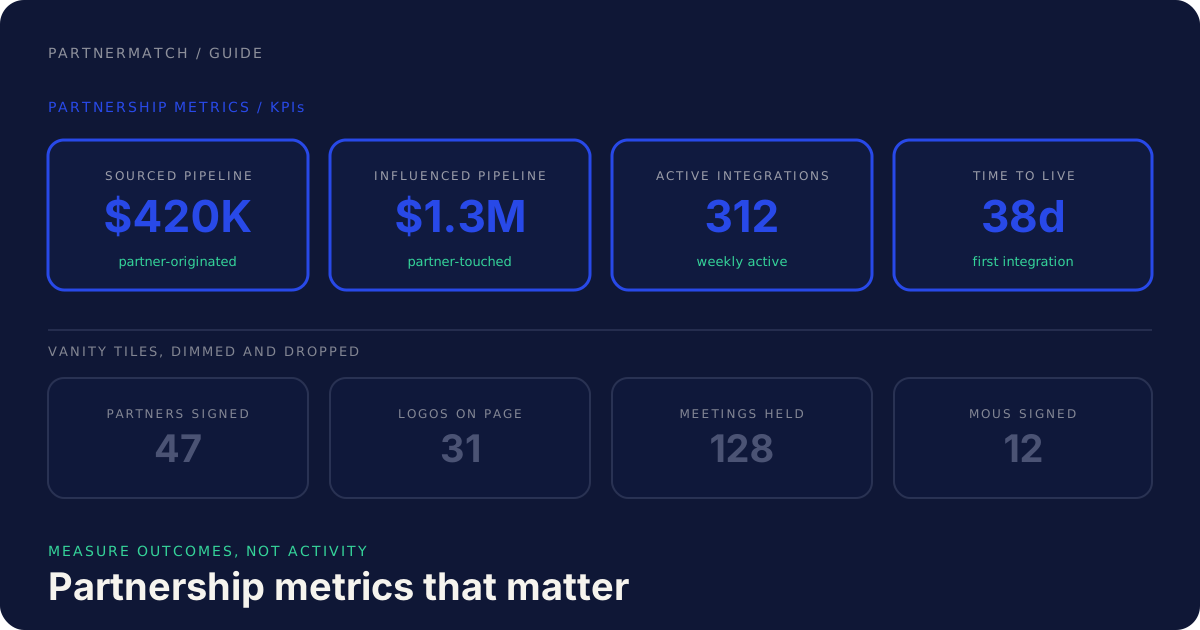
The scoreboard is where a QBR earns its credibility, and the mistake here is bringing too many numbers rather than too few. A wall of metrics invites debate about definitions and buries the two or three figures that actually tell you whether the partnership is working. Bring a short scoreboard of numbers both sides have agreed on in advance, walk it quickly, and spend the saved time on what the numbers mean rather than what they are.
The metrics worth reviewing in most partner QBRs:
| Metric | What it tells you |
|---|---|
| Sourced pipeline and deals | New opportunities the partner brought that you would not have had |
| Influenced pipeline and deals | Open or won deals the partner touched along the way |
| Integration adoption | How many shared customers are actually using the integration |
| Co-sell activity | Joint calls, intros, and registered deals in the quarter |
| Time to first value | How fast new joint customers get live and seeing benefit |
The distinction between sourced and influenced pipeline matters enough that we cover it on its own in influenced vs sourced pipeline, and a QBR is exactly where the difference becomes concrete: sourced is the partner bringing you a deal, influenced is the partner helping a deal you already had. Both count, but they tell different stories and lead to different plans.
Two habits make the scoreboard trustworthy. First, agree on definitions before the meeting, not during it, so the QBR is not derailed by an argument over what "influenced" means. Second, show the trend, not just the snapshot: a number is hard to read in isolation, but three quarters of the same number tells you whether the partnership is climbing, flat, or slipping. The point of the scoreboard is not to grade the past. It is to surface the one or two things the joint plan should fix or double down on, which is where the meeting goes next. For more on choosing the right figures and dropping the vanity ones, see our partnership metrics guide.
Step 3: build the joint plan
The joint plan is the reason the QBR exists, and it is the part most teams shortchange. After the scoreboard has shown what is working and what is stuck, the plan answers the only question that matters: what will the two companies do together over the next ninety days to drive revenue. The discipline here is subtraction. A plan with two real bets that both sides commit to beats a list of ten initiatives that no one owns, because a startup partnership has the capacity to actually execute two things and not ten.
Build the plan together, in the room, rather than presenting a plan you wrote alone. The difference is ownership: a partner who helped choose the priorities will work them, while a partner handed a plan will file it. Start from the scoreboard. If adoption is low, a bet might be a joint push to get existing shared customers live on the integration. If sourced pipeline is thin, a bet might be an account-mapping session to find new overlap. Let the numbers point at the priorities so the plan is grounded in something both sides already agreed on.
A simple joint-plan format that fits on one page:
| Priority | Why it matters | Each side's commitment | Target |
|---|---|---|---|
| The first bet | The number it moves | What you do, what they do | A figure or milestone for the quarter |
| The second bet | The number it moves | What you do, what they do | A figure or milestone for the quarter |
A few rules keep the plan real. Make each side's commitment specific and visible, so the plan is mutual rather than a list of things you will do hoping the partner reciprocates. Attach a target to each bet, even a rough one, because a priority with no target is a wish and a target is what you check against next quarter. And tie the plan to the motions you already run, whether that is the co-selling engine, an enablement push from your partner enablement kit, or a marketplace effort, so the QBR plan reinforces the work rather than adding a separate stream of it. The plan is not extra work. It is the quarter's work, agreed on together.
Step 4: assign owners and follow up
A joint plan with no owners is a conversation, not a commitment, and the gap between the two is where most QBR revenue leaks away. Before anyone leaves the room, every action in the plan gets a named owner on each side and a date. Not "we will work on adoption" but "Maria on our side and Sam on yours will run the customer outreach, drafts ready by the 15th." Names and dates are what turn a good meeting into a quarter of actual work, and they cost nothing but the discipline to ask "who owns this, by when" for each item before you close.
The follow-up rhythm matters as much as the assignment. A QBR every ninety days with silence in between is a plan that gets remembered in the last week before the next meeting and ignored for the eighty days before that. Set a lighter cadence between QBRs to keep the plan alive:
- A shared plan doc both sides can see. Owners, actions, dates, and status in one place the partner can open any time, so the plan does not live only in your notes.
- A short monthly or biweekly check-in. Fifteen minutes to confirm the bets are moving, surface blockers early, and adjust, rather than discovering at the next QBR that nothing happened.
- A quick recap sent within a day. A short written summary of the decisions, owners, and dates, sent right after the QBR while it is fresh, so both sides have the same record of what was agreed.
- A check against last quarter's plan at the next QBR. Open the next QBR by reviewing what you committed to last time, because a plan that is never checked is a plan partners learn to ignore.
That last habit is what closes the loop and makes QBRs compound. When a QBR opens by reviewing the previous plan, both sides know the commitments are real and will be checked, which changes how seriously the plan gets built in the first place. A QBR that is graded next quarter is a QBR people execute. The follow-up is not the boring administrative tail of the meeting. It is the part where the revenue actually happens, and the meeting is just where it gets set in motion.
Common mistakes, and the fix
Spending the meeting on the past. The fix: cap the recap at a third of the time and protect the joint-plan block. The only part of a QBR that can change an outcome is the part about what you will do next, so give the future most of the hour.
Presenting at the partner instead of planning with them. The fix: build the joint plan together in the room rather than handing over a plan you wrote alone. A partner who helped choose the priorities owns them; a partner handed a plan files it.
Bringing forty slides and twenty metrics. The fix: bring a short scoreboard of a few numbers both sides agreed on in advance, and spend the saved time on what they mean. Too many metrics bury the two or three that actually matter.
Leaving with a plan but no owners. The fix: assign a named owner on each side and a date to every action before anyone leaves. A plan without owners is a conversation, and conversations do not source deals.
Going silent until the next QBR. The fix: keep a shared plan doc and a short monthly check-in between meetings. A plan remembered only in the last week before the next QBR is a plan that mostly did not happen.
Never checking last quarter's plan. The fix: open each QBR by reviewing the previous commitments. A QBR that is graded next quarter is one people actually execute, and the review is what makes the whole cycle compound.
FAQ
What is a partner QBR? A partner quarterly business review is a recurring meeting between two partner companies to review how the partnership is performing and, more importantly, to plan what they will do together over the next quarter. A QBR that drives revenue spends most of its time on the forward plan rather than the backward recap, grounds that plan in a few shared metrics, and ends with named owners and dates so the plan turns into work rather than goodwill.
How long should a partner QBR be? For most startup partnerships, sixty minutes is enough, and a new or small partnership might run forty-five. The length matters less than the time split: spend roughly a third looking back at the scoreboard and two thirds looking forward at the joint plan, because the forward half is the only part that changes next quarter. A focused short meeting you run every quarter beats an elaborate one you hold once and abandon.
Who should be in a partner QBR? Someone from each side who can actually commit to a plan, not just report on one. For a startup that often means the partnerships lead from each company, plus whoever owns the relevant motion, sales for co-sell, product or engineering for an integration. The test is simple: if the people in the room cannot agree to the joint plan and assign the work, the QBR cannot produce commitments, only updates.
What metrics should a partner QBR review? A short scoreboard usually covers sourced pipeline and deals, influenced pipeline and deals, integration adoption among shared customers, co-sell activity, and time to first value for new joint customers. Agree on the definitions before the meeting and show the trend over a few quarters rather than a single snapshot. The goal is not to grade the past but to point the joint plan at the one or two things to fix or double down on.
How do I run a QBR if we are a tiny team? Keep it lightweight and proportional to the partnership. A first QBR can be forty-five minutes and a single shared doc with a scoreboard and a two-bet plan. Skip the formal deck, build the plan with the partner live, and assign owners before you close. The structure that drives revenue, a short recap, a focused plan, and named owners with a follow-up rhythm, scales down to a startup without losing what makes it work.
How is a QBR different from a regular partner check-in? A check-in keeps the work moving between QBRs: a short, frequent touchpoint to confirm the current bets are progressing and surface blockers. A QBR is the larger, quarterly meeting that reviews the scoreboard and sets the next quarter's plan. They work together: the QBR sets the plan, the check-ins keep it alive, and the next QBR grades it. Treating the QBR as just a bigger check-in is how it drifts into a status update.
Further reading
- Partnership metrics that matter for choosing the few numbers a QBR scoreboard should track and the vanity ones to drop.
- Influenced vs sourced pipeline for the distinction that makes a QBR scoreboard honest.
- How to build a co-selling engine for the motion a QBR joint plan most often drives.
- Partner enablement 101 for the enablement work a QBR plan reinforces.
- Harvard Business Review on designing an agenda for an effective meeting, the discipline that keeps a QBR from drifting into a status update.
- Harvard Business Review's management tips on leading effective meetings for keeping a recurring meeting focused and worth the hour.
- Harvard Business Review's collection on meeting management for the broader research on running meetings that produce decisions.
The short version
A partner QBR drives revenue when it is a planning meeting, not a status update. Build a tight agenda that gives the past about a third of the time and the future the rest, because the forward plan is the only part that can change an outcome. Bring a short scoreboard of a few numbers both sides agreed on in advance, sourced and influenced pipeline, adoption, co-sell activity, and time to first value, and use it to point at what the plan should fix or double down on rather than to grade the past. Build the joint plan together in the room, pick one or two real bets with a specific commitment from each side and a target, and tie them to the motions you already run. Assign a named owner and a date to every action before anyone leaves, then keep the plan alive between meetings with a shared doc and a short regular check-in, and open the next QBR by reviewing what you committed to. Keep all of it proportional to the partnership, because a focused hour you run every quarter beats an elaborate review you hold once and forget.
If you want help turning your partner reviews into a repeatable revenue motion, a Partner Audit looks at your partnerships, your metrics, and your co-sell process, then hands you a concrete plan for what to run and where deals are leaking.