The partnership kickoff: an agenda that starts the work
Kickoff versus celebration. Owners, scope, dates, and comms: what a technology partnership kickoff must decide in the room so the work actually starts.
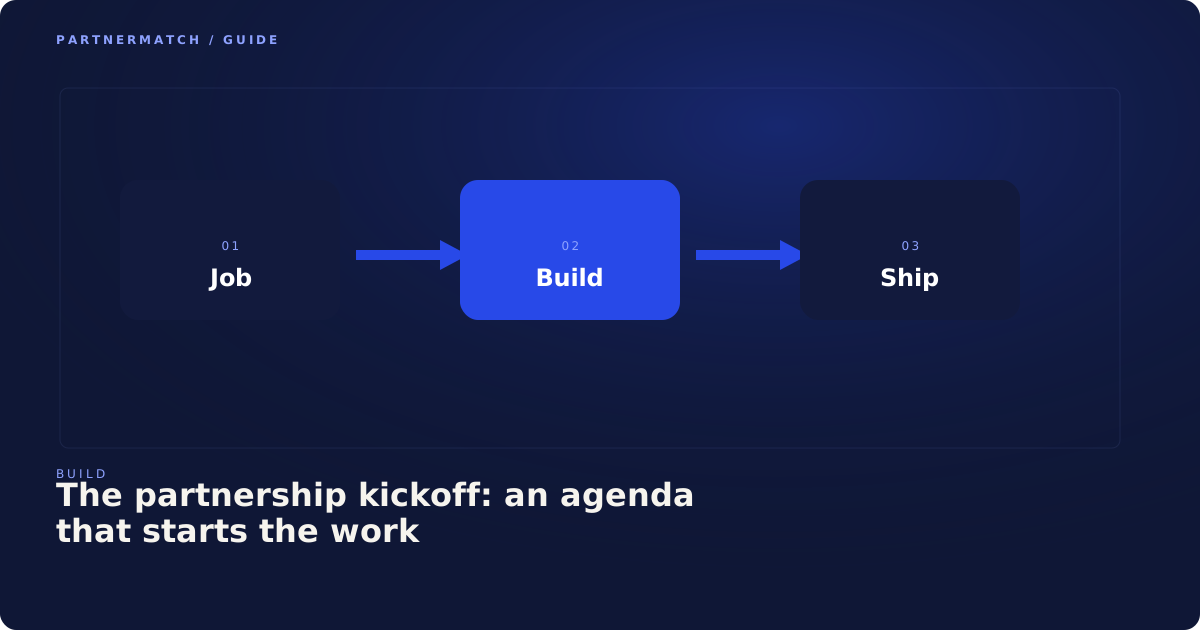
A partnership kickoff is not a celebration with a slide of logos. It is the first working meeting after both sides have said yes, and its only job is to start the work. If you leave with warmth and no owners, no scope, and no dates, you held a launch party six months early.
The lifecycle already had a discovery call. Kickoff is different. Discovery qualifies. Kickoff assigns. You are no longer asking whether there is a partnership. You are writing who does what, what "done" means for the first slice, when you will talk, and what you will not do in this window. Treat it like a project start, because that is what a technology partnership becomes the moment you stop selling it to each other.
This post is the agenda, the decisions that must happen in the room, and the artifacts you send the same day so the next 90 days have a spine.
The 60-second version
If you only read one section, read this one:
- Kickoff starts work. It does not celebrate a signature. If nothing was decided, it was a meetup.
- Leave with two owners, a first-slice scope, dates, and a comms path. Those four, in writing, the same day.
- Decide what is out of scope in the room. Unsaid extras become implied promises.
- The right people can commit capacity, not only cheer. Engineering or the implementer must be present if you are building.
- Sixty minutes, a shared doc, no 30-slide origin story. Read the one-pager before you join.
- Book the first check-in before you hang up. A kickoff with no next meeting is how silence starts.
- If you cannot staff it this quarter, do not kick off. Waitlist is cheaper than a fake start.
Kickoff versus celebration
Celebration can happen. It should not consume the hour. Ten minutes of context is plenty: why this pairing, the shared customer, the joint value proposition in one sentence. Then work.
You do not need a press plan as item one, or every executive who ever said "we should partner." Executives can sponsor. They often cannot name a deal-registration rule. If the kickoff is built for them, the people who will do the work sit quiet and then miss the dates. Put announcement last, after scope and owners. A full co-marketing campaign is too early unless the first motion is a listing with no build.
| This is kickoff | This is celebration (do it later or never) |
|---|---|
| Named DRIs on each side | Group photos and a tweet thread |
| First-slice scope, in and out | A roadmap tour of everything you might do |
| Dates: next check-in, first draft, target live | "We will try for this quarter" |
| Comms path and ticket path | A Slack channel with 40 people and no purpose |
| How deals get registered, if any | MDF brainstorming |
| Support and security contacts | A keynote about the ecosystem |
If legal is still redlining, you can still kick off the non-production work: sandbox, scope draft, enablement outline. You should not kick off a customer-data build or a public date. Say that out loud so nobody treats the meeting as "we are live."
What must be decided in the room
Go in with a proposed answer to each of these. Leave with a confirmed one. Writing for GOV.UK is the right bar for the notes: short, specific, dated.
Owners. One DRI on each company. Not a distribution list. Backup names help. "Partnerships" is not a name.
First slice. The smallest thing that would make a shared customer better: one workflow, one referral path, one listing. Write in-scope and out-of-scope. If you are building, this is the start of the scope document, not a vibe about "full platform connectivity."
Motion. Referral, reseller, or co-sell for this window. You can change later. You cannot run all three from day one without rules.
Dates. Next working session, first artifact due, target for first live or first referral, first QBR window. Dates have owners.
Comms. Where live deals and blockers go (email, a small Slack, a ticket tag). Who may speak publicly and when. How you will share product changes without turning them into customer promises.
Support and incidents. Who gets paged, what the customer hears, how you will not leave a shared account in a loop between two help desks.
Capacity honesty. Engineering weeks or seller time actually reserved. If the partner cannot staff, the kickoff output is pause, not optimism.
| Decision | Good enough in the room | Not good enough |
|---|---|---|
| Owners | Two names, with backups | "Our alliances team" |
| Scope | One workflow, listed outs | "Phase 1, then we will see" |
| Motion | One primary motion | "All of the above" |
| Dates | Calendar holds | "Soon" |
| Comms | One path, small list | A public channel and a hope |
| Capacity | A reserved slice or a pause | "We will find someone" |
If you disagree in the room, that is a successful kickoff. Disagreement in week six, after a public announcement, is a stall. Capture the default: "We will not do X until Y is live." Open commercial terms belong in a parking lot with an owner. Point at the agreements work and keep the build moving on what is already allowed.
A 60-minute agenda you can run
Send the agenda and a one-pager 48 hours ahead. If people have not read them, do not spend the hour on a product demo. Send them back to discovery.
| Minutes | Block | Output |
|---|---|---|
| 0 to 5 | Purpose and the one-sentence JVP | Everyone can say why this exists |
| 5 to 15 | Owners and who is in the working group | Two DRIs, a short list of helpers |
| 15 to 35 | First-slice scope, in and out | A written slice, not a tour |
| 35 to 45 | Dates, capacity, dependencies (legal, marketplace, security) | A timeline or a pause |
| 45 to 55 | Comms, support, deal rules | Paths, not tools for their own sake |
| 55 to 60 | Recap, next hold, who writes the note | A calendar hold before goodbye |
Helpers should be few: the engineer or SE who will build or review, the seller lead if co-sell is first, CS if shared customers are already live. Marketing attends if the first slice is a listing. They should not run the meeting.
The DRI on your side sends a one-page note the same day: decisions, dates, link to the working doc. That note is the start of onboarding. Book the next 30-minute working session now, inside two weeks. Kickoff energy dies on empty calendars.
After the room: artifacts and the first risks
Same-day artifacts:
- Kickoff note (decisions and dates).
- Owner table.
- Draft scope or motion brief.
- Comms path, including who is not on it.
- A list of shared customers you are allowed to name, if any.
First risks to name while you are still honest:
No engineer in the kickoff but a build on the timeline. Legal still open and a public date on the table. Ten people on Slack and no DRI. A partner who wants program tiers premier treatment on day one. A sales leader who thinks kickoff means every deal is now co-sell. Address those in the note. Unnamed, they become the stall.
Enablement starts here as a checklist, not a training festival. What does their seller need in week two. What does support need before any customer is pointed at the integration. Put those on the same timeline as the build. A live integration with no kit is how you get a launch and then silence.
If the kickoff reveals you should not have said yes, say so this week. A stop after kickoff is cheap. A stop after a half build is not. You are allowed to convert the output to waitlist.
Common mistakes, and the fix
Using the hour for origin stories and demos. The fix: one sentence of why, then owners and scope. Send reading ahead.
No engineer (or no seller) in a room that assumed their time. The fix: reschedule. A kickoff without the people who will spend the hours is theater.
Scope as a tour of both platforms. The fix: one customer job, listed outs, a date for the rest.
Announcement before dates. The fix: public only after the first slice has a real target and a staffed owner.
A 40-person Slack as the operating system. The fix: two DRIs and a small working path. Add people when they have a job.
No note the same day. The fix: the DRI writes one page before they do anything else. Memory decays in hours.
FAQ
When should we run the kickoff relative to the agreement? After commercial yes, even if paper is still moving, for non-production work. After signature for anything that uses customer data or a public date. Do not wait for a perfect contract to name owners.
Who should attend? Two DRIs, plus the people whose hours you are about to spend. Sponsors optional for five minutes. Curious bystanders no.
How is kickoff different from partner onboarding? Kickoff decides. Onboarding executes the first 30 days: kit, access, first action. You need both. Kickoff without onboarding is a meeting. Onboarding without kickoff is a welcome email with no plan.
What if we only agreed to explore, not to build? Do not call it a kickoff. Run another discovery. Kickoff is for a yes.
Should legal attend? Usually no. Bring them a decision memo after. If a term blocks the first slice, schedule a separate, short legal session.
How long should a kickoff be? Sixty minutes for a small team. Ninety if two time zones and an interpreter for scope. If you need half a day, you do not have a first slice yet.
What if the partner wants to announce tomorrow? Say no unless the first slice is already live or the announcement is clearly labeled as intent with no customer-facing date. A date in public is a promise.
Can we kick off over email? You can confirm owners and dates in writing if you already aligned live. Do not skip a conversation on scope.
Further reading
- Writing for GOV.UK for the same-day note.
- The first partner call for the meeting that should already have happened.
- Partner onboarding for the 30 days after this hour.
- SaaS partnership agreements for what paper should protect before you build.
- Partner enablement 101 for what their team needs once owners exist.
The short version
A partnership kickoff starts the work. Put two owners, a first-slice scope with outs, dates, comms, and capacity honesty in a 60-minute room, then send the note the same day and book the next working session. Do not spend the hour celebrating, announcing, or touring both products. If you cannot staff the slice, pause. If you leave with warmth and no dates, you will spend the next quarter pretending the partnership has begun.
If you want a kickoff agenda, a first-slice scope, and a 90-day plan your engineers will recognize, that is what a Partner Audit is for.