Running global partner workshops
How to plan, run, and follow through on partner workshops across regions. Agenda, hands-on labs, timezone and language, and the work after the room that turns a session into pipeline.
A partner workshop is easy to over-stage and easy to waste. You fly, or you fill a four-hour Zoom, you walk through slides the field has already ignored, and everyone agrees it was "great to connect." Two weeks later no one has registered a deal, no one has finished the lab, and the recording sits next to last year's kickoff. A workshop that drives revenue looks smaller from the outside: a tight agenda, a lab a rep can complete, a named next step, and a follow-through plan that works in more than one timezone.
This is an independent guide for a small team that cannot staff a roadshow. Public programs, including HubSpot's and Salesforce's, run events at a scale you will not copy. Steal the discipline, not the production: one agenda, hands-on practice, local champions, and a loop after the room. A workshop is a format inside partner enablement, not a substitute for the kit or for sales training. Plan who is in the room, teach one job, make them do it, and stay with them until the first real action.
The 60-second version
- A workshop is for practice, not for announcements. If they will only listen, send a recording.
- One job per workshop. Pitch and demo, or lab the integration, or run deal registration. Not all three in four hours.
- Cap the live block. Two to three hours with a break. Longer rooms drop off, especially on a video call across timezones.
- Labs need a sandbox, a script, and a definition of done. "Explore the product" is not a lab.
- Do not run one global time and hope. Repeat the same agenda in regional blocks, or run async lab plus a short live clinic.
- Local champions beat more flights. A certified seller in-region can host the 45-minute core after you have run it once.
- Follow-through is the workshop. Office hours, certification, and a first action in two weeks, or the room was a cost.
- Measure completions and first actions, not headcount in the session.
When a workshop is the right format
Workshops are expensive in attention, even when they are virtual. Use them when the work requires doing, not reading. Good reasons: a new integration just went live and sellers need to demo the joined workflow; you are certifying a first cohort; a region has never seen you and a recording will not create a relationship. Bad reasons: you have a quarterly slot on the calendar; leadership wants a "touchpoint"; you have slides looking for an audience.
If the goal is an announcement, write a note. If the goal is a pitch they can give, train the sales team in 45 minutes. If the goal is a working lab plus a cohort, that is a workshop. Split mixed audiences. Sellers get pitch and demo. Engineers get the sandbox. Marketers get the story and the assets. The enablement kit already maps to those roles. The workshop should too.
Planning: audience, regions, and logistics
Start with who, not with a venue. Name the role, the region, and the outcome. "APAC partner sellers can give the two-minute pitch and complete the demo lab" is a plan. "Global partners, enablement day" is not.
Logistics that actually matter:
- Timezone blocks. Americas, EMEA, APAC as three runs of the same agenda, not one "friendly to headquarters" slot. If you can only staff two, record the third and put a live office hours on that region's morning.
- Language. Run in the language the sellers sell in, or provide a local champion who can. Slides in English and a host who cannot pause are how APAC rooms go quiet.
- Length. Two to three hours live, including a break. A full day is a conference. You do not have a conference team.
- Size. Small enough that people speak. Twelve to twenty is workable. Fifty is a webinar with a workshop label.
- Access. Lab accounts, kit links, and the agenda sent 48 hours ahead. A room that spends 20 minutes on logins has already lost the lab.
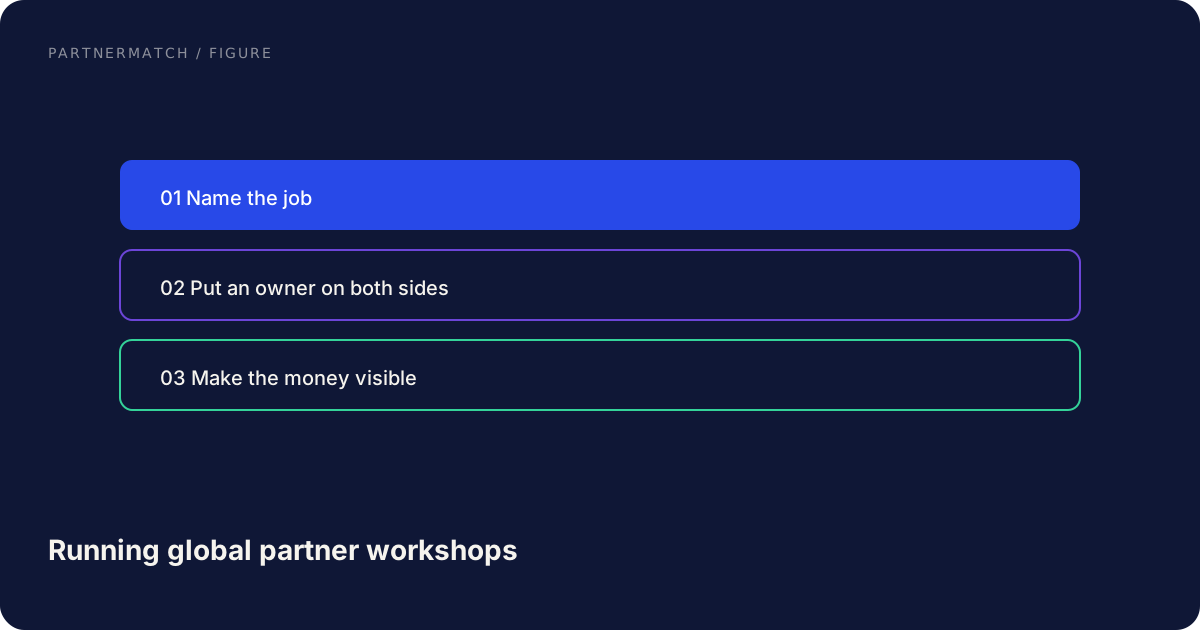
Assign owners before you send the invite. You own agenda, lab, and follow-through. The partner champion owns attendance. If no champion will put their name on attendance, cancel and run a smaller training instead.
| Planning item | Owner | Done when |
|---|---|---|
| Audience and outcome | You | One sentence: role, region, what they can do after |
| Agenda and timing | You | Same agenda for every regional run |
| Lab environment | Solutions / product | Sandbox accounts tested the day before |
| Attendance | Partner champion | Named list, not a forwarded link |
| Follow-through dates | You | Office hours and cert deadline on the invite |
You are running a repeatable class. Plan it like a class.
The agenda that actually teaches
Protect the doing. The default workshop fills with context until the lab is a leftover 15 minutes. Flip it. Teach the minimum, then they work, then you debrief.
A two-and-a-half-hour agenda that fits sellers:
| Block | Time | Purpose |
|---|---|---|
| Why we win together | 15 min | Joint value, who this is for, one customer story |
| Pitch | 20 min | You give it, they give it back in pairs |
| Demo | 20 min | Core workflow only, script on screen |
| Lab | 50 min | They run the script in a sandbox, definition of done on the slide |
| Break | 10 min | |
| Objections and deal mechanics | 20 min | Five objections, how to register a deal |
| Next steps | 15 min | Cert deadline, office hours, first action |
Cut anything that does not serve those blocks. Company history, full roadmap, competitive landscape beyond the battlecard, and "partnership vision" all belong in a doc. If you are running this for engineers, swap pitch and objections for architecture and a deeper lab, and keep the same time discipline.
Send the agenda with the invite. A partner who knows they will be asked to pitch sends the right person.
Hands-on labs that survive timezone and language
A lab is a scripted job with a visible finish line. "Get familiar with the product" is a hope. "Create a draft invoice for the sample customer and generate the overdue report" is a lab.
Build the lab as if the host will drop off the call. That is what happens in a regional replay and in any room where language or audio is uneven.
- Pre-provisioned sandbox. Accounts exist, sample data exists, passwords work. Test them the morning of, not the week of.
- A one-page script. Numbered steps, screenshots, the success screenshot at the end. No branching.
- Definition of done. A specific state in the product, or a screenshot they paste in a form. You cannot follow through on "I think I finished."
- A fallback. If the sandbox dies, they walk the demo script on a recorded environment. The workshop continues. You do not spend 40 minutes debugging auth in front of 20 people.
- Language. Translate the script, not just the slides. Sellers read the script while they click.
For integration labs, the job should be the joined workflow, not your product in isolation. Keep it on one path. If partners cannot get into a sandbox from their region, fix access first. A workshop on a broken environment trains people that your product is hard.
Rolling it out across regions
One global session is convenient for you and rude to half the audience. Repeat the agenda. Same slides, same lab, same cert, three time blocks. The second and third runs are cheaper because you already found the broken step in the lab.
Where you cannot staff three lives, use this pattern: async lab in their hours, 45-minute live clinic on their morning, recording of the first region's teach block. The clinic is for questions and pitch practice, not for re-teaching the slides.
Local champions are how this stops depending on flights. After the first run, the certified seller in-region hosts the 45-minute core for the next cohort, using your recording for the demo if needed. You join office hours, you do not MC every room. This is the same train-the-trainer move as in sales training, applied to geography.
Localize examples, not the story. The joint value stays one sentence. Drift between regions is how EMEA pitches a feature you cut.
A lighter version of a global series: a quarterly regional slot, same runbook, cancel if the champion cannot fill five seats. Empty rooms train you to skip the next one. This sits in the long tail of the partnership lifecycle. Launch gets the press. Workshops are how later cohorts, and later regions, ever catch up.
Follow-through is the workshop
The room is the start. The two weeks after it are the product. Without follow-through, you paid for awareness.
Put the dates on the invite, not in a closing slide people screenshot and lose:
- Lab completion. 72 hours. A form or a sandbox flag. Chase the champion, not each rep, if the list is long.
- Office hours. Two sessions in the following two weeks, in the region's morning. Bring a live deal or a lab blocker.
- Certification. Ten days. Recorded pitch plus lab done. Same rubric as your sales training.
- First action. Fourteen days. A registered deal, a joint call booked, or a working integration in a prospect account, depending on the motion.
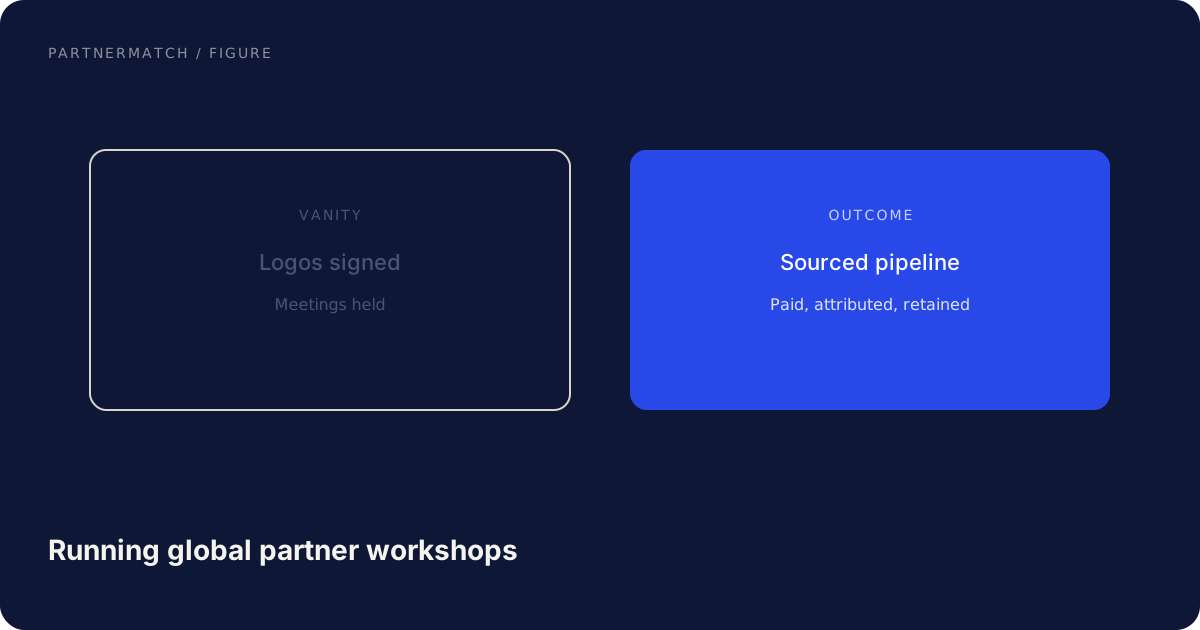
Report those four, not the headcount. A workshop with 40 attendees, 6 lab completions, and 1 certified rep was not a 40-person success. It was a 1-person success with a large audience.
Close the loop in the next partner QBR. Which named people from the workshop are still active. Which first actions happened. Whether the region needs a replay or a different format. That is how a workshop becomes part of the operating system instead of a tour.
Measuring whether it worked
Count the funnel, not the room.
| Metric | What it tells you |
|---|---|
| Invited to attended | Whether the champion and the time slot worked |
| Attended to lab complete | Whether the lab was real |
| Lab complete to certified | Whether they can sell, not just click |
| Certified to first action | Whether the workshop produced commercial motion |
| First action to pipeline | Whether you trained the right people |
If attendance is high and lab completion is low, the lab or the access failed. If labs complete and certs do not, you taught clicking, not selling. If certs happen and first actions do not, the motion after the room is missing. Fix the stage that drops. A region that never converts needs a local champion or a smaller format, not another all-hands.
Common mistakes, and the fix
A four-hour slide tour labeled as a workshop. The fix: two to three hours, lab in the middle, practice out loud. Announcements go in writing.
One global timezone. The fix: repeat the agenda in regional blocks, or async lab plus a local-morning clinic. Headquarters-friendly is not global.
No sandbox, no definition of done. The fix: pre-provisioned accounts, a numbered script, a success state you can see. Test the morning of.
No champion, no follow-through dates. The fix: a named partner owner for attendance, office hours and cert on the invite, chase completions in 72 hours.
Measuring applause. The fix: lab completions, certified names, first actions, pipeline. Headcount is a cost driver, not a result.
FAQ
How long should a partner workshop be? Two to three hours live, including a break, with the lab as the longest block. A full day is a conference. A 45-minute session is sales training. Use the workshop length only when people need to do the work in the room.
Do we have to run it in person? No. In person helps when you are opening a region or certifying a first cohort you have never met. Virtual with a real lab and regional time slots is the default for a small team. Do not fly for a slide tour.
How do we handle multiple languages? Translate the lab script and the pitch, run in the language sellers sell in, or put a local champion on the host role. English slides plus a fast host is how half the room watches in silence.
What if partners do not do the lab? The environment is too hard, the script is vague, or there is no deadline. Fix access, put a definition of done on the slide, and chase completions in 72 hours through the champion. Do not schedule a longer workshop.
How is a workshop different from partner sales training? Training is the 45-minute core plus certification. A workshop is that core plus a hands-on lab and a cohort, used when the job needs doing, not only hearing. Most partners need training. Fewer need a workshop. Do not upgrade every session to a workshop.
How do we know a global series is working? Look at lab completion, certified reps, and first actions by region, not global headcount. A region with empty follow-through needs a local champion or a smaller format, not another keynote from headquarters.
The short version
Run partner workshops as a class, not as a tour. One job, a short agenda, a lab with a finish line, and the same run in each region. Use local champions after the first cohort. Put follow-through on the invite: lab, office hours, cert, first action. Measure those, not the size of the room.
If you want enablement, workshops, and the co-sell motion designed as one path from signed partner to first deal, that is exactly what a Partner Audit is for. We review your product, API, and partner potential, then define what to build, who to approach, and how to ship and sell it together.
Further reading
- HubSpot partner program: a public partner program that treats training, events, and a partner community as part of the channel, useful as a shape to study, not a template to copy at startup scale.
- Salesforce Partner Program: the public face of a large partner ecosystem with workshops and enablement at global scale. Steal the idea of a standing calendar and materials, not the production budget.