Training partner sales teams: formats that stick
How to train partner sales teams so the pitch survives turnover. Live versus async, certification that means something, repeatable formats, and measuring retention rather than attendance.
You ran a kickoff. Forty partner reps joined. The recording went into a folder. Ninety days later you ask a new seller at that partner to give your two-minute pitch, and they cannot. The training happened. The selling never started. That is the usual life of partner sales training: a well-attended event that decays to zero the moment the original room turns over.
Training partner sellers is how you manufacture, on someone else's payroll, a person who can recognize when you fit, pitch you from memory, and book a demo without pulling you onto the call. Partner enablement 101 covers the whole discipline. This post is the training layer: live versus async, formats that survive a busy quota, certification that is more than a quiz, and how to measure whether anything stuck. You do not need a learning platform. You need a repeatable format, a bar a real rep can clear, and a refresh loop. Public programs such as HubSpot's make training visible for a reason: a partner who cannot sell the product is not a channel.
The 60-second version
- Attendance is not enablement. A full webinar and an empty pipeline is the default failure.
- Use live for practice, async for coverage. Live is where reps try the pitch. Async is how the next hire finds it.
- Keep the live session short. Forty-five minutes: joint story, two-minute pitch, demo, objections, one next step.
- Certify the person, not the company. A partner is enabled when a named rep can give the pitch and demo without you.
- Certification is a recorded pitch or a live role-play, not a multiple-choice quiz. Quizzes measure memory of slides. Role-play measures selling.
- Build a loop, not an event. Onboard, train, certify, sell, refresh. Turnover and product changes reset the loop.
- Measure behavior and deals, not smile sheets. Did they pitch you in a real deal, and did pipeline follow.
- Name an owner on each side. Training with no accountable person is a calendar invite.
Why most partner sales training evaporates
Partner sellers are not your employees. They carry someone else's quota, sit through someone else's onboarding, and have a stack of vendors asking for an hour. Your training competes with all of that. If it is long, generic, or one-time, it loses.
Three things make it evaporate even when the session was good. First, turnover. The reps you trained leave. New reps arrive. Nobody re-runs the hour. Second, product change. You ship a feature, change packaging, or retire a workflow, and the recording now teaches the wrong thing. Third, no practice. A webinar where you talk and they listen produces recognition, not a pitch they can give. Recognition fades. A pitch they have said out loud lasts.
The un-enabled seller is not hostile. They never bring you up, because they might look uninformed in front of their customer. Training that does not get them past that fear is entertainment. Training that does is a two-minute pitch they have rehearsed, a demo they have clicked, and a person they can ping. That work sits next to the partner enablement kit. The kit is the source of truth. Training is how a human internalizes it.
Live vs async: pick the mix, not a winner
The live-versus-async debate is a false choice. Live without async dies at the first hire after the session. Async without live never produces a rep who has said the pitch out loud. You run both, on purpose, for different jobs.
| Job | Live | Async |
|---|---|---|
| First pitch and demo | Yes. They watch it done, then try it. | Recording of that session, plus the script. |
| Coverage for new hires | No. You cannot re-staff a webinar every week. | Yes. The hub is how a new seller self-serves. |
| Objections and deal clinics | Yes. Real deals, real questions. | A short FAQ and battlecard they open on the call. |
| Product changes | A short live delta when the pitch actually changes. | Updated script and a 10-minute clip, same day. |
| Certification | Live role-play, or review of a submitted recording. | The brief and the rubric, always available. |
Live earns its cost when the room practices. If the hour is a slide tour, record it once and stop running it. Async earns its keep when it is current and findable. If the hub is a dump of last year's decks, async is worse than nothing, because reps will pitch a stale product with confidence.
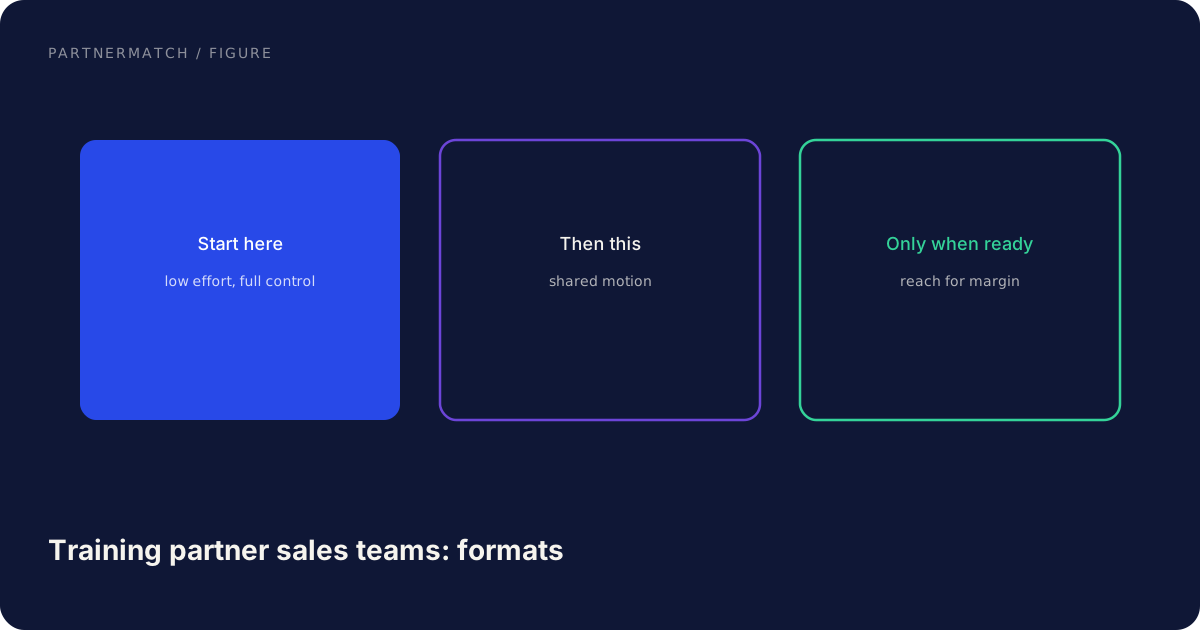
A working mix for a startup: one live session per new partner in the first 30 days, recorded. Office hours every two weeks for anyone with a live deal. Async kit always on. Recertify when the pitch changes or when the named certified reps leave. That mix is small enough to run without a training team and large enough to survive turnover.
Formats that stick
Format is the difference between a session people attend and a session people can use the next morning. Stick to a few, run them the same way every time, and stop inventing a new agenda for each partner.
The 45-minute live core. Joint value in five minutes, two-minute pitch, ten-minute demo, ten minutes of objections, remaining time on the first action (register a deal, book a joint call, or complete certification). No company history. No roadmap tour. If it does not help them sell this week, it is not in this session.
The two-minute pitch drill. They say it. You correct it. They say it again. This is the highest-value fifteen minutes you will spend, because the pitch is what they will actually use. Write it down in the kit so they are not improvising from a memory of your voice.
The objection clinic. Five real objections, one-line responses, one backup fact. "We already have X." "We need to see it in our stack." "Your price." Do not write a novel. A partner seller will remember a sentence, not a matrix.
The recorded demo they can give. A demo script beats a polished video. Pair it with a sandbox they can actually open.
Office hours. A standing 30 minutes. Bring a live deal or do not come. Every question that shows up twice becomes an asset in the kit.
Repeatability matters more than novelty. A partner with ten new hires a year should get the same 45 minutes, the same pitch, the same cert. That is how you scale without a program office, and how you keep the story from drifting between regions when you run global workshops.
Certification that means something
Certification is the stage most teams skip, because attendance is easier to report. Attendance is not competence. A partner is not enabled until at least one named human can deliver the pitch and the core demo without you in the room.
Keep the bar short and observable:
- Give the two-minute pitch, recorded or live, using the current narrative.
- Run the core demo, or talk through the script while sharing the product.
- Handle two objections from the battlecard.
- Know how to register a deal or book the joint next step.
Pass or not. No bronze-silver-gold theater for a startup. A quiz can sit underneath as a knowledge check, but it does not replace the performance. Multiple choice tells you they skimmed the deck. A recorded pitch tells you they can sell.
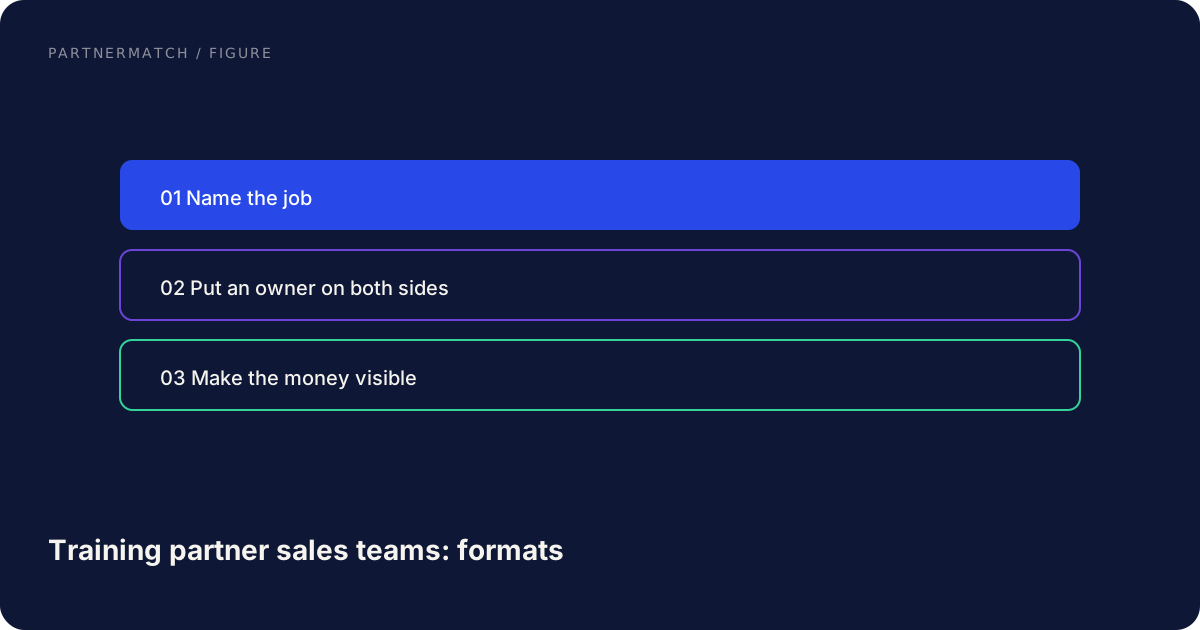
Who certifies: you, or a certified champion at the partner. Train the trainer on purpose so you are not the bottleneck. Atlassian's RACI chart guidance is enough: one accountable owner on your side, one on theirs.
Recertify when the pitch changes, when packaging changes, or when the certified reps leave. A cert that is valid forever is a badge, not a control. Tie expiry to your release rhythm and to the partner QBR, where you should already be asking which named reps are still active.
A repeatable training system, not a one-off event
The system is the enablement journey applied to sales: onboard, train, certify, sell, refresh. Partner onboarding gets them the kit and a point of contact in the first 30 days. Training is the live core plus async. Certification is the gate. Selling is the first partner-led demo. Refresh is the loop.
Write it down as a runbook so any owner can run it:
| Stage | What you run | Done when |
|---|---|---|
| Onboard | Access, kit, named owner, kickoff date | They can find the current pitch without emailing you |
| Train | 45-minute live core, recorded into the hub | Reps have heard and said the pitch |
| Certify | Recorded or live demo against the rubric | At least one named rep passed |
| Sell | First registered deal or partner-led demo | They did it without you talking |
| Refresh | Delta session or updated clip when the product or team changes | Nobody is pitching a retired workflow |
Customize the examples (their ICP, their integration, their objections). Do not customize the shape. This system is one of the five components of a co-selling engine. Without it, account mapping and incentives sit on top of sellers who still cannot explain you.
Measuring retention, not attendance
Smile sheets tell you the pizza was fine. They do not tell you whether a partner seller can still pitch you in week six. Borrow the shape of Kirkpatrick's four levels, which Kirkpatrick Partners still describe as reaction, learning, behavior, and results, and then be strict about which level you report.
| Level | Question | What to collect | Do you report it? |
|---|---|---|---|
| Reaction | Did they like the session? | A three-question pulse | Internally, maybe. Not to the board. |
| Learning | Can they pass the cert? | Named certified reps, pass date | Leading indicator. Yes. |
| Behavior | Did they pitch you in a real deal? | Partner-led demos, registered deals | Leading indicator. Yes. |
| Results | Did pipeline follow? | Sourced and influenced pipeline, win rate | Outcome. This is the number. |
Retention is the gap between learning and behavior. A rep who certified in March and has not mentioned you by June did not retain. Track time from cert to first partner-led demo, certified reps still in seat, and whether the pitch is current. Those are partnership metrics you can defend. Headcount in a webinar is not.
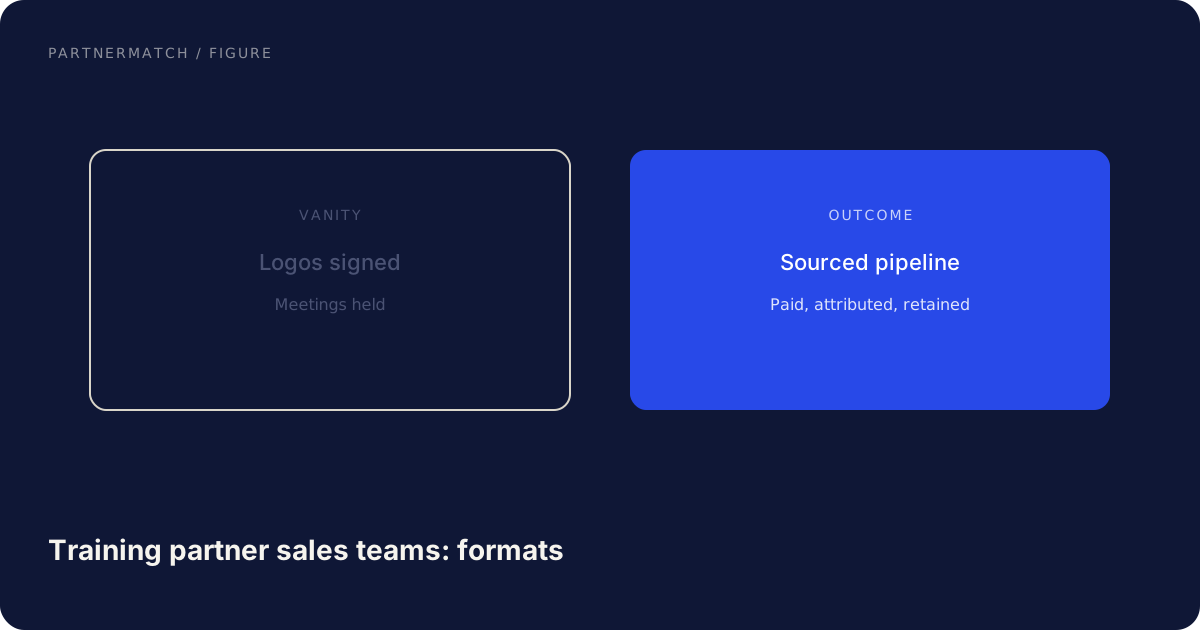
If behavior is missing, do not add more slides. Add practice, office hours, and a smaller first action. Training that cannot point to a certified rep and a first demo is the first line cut in a budget review, and it should be.
Who owns training
Unowned training is a kickoff that never repeats. On your side, one person is accountable: the partnerships lead, or the founder if you have not hired partnerships yet. They own the kit, the calendar, the rubric, and the refresh.
On the partner side, you need a named champion who will get people in the room and later run the 45 minutes themselves. If you cannot get a name, you do not have a training plan. Keep the RACI on one page in the kit.
Common mistakes, and the fix
Running a 90-minute product tour and calling it sales training. The fix: 45 minutes, pitch plus demo plus objections, practice in the room. Put the rest in the kit.
Certifying the company. The fix: certify named reps against a performance rubric. A signed partner with zero certified sellers is not enabled.
Async only, never updated. The fix: one source of truth, versioned, retired copies gone. Pair it with live practice for the first cohort and office hours after.
Measuring NPS of the webinar. The fix: certified headcount, time to first partner-led demo, sourced and influenced pipeline. Reaction is optional. Results are not.
No owner, no refresh. The fix: one accountable person on each side, recertify on turnover and on pitch change, review named reps in the QBR.
FAQ
How long should partner sales training be? Forty-five minutes for the live core, plus a two-minute pitch they actually say. Depth lives in the kit and in office hours, not in a longer webinar.
Live or async? Both. Live for practice and certification. Async for new hires. Live without a recording dies at turnover. Async without practice never produces a seller.
What does a real certification look like? A named rep gives the current two-minute pitch, runs or talks through the core demo, and handles two objections. Pass or not. A quiz cannot replace the performance.
How do we keep training current? One versioned kit, a short delta when the pitch changes, and recertification when certified reps leave. Review named reps in the QBR.
Do we need a learning management system? No. A current hub, a recording, a rubric, and a tracker of certified names is enough at seed to Series B.
How do we know training stuck? Time from certification to first partner-led demo, certified reps still in seat, and partner-sourced plus influenced pipeline. If those are empty, the session did not stick.
The short version
Partner sales training works when a named human can pitch you without you in the room. Run a short live core, put the recording and the kit in one place, and certify the person with a real pitch and demo. Refresh when people or the product change. Measure certified reps, first partner-led demos, and pipeline, not attendance.
If you want the kit, the training loop, and the co-sell motion designed as one system rather than a stack of webinars, that is exactly what a Partner Audit is for. We review your product, API, and partner potential, then define what to build, who to approach, and how to ship and sell it together.
Further reading
- The Kirkpatrick Model: reaction, learning, behavior, and results, which is the right ladder for not reporting smile sheets as outcomes.
- RACI chart: Atlassian's overview of responsible, accountable, consulted, and informed, enough to put a name on training.
- HubSpot partner program: a public example of a vendor that treats partner training and certification as a visible part of the channel, not an afterthought.