What is a technology partnership? Types, models, and how they work
A technology partnership is two SaaS companies with overlapping customers building around a working integration. Definition, types, models, and how they work.
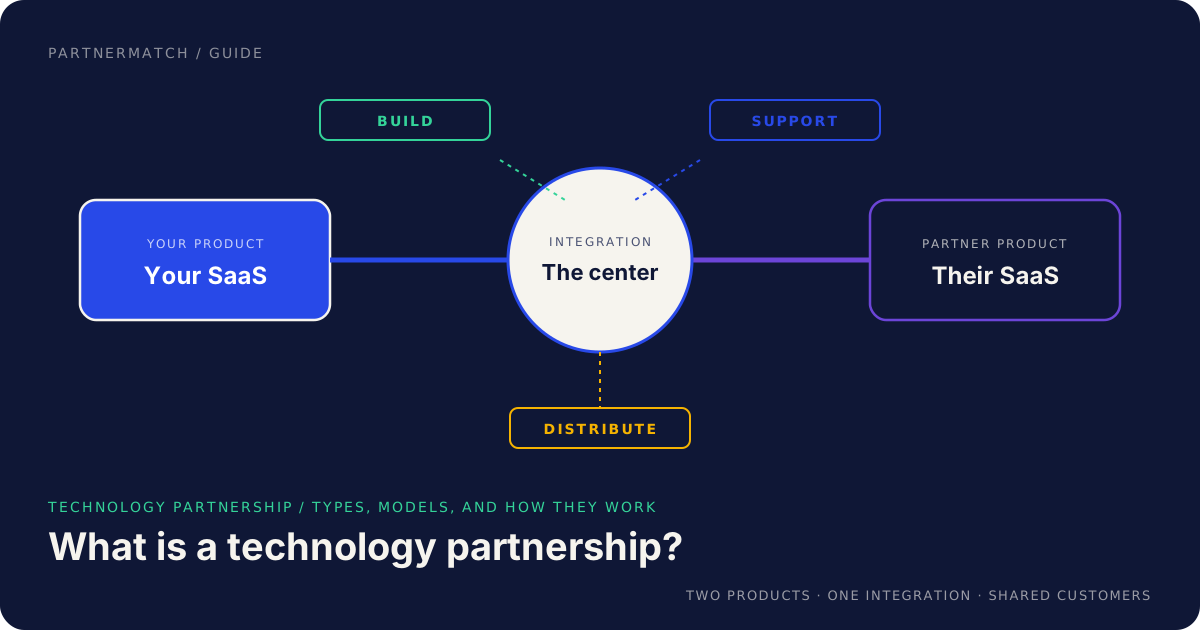
Someone at a larger company emails to "explore a technology partnership." A customer asks when you will "partner" with the tool they already use. Your competitor's site has a partners page and yours does not. The word gets used constantly, and almost never defined.
So here is the definition, plainly. A technology partnership is a product relationship between two software companies whose customers overlap, where the two build or distribute together, usually around a working integration that connects the products. The integration is the thing. Everything else, the listing, the co-marketing, the joint selling, hangs off it.
That one sentence rules a lot of things out. A logo swap is not a technology partnership. A signed memo with no integration is not a technology partnership. A reseller who never touches your product is a go-to-market arrangement, not a technology partnership in the strict sense.
This page is the canonical explainer: a precise definition, how a technology partnership differs from channel, affiliate, and pure co-marketing relationships, the main types, the GTM models that layer on top, why integrations sit at the center, the lifecycle in brief, who owns it at a startup, and when to start.
The 60-second version
If you only read one section, read this one:
- A technology partnership is two software companies whose customers overlap, building or distributing together, usually with a working integration at the center.
- The integration is the deliverable, not the agreement. A partnership with no shipped connection is a press release waiting to disappoint.
- There are five main types: integration/tech partner, ISV, platform/marketplace, OEM/embed, and strategic alliance. They differ on who builds, who sells, and who owns the customer.
- GTM models layer on top of the type: referral, co-sell, and reseller describe how the thing gets sold, not what it is.
- A technology partnership is not a channel, affiliate, or co-marketing relationship. Those can ride on top, but the integration is what makes it technical.
- The lifecycle is long after launch. Build is the visible part; maintenance is where the value compounds or quietly breaks.
- Someone has to own it. At seed to Series B that owner is usually a founder or product leader, not a partnerships hire.
- Start when customers describe moving data by hand between your product and another tool. That is demand you can name.
What a technology partnership actually is
A technology partnership is a product relationship between two software companies whose customers overlap, where the two companies build or distribute together, with a working integration usually at the center.
Each clause is doing work.
Two software companies. Two products that could, in principle, exchange data or extend each other, not a software company and an agency or a vendor and a customer.
Whose customers overlap. The partnership only has fuel if the same buyers use, or would use, both products. No overlap, no shared workflow, no reason for the integration to exist.
Building or distributing together. Either you connect the products technically, or one company carries the other to market, or both. The "technology" in technology partnership is that there is a technical artifact involved, not just a commercial one.
A working integration usually at the center. This is the part people skip. The deliverable that makes the partnership real is the integration: the connection that removes steps from a workflow your shared customers already run. Strip it out and you are left with a marketing arrangement.
For a B2B SaaS startup, a technology partnership pays off in three ways, and they compound.
| What you get | How it shows up |
|---|---|
| Growth | The partner's marketplace and customer base put your product inside workflows your prospects already use. |
| Retention | A connected integration wires your product into daily operations, which makes it harder to rip out. |
| Credibility | Being a verified app on a known ecosystem makes a seed-stage product look enterprise-ready in security reviews and sales calls. |
If you want the full operational playbook for getting from idea to a shipped integration, that lives in the complete guide to tech partnerships for SaaS. This page is the definitions and the map.
How a technology partnership differs from other partner relationships
The fastest way to understand a technology partnership is to see what it is not. Three relationships get confused with it constantly, and the confusion is expensive: it sets the wrong expectations on both sides.
Channel or reseller relationship. A reseller sells your product as part of their offering. They quote it, invoice the customer, and often carry first-line support. There may be no integration at all. A reseller is a distribution arrangement; it becomes a technology partnership only when an integration is part of what makes the resale work.
Affiliate relationship. An affiliate sends traffic for a commission. There is no shared product, no joint workflow, and no integration. It is a marketing payout dressed in partnership language. Useful, but a different thing entirely.
Pure co-marketing. A joint webinar, a co-branded ebook, a shared booth. Co-marketing builds public proof, but on its own it is air with no ground underneath. Co-marketing becomes part of a technology partnership when it is promoting a real integration, not standing in for one.
The line is simple. If there is a technical artifact, an integration that connects the two products, you have a technology partnership. If there is only a commercial or promotional arrangement, you have something else, and it may still be worth doing, but you should call it by its real name.
| Relationship | Is there an integration? | Who owns the customer | What it actually is |
|---|---|---|---|
| Technology partnership | Yes, usually at the center | Usually each keeps theirs | A product relationship |
| Reseller / channel | Sometimes, not required | The partner | A distribution arrangement |
| Affiliate | No | You | A marketing payout |
| Pure co-marketing | No | You | A promotion |
A reseller motion and co-marketing both turn into useful parts of a technology partnership once a real integration exists. They are layers, not substitutes. We will come back to that.
The main types of technology partnership
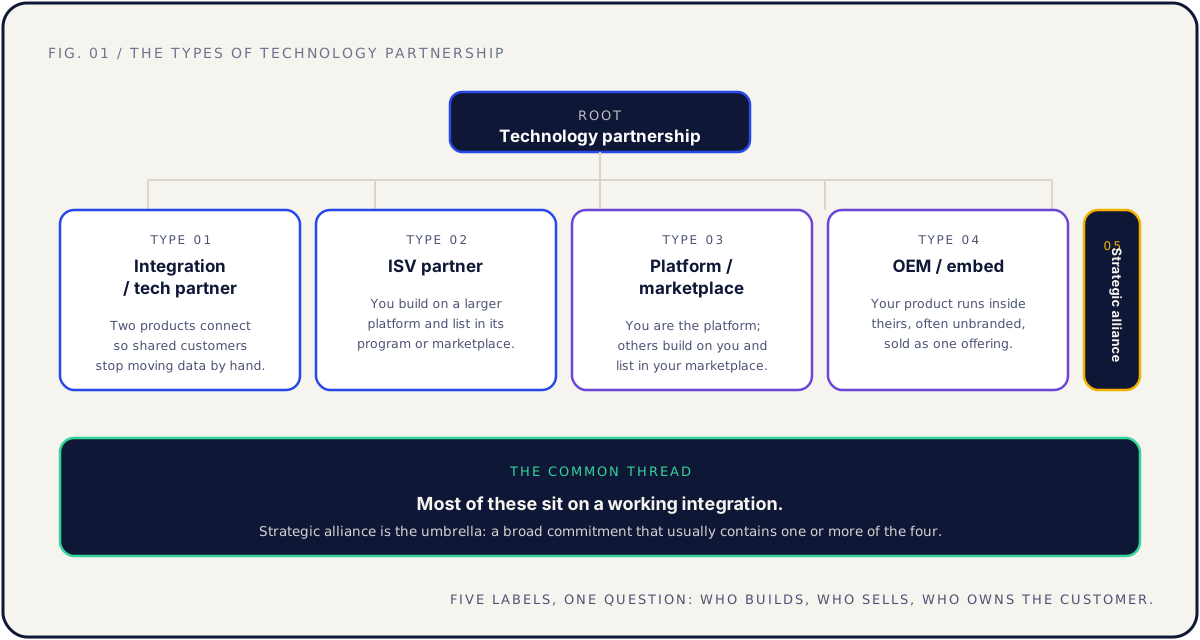
"Technology partnership" is a category, not a single thing. There are five main types, and they differ on three questions: who builds the integration, who sells, and who owns the customer. Get the type right and the contract, the comp, and the support model mostly name themselves.
Integration / tech partner. The most common and the most concrete. Two products connect through an API so shared customers stop moving data by hand. Each company keeps its own customer, sells its own product, and the integration is the shared asset. When people say "technology partnership" with no other qualifier, this is usually what they mean.
ISV partner. ISV stands for independent software vendor. Here you build on a larger platform and list in its program or marketplace. The integration runs one direction, toward the platform, and the platform's ecosystem is your distribution. You still own your customer; the platform provides reach and a certification stamp.
Platform / marketplace partner. The mirror image of ISV. You are the platform, and other companies build on you and list in your marketplace. Your job shifts from building integrations to running the program: docs, review process, listing quality, and developer support. This is a later-stage posture, not a starting point for most startups.
OEM / embed. Your product runs inside theirs, often unbranded, sold as a single offering. This is the one type where you hand over both the selling and the customer relationship. It can be lucrative and it can be a trap, because you lose the direct line to the people using your product.
Strategic alliance. The umbrella term. A broad, often executive-level commitment between two companies that usually contains one or more of the four types above plus joint roadmap, co-selling, and co-marketing. "Strategic alliance" describes the scope of the relationship, not a specific technical pattern.
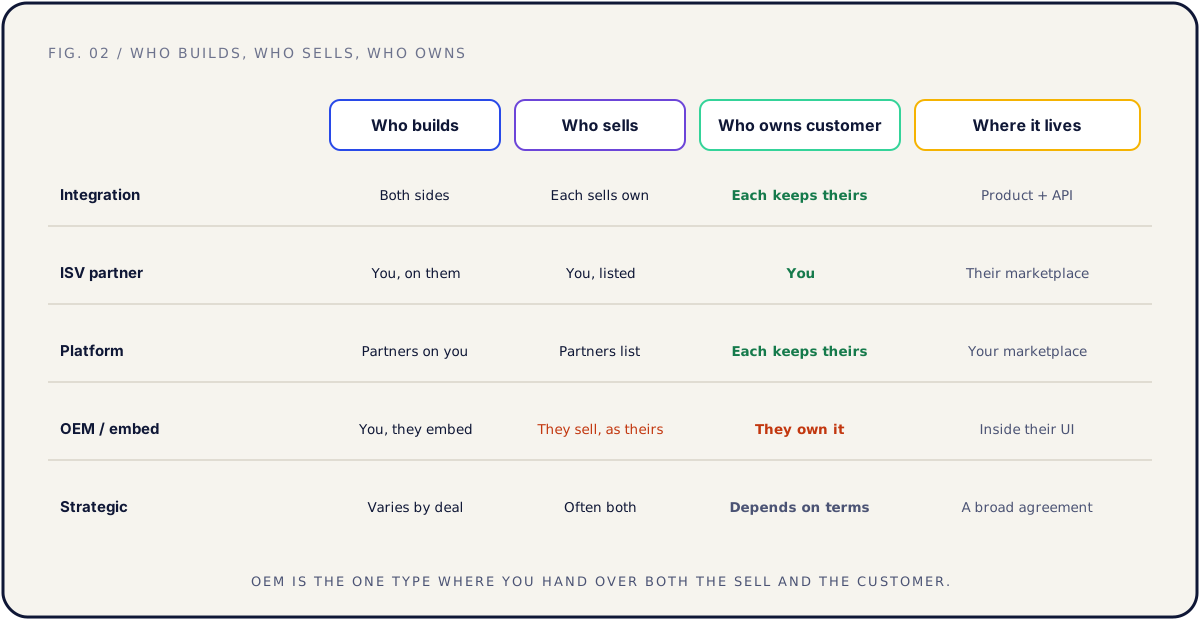
The column that surprises founders is "who owns the customer." For integration, ISV, and platform partnerships, each side keeps its own customer, which is why those types are safe to start with. OEM is the one where you give the customer away. Decide that on purpose, never by drift.
The GTM models that layer on top
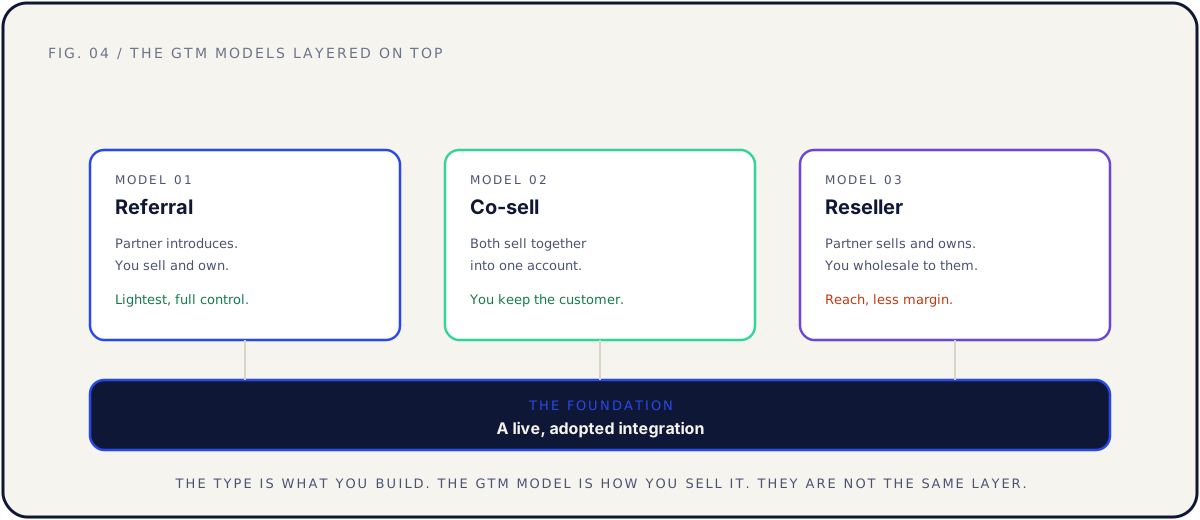
Here is the distinction that clears up most of the confusion. The type of partnership is what you build. The go-to-market model is how you sell it. They are different layers, and a single partnership can wear different GTM models for different deals.
There are three core partner GTM models, and they answer two questions: who sells, and who owns the customer.
- Referral. The partner introduces, you sell, you own the customer. The lightest possible relationship and the right first move for most startups.
- Co-sell. Both companies sell into the same account at once. You keep the customer and the margin; the leverage is the partner's access and timing.
- Reseller. The partner sells and owns the customer, you wholesale to them. More reach, less margin and control.
These are not types of technology partnership. They are motions you run on top of one. An integration partner can be sold via referral this quarter and co-sell the next. The full treatment of which model fits when is in referral vs reseller vs co-sell; the short version is below.
| Layer | Question it answers | Examples |
|---|---|---|
| Type | What are we building together? | Integration, ISV, platform, OEM, strategic |
| GTM model | How does it get sold? | Referral, co-sell, reseller |
| Foundation | What is it all standing on? | A live, adopted integration |
Keep these layers separate, because mixing them produces bad decisions. "We should do a reseller partnership" is a sentence about a GTM model with no product underneath it. The right order is: confirm the customer overlap, build the integration, then choose the model that sells it best.
Why the integration sits at the center
In nearly every type except a pure strategic alliance, the integration is the load-bearing element. Take it away and the rest collapses.
A technology partnership touches three things: product, go-to-market, and support. The integration is what connects them.
On the product side, the integration is the shared workflow itself, plus the API, data model, and roadmap decisions that keep it working. On the go-to-market side, it is what the marketplace listing points to, what co-marketing announces, and what a co-selling rep links to in a deal. On the support side, it is what gets monitored, what breaks when a partner changes their API, and what your help center has to document.
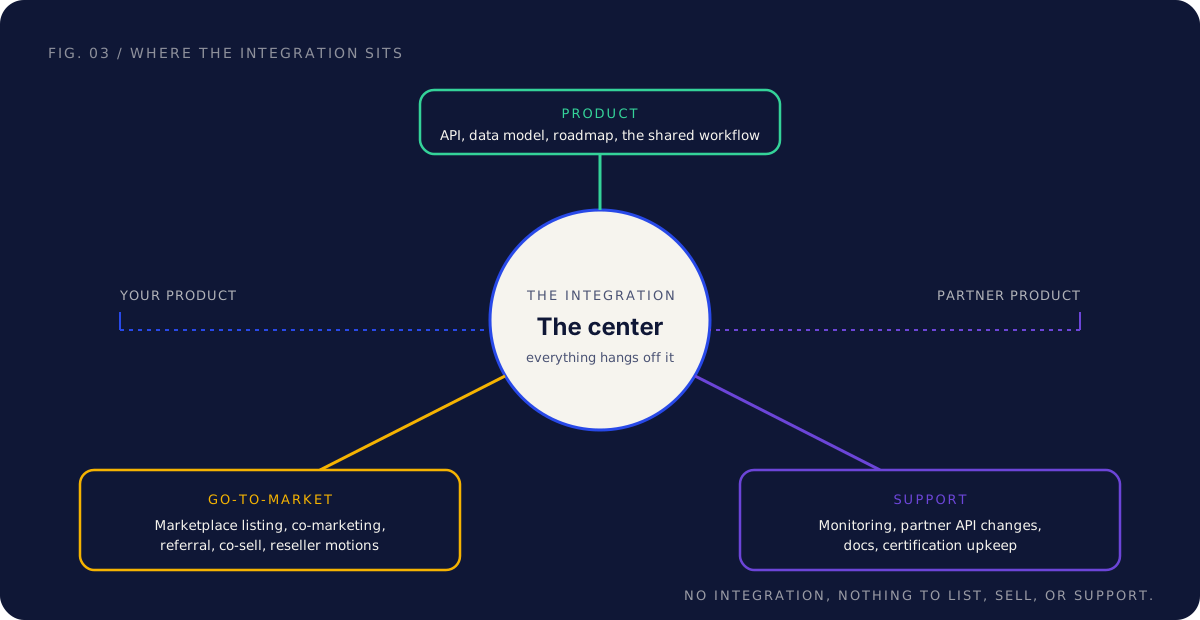
This is why a partnership with a signed agreement and no integration goes quiet. There is nothing for the marketplace to list, nothing for the seller to demo, nothing for support to monitor. The agreement was never the deliverable. The integration was.
It is also why the build step is where most partnerships stall. Strategy and scoping are cheap; the integration is the part that needs dedicated engineering, and the part that converts a nice conversation into a real partnership. A partnership without a build plan is a partnership without a center.
The lifecycle in brief
A technology partnership is not an event. It is a sequence, and the build is a small slice of it. Most of the value, and most of the failure, happens in stages people forget to plan for. The arc looks like this:
- Audit and strategy. Decide what partnerships are for, growth or retention or enterprise credibility, and map what you already have.
- Targeting. Pick partners by customer workflow overlap, not by logo size.
- API readiness. Make your documentation partner-ready so a partner's engineers can say yes in ten minutes.
- Scope. Turn the idea into user stories, a workflow map, and acceptance criteria before code is written.
- Build. Write, test, and ship the integration, coordinating on the partner's review and certification.
- Enablement. Prepare sales, support, and marketing before launch, not after.
- Launch. Marketplace listing, announcement, co-marketing, treated as a project.
- Maintain. Monitor, handle partner API changes, keep certifications current.
| Phase | What it produces | Where it goes wrong |
|---|---|---|
| Before build | Strategy, targets, scope, ready docs | Skipped, so the build has no spec |
| Build | A shipped integration | Stalls for lack of dedicated engineering |
| Launch | Listing, adoption, first reviews | Ships silently, so no one installs |
| Maintain | A connection that keeps working | Ignored, so it breaks without warning |
The stages after launch are where a technology partnership either compounds or quietly dies. An integration that silently breaks is worse than no integration, because a customer trusted it. The full stage-by-stage breakdown is in the SaaS partnership lifecycle.
Who owns partnerships at a startup
A technology partnership fails most often for a boring reason: nobody owns it. The work cannot survive a prioritization meeting if no single person is accountable for shipping it.
At seed to Series B, the owner is usually a founder or a product leader with part-time focus, not a dedicated partnerships hire. Early partnership work is mostly product work: scoping the integration, getting engineering capacity, defining done. That is a product muscle, not a BD one.
A dedicated partnerships person makes sense later, once integrations are a proven channel with enough live ones to manage, enable, and grow. Hiring that role too early produces someone who can run meetings but cannot ship the thing the meetings are about.
| Stage | Who usually owns it | What they need |
|---|---|---|
| Seed to Series A | A founder or product leader | Engineering capacity and authority to prioritize |
| Series A to B | Product leader, maybe a first partner hire | A proven first integration to scale from |
| Series B and beyond | A partnerships function | Multiple live integrations and a repeatable motion |
The non-negotiable, at any stage, is one named owner per partnership with the authority to prioritize and the access to engineering to ship. A committee owns nothing.
When a startup should start
The right trigger is not a stage or a headcount. It is a sentence you can hear in customer conversations.
Start when customers describe moving data by hand between your product and another tool. "I export from yours and import into theirs every Monday" is demand you can name, scope, and build against. That is the signal that an integration would remove real work from a real workflow.
You do not need a partnerships hire, a partner program, or a marketplace strategy to begin. You need three things: a workflow worth connecting, an API you can expose, and one owner. Everything else is process that follows.
Do not start because a competitor has a partners page, or because a big platform's partner manager sent a friendly email, or because "partnerships" feels like the next growth lever. Those are reasons to look, not reasons to build. The build is expensive enough that it should always trace back to a customer workflow you can describe in one sentence.
Common mistakes, and the fix
Calling everything a technology partnership. The fix: reserve the term for relationships with a technical artifact, an integration, at the center. An affiliate deal or a co-marketing webinar is fine to do, but naming it a technology partnership sets expectations that the absent integration will never meet.
Confusing the type with the GTM model. The fix: decide what you are building (the type) before deciding how you will sell it (referral, co-sell, reseller). "Let's do a reseller partnership" with no integration underneath is a motion with nothing to move.
Signing the agreement and treating it as the deliverable. The fix: define done as "integration live and adopted," and put the scope, owner, and date in writing. The agreement is the start of the work, not the end of it.
Choosing OEM without weighing the customer loss. The fix: remember OEM is the one type where you hand over both the sale and the customer relationship. Do it deliberately, for reach you genuinely cannot get another way, not because it sounded like the biggest deal.
Starting before there is a customer workflow to point at. The fix: wait for the sentence. If you cannot describe the one workflow the integration improves, run five customer interviews before any partner outreach.
FAQ
What is a technology partnership in simple terms? Two software companies whose customers overlap, building or distributing together, usually with a working integration connecting their products. The integration is the deliverable; the agreement, listing, and co-marketing all hang off it.
How is a technology partnership different from a reseller or channel partnership? A reseller sells your product as part of their offering and may use no integration at all; it is a distribution arrangement. A technology partnership has a technical artifact, the integration, at its center. A reseller motion can ride on top of a technology partnership, but reselling alone is not one.
Is co-marketing a technology partnership? No. Co-marketing is joint promotion, a webinar or co-branded content. It becomes part of a technology partnership when it is announcing a real integration. On its own it is a marketing arrangement, not a product relationship.
What are the main types of technology partnership? Five: integration/tech partner, ISV, platform/marketplace, OEM/embed, and strategic alliance. They differ on who builds the integration, who sells, and who owns the customer. Strategic alliance is the umbrella that often contains one or more of the others.
What is the difference between a partnership type and a GTM model? The type is what you build together, an integration or an ISV listing, for example. The GTM model is how it gets sold: referral, co-sell, or reseller. One partnership can use different GTM models for different deals. They are separate layers, and confusing them leads to selling a model with no product underneath.
Do you need an integration for a technology partnership? In nearly every type except a pure strategic alliance, yes. The integration is the load-bearing element that connects product, go-to-market, and support. Without it, there is nothing for a marketplace to list, a seller to demo, or support to monitor.
Who should own technology partnerships at a startup? At seed to Series B, usually a founder or product leader with part-time focus, because early partnership work is mostly product work. A dedicated partnerships hire makes sense once integrations are a proven channel, not before. The constant is one named owner with authority to prioritize and access to engineering.
When should a startup start building technology partnerships? When customers describe moving data by hand between your product and another tool. That is nameable demand. You need a workflow worth connecting, an API you can expose, and one owner. A competitor's partners page or a friendly email from a big platform is a reason to look, not to build.
The short version
A technology partnership is two software companies whose customers overlap, building or distributing together, with a working integration usually at the center. That definition is the whole map. The integration is the deliverable; the agreement, the listing, and the co-marketing are downstream of it.
Keep the layers straight. The type, integration, ISV, platform, OEM, or strategic alliance, is what you build. The GTM model, referral, co-sell, or reseller, is how you sell it. Both sit on top of a live, adopted integration, and without that foundation neither layer has anything to stand on.
Name an owner, start when a customer workflow gives you a sentence to build against, and treat the partnership as a product project with a date, not a relationship with a logo. The types and models are easy once the integration is real.
If you want help defining which type fits, building the integration it rides on, and choosing the model that sells it, that is exactly what a Partner Audit is for. We review your product, API, and partner potential, then define what to build, who to approach, and how to ship it.