Forecasting partner-sourced revenue
A simple model for forecasting partner-sourced revenue. Conversion assumptions, confidence bands, sourced vs influenced, and the mistakes that make the forecast a wish.
Most partner forecasts are a list of logos with a number next to each one, added up until the total looks like a plan. Then the quarter happens. Two partners send nothing. One sends a deal that was already in your pipeline. A fourth closes something you had not counted. The forecast was not wrong in a useful way. It was never a forecast. It was a wish with partner names on it.
Forecasting partner-sourced revenue is a different job from forecasting direct sales. You do not control the partner's sellers. Conversion is noisier. Cycle times are often longer. And the number people most want in the plan, "everything a partner might touch," is the number finance will reject first. A usable forecast is smaller, slower, and honest about confidence. This is a simple model for a startup that needs a partner line without a revenue operations team. It pairs with partner program ROI, influenced vs sourced pipeline, and partnership metrics.
The 60-second version
- Forecast sourced revenue, then show influenced as a separate view. Mixing them produces a plan finance will not accept and a quarter you cannot score.
- A simple model is enough: active partners, coverage, opportunities per covered seller, conversion, ACV, and cycle time.
- Write the conversion assumptions down. Win rate and time-to-close need a source: last two quarters of tagged deals, not a hope.
- Use bands, not a single number. Conservative, base, and stretch. The plan number is conservative or base, never stretch.
- Discount anything you have not seen twice. A first-time partner or a new motion gets a lower conversion until the data exists.
- Update as the quarter unfolds. A forecast that is not revised against registered deals by week four is a slide, not a tool.
- Confidence is a property of the input, not of the math. Thin history or reconstructed tags mean a wide band. Say so.
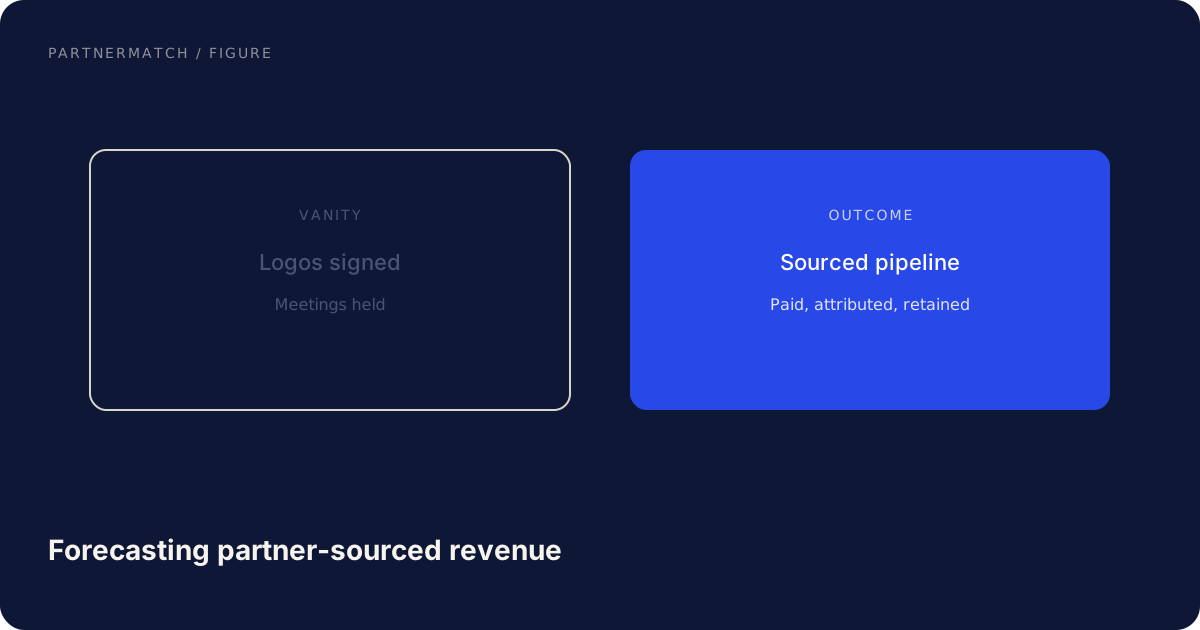
- Do not forecast activity and call it revenue. Partners signed do not convert by arithmetic unless you have a measured rate to closed-won.
Why partner revenue is harder to forecast than direct
Direct sales forecasts rest on a team you employ and a CRM you fill in every week. Partner-sourced revenue rests on someone else's calendar. Their sellers have a number that is not yours. That is not a reason to skip the forecast. It is a reason to treat the inputs as less certain.
You see less of the funnel. A partner-sourced deal often appears in your CRM already mid-stage. Stage-to-stage conversion will not match direct deals, and pretending it does will overstate the close rate.
The unit of supply is the covered seller, not the partner logo. A partner with two hundred sellers and no enablement produces near zero. A partner with twelve sellers who can say your two-minute story produces a line. Forecasting "twelve partners times average deal size" skips the conversion that matters. The co-selling engine is explicit: coverage is the bottleneck, not the contract.
Sourced and influenced behave differently in a plan. Sourced is incremental supply. Influenced is an effect on deals you already had. Putting influenced into the same line double counts against the direct number. Show it. Do not add it.
SaaStr's writing on SaaS and a16z's note on the SaaS business model are useful context: recurring revenue rewards forecasts that are slightly conservative and repeatedly true. Partner-sourced ARR is still ARR.
A simple model: partners, coverage, conversion, ACV
You need a handful of factors you can name, source, and revise.
Active partners. Partners with a live motion this quarter. Not logos. Not "in conversation." If you would not put them on a partner QBR agenda, they are not in the forecast.
Coverage. Sellers who can pitch you without you in the room. For a new partner this is often three to ten, not their whole field. If you have not enabled them, coverage is zero.
Opportunities per covered seller per quarter. From history if you have it. From a conservative analog if you do not. One qualified sourced opportunity a quarter per covered seller is already a strong result at a startup.
Conversion, ACV, cycle time. Sourced win rate over a window that matches cycle time, not the direct-sales win rate. Median ACV of closed partner-sourced deals, not the average pulled up by one outlier. Median days from registration to close, which decides what can still land this period.
| Input | Example | Notes |
|---|---|---|
| Active partners | 4 | QBR-worthy, live motion |
| Covered sellers (total) | 22 | Enabled, not headcount |
| Sourced opps / covered seller / qtr | 0.4 | From last two quarters |
| Implied sourced opps | 9 | 22 × 0.4 |
| Sourced win rate | 25% | Partner-tagged, not direct |
| Expected sourced closes | 2.25 | 9 × 0.25 |
| Median ACV | $28k | Median, not mean |
| In-period factor | 0.7 | Share that can close given cycle time |
| In-period base | ~$44k | What you can put in this quarter |
Every factor is visible. When the forecast misses, you can say whether coverage, conversion, or cycle time failed. Use the same counting rules as partner program ROI: sourced close to full value, influenced discounted.
Conversion assumptions that do not lie
Win rate has to come from tagged deals. Twenty closed-won sourced opportunities over two quarters is a win rate. Three is an anecdote. Use the anecdote as the conservative case. Do not use 40% because that is what the deck needs.
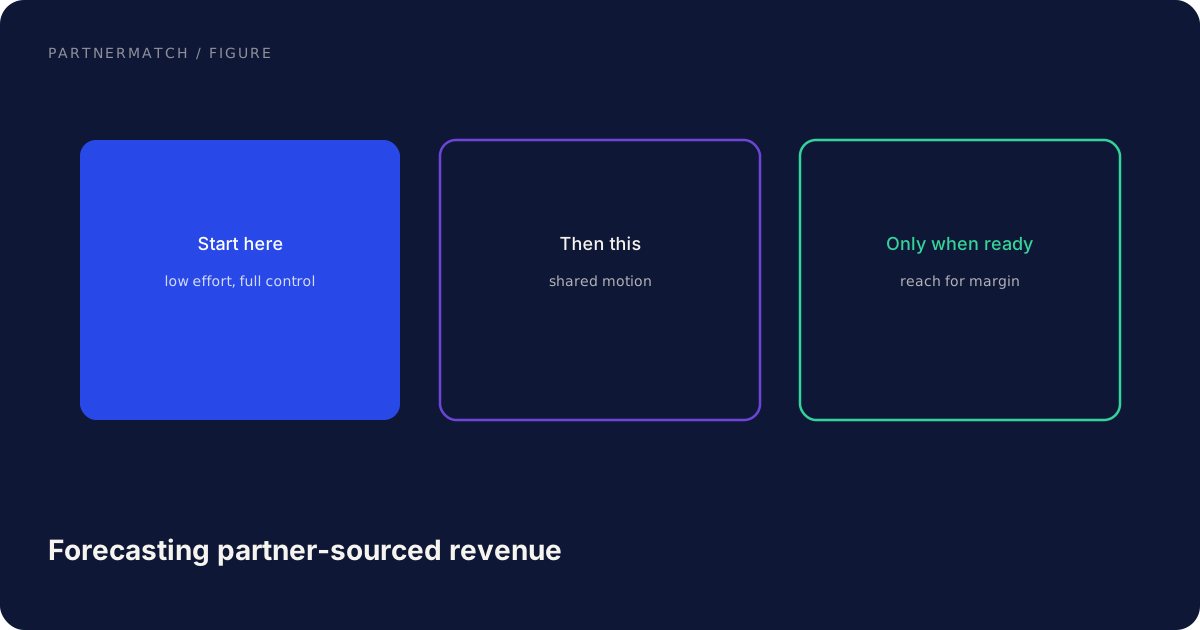
First-time partners and new motions get a haircut. A partner who has never sourced a deal is a hypothesis. Put them in stretch, or in base at half conversion, until they have sourced twice. The SaaS partnership lifecycle treats the first close as proof the motion exists, not as a run rate. Referral, reseller, and co-sell convert differently. Do not apply a referral win rate to co-sell volume. See referral vs reseller vs co-sell.
Cycle time decides what is even eligible. A 90-day median means a deal registered on day 60 of the quarter is mostly next quarter's revenue. Split in-period and next-period explicitly.
| Assumption | Honest source | Dishonest source |
|---|---|---|
| Win rate | Tagged sourced closes, last 2–4 quarters | Direct-sales win rate copied over |
| Opps per seller | Registered sourced opps / covered sellers | "Each partner will send 5" |
| ACV | Median of partner-sourced closes | Largest deal a partner mentioned |
| Cycle time | Median registration-to-close on sourced | Company average, unsegmented |
| Coverage | Sellers who completed enablement | Partner's published field headcount |
| In-period factor | Share of cycle that fits remaining days | 100% of registered deals this quarter |
If finance asks "why 25%," you should be able to point at a CRM list.
Confidence bands, not a single number
A point forecast pretends you know things you do not.
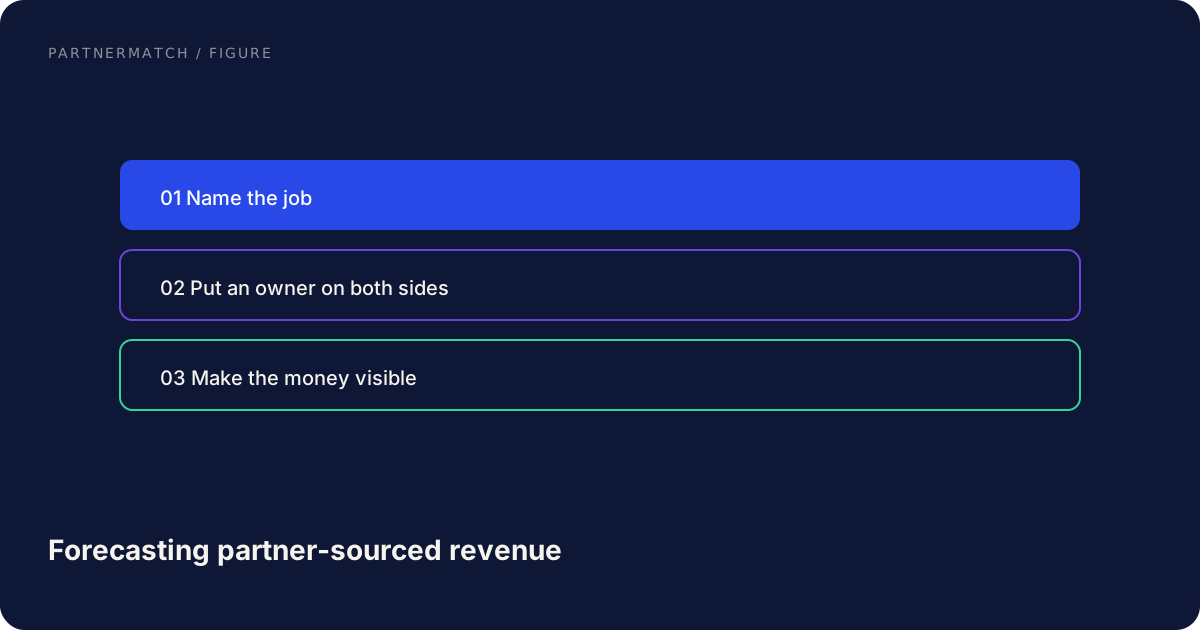
Conservative. Only partners who have sourced in the last two quarters. Coverage you can name by person. Conversion at the low end of recent history. This is the commit.
Base. Active partners including those in motion, with a haircut. Conversion at the recent median. Coverage you reasonably expect to complete this quarter.
Stretch. Full coverage targets, conversion at the high end, a new partner included. This is a management case, not a commit.
| Band | Who is in | Conversion | What it is for |
|---|---|---|---|
| Conservative | Proven partners only | Low end of history | The commit, the plan |
| Base | Proven plus in-motion, haircut | Recent median | The operating view |
| Stretch | Plus new partners and new motions | High end of history | Upside, not a promise |
a16z's SaaS business model framing of predictability is the standard buyers of the forecast already have: they would rather under-commit partner revenue and beat it than over-commit and explain. Tag quality is also a forecast input. If last quarter's sourced list was rebuilt in week twelve, widen the band. Clean tags, the discipline in co-sell attribution, are part of the model.
Sourced vs influenced in the forecast
Keep two columns, not one.
Sourced forecast. Incremental revenue. This is what can sit next to the direct number without double counting. It is the line this post is about.
Influenced view. A separate projection of how much of the direct forecast you expect partners to touch, and the win-rate lift you have measured. Useful. Not additive.
If leadership wants one partner number in the plan, give them sourced at the conservative band, and show influenced as a footnote. Combining them is how the plan and the actuals stop matching company ARR. Expansion on already-won partner-sourced accounts belongs only when you can show the partner affected it, the same rule as in partner program ROI.
How to update the forecast as the quarter unfolds
Week 1–2. Freeze conservative, base, and stretch. Confirm who is enabled this quarter. Drop partners who went quiet. Do not add stretch logos to the commit.
Week 3–6. Replace assumed opportunities with registered ones. If registrations are behind pace, cut the base. Registration is supply, not revenue.
Week 7–10. Apply the in-period factor with remaining days. Deals that cannot close this quarter move to next quarter. This is the moment most teams "miss" a number that was only ever going to land later.
Week 11–13. Score the quarter on tagged closed-won. Feed actual win rate, ACV, and cycle time into next quarter's assumptions.
The partner QBR is a natural place to do this with the partner: here is what we forecasted, here is what registered, here is what closed, here is next quarter's conservative number.
Common mistakes, and the fix
Forecasting logos times ACV. The fix: insert coverage and conversion. A partner who cannot pitch you is not a revenue input.
Putting influenced in the sourced line. The fix: two columns. Sourced is incremental. Influenced is a view on deals you already had.
Copying the direct win rate. The fix: use tagged partner-sourced history, or haircut the direct rate until you have it.
Treating a first close as a run rate. The fix: first-time partners sit in stretch, or in base at half conversion, until they have sourced twice.
Ignoring cycle time. The fix: an in-period factor. Late registrations belong in next quarter.
Never revising. The fix: a checkpoint cadence against registered deals. A forecast that cannot change is hoping in public.
FAQ
What is a partner-sourced revenue forecast? A projection of closed-won revenue from deals a partner originated, built from active partners, covered sellers, opportunities, conversion, ACV, and cycle time. It is incremental to the direct forecast, not a sum of every deal a partner might touch.
How is this different from forecasting influenced pipeline? Sourced is demand the partner created. Influenced is an effect on deals that were already going to exist. Forecast sourced as a revenue line. Show influenced as a separate view. Do not add them together in the plan.
What conversion rate should I use for partner-sourced deals? The win rate on your own tagged sourced opportunities over the last two to four quarters. If you do not have enough closes, use a conservative analog or a haircut of the direct win rate, and say which.
Should the board see one partner number or a range? Show conservative, base, and stretch, and put conservative or base in the plan. A range with named assumptions is easier to trust than a single stretch figure.
How often should we update a partner revenue forecast? At least monthly, biweekly if partner supply is material. Replace assumed opportunities with registered ones, apply cycle time, and feed actuals into next quarter.
Can a small team forecast partner revenue without RevOps? Yes. A spreadsheet with the factors above, CRM tags for sourced versus influenced, and a coverage list of enabled sellers is enough. The constraint is tag quality, not software.
The short version
Forecast partner-sourced revenue as incremental demand, not as a pile of logos. Count active partners, then covered sellers, then opportunities, then conversion, ACV, and cycle time. Write the assumptions so finance can see them. Use conservative, base, and stretch, and put conservative or base in the plan. Keep influenced in a separate view so you do not double count. Haircut first-time partners until they have repeated. Update against registered deals as the quarter runs, and move late supply into next period instead of calling it a miss.
If you want a partner-sourced forecast your finance team will accept, with sourced and influenced split and conversion pulled from your actual tags, that is what a Partner Audit is for. We look at your coverage, your history, and your assumptions, then leave you with a model you can revise every month.
Further reading
- SaaStr, on how SaaS companies plan and measure recurring revenue.
- The SaaS Business Model, Andreessen Horowitz.
- Partner program ROI for the backward-looking model that should use the same counting rules.
- Influenced vs sourced pipeline for the classification the forecast has to respect.