Attribution models for co-sell and integrations
How to pick an attribution model for co-sell and integrations: first-touch, multi-touch, sourced, and influenced, without inflating pipeline.
Marketing has a model for every slide. Partnerships borrows the vocabulary, tags co-sell intros and marketplace installs as if they were the same event, and produces a quarterly number finance cannot add without exceeding booked revenue. That is inflation, not a model.
Partnership attribution answers who originated a deal, who touched it, and whether an integration was in the path, without counting the same dollar twice. It builds on influenced versus sourced pipeline and co-sell attribution. Google's Analytics attribution models and HubSpot's attribution reports are independent catalogs, not partnership policy.
The 60-second version
- A partnership attribution model is a credit rule, not a dashboard theme. Write what counts as a touch, the window, and whether the partner originated the deal.
- Sourced versus influenced is the load-bearing split. First-touch and last-touch are optional layers on top, not a substitute for origination versus assist.
- First-touch is clean and often too harsh. It gives the introducer everything and ignores the integration that closed the deal.
- Last-touch is clean and often too kind to whoever was in the room at the end.
- Multi-touch is fairer and easier to inflate. If every touch gets a share, totals need a hard cap at 100 percent of the deal.
- Integration-touch is a kind of influence, not a second source, unless the install truly created the opportunity.
- Pick one model, publish it, and do not mix outputs in one board slide. Mixing is how 140 percent of revenue appears.
- If a tagged dollar cannot be audited to a timestamped event, it does not belong in the number.
What the model is trying to answer
Before naming models, name the questions. Partnerships usually has three, and they are not the same:
- Did the partner create this opportunity? Origination. This is sourced.
- Did the partner help a deal that already existed? Assist. This is influenced.
- Did a product integration appear in the path (install, technical win, required connector)? Product-influenced, which may or may not involve a partner seller.
A model that answers (1) with a first-touch marketing rule will miss a co-sell that joined in the middle. A model that answers (2) by giving every partner 100 percent of every deal they emailed about will explode the total. Write the question on the report, then pick the model that answers it.
Marketing attribution, as in Google's model catalog, is built for a path of campaigns and sessions toward a conversion. Co-sell is built for two sales teams and sometimes an integration. The borrowed words (first-touch, last-touch, linear) can still help, but only after sourced and influenced are tagged. Otherwise you are applying a campaign model to a channel conflict.
| Question | Good model family | Bad substitute |
|---|---|---|
| Who originated the deal | Sourced (registration, first qualified partner touch before the opp existed) | Last-touch (rewards whoever was on the close call) |
| Who helped it close | Influenced, with a window and a defined touch | Counting influence as a second full booking |
| Did the integration matter | Integration-touch as influence, or a separate adoption metric | Treating every install as sourced pipeline |
| How we report to the board | One primary model, sourced and influenced shown separately | A blended "partner-driven" lump |
First-touch, last-touch, and multi-touch
These three are the marketing imports. Use them as sub-rules for influence, not as a replacement for origination.
First-touch. 100 percent to the first qualifying partner event in the window. Simple, hard to game if registered. Ignores the later technical win and the integration that closed the deal.
Last-touch. 100 percent to the last partner event before close. Matches "who was in the room." Rewards a late ride-along and punishes the introducer.
Multi-touch. Credit split across qualifying touches (linear, position-based, time-decay). Matches the reality that co-sell is shared work. Also adds arguments about what a touch is, and a temptation to add touches until the share looks like a full sale.
| Model | Gives credit to | Inflates when | Use it if |
|---|---|---|---|
| First-touch | The first qualifying partner event | You treat first-touch influence as sourced | You care most about origination and introductions |
| Last-touch | The last partner event before close | Late ride-alongs get full influence | You care most about who helped close |
| Linear multi-touch | Every qualifying touch, equally | You let weak touches (a logo, a newsletter) count | You have clean touch definitions and a 100 percent cap |
| Position-based | First and last more than middle | Same as linear, plus fights about first and last | You want to honor both intro and close |
| Sourced / influenced (primary) | Originator full sourced; others influence only | You report influence as revenue | You need finance to trust the program |
Notice that sourced versus influenced can sit under any of the marketing models. A deal is sourced or it is not. If it is sourced, first-touch and last-touch are often the same partner. If it is influenced, you still need a rule for which partner (or which internal team) shares the assist. Do not skip the first split. Co-sell attribution is explicit: a deal is sourced or influenced, never both.
Sourced, influenced, and the 100 percent cap
The partnerships-native model is still the one finance will live with:
- Sourced: the partner originated the opportunity. Deal registration before it existed in your pipeline is the clean evidence. Full partner-channel credit for that deal, and it still appears once in company revenue.
- Influenced: the partner touched an opportunity that already existed. You report influenced pipeline as a parallel metric, not as added revenue.
- Neither: a logo on a slide, a webinar they might have attended, a marketplace browse with no install. Not a touch.
The arithmetic rule: company revenue is counted once. If you use multi-touch inside influence, the shares of a single deal add to 100 percent of that deal's influence credit, not 100 percent extra revenue. Two partners on one influenced deal do not create two deals. Internal teams do not add their own 100 percent on top of the partner's 100 percent and call the sum "contribution."
This is also how you keep referral, reseller, and co-sell motions from colliding. A referral that originated the account is sourced. A co-sell on a direct opp is influenced. A reseller booking is often sourced in a different revenue line. One model, three motion labels, not three overlapping full credits.
Integration-touch: when the product is the partner
Marketplace installs and native integrations confuse models because there may be no partner seller. The "touch" is an install, an OAuth connect, a technical validation in a deal, or a requirement on the customer's side ("we will not buy you without the connector to X").
Treat integration-touch as influence, unless you can show the opportunity would not exist without that integration (rare, and worth a sourced tag only with a written rule). Then measure adoption separately. Installs are not pipeline. Partnership metrics already drop vanity install counts; attribution should not smuggle them back in as sourced dollars.
Practical rules:
- An install on an existing account during an open opportunity can be an influence touch if you have a timestamp and a deal id.
- An install with no opportunity is adoption, not attribution. Do not mint pipeline from it.
- A technical win ("their security team signed off because the Salesforce sync works") is a touch. Put a date on it.
- Do not give the marketplace 100 percent first-touch sourced credit for every buyer who found you there unless origination is actually unknown and you have chosen a marketplace-source rule on purpose. Even then, label it.
HubSpot's attribution report documentation is a good reminder that tools will happily assign credit across many interaction types. Your job is to decide which interaction types count for partners, and to keep marketplace "source" from overwriting a partner registration that happened first.
How to pick a model
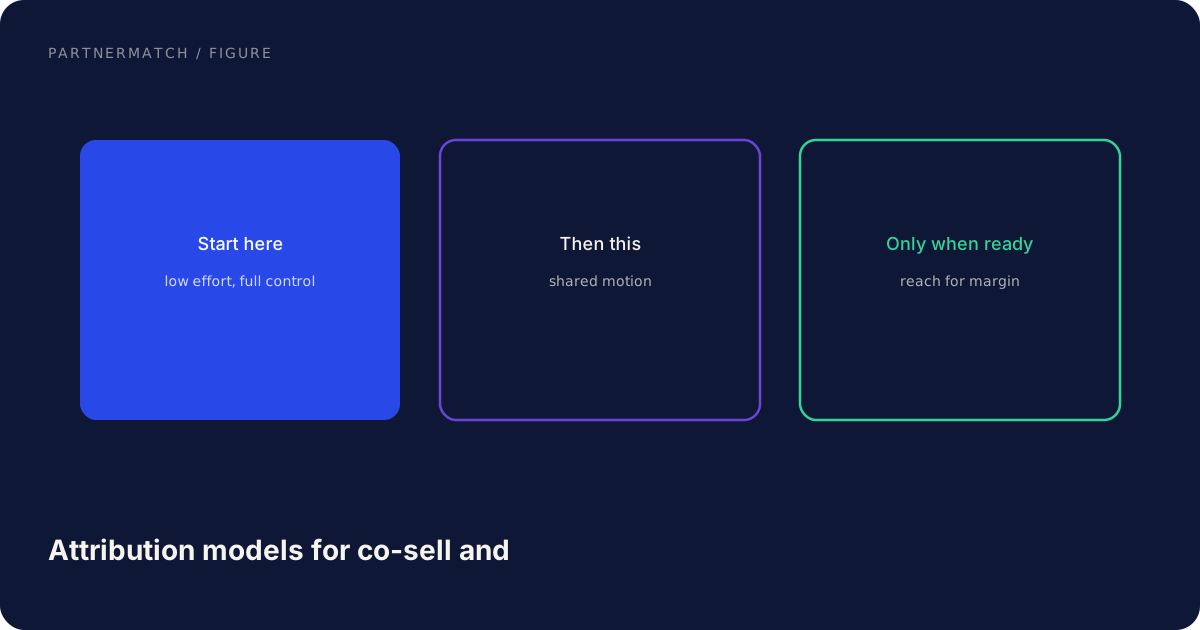
You pick one primary model for board and finance, and maybe one diagnostic view for the partnerships team. You do not pick four and report the largest.
A sequence that stays honest:
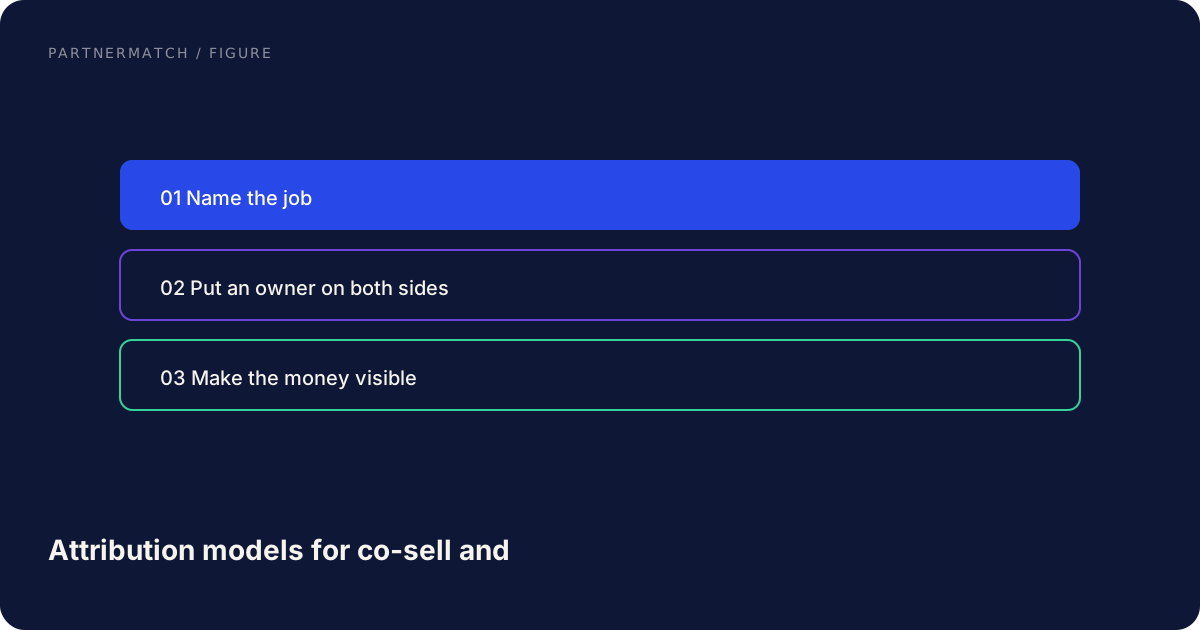
- Define sourced versus influenced with an origination test and a registration path. This is non-negotiable. See influenced versus sourced.
- Define a touch. Co-sell meeting, registered intro, technical validation, integration connect on an open opp. Not a newsletter. Not "they are a partner in this industry."
- Set a window roughly on the order of your sales cycle, as in co-sell attribution.
- Choose how influence splits when two partners (or partner plus integration) both qualify: first-touch, last-touch, or linear, with a 100 percent cap.
- Publish the model in the partner agreement and in the internal wiki. Changing it retroactively is how you pick a fight.
- Report sourced and influenced as two lines. Never a single "partner-driven" sum that mixes them.
For most seed-to-B teams, the durable choice is: sourced via registration; influenced via a defined touch inside a window; first-touch among influencers if you need a tie-break; integrations as influence only. Multi-touch can wait until you have enough volume that a linear split changes decisions. Until then it is extra bookkeeping.
| Team situation | Primary model | Why |
|---|---|---|
| Few partners, few deals, first hire | Sourced vs influenced, first-touch on influence | You can still narrate every deal |
| Active co-sell, occasional two-partner overlap | Sourced vs influenced, first registered partner wins sourced; linear on influence with a cap | Stops partner-versus-partner fights |
| Strong marketplace plus co-sell | Same, plus a marketplace source field that cannot overwrite a prior registration | Keeps installs from stealing origination |
| Finance already distrusts the numbers | Sourced only on the board slide; influenced in an appendix | Rebuild trust with the smaller number |
Avoiding inflation
Inflation is usually not fraud. It is adding models, adding touches, and adding functions that each want 100 percent. One deal is one company revenue row; influence is a tag, not a second booking. Sourced and influenced are never both. Touches need a type, a date, and an actor, and the window closes. Do not sum first-touch plus last-touch plus multi-touch, and do not stack partner influence on marketing first-touch on sales last-touch as extra dollars. Those are views of the same deals. Pick one view for the slide.
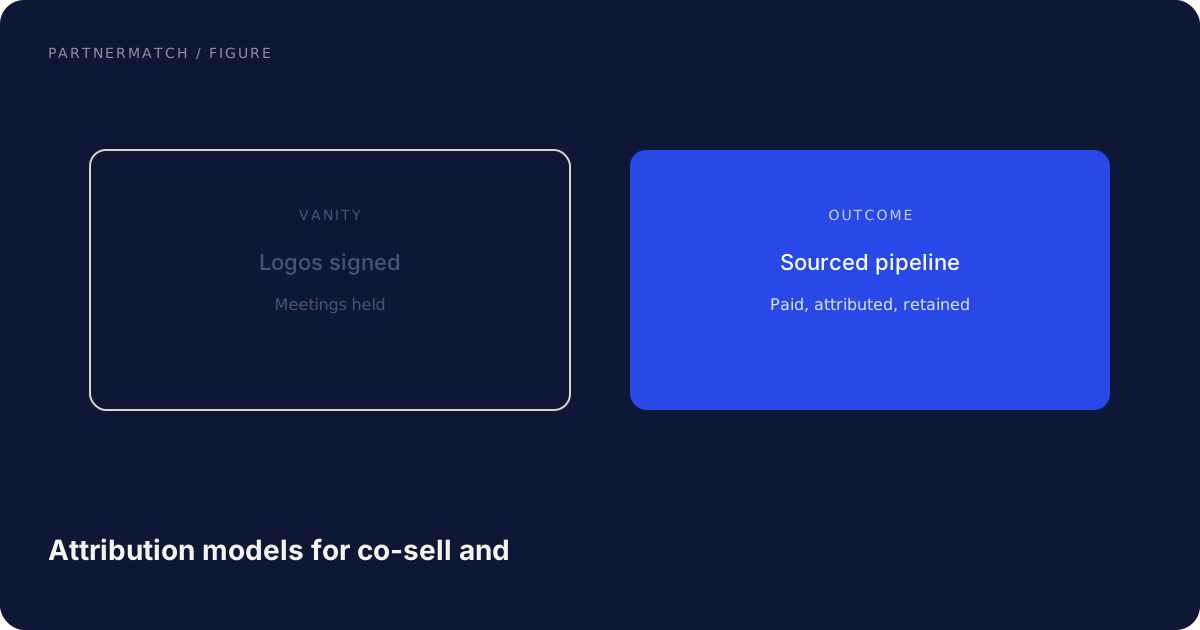
If your test is "sum every credited dollar across functions, compare to booked revenue," and the first is larger, the model is inflating. Fix the model. Do not fix the slide with a footnote nobody reads.
Common mistakes, and the fix
Using a marketing default as the partnership model. The fix: answer origination first. Then, if needed, apply first-touch or linear only inside the influence bucket. Google's model list is a menu for campaigns, not a policy for co-sell.
Reporting a blended "partner-driven" number. The fix: two lines, sourced and influenced. Blending is inflation with a hyphen.
Letting every install mint pipeline. The fix: integration-touch is influence on an open opp, or it is adoption. No opp, no attribution.
Changing the model on deals that already closed. The fix: publish the rule, apply it forward, and if you must restate, restate the whole period with a note. Quiet retags are how finance checks out.
Multi-touch without a cap. The fix: shares on one deal add to 100 percent of that deal. Extra partners dilute shares. They do not create extra money.
No registration, all memory. The fix: the co-sell attribution mechanics: register, window, CRM fields at the moment of the touch. A model without capture is a story.
FAQ
Which attribution model should a startup use for co-sell? Sourced versus influenced first, registration for sourced, a defined touch and window for influenced, first-touch as a tie-break. Multi-touch can wait.
Is first-touch the same as sourced? No. First-touch is who got the first event. Sourced is who created the opportunity. A partner can be first-touch on an influenced deal without originating it.
How do we attribute marketplace installs? Influence when they sit on an open opportunity with a timestamp. Adoption when they do not. An install is not sourced pipeline by default, and it must not overwrite an earlier registration.
Can we show multi-touch internally and sourced-versus-influenced to the board? Yes, if the board number is the conservative one and multi-touch is labeled diagnostic. They are not additive.
What stops two partners from both claiming sourced? Registration with a first-to-register rule, plus the origination test. The second partner is influence if they later help.
How do we know the model is inflating? Sum credited dollars across functions. If that exceeds booked revenue, you are stacking 100 percent claims. Cap shares and stop mixing models on one slide.
The short version
Pick a partnership attribution model that answers origination first, then assist. Sourced versus influenced is the split finance will trust. First-touch, last-touch, and multi-touch are optional ways to share influence, each with a failure mode. Integrations are influence or adoption, not a quiet sourced factory. One deal is one revenue row. Touches need types, dates, and a window. Publish the rule and do not mix outputs to make a larger number.
If the figure cannot be audited, it is not attribution.
If you want help wiring sourced and influenced into a motion you can actually run, that is exactly what a Partner Audit is for. We review your product, API, and partner potential, then define what to build, who to approach, and how to ship it.