Setting partnership targets for seed to Series B
How to set partnership targets from seed to Series B: capacity math, stage-appropriate goals, and leading indicators you can steer by.
A board slide says "partnerships will source 20 percent of pipeline next year." Nobody modeled how many partners one person can run. The number was reverse-engineered from a revenue gap. Three quarters later the target is missed, and the real issue is that it was a wish.
The right number is the one you can defend from hours, stage, and leading indicators. Copying a later-stage partner-sourced percentage produces the same miss. This sits next to partnership OKRs and when to hire partnerships. Here the question is narrower: what number, and why that number.
The 60-second version
- Start from capacity, not from a revenue hole. Hours and concurrent integrations bound the target. A number that ignores both is a wish.
- Stage changes the target. Seed proves one motion. Series A proves it repeats. Series B asks for efficiency, not just more logos.
- Leading indicators first. Influenced pipeline, active integration accounts, and time-to-live move this quarter. Sourced revenue often does not.
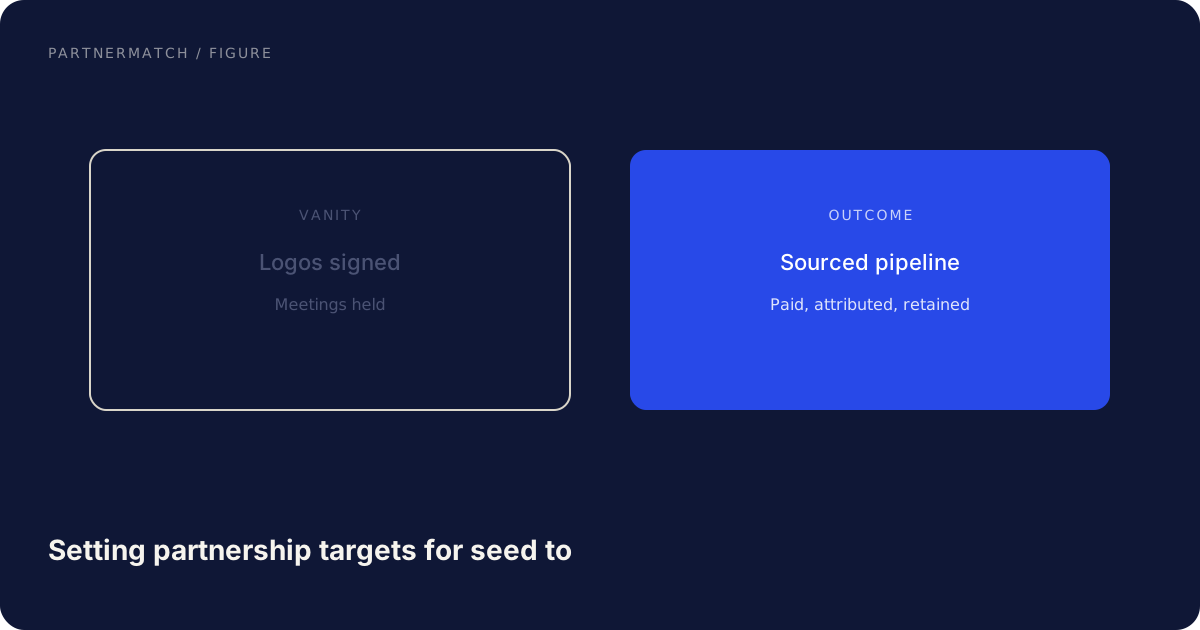
- Count outcomes, not activity. Partners signed and meetings held are inputs. Adoption and pipeline are targets.
- Fewer targets beat a dashboard of them. One primary outcome and two leading indicators is enough for a small team.
- Write the assumptions. Conversion, cycle time, and hours per partner should be explicit, so a miss is diagnosable.
- Revise mid-course when the motion is slower than the model, rather than quietly sandbagging next quarter.
- Hire and target are linked. A founder-led motion cannot carry a Series B sourced-revenue target. The hire timing guide is part of the math.
Why copied targets fail
The most common target in a seed-to-B deck is someone else's. A later-stage SaaS company reports a partner-sourced share, a marketplace lists thousands of apps, a blog mentions a round number, and that number lands in your plan. Two things are wrong with that.
First, you do not have their motion. They have a field, a partner engineering bench, listings that have been live for years, and a sales team that already knows how to co-sell. You have a founder, maybe one hire, and an integration that is not GA. Their percentage is a trailing result of that machine. It is not a starting quota.
Second, activity targets sneak in because they feel controllable. "Sign eight partners" can be hit by signing eight partners who never ship. Partnership OKRs already make this point at the objective layer: if you can hit the number with no market response, it is a task. Targets inherit the same rule. If finance will not care that you hit it, it is not the target.
Independent framing matters here. There is no official "right" partner-sourced percentage for a Series A company, and this post will not invent one. YC's Library and a16z's SaaS business model essay are useful for how B2B SaaS actually grows (retention, payback, concentration). Neither is a partner quota book. Your target comes from your capacity and your own conversion, once you have any.
Targets by stage
The objective climbs. The units change with it.
Seed: prove a motion exists. You are trying to get one integration live, used by real accounts, and ideally tied to a first influenced opportunity. Absolute counts are small on purpose. A target of "one live integration, a handful of active accounts, one influenced deal in the pipeline" is a real seed target. "Partner-sourced 15 percent of ARR" is not.
Series A: prove it repeats. The target shifts from one working example to a short list that runs on a playbook: a few integrations with active use, influenced pipeline from more than one partner, an enablement path someone other than the founder can run. You may still not have sourced revenue in volume, and that is fine if the leading indicators are honest.
Series B: scale without proportional cost. Now sourced revenue and efficiency ratios belong in the plan: pipeline per active partner, time-to-live, cost against partner program ROI. Logo count is a vanities leftover unless it is capped by the capacity model.
| Stage | Primary target (outcome) | Leading indicators | What you refuse to treat as the target |
|---|---|---|---|
| Seed | One live integration with real active accounts | Time to first live, first influenced opportunity | Partners signed, logo wall |
| Series A | Several integrations adopting on one playbook; influenced pipeline from more than one partner | Enablement completion, time-to-live, active accounts per integration | Meetings held, listings launched with no usage |
| Series B | Sourced revenue plus efficiency (pipeline per partner, cost per sourced dollar) | Influenced pipeline, retention on integrated accounts | Raw partner count |
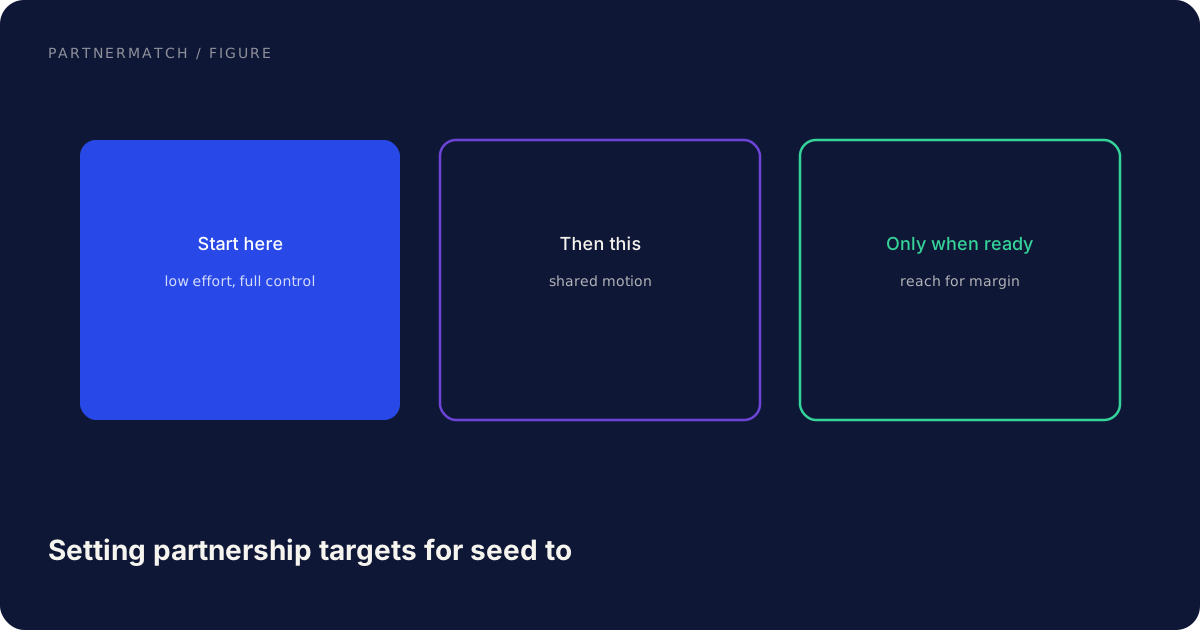
If you are unsure which row you are on, ignore the round on the term sheet and look at the motion. A Series A company that has never shipped a partner integration is still in the seed row for this function. When to hire uses the same signal: demand and a shipped example before you staff as if the channel were proven.
Capacity math
A target that does not fit in the calendar is not a stretch. It is fiction. Capacity math is how you keep the number inside the week.
Worked from hours, not from hope:
- Name the people and the fraction of their time. Write it down. If the engineer is "when we can," the integration target is not a target.
- Price a partner in hours. Count discovery, scope, partner review, enablement, and after-launch maintenance, not just the build sprint.
- Price an integration in engineering time, including app review and the monitoring you will owe. Four GA integrations with one engineer at 30 percent is a schedule that will slip.
- Cap concurrent work. One in build, one in launch or beta, a small number earlier is an honest tiny-team load.
- Only then set the outcome target. Do not set pipeline and then "find the partners."
| Input | What you record | What it bounds |
|---|---|---|
| People × fraction of time | Hours per week on partnerships | How many partners you can run |
| Hours per partner, by stage of the lifecycle | A range from your last two partners, not a blog average | Concurrent partner load |
| Engineering fraction | Hours per quarter for build and maintenance | How many integrations can be live and healthy |
| Sales-cycle length | Time from influenced opportunity to close | When revenue targets are even eligible |
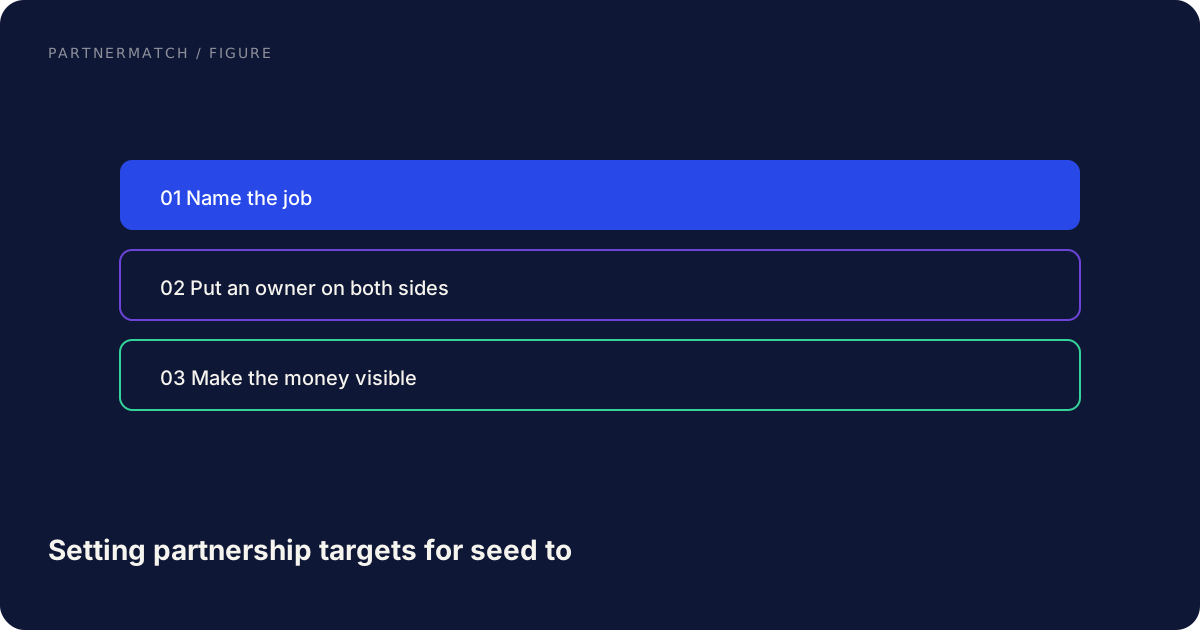
You will not have perfect hour data at seed. Use the last partnership as a case study and round up. Underestimating partner-review and legal time is the usual miss. Do not import an industry "average hours per partner." You do not have that number, and neither does this post.
Leading indicators you can steer by
Sourced revenue is the outcome everyone wants and the last one to move. A partnership signed this quarter may not close sourced revenue for two cycles, because the integration has to ship, customers have to adopt, and a deal has to run. If sourced revenue is the only target, you will spend two quarters looking at zero and learn nothing.
Put leading indicators in the plan as first-class targets, not as commentary:
- Time to first integration live. From signed scope to GA. This is a capacity and process target. If it stretches, every downstream number is late.
- Active accounts on each live integration. Not installs. Use. This is the same honesty as partnership metrics: usage is the outcome, listings are the activity.
- Influenced pipeline. Deals the partner touched, defined so finance will not laugh, as in influenced versus sourced. This often moves before sourced revenue.
- Enablement completion with a use test. Reps who can pitch you, not reps who clicked a deck.
Lagging outcomes stay in the picture as the destination. They just do not carry the quarter alone at seed and early A.
| Indicator | Type | Use it as a target when |
|---|---|---|
| Time to live | Leading | You are still proving you can ship |
| Active integration accounts | Leading | You have something live and need adoption |
| Influenced pipeline | Leading | Partners are in deals, even if they did not originate them |
| Sourced revenue | Lagging | The motion has run long enough to produce it |
| Pipeline per active partner | Efficiency | You are at B and adding partners is not the point |
How to pick the actual number
Once stage and capacity are clear, the number is an assumption you write down, not a vibe.
Use your own conversion, or stay qualitative. If three prior partners produced, on average, a certain influenced pipeline per quarter after launch, you may project from that with a range. If you have no history, do not invent a conversion rate. Set targets on live integrations and active accounts until history exists.
Range, not a false point. A single point target on pipeline at seed is theater. A range ("enough influenced pipeline to show up in a forecast conversation, from at least one partner") is more honest. At B, point targets on sourced revenue are fair because you have a base.
Write the assumptions next to the number. Example: "One engineer at 30 percent can keep two integrations healthy and ship one new GA this half. Founder plus one hire can run three active partners. Target: two integrations with active use, influenced pipeline from those partners, no sourced-revenue quota this half." When you miss, you can see whether the miss was hours, conversion, or a slipped partner review.
Tie to OKRs, do not duplicate a laundry list. The target is the key result. The OKR post is the format. This post is the math that fills the number. One primary outcome, two leadings.
Review on a schedule, not whenever the week looks bad. Monthly, look only at leading indicators and change the plan if they are off. Quarterly, revisit the outcome and the assumptions. If partner app review added two months you did not model, the sourced-revenue target for this half is wrong: say so, reset with the new capacity, and write why. Do not raise the pipeline target because you held more meetings. Chronic capacity shortfall with real demand is a hiring signal, or a reason not to take a Series B efficiency target on a founder-led calendar.
Common mistakes, and the fix
Reverse-engineering the target from a revenue gap. The fix: start from hours, concurrent integrations, and stage. If the gap still exists, it is a company plan problem, not a partnerships quota you can invent.
Copying a later-stage partner-sourced percentage. The fix: use the stage table. Their trailing share is not your starting number. a16z on SaaS is about retention and payback of a software business, not a license to paste someone else's channel mix.
Making "partners signed" the target. The fix: live integrations, active accounts, influenced or sourced pipeline. Signing is an activity. The lifecycle does not end at the announcement.
Ignoring engineering capacity. The fix: put the engineering fraction in the capacity table. A pipeline target with no build hours is a slide.
Using sourced revenue as the only number at seed. The fix: leading indicators until the motion has had time to close deals. Zero for two quarters teaches the team the target is fake.
Hiding the assumptions. The fix: write conversion, cycle time, and hours next to the number. A miss should be diagnosable in one page.
FAQ
What is a realistic partnership target at seed? One live integration with real active accounts, and a first influenced opportunity if the cycle allows it. See partnership OKRs for the matching shape. A percentage of company pipeline is not a seed target.
How many partners should we target? Whatever fits concurrent load after you price hours per partner. Founder-led is often one in build and one in conversation, not a dozen nobody runs.
Should we target sourced or influenced pipeline? Influenced until origination is real and documented. Mixing them inflates the target. Definitions: influenced versus sourced.
How do we set a number with no history? Do not invent a conversion rate. Target time to live, GA integrations, and active accounts until a partner has produced a deal you can inspect.
When does a revenue target become fair? After a full cycle: shipped integration, adoption, a sales cycle, closed-won with a clean source tag. Often Series B, sometimes late A. Not seed.
How does hiring change the target? A dedicated owner increases capacity only after ramp. When to hire is also a check that you are not hiring to justify an already-unrealistic number.
The short version
Set partnership targets from stage and capacity, not from a hole in the company plan. Seed proves one motion with small absolute outcomes. Series A proves repeatability. Series B adds sourced revenue and efficiency. Hours, concurrent integrations, and your own conversion (when you have any) bound the number. Leading indicators carry the quarter while sourced revenue is still in flight.
Write the assumptions, review them on a schedule, and refuse activity counts as the goal. A target that cannot fit in the calendar is not ambitious. It is a miss you scheduled in advance.
If you want the plan, the API work, and the first integrations sized to a team you actually have, that is exactly what a Partner Audit is for. We review your product, API, and partner potential, then define what to build, who to approach, and how to ship it.