What a partner audit actually covers
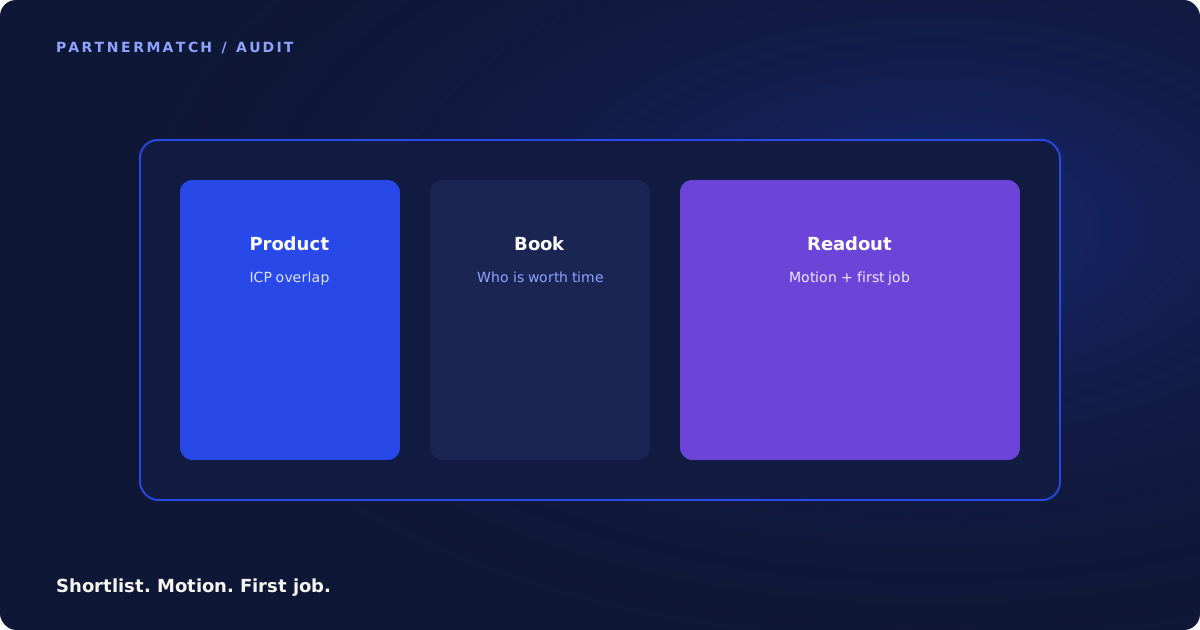
A partner audit is not a slide deck. It is a two-week readout: ranked shortlist, commercial motion, and the first shared job worth building.
Most companies do not have a partner problem. They have an unsorted list. Logos on a page, a few warm intros, an engineer who once talked to a platform, and a hope that someone will turn that into pipeline. A partner audit is the job of making that list honest.
It is not a strategy offsite. It is not a 40-page PDF nobody opens. In two weeks you should leave with three artifacts you can act on: who is worth time, how money could move, and which workflow is worth building first. If you cannot hold those three on one page, you do not have an audit. You have notes.
This is the same sequence large ecosystems imply when they ask you to show a product, a customer overlap, and a path to list. See how AWS Partners and Shopify Partners describe the work as build, meet a bar, then maybe earn attention. They are examples of the pattern, not programs this post is selling.
The 60-second version
- An audit ranks the book. Ten names worth time. The rest of the logo wall is dropped.
- It names a commercial motion a field rep can explain: referral, co-sell, or revenue share.
- It scopes one shared job the two products do together that neither does alone.
- It does not ship the plugin. That is the build. The audit tells you whether the build is worth it.
- One owner, two weeks, a readout. Committees stall. A deck without a next step is decoration.
What you walk in with
Bring the product as customers use it, not as the homepage describes it. Bring the current partner list, including the quiet ones. Bring any revenue you can already attribute, even if finance does not trust it yet. Bring the platforms your customers already live in.
If you have no list, the audit still works. The work then starts from customer overlap: which stacks show up in deals, which integrations support already answers, which names keep appearing in lost-deal notes. That is how you avoid inventing a go-to-market that only exists in a slide.
What you walk out with
| Artifact | Good enough | Not enough |
|---|---|---|
| Shortlist | Ranked, with a reason to build or drop | Forty logos in a grid |
| Motion | One sentence a seller can repeat | A menu of every possible fee |
| Shared job | A workflow a customer can complete | A theme of collaboration |
| Next step | Who does what in the next 30 days | We should stay in touch |
For the definition of the relationship itself, see what a technology partnership is. For the full path after the readout, see tech partnerships for SaaS.
What an audit is not
It is not a promise that a platform will sell you. It is not a substitute for engineering. It is not due diligence on every legal clause. It is a decision tool: build, watch, or drop.
If the readout says drop, that is a successful audit. Time not spent on a logo that will never produce a channel is time you can spend on a pairing that might.
Further reading
- Partnership due diligence for the checks before you commit engineering.
- AWS Partners, as an example of a public partner path.
- Shopify Partners, as an example of a commerce ecosystem.
- Go-to-market.
If you want that readout on your book, that is what a Partner Audit is for. Two weeks. A shortlist you can act on.
Continue on PartnerMatch