OpenAPI: the one spec that powers your docs, SDKs, and CLI
An OpenAPI spec is the single source of truth for partner developer experience. What it contains, what you generate from it, and how to keep it honest.
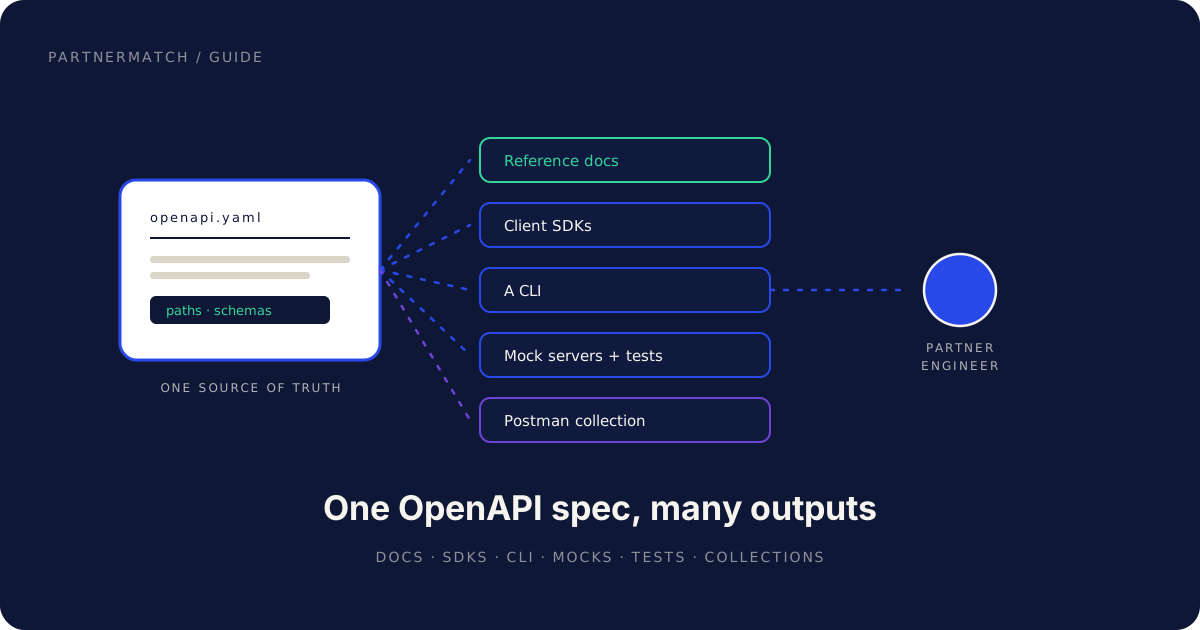
A partner engineer is about to integrate with your API. Before they write a line of code, they want three things they can hold: a reference they can read, an SDK they can import, and ideally a CLI they can run. You probably have all three somewhere. What decides how painful the integration will be is whether those three agree with each other, and with the API they actually call.
When they agree, it is almost always because one artifact sits underneath all of them: an OpenAPI spec. An OpenAPI spec is a single, machine-readable description of your API that becomes the source of truth for your docs, SDKs, CLI, mocks, and tests. Write it once, generate the rest, and your partner developer experience stops drifting apart one release at a time.
This guide explains what an OpenAPI document is in plain terms, what a good one contains, the outputs you can generate from it, the design-first versus code-first choice, and how to keep the spec accurate and versioned. It pairs with our guide to making your API partner-ready, which covers the wider surface of auth, sandbox, and webhooks.
The 60-second version
- An OpenAPI spec is a machine-readable description of your API: paths, schemas, auth, examples, errors, and webhooks, in one file.
- It should be the single source of truth for everything a partner developer touches, so nothing drifts apart.
- One spec generates many outputs: reference docs, client SDKs, a CLI, mock servers, contract tests, and a Postman collection.
- A good spec is more than paths: typed schemas, auth schemes and scopes, real examples, an error model, and webhooks.
- Design-first means write the spec, then build to it. Code-first means build, then generate the spec. Both are valid.
- Drift is the enemy. A spec that disagrees with the running API turns your docs into fiction and your SDKs into traps.
- Generate and test in CI so a spec validated against the real API on every release cannot rot silently.
- Version the spec like the contract it is, with a changelog and a deprecation policy partners can plan around.
What an OpenAPI spec actually is
Strip away the tooling and an OpenAPI spec is one file, written in YAML or JSON, that answers a single question for a machine: what can I do with this API, and exactly how. It is a contract written in a format other programs can read.
That last part is what separates it from a wiki page. Prose cannot be checked, generated from, or validated against. An OpenAPI document describes the same API in a structure tools understand, so a tool can turn it into a website, a library, a CLI, or a fake server, with no human retyping anything.
The format is an open standard, governed by the OpenAPI Initiative, and the most widely supported way to describe an HTTP API. Because almost every API tool reads OpenAPI, a spec you write is portable across your docs generator, SDK generator, testing tools, and the partner's own tooling, without you building any of that.
A few terms you will see, in plain language:
| Term | What it means | Why a partner cares |
|---|---|---|
| Path | A URL template, like /v1/contacts/{id} |
The thing they call |
| Operation | A verb on a path, like GET or POST |
The action they take |
| Schema | The shape of an object, with typed fields | What they send and receive |
| Component | A reusable piece, referenced across the spec | Why the spec stays consistent |
| Security scheme | How auth works, like OAuth or API key | The first code they write |
You do not need to memorize the grammar. You need to understand that the spec is the one place your API is described in a form everything else can be built from.
Why one spec should be your source of truth
Most teams do not decide to have three slightly different versions of their API description. It happens by accident. The docs were hand-written last quarter, the SDK was generated six months ago and patched since, the CLI was a weekend project. Each was correct on the day it shipped, and each has drifted a little since.
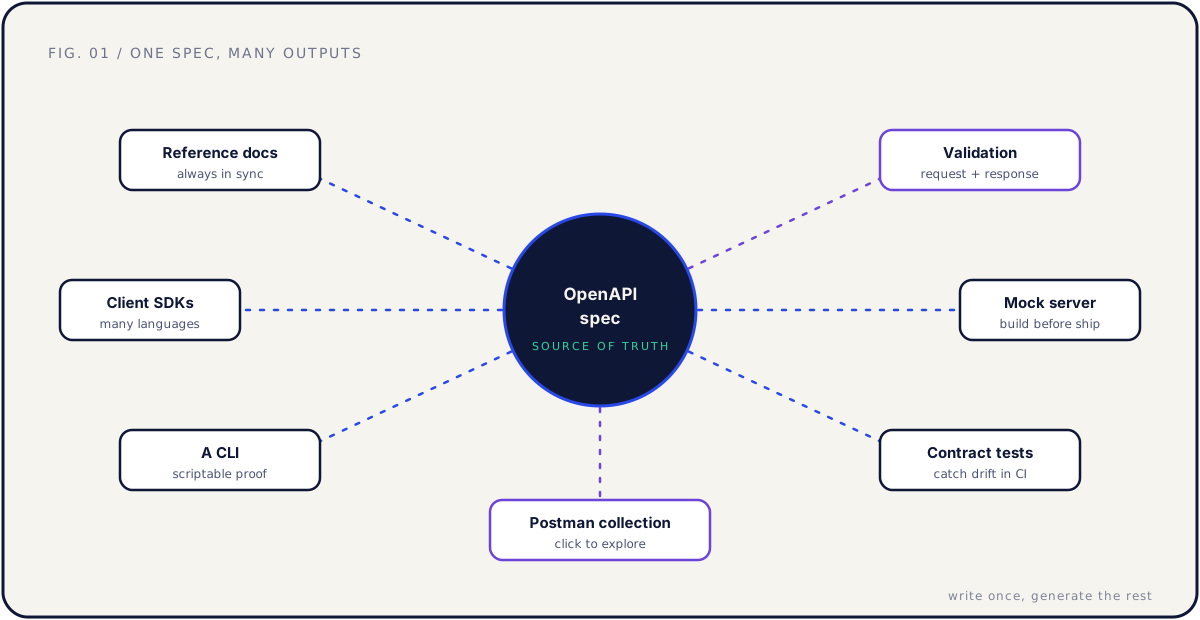
The fix is structural. Pick one artifact to be authoritative, make it the spec, and generate everything else from it. Now there is exactly one place to change a field name, and the change propagates to the docs, the SDK, and the CLI in the same release. You stop reconciling three sources and start maintaining one.
This matters more for partners than for your own engineers. Your team knows which artifact is ahead and which to trust. A partner engineer has none of that context, so when your reference says one thing and your SDK does another, they assume the whole platform is sloppy and pad their estimate accordingly. We unpack that ten-minute judgment in the partner-ready API guide.
A single source of truth also forces honesty. When the docs are generated from the spec and the spec is checked against the running API, you cannot quietly ship an undocumented field. The generation step makes every gap visible, because a wrong spec produces a visibly wrong doc.
What a good OpenAPI spec includes
A spec that only lists paths is a directory, not a contract. The difference between a spec a partner can build on and one that creates a support thread is in the parts beyond the URL list.
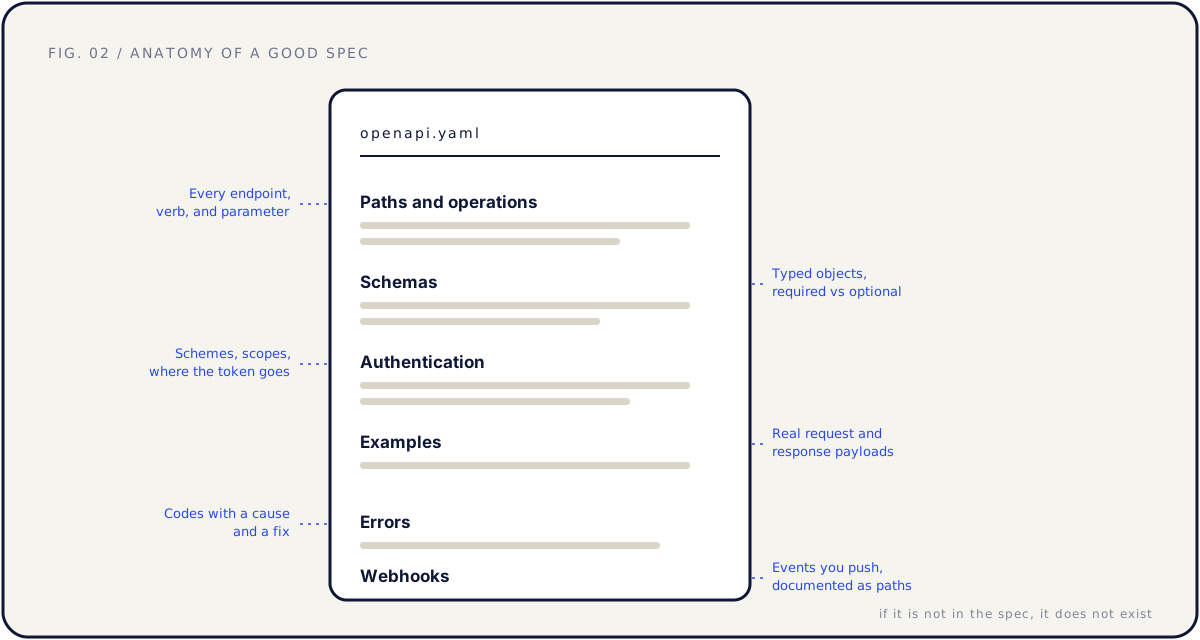
Paths and operations. Every endpoint, verb, and parameter, each parameter typed and marked required or optional. This is the skeleton, and if it is incomplete everything generated from it is incomplete too.
Schemas. The shape of every object you send or receive, with typed fields. Define them once as components and reference them everywhere, so a Contact looks identical in every operation that touches one. Schemas are what make generated SDKs strongly typed.
Authentication. The security schemes you support, the scopes that go with them, and where the credential belongs in a request. This is the first code a partner writes, so an incomplete auth section stalls the evaluation before it starts. We go deep on auth choices in the partner-ready API guide.
Examples. Real request and response payloads, with realistic values, not string and 123. They show the partner what actually comes back, and tools surface them directly in docs and mock servers.
Errors. An error model every operation references: the status codes it can return, the shape of the error body, and a stable error code per failure. A spec that documents only the happy path leaves the partner to discover failures in production.
Webhooks. The events you push, described as first-class paths with their own payload schemas. OpenAPI describes outbound events, not just the endpoints you expose, so partners can generate handlers for what you send them.
The difference between a thin spec and a good one, section by section:
| Section | Thin spec | Good spec |
|---|---|---|
| Paths | URLs and verbs only | Every parameter typed and marked |
| Schemas | Loose objects | Reusable components, fully typed |
| Auth | "OAuth supported" | Schemes, scopes, token placement |
| Examples | None | Real request and response per operation |
| Errors | Status codes listed | Error model with stable codes and bodies |
| Webhooks | Not described | Events as paths with payload schemas |
The outputs you generate from one spec
This is where the spec pays for itself. A complete OpenAPI document is an input to a long list of tools, each producing something a partner developer wants, without you maintaining it by hand.
Reference docs. Point a docs generator at the spec and you get a browsable reference, regenerated on every release. It can never drift from the spec, because it is the spec, rendered. The conceptual pages around it still need a human, which we cover in API documentation best practices.
Client SDKs. Generators emit typed client libraries in many languages at once. A partner in Python and another in Go both get an idiomatic library that matches your API exactly, with no per-language maintenance from you. Open-source tooling like OpenAPI Generator supports dozens of targets.
A CLI. The same spec can drive a command-line tool that maps every operation to a command. Nothing proves an API is real faster than a CLI a partner engineer can install and run in two minutes, and generating it keeps it in step with the API. We make the full case in why your B2B SaaS needs a CLI.
Mock servers. Feed the spec to a mock tool and you get a fake server that returns example responses for every endpoint, so partners can build before your real endpoints are finished and integration work runs in parallel with your own.
Contract tests. A contract can be tested. Validation tools check that your running API conforms to the spec: responses match the schemas, required fields are present, error shapes are right. Run those in CI and drift fails the build instead of failing a partner.
Postman collections. Convert the spec to a Postman collection and a partner can click through every endpoint in a tool they already use, with auth and examples pre-filled. A low-effort way to let a non-engineer explore the API.
| Output | What it gives the partner | What it saves you |
|---|---|---|
| Reference docs | A browsable, accurate reference | Hand-writing endpoint pages |
| Client SDKs | Typed libraries in their language | Per-language SDK maintenance |
| A CLI | Scriptable proof the API is real | Building a CLI by hand |
| Mock server | Build before you ship | Blocking partners on your timeline |
| Contract tests | Confidence the docs are true | Drift discovered in production |
| Postman collection | Click-to-explore the API | A separate exploration surface |
The pattern across all six: you maintain one file, and the ecosystem maintains the rest.
Design-first or code-first
There are two honest ways to end up with a spec, and the right one depends on where you start. The choice is not about quality, since a good spec is a good spec either way. It is about workflow.
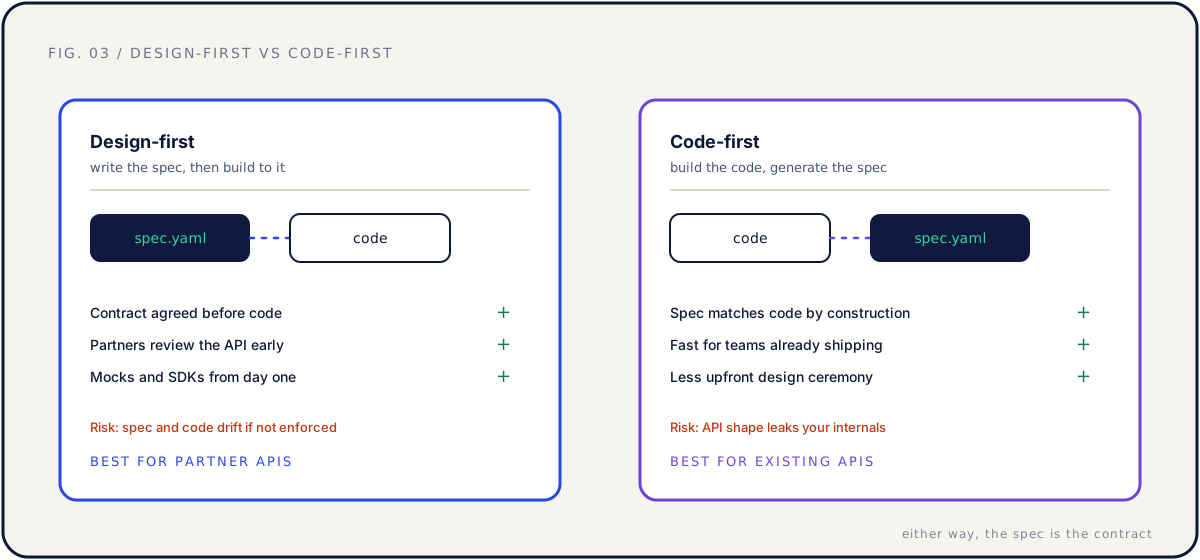
Design-first means you write the spec before the implementation, then build the API to match it. Partners and your team agree on the contract early, and you generate mocks and SDKs from day one. The risk is drift: if nothing enforces that the code matches the spec, the two diverge, so design-first needs contract tests to stay honest.
Code-first means you build the API and generate the spec from the code, via annotations or framework introspection. The spec matches the implementation by construction, and it is fast for teams already shipping. The risk runs the other way: an API shaped by your internal code tends to leak field names that made sense inside your service but confuse an outside developer.
| Dimension | Design-first | Code-first |
|---|---|---|
| Order | Spec, then code | Code, then spec |
| Spec accuracy | Needs contract tests | Accurate by construction |
| Partner review | Early, before code | After the API exists |
| Mocks and SDKs | Available from day one | Available once code ships |
| Main risk | Drift between spec and code | API leaks internal structure |
| Best fit | New partner-facing APIs | Existing APIs adding a spec |
For most B2B SaaS startups the answer is a hybrid: design-first for a new partner API so the contract leads, code-first when you already have an API and no spec, then review the generated spec with a partner's eyes and clean up the internal leakage before publishing. Either way, the spec becomes the contract once it exists.
Keeping the spec accurate and versioned
A spec is only as good as its agreement with the running API. The fastest way to lose a partner's trust is one wrong example: the moment a copy-pasted snippet returns an error the spec does not mention, they stop trusting all of it. Keeping the spec honest is what makes everything generated from it worth shipping.
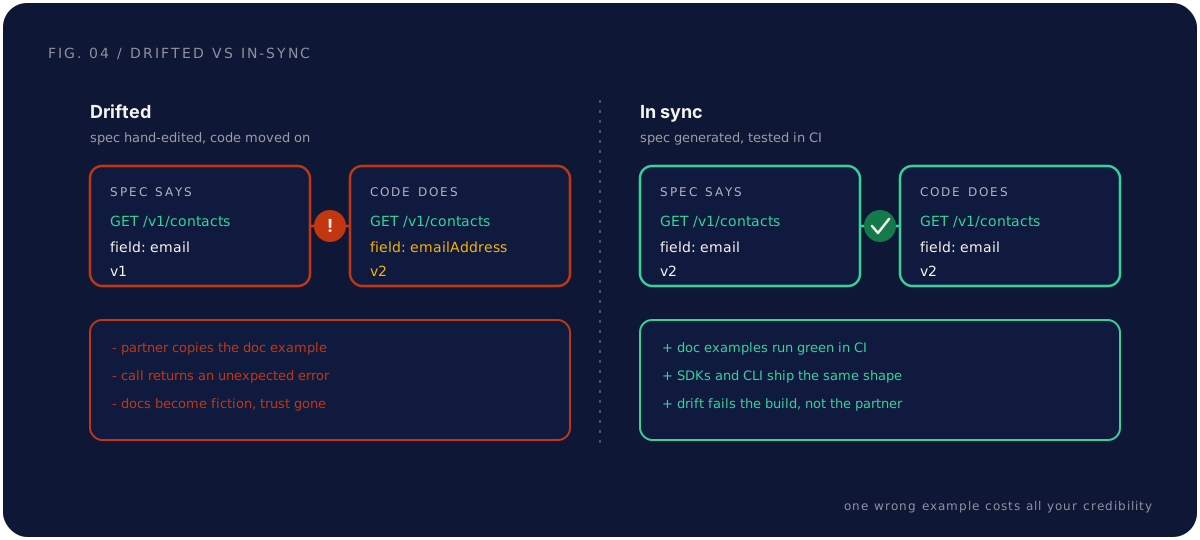
Three habits keep a spec accurate:
Generate, do not hand-edit. If you are code-first, regenerate the spec from the code on every build. If you are design-first, generate the docs, SDKs, and CLI from the spec. The artifact you edit by hand is the one that drifts.
Validate against the real API in CI. Add contract tests that call the running API and check responses against the spec. When a developer changes a response without updating the spec, the build fails, which is exactly where you want drift to surface. This is the highest-return automation in a spec program.
Test the examples. The examples in your spec are what partners copy first. Run them against a real environment in CI so one that rots gets caught before a partner finds it. We make the same argument about doc examples in API documentation best practices.
Versioning is the other half. A spec is a contract partners maintain an integration against for years, so treat changes to it like changes to a contract:
| Change | How partners should learn about it | Notice |
|---|---|---|
| Additive (new field, new endpoint) | Changelog entry | None required |
| Behavioral (changed default, new validation) | Changelog plus release note | Some |
| Breaking (removed field, renamed path) | Deprecation notice, then version bump | Long, announced |
Keep the spec under version control alongside the code, tag each published version, and maintain a changelog. A dated changelog and a stated deprecation policy signal that you treat the API as a product, which is the signal that moves a partner from cautious to committed.
How the spec connects to the rest of partner DX
A spec is the foundation the rest of partner developer experience sits on. It makes a partner-ready API easier to evaluate, because the docs, the SDK, and the sandbox all tell the same story. It powers great documentation, since the reference section should be generated from the spec. And it produces a CLI that is the most convincing proof the API is real: a partner who installs it, runs one command, and gets a real response has verified your platform in under a minute.
There is a newer consumer, too. AI agents and coding assistants increasingly read specs to call APIs on a developer's behalf, and they are even less forgiving of ambiguity than people. A complete, accurate OpenAPI spec is among the most machine-friendly assets you can publish, which is the bridge to our guide to MCP for SaaS.
Common mistakes, and the fix
Treating the spec as documentation, not a source of truth. The fix: generate your docs, SDKs, and CLI from the spec instead of maintaining them separately. A spec that is just one more artifact drifts like all the others. A spec that everything is generated from cannot.
A spec that only lists paths. The fix: add typed schemas, an error model, real examples, auth schemes with scopes, and webhooks. The URL list is the skeleton, and a skeleton is not something a partner can build on.
Letting the spec drift from the running API. The fix: validate the API against the spec in CI and test the examples against a real environment. Drift that fails the build never reaches a partner; drift that does not is discovered in their production, at the worst possible time.
Publishing a code-first spec that leaks your internals. The fix: review the generated spec with a partner's eyes before you publish, and rename or hide fields that only make sense inside your own service.
Versioning the spec casually. The fix: keep it in version control, tag published versions, maintain a changelog, and state a deprecation policy. Partners build against your contract for years, and silent breaking changes cost you trust you do not get back.
FAQ
What is an OpenAPI spec in plain terms? It is a single machine-readable file, in YAML or JSON, that describes your API completely: its paths, the verbs and parameters on each, the shape of the objects it sends and receives, how authentication works, what errors it returns, and what webhooks it sends. Because it is structured rather than prose, tools can read it and turn it into docs, SDKs, a CLI, mock servers, and tests.
Is OpenAPI the same as Swagger? They are closely related. Swagger was the original name, and the term still lingers in tool names like Swagger UI. The specification was donated to the OpenAPI Initiative and renamed OpenAPI, which is the current standard. People use the names loosely, but the format you should target today is OpenAPI.
Do we need an OpenAPI spec if we already have docs? Almost certainly yes, because the spec is what keeps those docs honest. Hand-maintained docs drift from the API one release at a time. Generating the reference from a spec, and validating that spec against the running API, removes the drift and gives you SDKs, a CLI, mocks, and tests for free from the same file.
Should we go design-first or code-first? For a new partner-facing API, design-first lets you agree on the contract and generate mocks and SDKs before the code exists. For an existing API without a spec, code-first captures reality faster, after which you review the generated spec and clean up anything that exposes your internals. Both are valid as long as the spec ends up as the source of truth.
How does an OpenAPI spec help with AI agents? Agents and coding assistants read API descriptions to call APIs on a developer's behalf, and a complete, accurate OpenAPI document is one of the most machine-readable assets you can give them. The same precision that lets a human partner integrate quickly lets an agent do the same with less ambiguity.
Who should own the OpenAPI spec internally? One named owner, usually whoever owns the API, so the spec ships with the behavior it describes. A spec owned by "everyone" drifts within a release or two. The spec is the contract the whole developer experience is generated from, so it needs a name attached.
Further reading
- OpenAPI Initiative: the organization that governs the specification and the most widely supported way to describe an HTTP API.
- OpenAPI Specification: the formal specification document itself, useful when you need the exact grammar.
- OpenAPI Generator: open-source tooling to generate client SDKs, server stubs, and documentation from an OpenAPI document.
The short version
An OpenAPI spec is a single machine-readable description of your API, and its highest use is as the source of truth for everything a partner developer touches. Write it once, with typed schemas, auth, real examples, an error model, and webhooks, and generate the rest: reference docs, client SDKs, a CLI, mock servers, contract tests, and a Postman collection. Pick design-first for new partner APIs and code-first for existing ones, but either way keep the spec authoritative: generate instead of hand-editing, validate against the running API in CI, and version it like the contract it is. Do that, and your docs, SDKs, and CLI stop disagreeing, which is exactly what a partner engineer is checking for.
If you want an outside pair of eyes on exactly that, a Partner Audit reviews your API, your spec, and your partner developer experience, then hands you a concrete plan: what to write, what to generate, and which partners to approach once the spec can carry the weight.