AI note-taking and follow-up for partner calls
How to use AI note-taking on partner calls: capture with consent, extract actions, sync to the CRM through a review gate, and draft follow-ups a human still sends.
The call was good. The partner named a blocker, a date, and a new technical contact. Two hours later those facts live in one person's head. The follow-up is late, the CRM still shows last quarter's stage, and the relationship is moving on memory.
Partner calls produce next steps, owners, blockers, and who is now in the room. The problem is turning forty minutes into structured work without stealing the hour after. Treat AI note-taking as a gated pipeline: capture, extract, sync, draft. Do not treat it as a silent publisher. It sits next to updating the CRM from transcripts and AI tooling for partnerships.
The 60-second version
- Capture is a consent problem first. Record only when everyone on the call knows, and store the least you need.
- The pipeline is capture, extract, review, write, draft. AI proposes. A person confirms anything that leaves the room or becomes source of truth.
- Extract a fixed set: stage, next step and owner, blocker, contacts, commitments with dates, and open questions. Each item should carry a source quote.
- CRM sync fails closed. If nobody reviews the extraction, nothing is written. A wrong stage in the forecast is worse than a blank field.
- Follow-up emails are drafts. AI can write them. A person sends them. No unreviewed external send, ever.
- Privacy is not a footnote. Partner calls contain commercial terms, customer names, and things said in confidence. Retention, access, and vendor policy are part of the workflow.
- The relationship stays human. Measure freshness and follow-through, not summary length. Judgment on the call is still the job.
Why partner-call notes rot
Partnerships teams do not fail to take notes because they are careless. They fail because the moment of capture is the worst moment in the day. You hang up, you are already late to the next call, and structured data entry loses to walking to the kitchen. By the time you sit down, the blocker has become "something about their API," which is not an action.
Notes you do take still fail when they are unstructured (a recap is not a next step), private to the person who typed them (the engineer never sees the new contact), or never become the follow-up. The partner remembers the date you promised. Memory is a bad SLA.
AI note-taking attacks the conversion cost, not the relationship. It is good at turning speech into a candidate list of actions. It is not good at deciding whether you actually promised a timeline. That is why the rest of this guide is gates, not magic.
Capture: consent, then recording
Do not start with the tool. Start with whether you are allowed to record.
Tell people. At the start of the call, say you are recording for notes. In many places this is a legal requirement, not a courtesy. If someone objects, stop the recording and take manual notes. A partner who feels ambushed will remember it longer than any summary you produce.
Prefer the meeting tool's own recording when you can. A bot that joins as a silent participant surprises people and looks like surveillance. A recording banner the platform already shows is clearer. If you use a dedicated notetaker, announce it by name.
Scope the capture. You need the transcript for extraction. You rarely need the video, and you almost never need to keep the audio once the transcript exists. Decide retention on purpose: how long the transcript lives, who can access it, and when it is deleted. "Keep everything forever in the vendor" is not a policy.
Watch the room. If a third party joins (their customer, counsel, a prospect), re-confirm recording or stop it.
| Situation | Record? | Extra step |
|---|---|---|
| Partner agreed at the start | Yes | Keep the announcement on the recording |
| Anyone objects | No | Manual notes |
| A third party joins mid-call | Only after a new yes | Stop until they answer |
| Security or legal deep-dive | Default no | Ask; often notes without audio |
GDPR and similar regimes treat recordings as personal data when they identify people. Start from gdpr.eu and your counsel. The FTC's privacy and security guidance is the US companion: say what you collect, limit it, do not surprise people.
Extract a fixed set, with quotes
Free-form summaries are how you get a polite paragraph and no owners. Constrain the extraction. The same field list every time, each item backed by a quote from the transcript so a reviewer can check it in seconds.
| Field | What good looks like | What to reject |
|---|---|---|
| Stage | A value from your partner stages, inferred from what was said | A new stage name the model invented |
| Next step | One action, one owner, one date | "Keep the conversation going" |
| Blocker | A concrete dependency, access, decision, or legal item | "Alignment" with no owner |
| Contacts | Name, role, and whether they are new | A guessed title with no quote |
| Commitments | What you promised, and what they promised, with dates | Soft language treated as a promise |
| Open questions | Unresolved items that need a later call | Questions the model thinks would be interesting |
Two extraction rules keep this honest:
Every field carries a source quote. If the model cannot point at a sentence, the field is blank, not guessed. "They seemed excited" is not a stage change.
Commitments are split by who made them. Mixing "we will send the sandbox by Friday" with "they will look at it" into one blob is how both sides miss. Your follow-up is built from your commitments. Theirs go on the tracker as asks.
This is the same extraction idea as in AI CRM updates from transcripts, applied to the partner object rather than only the deal. If you already run that pipeline, do not build a second one. Add partner-specific fields (blocker class, integration stage, app-review status) to the same review queue.
Sync to the CRM through a review gate
The CRM is only useful if it is trusted. Auto-writing every extraction into it is how you get a forecast full of confident errors. The gate is simple: the model proposes a diff, a person accepts or edits, then the write happens. If nobody reviews, nothing is written.
What to write, and what to leave in the note:
- Write: stage, next step, owner, due date, blocker, new contacts, last-touched date.
- Leave in the note: color, politics, "they seemed annoyed," and anything you would not want the partner to read if the CRM were ever shared in a QBR.
A practical queue: after each recorded call, the owner gets a short card (the six fields plus quotes) in Slack, email, or the CRM's own review UI. Clearing the card should take a minute, not a re-listen. If it takes longer, the extraction is too verbose.
Do not let the pipeline create duplicate contacts or duplicate tasks. Match on email first. If the model proposes a new person, the reviewer confirms they are not already in the record under a different spelling. Account-mapping messes are hard to unwind; see the caution in AI tooling for partnerships about partner account data being sensitive.
The payoff is a dashboard you can run a partner QBR from without a reconstruction night. Stage and next step are current because the call wrote them, through a person, the same day.
Follow-up drafts a human still sends
The second half of the pipeline is the email or Slack message that should go out while the call is still warm. AI is good at this draft: recap, your commitments, their asks, a proposed time for the next step. AI is bad at tone with a specific person, and it will occasionally invent a commitment you did not make.
Rules for the draft:
- Built only from confirmed extraction. If the reviewer cut a "commitment," it does not appear in the email.
- Short. Five to eight lines. Partners do not need a transcript.
- No new promises. The draft may recap. It may not add scope, dates, or pricing the call did not contain.
- A person sends. The send button is human. Wire the tool so there is no automatic send on meeting end.
That last rule is the one teams cut when they are busy, and it is the one that blows up. A hallucinated "we can have the integration in two weeks" in a partner VP's inbox is not a note-taking failure. It is a relationship failure. The same "no unreviewed external sends" rule from the AI tooling guide applies here without exceptions.
Internal follow-ups can be more automatic: a task for the engineer to send sandbox credentials, a calendar hold, a reminder the day before the date you committed to. Those still need the review gate on the date and the owner, because a wrong owner is how the task dies in the wrong queue.
Privacy, vendors, and what you retain
Partner transcripts are a pile of other people's information: names, emails, customer references, commercial terms, sometimes security details. Treat them as you would a shared due-diligence folder, not as blog raw material.
Vendor policy. Before you connect a notetaker, read whether it trains on your data, where it stores audio, who can share a link, and how deletion works. If you cannot get a clear answer, do not put partner calls in it.
Access. Transcripts should not be world-readable in the company. Partnerships, the relevant engineer, and the founder is a typical set. A public Slack channel of full transcripts is how a joke on a call becomes a problem.
Redaction. You do not need every customer name the partner mentioned. If extraction only needs "shared enterprise account in pipeline," drop the rest. Redact secrets if anyone pastes a key in chat (they will).
Retention. Keep transcripts long enough to defend a CRM update and a follow-up, then delete or archive under your policy. Indefinite retention of every partner call is a discovery and a breach waiting room.
Training data. Do not feed partner calls into a custom model you do not control, and do not paste transcripts into a consumer chatbot to "clean them up." The pipeline should be a contracted tool with a data processing term, or an internal one.
This is part of running a partnership lifecycle like an adult: the relationship includes how you handle what they say when they think they are talking to you, not to a vendor's training set.
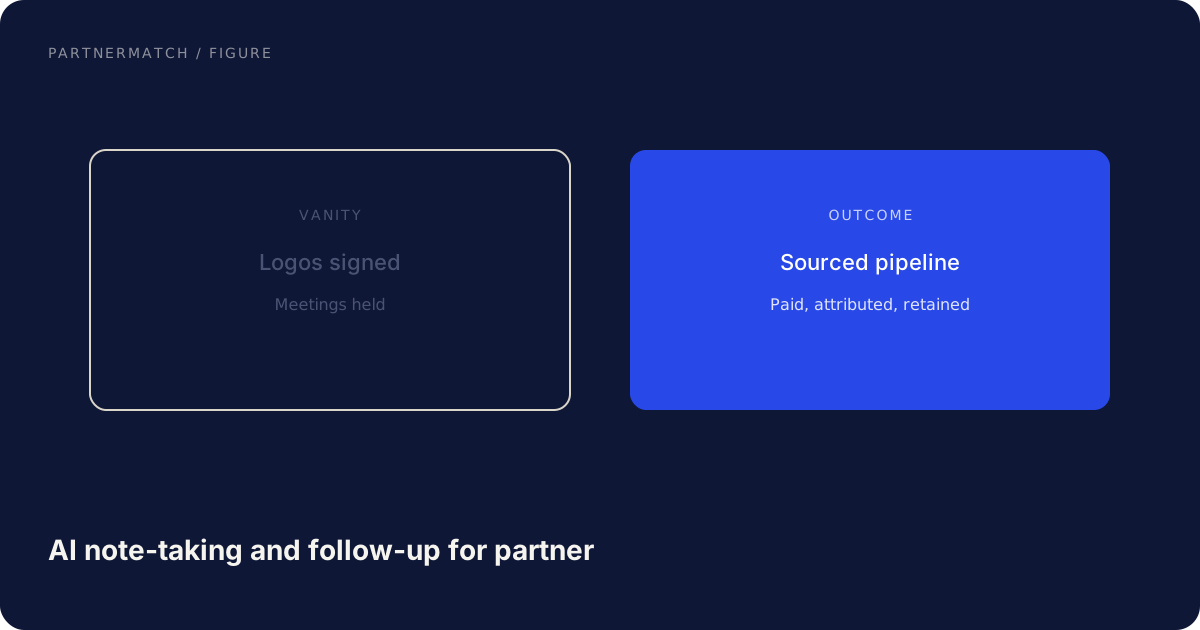
Measure the pipeline by work produced, not by summary length: time from call to reviewed CRM update, next-step completeness (owner plus date), follow-up send time, and zero recording-consent surprises. A short, quoted, reviewed card beats a three-page recap.
Common mistakes, and the fix
Recording without saying so. The fix: announce at the start, every call, and stop if anyone objects. A secret bot joining the meeting is not a productivity win.
Writing the CRM with no review. The fix: fail closed. Proposed fields sit in a queue until a person accepts them. A wrong stage in a forecast costs more than the minute of review.
Letting the tool send the follow-up. The fix: drafts only. A person reads for invented commitments and tone, then sends. Wire send so it cannot be automatic.
Extracting essays instead of fields. The fix: the six-field list, each with a quote. If there is no quote, the field stays blank.
Keeping every transcript forever in a vendor you did not diligence. The fix: a retention period, an access list, and a vendor that will delete on request. Notes do not replace being present on the call; judgment stays human, as in where not to use AI.
FAQ
Do we need a dedicated notetaker bot? Not at first. Start with the meeting platform's recording and an assistant that reads the transcript. A bot is worth it when you have volume and a review queue.
Is it legal to record a partner call? It depends on location and consent. Announce every time, stop on a no, and read what GDPR is with your counsel. This post is not legal advice.
What if the extraction is wrong? Reject, blank, or edit from the quote. If the model invents next steps, require quotes and empty fields without them.
Should we share the transcript with the partner? Usually no. Share a short recap of commitments. Transcripts include asides and third-party names that were not meant to be a document.
How does this connect to the CRM article? Updating the CRM from transcripts is extract, review, write. This post adds capture, consent, partner fields, and the follow-up draft.
Can we use the same pipeline for sales calls? Yes, with the same gates and stricter retention. Do not mix partner commercial terms and customer deal strategy in one open transcript folder.
The short version
AI note-taking for partner calls is a pipeline, not a recorder. Capture with consent. Extract a fixed set of fields, each with a quote. Review, then write the CRM. Draft the follow-up, then have a person send it. Keep transcripts scarce: limited access, limited retention, a vendor you have actually read.
The point is same-day next steps and a CRM you can trust in a QBR. The relationship, the promise, and the send button stay human.
If you want the rest of the partner motion as tight as the notes, that is exactly what a Partner Audit is for. We review your product, API, and partner potential, then define what to build, who to approach, and how to ship it.