AI-generated partner collateral: process and guardrails
How to draft partner one-pagers, decks, and FAQs with AI, keep brand control, and run a human edit pass before anything reaches a partner.
Partner collateral is the work everyone agrees matters and nobody has a day for. A new partner needs a one-pager their sellers can scan, a deck for enablement, and a FAQ for the questions that land in Slack by week two. Each artifact is mostly a structure you already know, with the partner's specifics swapped in. That is why teams skip it, ship a generic PDF, or spend a full day rewriting the page they wrote last quarter.
AI-generated partner collateral is a way out of that trap if you treat the model as a drafter, not a publisher. Give it a brand brief, the joint story, and the facts you will stand behind, and it produces a credible first draft in minutes. What it will not do is own the claims, the voice, or the legal line. This guide is the process and the guardrails. It sits next to our AI tooling for partnerships overview and the partnership one-pager template. The through-line: AI writes the first pass, a human owns the page that ships.
The 60-second version
If you only read one section, read this one:
- Partner collateral is templated work with a judgment layer. One-pagers, decks, and FAQs share a structure; the facts, claims, and voice do not.
- Run a four-step loop: brief, draft, edit, ship. Skip the brief and the draft is generic. Skip the edit and the draft is a liability.
- Brand control lives in the brief, not in hope. Paste positioning and voice with every request so the model starts from your language.
- AI drafts structure and first-pass copy. A human owns claims, numbers, joint-value wording, legal lines, and anything a partner will repeat.
- The edit pass is the deliverable. Check truth, voice, specificity, and accessibility before the file leaves your machine.
- Never let a model send or publish unreviewed. That gap is where invented proof and off-brand phrasing get caught.
- Reuse the same brief, swap the specifics. The process repeats; a unique story for each partner is still a human job.
- AI is a tool. A person owns the collateral the partner sees.
The process: brief, draft, edit, ship
Most partnership writing is variation, not invention. The partnership one-pager has a known anatomy. An enablement deck walks the same joint story in slides. A FAQ answers questions every new partner asks. That is the shape an assistant handles well. The judgment sits on top: which claims are true, which number you may print, whether the voice sounds like you.
Do not start from a blank prompt. Run a loop.
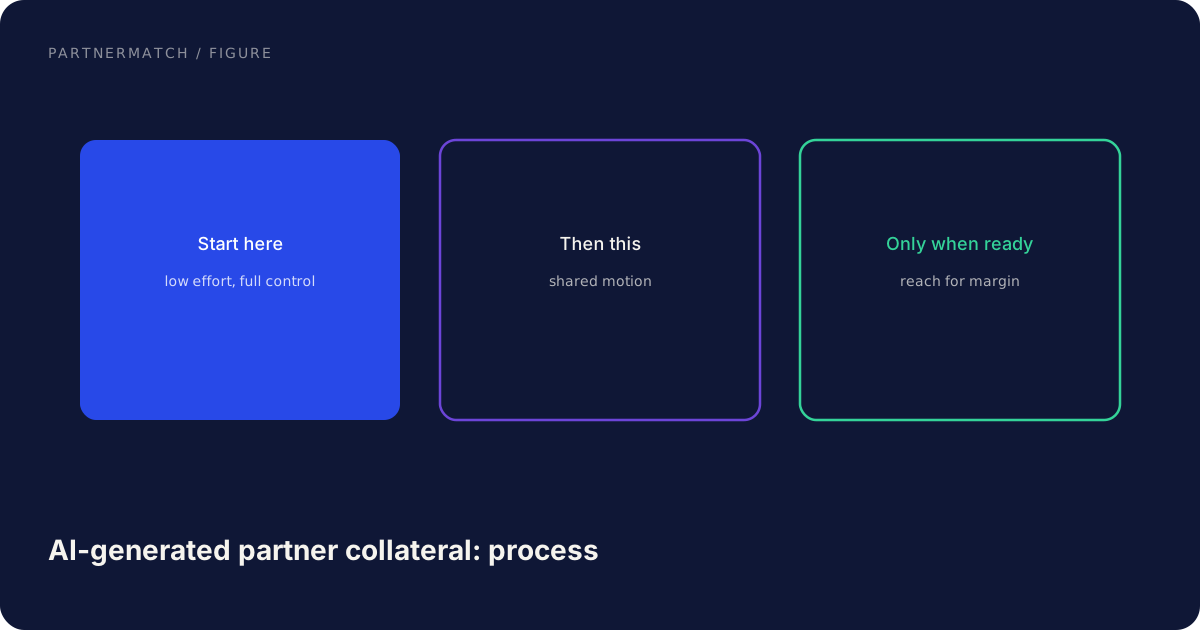
1. Brief. Assemble what the model is not allowed to guess: positioning and voice, the partner's product, the shared-customer workflow, the integration in one sentence, three proof points you can defend, the ask, and anything you must not say. If you have a joint value proposition, paste it. If a one-pager worked for a similar partner, paste it as the pattern, not as copy to clone.
2. Draft. Ask for one artifact at a time, with a format: one page, eight slides with notes, ten FAQ pairs. Tell the assistant what to leave blank rather than invent, especially numbers, logos, and legal claims. A placeholder is more useful than a fabricated proof point.
3. Edit. A person who owns the brand reads the draft against the brief. Budget an hour. The win is turning a day of writing into an hour of editing, not turning an hour of writing into a click.
4. Ship. Only the edited file goes to the partner, the portal, or sales. Label raw drafts so nobody forwards them.
| Step | Input | Output | Owner |
|---|---|---|---|
| Brief | Positioning, partner facts, proof you can defend | A prompt pack the model cannot wander from | Partnerships, with product and brand |
| Draft | The brief plus a format | First-pass copy and structure | AI assistant |
| Edit | The draft, read against the brief | Claims, voice, and specifics signed off | A human who owns the brand |
| Ship | The edited file | Partner-facing collateral | The same human, or enablement |
Draft the one-pager first. It is the source of truth the deck and FAQ should follow. Mixing all three in one prompt produces a mush that is hard to edit.
Brand control: the brief that keeps drafts on-voice
Brand control is a document you paste every time, not a vibe you hope the model picks up. Without it you get the default: polished, generic, slightly breathless, full of phrases buyers skip.
Keep a one-to-two-page brief and update it when positioning changes:
- Who you are for, in one sentence, and who you are not for.
- Voice rules. Short sentences. Concrete verbs. Banned phrases ("synergy," "better together" with no workflow, empty superlatives).
- Claim rules. What you may say about customers, uptime, security, and the integration. If a number is not on this list, the draft must not invent one.
- The joint-value pattern. Shared customer, shared problem, what the two products do in sequence, so the model cannot wander into a feature list.
- Examples. Two paragraphs you would ship, one you would reject, with a note on why.
Teams that skip the brief spend the edit hour rewriting tone. Teams that keep it get drafts that already sound like them, which is the only way this stays cheaper than writing from scratch.
Accessibility belongs in the brief. Partner decks get forwarded into orgs that check. Plain language, real headings, alt text, sufficient contrast, and a reading order that works without the layout are part of brand control. The W3C accessibility fundamentals are the baseline.
What to generate, and what to leave to a human
The split matches the rest of AI partner tooling: AI drafts the repetitive middle, a human owns anything a partner will treat as a promise.
| Collateral type | What AI should draft | What a human must own |
|---|---|---|
| Partner one-pager | Structure, first-pass copy, workflow story | Shared-customer hook, proof points, the ask |
| Enablement deck | Slide outline, speaker notes, talk track | Sequencing, brand, claims a seller will repeat |
| Partner FAQ | Common questions, draft answers from your docs | Accuracy, what not to promise, legal and security |
| Pitch narrative | Arc, objection handling | What is actually true in your deals |
| Intro email or Slack | Short variants of an approved one-pager | Recipient, tone for that relationship, send |
Do not generate the number you have not measured, the quote you have not cleared, or the security sentence that belongs to your latest questionnaire. If the fact is not in the brief, the right output is a placeholder.
Resist a kit for every logo in the pipeline. Unused collateral trains partner sellers to ignore you. Draft on demand for partners you are actually enabling, the same way you would staff a partner enablement kit.
The human edit pass, in practice
Treat the edit as a checklist. A reread catches typos. A checklist catches the failures that damage a partnership.
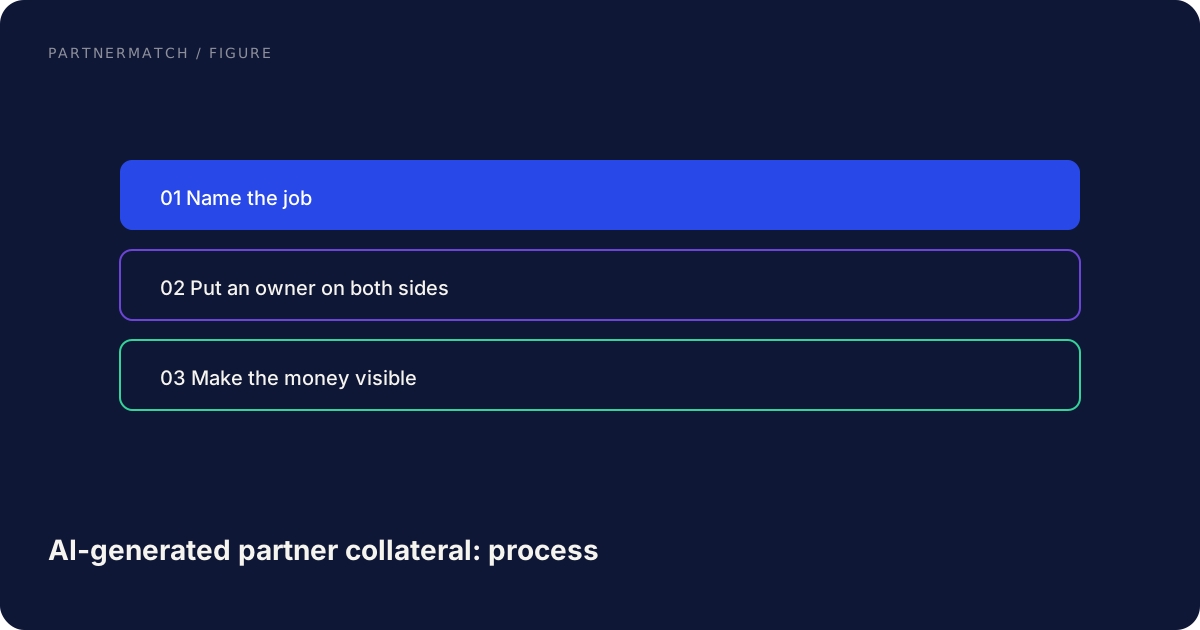
Truth. Every number, customer name, capability, and integration behavior must match a source you trust. If you cannot point to it, cut the line. Invented proof is how you get a legal email.
Voice. Read it out loud. If it sounds like a template every competitor could send, rewrite the filler. Keep the structure if it works.
Specificity. A one-pager you could send to any partner by swapping a logo is a one-pager none of them will act on. Name the workflow, the shared segment, and the outcome.
Accessibility and format. Headings that mean something, figures with alt text, contrast that holds, a page that still makes sense as text. If the meaning lives only in a screenshot, it will not survive the forward.
Most drafts need edit-then-approve. That is success. Who reviews: partnerships for the joint story, brand or a founder until the brief is proven, legal or security for FAQ answers that touch data or certifications. Then a named owner can clear routine kits against the same checklist.
Guardrails: claims, legal, and what never ships from a draft
Speed without guardrails is how a team sends a page that over-promises an integration that is still a spike.
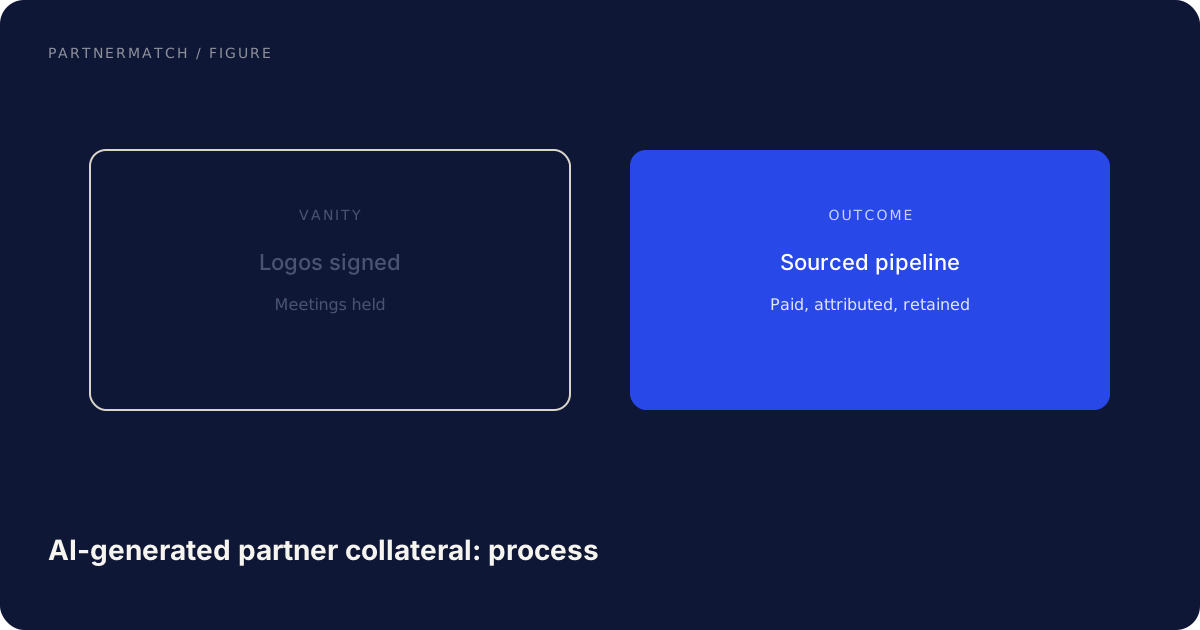
Human in the loop on every external file. AI drafts; a person ships. Do not wire a generator to a portal or a mailbox.
No invented numbers or logos. If the brief does not contain the metric, use a placeholder. Logos need clearance.
Claims trace to a source. The same discipline as partnership metrics. If you say the integration cuts a weekly export, point to the workflow you scoped.
Do not let the model write security or legal as marketing. Those FAQ answers come from your current knowledge base and the owner of that domain. A wrong sentence here is a contract issue.
Treat model risk as a process problem. Assistants omit, flatten, and occasionally fabricate. NIST's hub on artificial intelligence is a reminder that reliability is designed (review, sourcing, human ownership), not assumed.
Strip sensitive partner facts before they go into a tool you have not reviewed. Unpublished roadmaps and shared customer lists do not belong in a collateral prompt.
The model can read and draft freely. Acting on the outside world stays human-gated.
Common mistakes, and the fix
Shipping the first draft because it looks finished. The fix: no partner-facing file leaves without the four-check edit. Looking done is why you need the checklist.
Skipping the brief and prompting from memory. The fix: paste a reusable brand and claims brief every time, and update it when positioning changes.
Generating a kit for every logo. The fix: draft on demand for partners you are enabling this quarter, with the one-pager as the source of truth.
Letting the model fill empty proof with plausible numbers. The fix: placeholders for any fact not in the brief.
Writing security and legal in the same pass as marketing. The fix: pull those answers from the signed knowledge base and have that owner clear them.
Ignoring accessibility because "it is just a one-pager." The fix: headings, alt text, contrast, and plain language are part of the edit pass.
FAQ
Can AI write our partner one-pager end to end? It can write a strong first draft from a brief. It cannot own the hook, the proof, or the ask. Use the partnership one-pager structure, generate the pass, then edit until a partner manager could forward it without adding context.
How long should the human edit pass take? Plan an hour for a one-pager or FAQ, a bit more for a deck, once the brief is good. If edits take a full day, the brief is too thin or you are asking the model to invent facts.
What belongs in the brand brief? Positioning, voice rules, banned phrases, claim rules, the joint-value pattern, and a few examples of copy you would ship or reject. Keep it short enough that you actually paste it.
Is it safe to paste partner details into an AI tool? Only after you have read the data policy, and only the details the draft needs. Do not paste unpublished roadmaps or full customer lists. Strip the brief to what the page requires.
Should we generate decks and FAQs from the one-pager? Yes. The one-pager is the shortest joint story. The deck sequences it. The FAQ answers objections it raises. Separate prompts without a shared source of truth will drift.
Who should sign off? A named owner on partnerships for routine kits, against the four-check list. Brand or a founder until the brief is proven. Legal or security for data, certifications, or contractual claims.
The short version
AI-generated partner collateral works as a drafting process with a human gate, not as a publish button. Keep a reusable brand and claims brief. Draft one artifact at a time. Edit for truth, voice, specificity, and accessibility. Ship only the edited file. Leave numbers, legal lines, and security answers to sources you control. The model gives back the blank-page hours. The page the partner sees is still yours.
If you want a second pair of eyes on the collateral, the enablement kit, and which partnerships are worth writing for, that is exactly what a Partner Audit is for. We review your product, API, and partner potential, then define what to build, who to approach, and how to ship it.
Further reading
- NIST artificial intelligence: the U.S. standards body's hub for AI risk, measurement, and trustworthy use.
- W3C Web Accessibility Initiative, fundamentals: the baseline for making pages, decks, and PDFs usable beyond a single visual layout.
- NIST AI Risk Management Framework: mapping, measuring, and managing AI risk, including human review.